Some geniuses are tragically short-lived, leaving us to wonder what more they could have achieved if they had been granted decades more to live.
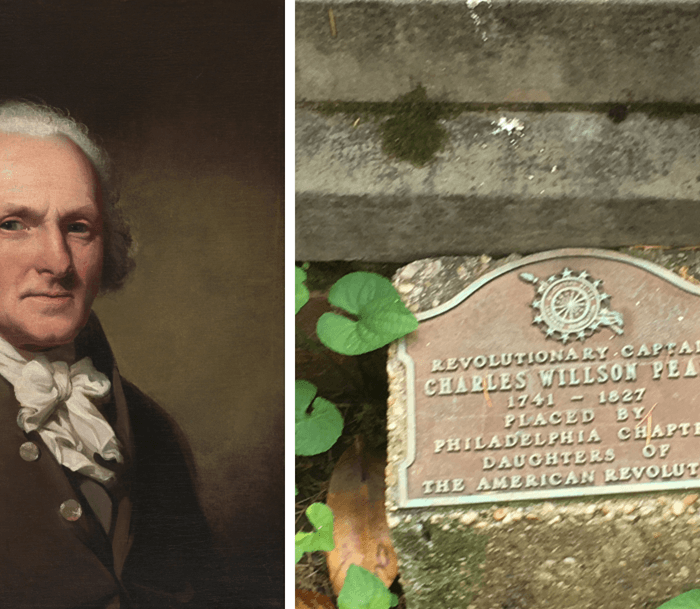
Such is the case with one of the sons of colonial portraitist Charles Willson Peale (1741–1827), Titian Peale I. Although several of Peale’s 16 children died before reaching adulthood, Titian survived the high odds of childhood mortality to die suddenly at age 18.
An Artistic Beginning
Titian Ramsay Peale was born in Philadelphia in 1780. He was the third son and fourth of six surviving children born to Charles Willson Peale and his first wife, Rachel. He was trained alongside his older brothers, Raphaelle and Rembrandt, in drawing and painting from a young age.Willson Peale spent years teaching himself painting skills while traveling abroad as a young man. These he taught his sons and daughters when they were still children. While the second son, Rembrandt, left home to pursue his career as a portraitist, the oldest surviving Peale son, Raphaelle, and Titian continued their studies at home with their father. At the time, the Peales lived in the Philosophical Hall, which served as both the Peale Philadelphia Museum and the family home.
The Philadelphia Museum’s enterprise was ambitious, delving into new territory. Like many pioneers, Charles Peale relied on his children’s help, hoping they would share his passion and continue the legacy.
In a 1793 letter to a friend, he wrote: “I have labored to instruct my children to be industrious and careful that they may help themselves and be useful members of the community, and as I have several, some amongst them will be able to assist me.”
‘The Staircase Group’
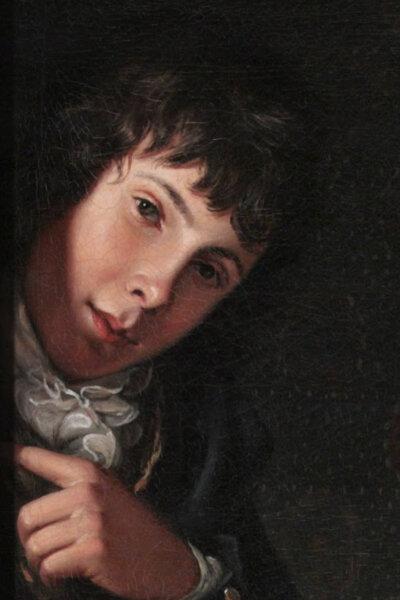
Titian’s greatest lasting fame is his likeness in a double portrait painted by his father. The 1795 oil painting “The Staircase Group” shows 14-year-old Titian and his older brother Raphaelle, who was then 21.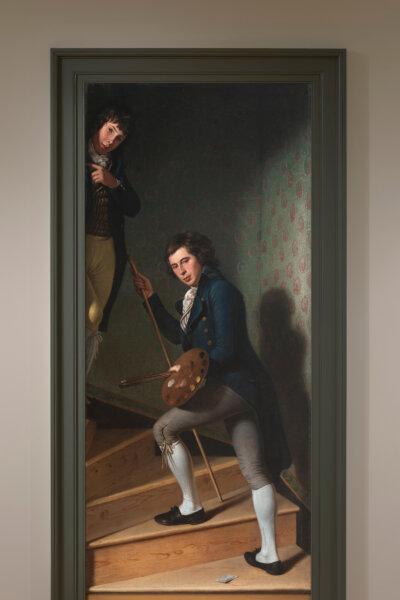
This highly realistic painting was more than a portrait of two of his beloved children, though. It was an important feature in the museum, serving not just as a piece of art but as a sign.
The painting was put in a closed-off doorway of the museum, and it was an invitation for museum guests, not just casual viewers. Since the painting was positioned in a doorway, it looked like a real staircase rather than just a piece of art.
Guests were often fooled by how lifelike the work was. The two boys’ poses were a further invitation. With his art palette in one hand and a maulstick (a painter’s hand support) in the other, Raphaelle mounts the stairs, looking back over his shoulder directly at the viewer as if beckoning him to follow.
A few steps higher, the impish Titian peers around the corner, impatiently waiting to show new friends around the museum.
This rich portrait paid tribute to the boys’ roles at the museum. They weren’t just dutiful sons helping their father with the family business. They were both passionate about improving their own disciplines and expanding the museum into an even greater collection of knowledge and beauty.
Growing in the Sciences
In his teenage years, Titian became quite accomplished in several scientific fields, particularly ornithology, taxidermy, and entomology. His father greatly enjoyed ornithology and taxidermy; he made the display of natural specimens, particularly of birds, an important part of the Peale Museum.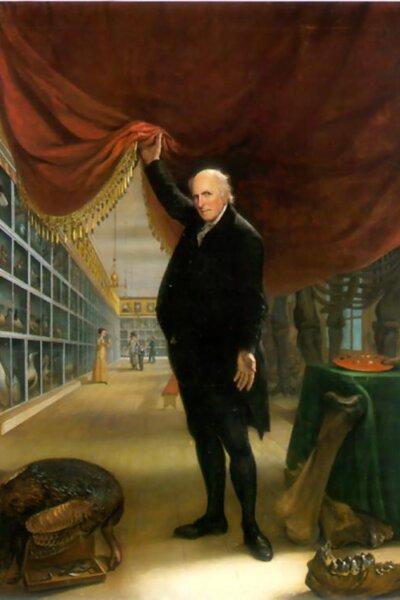
Titian and his family would frequently go on hunting trips to collect the birds that they wanted to study and preserve. Then, they would preserve them taxidermically so that they could be displayed in the museum or, even more valuable to Titian, traded with foreign naturalists for European bird specimens. Together, Charles and Titian were continually improving their methods of mounting these birds, as some of America’s earliest ornithologists.
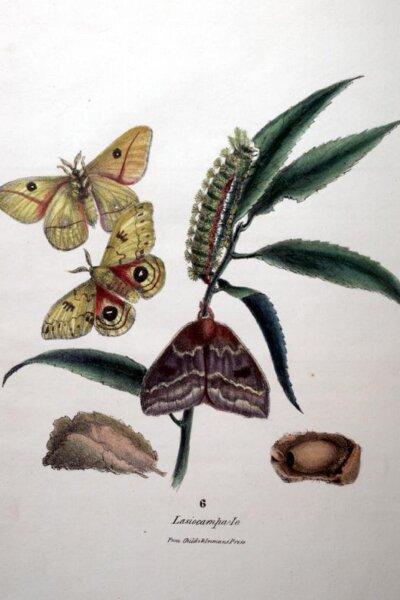
Titian combined his love of art and science, applying them to entomology. As early as 1796, he was working on a manuscript describing all the insects in the United States.
These written descriptions were accompanied by illustrations, which he rendered easily with his artistic training. He was working on this manuscript at the time of his death.
Genius Cut Short
Tragically, the world never saw this young genius’s full potential. On Sept. 18, 1798, Titian died of yellow fever at age 18. This was a common disease in Philadelphia in those days, and he died just two days after contracting the illness.Although Charles had numerous other gifted children, the early death of this beloved son left him greatly grieved.
Titian was clearly on his way to becoming one of America’s foremost scientific minds. By all indications, he was headed toward a brilliant future in ornithology, taxidermy, and scientific documentation through the use of art.
Although he sadly didn’t live to see his full potential realized, the work he did in his short life left an impressive legacy of American ingenuity. He paved the way for generations of natural scientists to come.