It’s the beginning of summer, so that means it’s time for picnics, parades, and fairs. One compelling story about a farm family’s visit to the yearly state fair was adapted into three very different classic films, in 1933, 1945, and 1962, all called “State Fair.”
The story, from a 1932 novel of the same name by Phil Stong, focuses on a farmer’s daughter and son during their weeklong visit to the state fair. Each film reflects the cinematic styles and mores of its era.
Pre-Code Roots
The original novel was scandalous. The story depicts wholesome Iowans who have affairs with much worldlier people they meet at the fair. The movie, made a year later, retained much of that plotline. It was a Fox Film, and Stong himself worked on the screenplay.
Will Rogers plays the father, Abel Frake. As one of Fox Film’s biggest stars, Rogers’s character is a bigger focus in this movie than in subsequent versions.
Farmer Frake is excited about entering his prized Hampshire boar, Blue Boy, in the hog contest. His wife, Melissa (Louise Dresser), is entering her pickles and minced meat in the fair’s cooking contests.
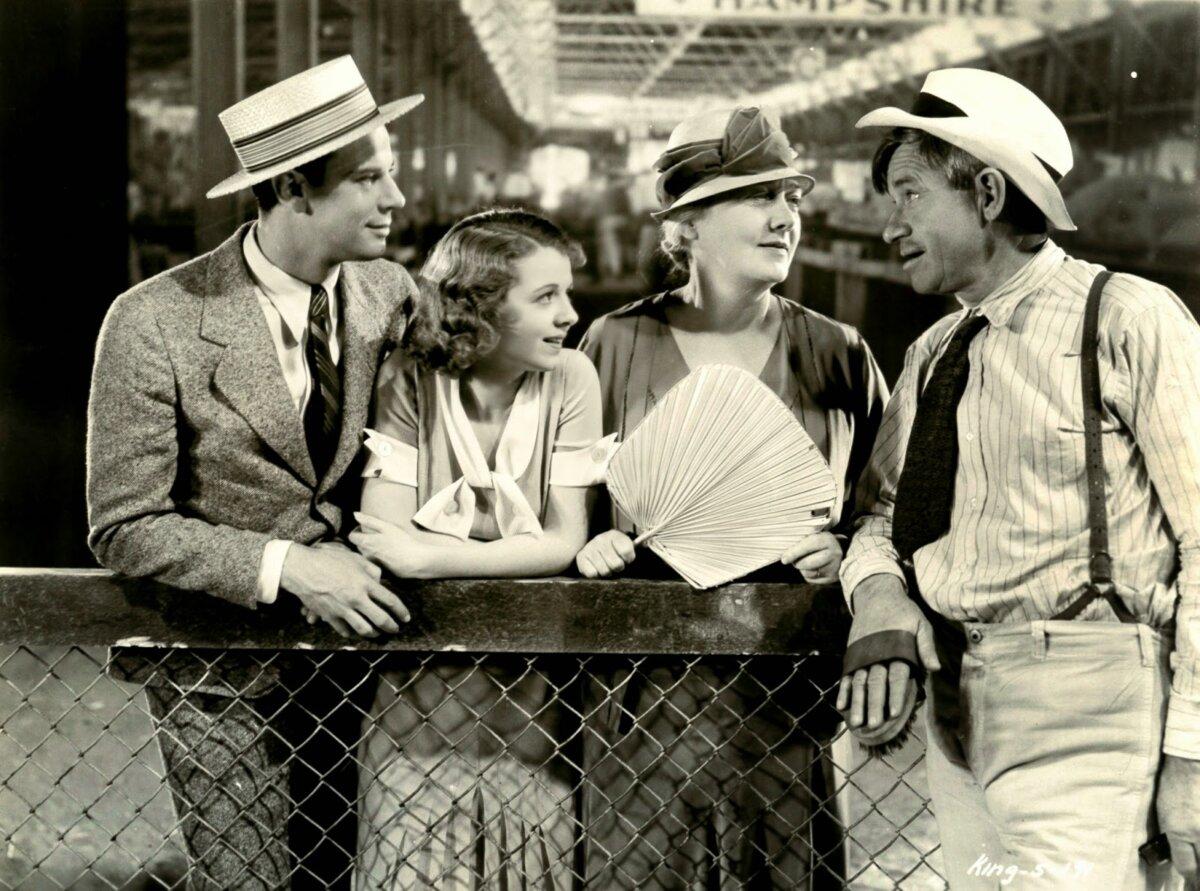
Their two adult children, Margy (Janet Gaynor) and Wayne (Norman Foster), go to the fair looking to have fun. Wayne wants to beat the crooked carnie (Victor Jory) who swindled him at the ring toss the year before. While there, he meets a female acrobat, Emily (Sally Eilers). He takes a liking to the pretty blonde right away, but she quickly lures him into drinking and carousing.
Margy meets handsome young newspaperman Pat Gilbert (Lew Ayres) on the rollercoaster. They feel immediate chemistry, and Margy thinks Pat is much more exciting than her beau back home, Harry (Frank Melton). However, she knows that there have been many women in his life. Can people from such different backgrounds have any future together?
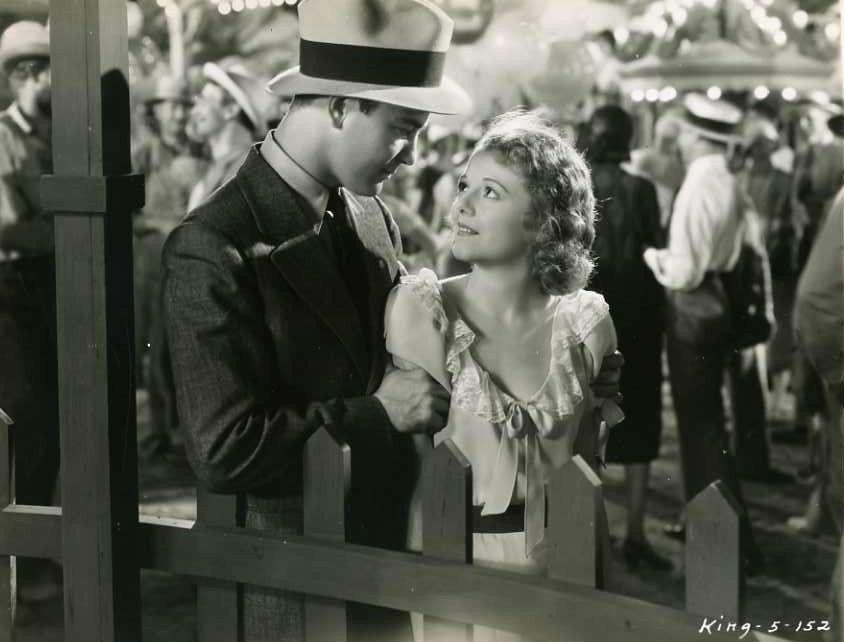
Although the novel was set in the late 1920s, this film is rooted in the Great Depression. Establishing footage was taken at the 1932 Iowa State Fair. It isn’t polished and Hollywood-perfect. Fairgoers look hot, hungry, tired, and a little worn by economic hardship.
Nevertheless, viewers also see the resilient American spirit of the time to stick together and have some homespun fun. An interesting sidenote is that the hog playing Blue Boy was the actual blue prize-winning Hampshire boar at that fair, purchased by the filmmakers for use in the movie.
Wholesome Americana
20th Century Fox remade the story in 1945 as a Technicolor musical. For the score, they hired the hit Broadway team Richard Rodgers and Oscar Hammerstein II to write what would be their only score for a movie, not the stage.
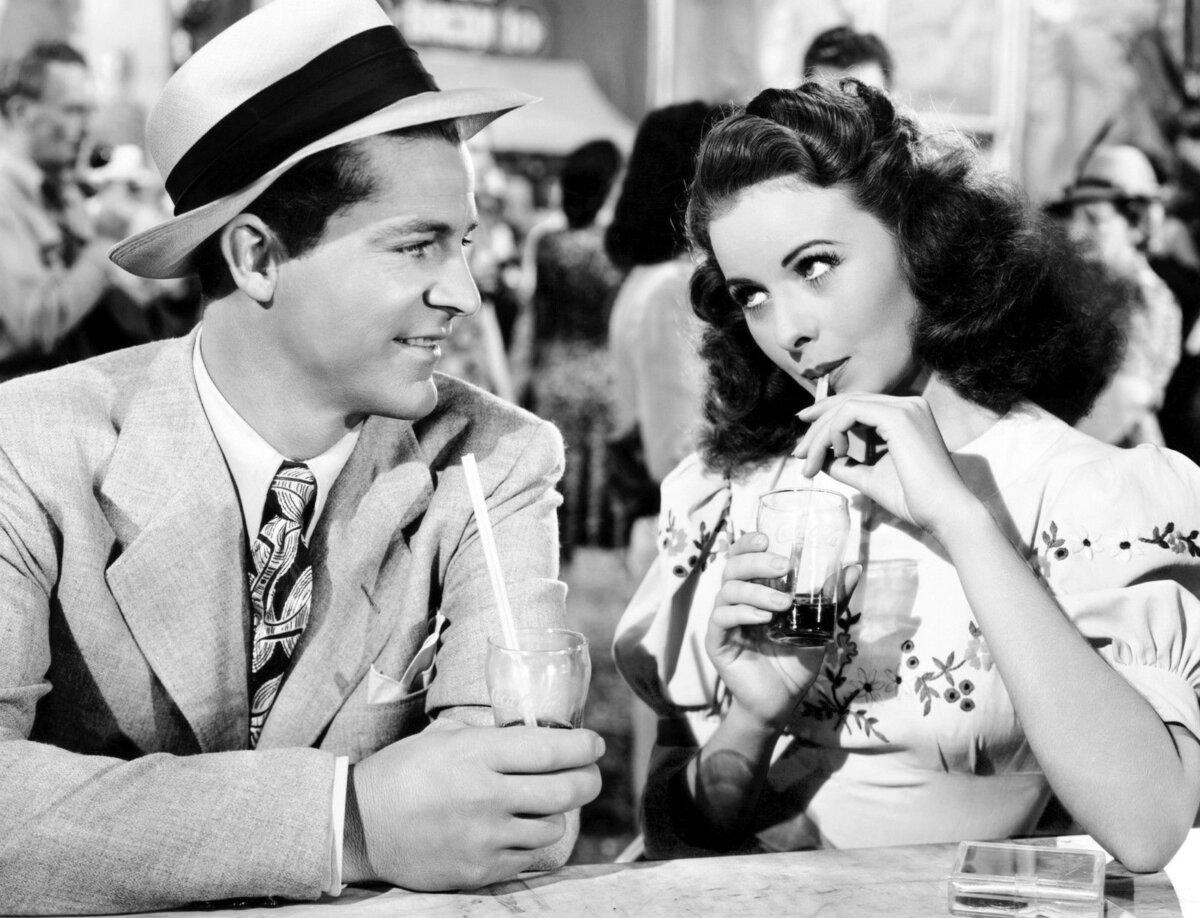
This movie shifted the story’s focus to Margy, played by wholesome rising star Jeanne Crain. She wasn’t a musical performer, so Louanne Hogan overdubbed her singing. Newspaperman Pat Gilbert is played by Dana Andrews, a more dramatic actor best known for appearing in crime films.
Popular radio singer Dick Haymes played Wayne in one of his few film appearances. Instead of an acrobat, Emily is a band singer performing at the fair in this version. The actress in this role, Vivian Blaine, would later become a Broadway star and originate the role of Adelaide in “Guys and Dolls” on stage and screen.
Although Blue Boy and the pickles and minced meat are still important elements of the story, Mr. and Mrs. Frake take a smaller role in this film. They’re played by character actors Charles Winninger and Fay Bainter.
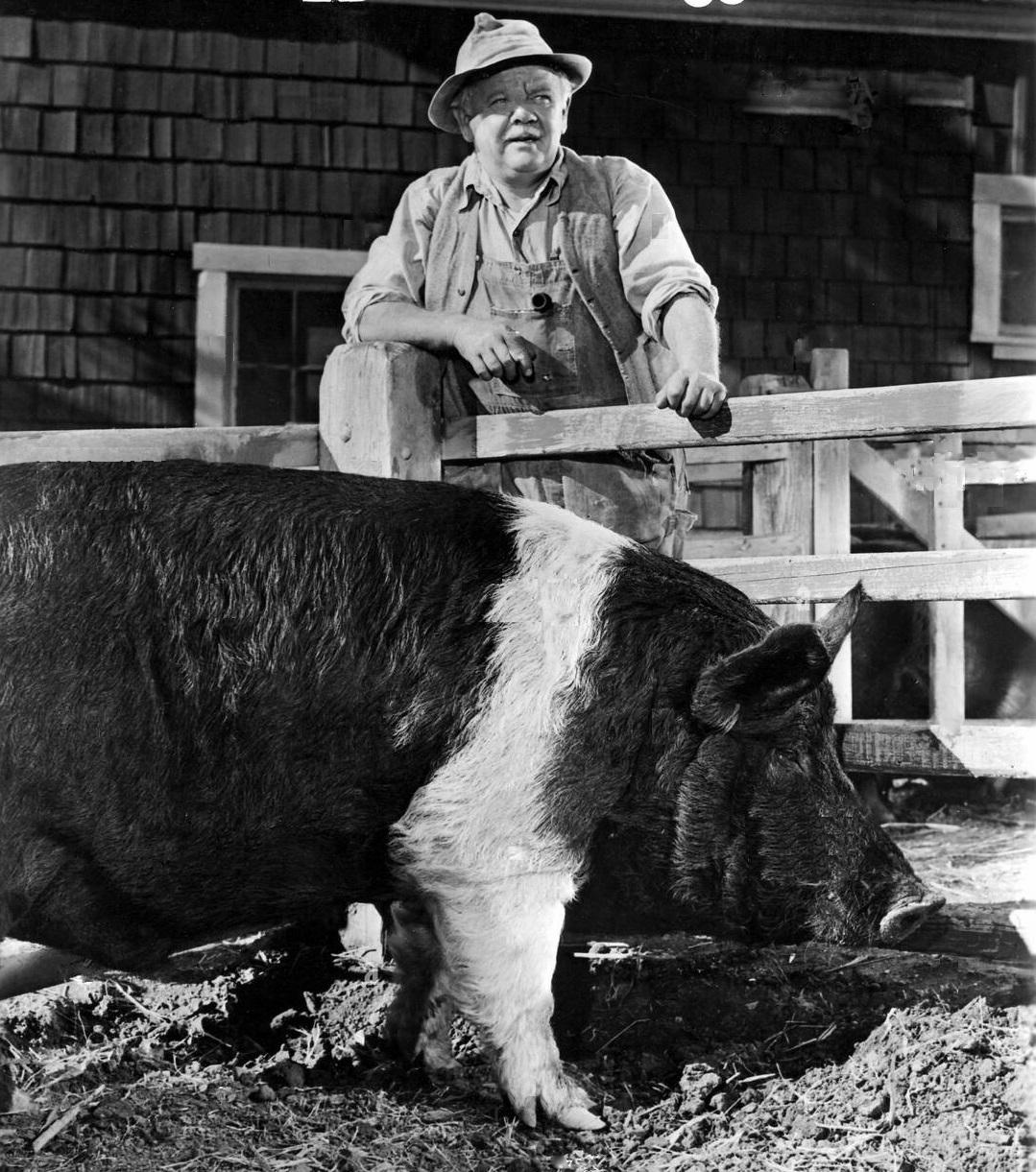
While the 1933 film eliminated Margy’s affair while retaining Wayne’s, the 1945 remake cleaned up both romances. Instead of being a scantily clad floozy, Blaine’s Emily is a sincere, respectable young woman who truly cares for Wayne. Their brief romance is entirely wholesome but ultimately ill-fated because she is stuck in a failed marriage.
Pat is characterized as mature, well-traveled, and perhaps a trifle cynical, but he doesn’t talk about all the women he’s known, like the earlier version of this character.
The memorable, engaging songs are the heart of this film. Not filmed at a real fair, this movie didn’t focus as much on realism. Instead, it’s a dreamy tribute to the heartland of Americana. The musical numbers are not stagey, but were worked into the story naturally. Nevertheless, it’s the most theatrical in its almost fairytale aesthetic.
Margy’s colorful, full-skirted costumes are evocative of traditional European garb, and there’s no mention of World War II or the fact that the Iowa State Fair didn’t even take place from 1942 to 1945. This musical wonderland focuses on the decency of average Americans.


Reviving Scandal
The least acclaimed of the three “State Fair” films was released in 1962. Although technically an adaptation of the original novel, it’s actually a remake of the 1945 film as a color musical.
The film incorporates most of the Rodgers and Hammerstein songs and adds a few new numbers that Rodgers wrote by himself. Unfortunately, some of these songs demonstrate why he usually left the lyrics to his late collaborator.
The film changes the setting from Iowa to Texas. A good deal of the production was filmed at the real Texas State Fair. As a result, the 1945 song “I Owe Iowa” had to be replaced with the new “The Little Things in Texas.”
The focus shifts to Wayne, who’s played by clean-scrubbed singing star Pat Boone. Although the story’s tone had shifted drastically over 30 years, this film incorporated some of the more scandalous elements of the original book by making the relationships between the two young couples more questionable.
Ann-Margret played Emily, more of the leading lady than Margy. She’s a scantily clad showgirl who starts as a shameless flirt but seems to end up genuinely caring for Wayne. It’s clearly implied that they have an illicit affair. It’s a bit surprising to see Boone, America’s favorite milk spokesman, doing passionate, shirtless love scenes.
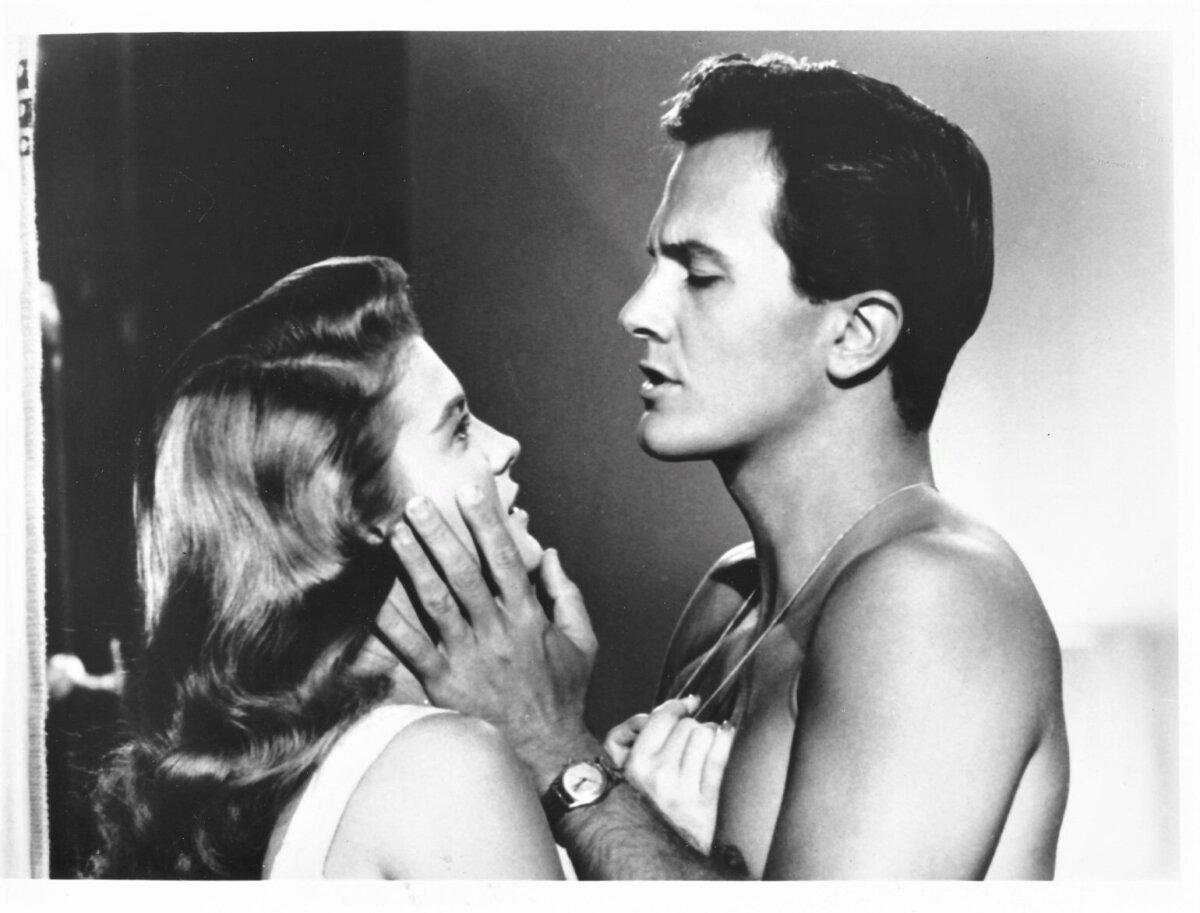
Pamela Tiffin played Margy in one of her first roles. Popular singing star Bobby Darin was an unlikely choice for her leading man, who was no longer a newspaperman but a slick young TV host renamed Jerry Dundee.
Darin introduced the only new song, which found success outside the film, “This Isn’t Heaven.” Jerry’s is the most licentious version of the character, making very aggressive advances toward Margy, whose youth and inexperience are emphasized.
One of the biggest names in the film is Alice Faye, a musical star of the 1930s and 40s who came out of retirement to play Melissa Frake. Naturally, she needed a couple of new songs to highlight her singing.
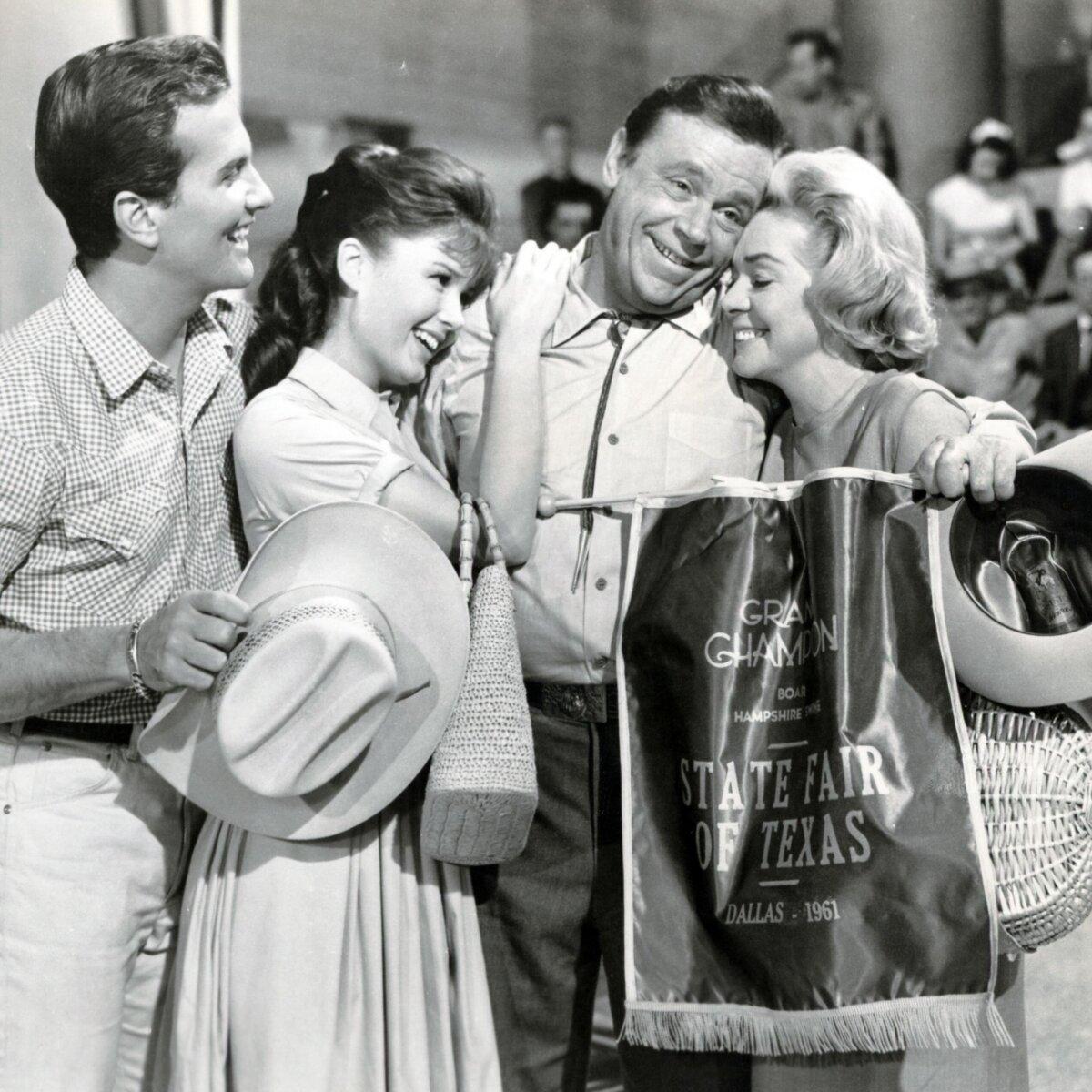
Faye’s portrayal is decidedly less rural than the two previous Mrs. Frakes; her fashion is evocative of the current Texas-born second lady, “Lady Bird” Johnson. Tom Ewell was definitely out of place as Abel Frake, convincing in neither role as a farmer nor a Texan. Undoubtedly, the greatest embarrassment of this film is Ewell’s tunelessly sung lullaby to Blue Boy, which could only rightfully be titled “Serenade to a Hog.”
Reflections of the Times
All of these movies reflected the climate in Hollywood and the country at large when they were made. In 1933, Hollywood was in the midst of its “Pre-Code Era,” a brief period in the early 1930s when talking pictures were flagrantly salacious because few moral guidelines were enforced.
By 1945, the Motion Picture Production Code (commonly misnamed the Hays Code) was being strictly enforced by the Production Code Administration under Joseph Breen, resulting in years of decent yet highly entertaining films that represented American morals.
By 1954, Breen had retired and been replaced by the much more lenient Geoffrey Shurlock, under whose watch the code quickly lost its ability to hold Hollywood to high standards.
Viewed on their own, each of these films is an entertaining watch, depending on your personal tastes in films and music.
If you’re looking for a clean-scrubbed, heartwarming celebration of summer fun for the whole family, the 1945 “State Fair” wins the blue ribbon.
What arts and culture topics would you like us to cover? Please email ideas or feedback to [email protected].