This copy is for your personal, non-commercial use only. Distribution and use of this material are governed by our Subscriber Agreement and by copyright law. For non-personal use or to order multiple copies, please contact The Epoch Times Reprints.
Maybe it was John Keats’s presentiment of his own early death that made him so concerned with the questions of transience and eternity. Like many great poets, Keats asked: How can we make beauty last? Is beauty always destined to die, or does it live on in some form forever?
In “Ode to a Nightingale,“ written in the spring of 1819, Keats described our world with “Where Beauty cannot keep her lustrous eyes/ Or new Love pine at them beyond to-morrow.” The ode presents an acute awareness of the passing nature of all things and our inability to capture and preserve the goodness and beauty that surround us.
But another of Keats’s poems, “Ode on a Grecian Urn,” enters into dialogue with “Ode to a Nightingale” in a somewhat different way. In “Nightingale,” the lover who won’t long pine after his love and her fading beauty meets a direct and contrasting counterpart in “Grecian Urn.” Describing an amorous scene depicted on a piece of Greek pottery, Keats writes:
Bold Lover, never, never canst thou kiss,Though winning near the goal yet, do not grieve;She cannot fade, though thou hast not thy bliss,For ever wilt thou love, and she be fair!
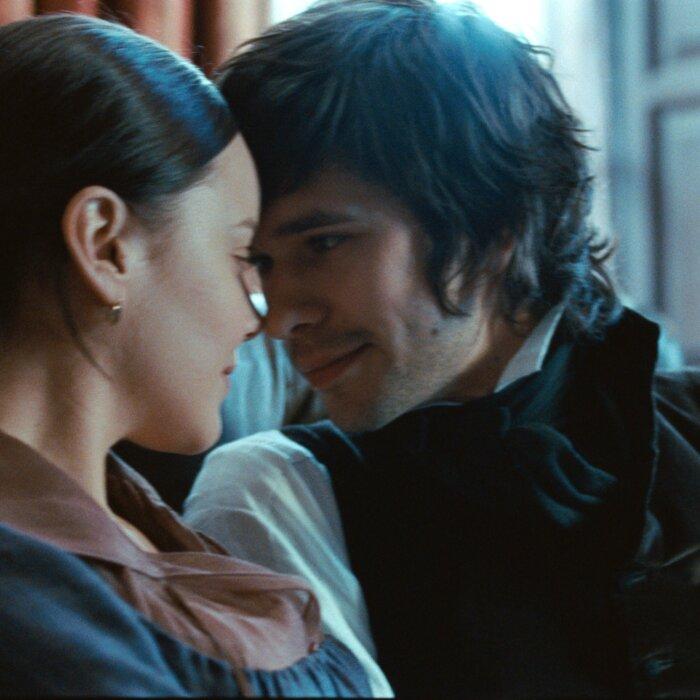
The lover and beloved who live as slaves to the decimating processes of time in “Nightingale” appear free of time’s cruel tyranny in “Grecian Urn.” She will never lose her beauty, nor he his love. This might be the deepest human dream: that all that is best and most beautiful become imperishable and bound in love.
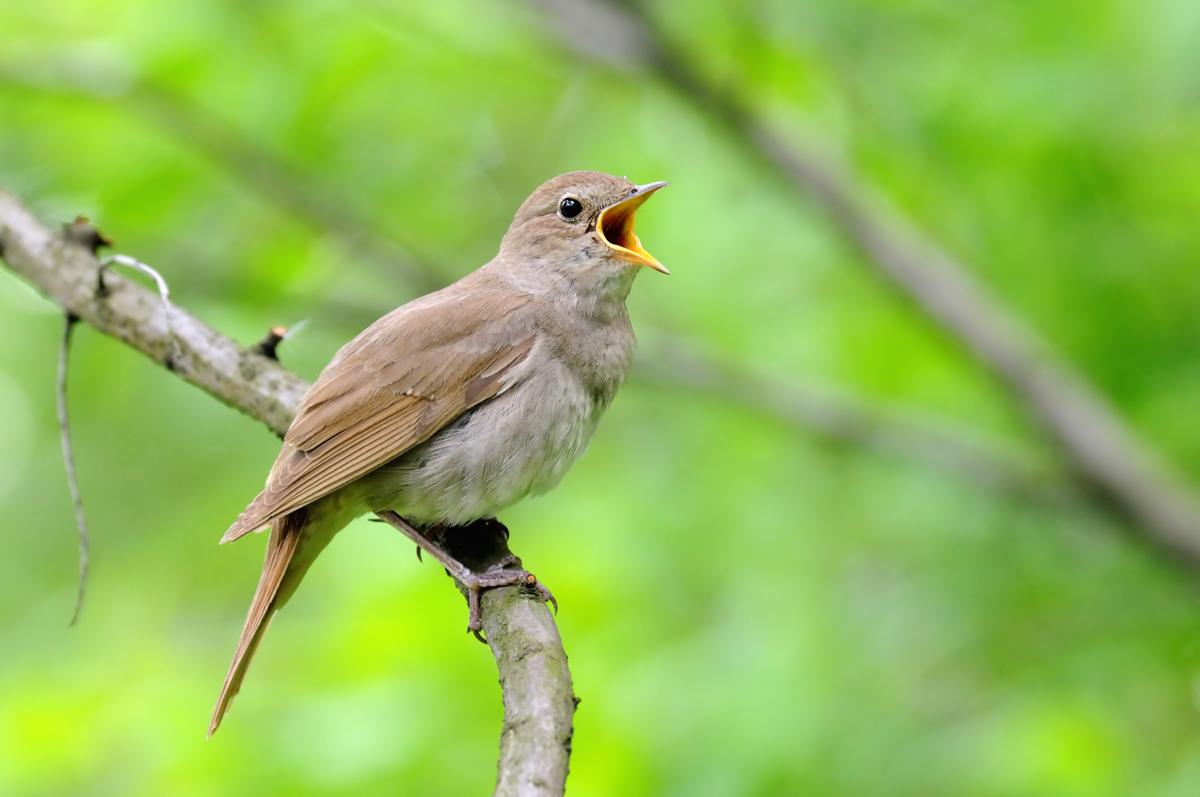
A nightingale hears the plight of a poor student, and gives the ultimate gift. Victor Tyakht/Shutterstock
Many Thanks to a Museum
What facilitates this transformation of the mortal lovers in “Nightingale” to the immortal ones in “Grecian Urn”? The power of art itself. Keats wrote “Ode on a Grecian Urn” as a result of a visit to the British Museum.
As Camille Guthrie wrote for The Poetry Foundation:
“[Keats] found himself astonished and preoccupied by the grand and alien classical Greek works of art he encountered. Haunted by the loss of his mother and brother and entering a period of meditation on aesthetics, he found himself ready to write poems about . . . ‘the irresolvable contrarieties of experience’ and the transformative powers of the imagination.”
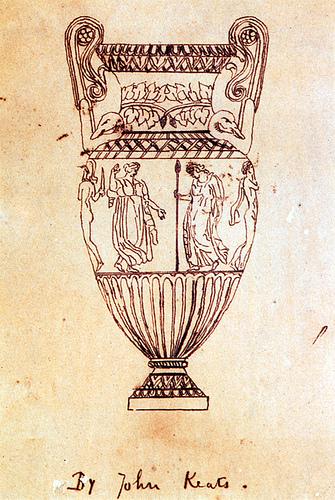
Keats reflected on the Townley Vase, the Elgin Marbles, the works of Claude Lorrain, and the Neo-Attic Sosibios. In the ancient artworks, Keats found a timelessness that contrasted sharply with the mortality and transience experienced in his own life.
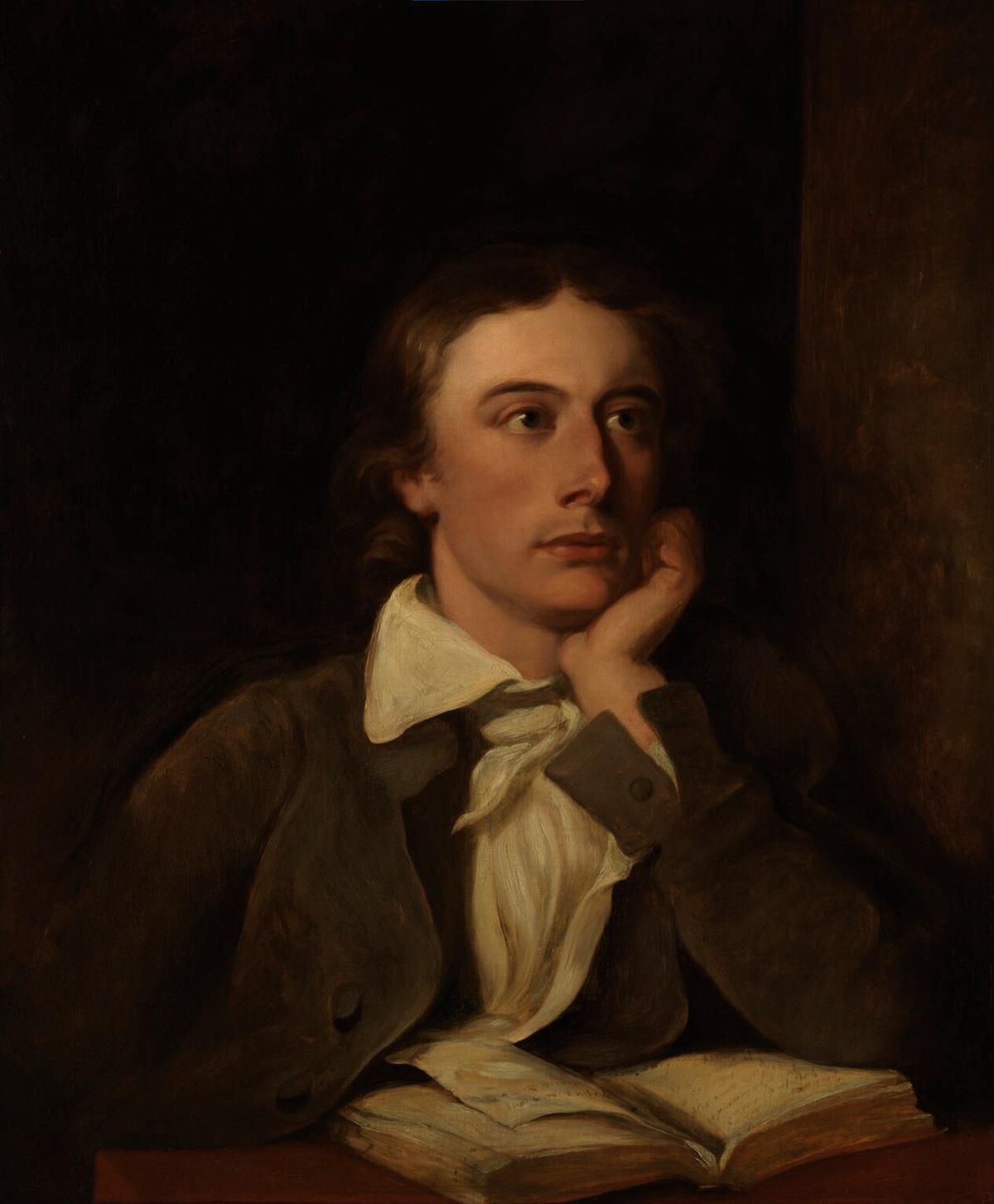
A posthumous portrait of John Keats, circa 1822, by William Hilton. Public Domain
The opening stanza of the poem expresses breathless wonder at the scene etched on the urn to which the poem is addressed:
What leaf-fring'd legend haunts about thy shapeOf deities or mortals, or of both,In Tempe or the dales of Arcady?What men or gods are these? What maidens loth?What mad pursuit? What struggle to escape?What pipes and timbrels? What wild ecstasy?
The stanza’s rapid-fire questions reflects the speaker’s amazement, which causes him to almost stumble over his own words. In addition to highlighting amazement, the interrogatory nature of much of the poem also mirrors the mysteries of beauty, art, and time—the unknown or half-known realm.
As Dennis Quinn explained in his book “Iris Exiled: A Synoptic History of Wonder,” wonder is a kind of fearful awareness of our ignorance in the face of something powerful, mysterious, and of something somehow beyond us.
In “Ode on a Grecian Urn,” Keats saw in the urn’s artwork a reflection of all of human life, especially its passion and its ritual. It is this—alongside clay’s ability to capture and immortalize it—that strikes the poem’s speaker, transfixing him in wonder. The “mad pursuit” and “wild ecstasy” of stanza one aren’t images of erotic desire–or not solely that, at least.
A drawing of the Sosibios vase, 1819, by John Keats. Public Domain
The speaker sees in these images a glimpse of something at the core of human life, the great chase after ever-elusive fulfillment and beauty, symbolized by the maidens. The “struggle to escape” can be read as the maidens’ flight from their pursuers, but also as humanity’s desire to break the bonds of time and corruptibility so eloquently described in “Ode to a Nightingale.”
The ecstasy is several things at once: It’s the frolicking of the figures on the urn, but also the yearning of the human spirit for transcendence and permanence. These qualities are mysteriously embodied in the urn itself because it is a permanent form of beauty, the very thing we long for in our day-to-day lives.
Here, we meet one of the purposes of art: to capture the essence of something and immortalize it. This is one reason we find consolation in art. It forms a bulwark against time.
In the fifth stanza, still asking questions, the speaker reveals more of the scene decorating the urn:
Who are these coming to the sacrifice?To what green altar, O mysterious priest,Lead’st thou that heifer lowing at the skies,And all her silken flanks with garlands drest?What little town by river or sea shore,Or mountain-built with peaceful citadel,Is emptied of this folk, this pious morn?
Under the poet’s gaze, the still and silent scene on the urn comes to life with the color of green and the sound of lowing. The little town takes on a universal significance. It’s being “by a river” or by “a sea shore” or “mountain built” implies that it could be anywhere, that it’s, in a sense, universal. This isn’t merely a city; it is thecity; the city of man, the city of the world in all places. Thus, the urn presents a universal picture of both a pastoral and an urban ideal—perfect, beautiful, and timeless.
The best literary parallel for this passage is the great shield of Achilles in Homer’s “Iliad.” Crafted by the god Hephaestus, it has magical images of the full range and breadth of human life: people singing, dancing, reaping, harvesting, fighting, living, and dying. In both cases, the individual cities, whether carved on metal or painted on terra cotta, are meant to stand for all human cities, for civilization itself.
As a permanent picture of the archetypal human culture, it draws us “out of thought/ as doth eternity,” as Keats says in “Grecian Urn.” This is artistic ecstasy—a word derived from the Greek “ekstasis,”meaningto “stand outside or transcend oneself.” For a moment, through the power of art, the poet has slipped out of the particularities of time and place and falls into the very ecstasy that the urn describes.
Yet the speaker draws us up short with a surprising turn. He calls the urn a “Cold Pastoral.” For all its beauty and timelessness, it remains cold clay—distant, frozen, silent, idealized, and inert. The final stanzas involve a carefully balanced tension: art immortalizes and consoles, granting a flickering glimpse of something eternal, but it is not alive. It isn’t the same as life, which goes on, and still holds all its griefs.
“When old age shall this generation waste/ Thou shalt remain, in midst of other woe/ Than ours, a friend to man.” After the ecstasy of the artistic experience, the poet returns to himself and goes on with his life, which gives way to old age and decay. The beautiful urn will remain unchanged, down through the ages, enlightening future generations. But that doesn’t solve the dilemma of the individuals confronting their own mortality.
"Time Orders Old Age to Destroy Beauty," circa 1746, by Pompeo Girolamo Batoni. Oil on canvas; 53 1/5 inches by 37 11/12 inches. The National Gallery, London. Public Domain
Or does it? The final lines of the poem may offer an answer, albeit a cryptic one. “Beauty is truth, truth beauty,—that is all/ Ye know on earth, and all ye need to know.” Are these lines a kind of naive trap, not to be taken seriously, as some critics suggest? Or does Keats genuinely mean them?
A too literal reading of these lines reduces truth to a subjective sentimental experience–wherever one senses beauty, one finds the truth. I suspect Keats’s understanding of the relationship between truth and beauty was more complex than that, however. As Matthew Arnold explained in “Essays on Criticism,”
“‘The yearning passion for the Beautiful,’ which was with Keats, as he himself truly says, the master-passion, ... is an intellectual and spiritual passion. ... And in his last days Keats wrote: ‘If I should die, I have left no immortal work behind me–nothing to make my friends proud of my memory; but I have loved the principle of beauty in all things, and if I had had time I would have made myself remembered.’”
So what of theurn? Has the urn really failed to make beauty last, when it comes to the life of the individual, which continues just as transient as before, even after the individual experiences the Grecian urn? Is it just a cold, mocking echo of an ideal that doesn’t exist in a world forever passing away? I think not.
By distilling and immortalizing the essences of beautiful things—love, human figures, trees and vines, ceremonies, and little towns by the sea—the work of art makes it easier for the viewer to recognize beauty in the real world. The urn reveals the “principle of beauty in all things” that Keats so loved and that is really active around us.
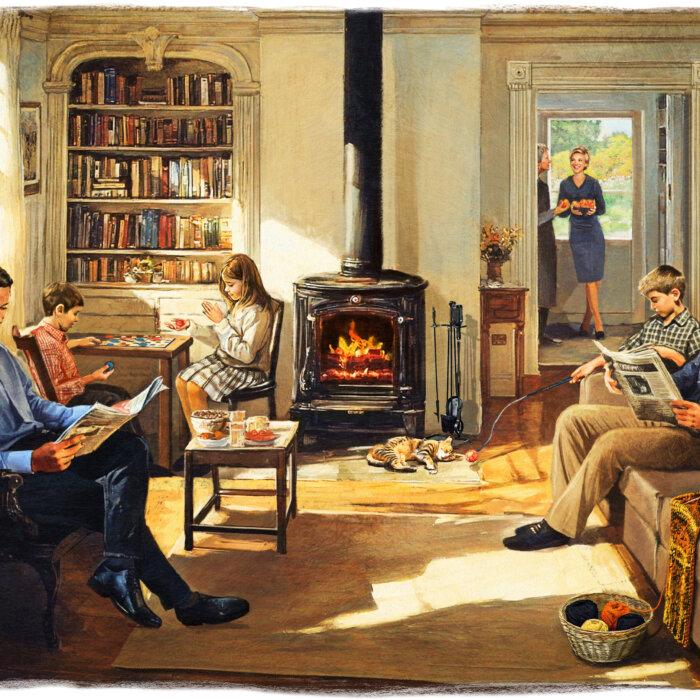
An aesthetic view of the world enables people to transcend their circumstances. Arcady/Shutterstock
In this “principle of beauty,” the particular can partake of the universal; the timebound can participate in the timeless. The person able to see this principle in things has discovered an inexhaustible source of beauty, even if its particular manifestations are transient. Keats understood that truth and beauty really do endure, despite changing appearances. Through this realization, we can step toward reconciliation with transience.
What arts and culture topics would you like us to cover? Please email ideas or feedback to [email protected]
Before becoming a freelance journalist and culture writer, Walker Larson taught literature and history at a private academy in Wisconsin, where he resides with his wife and daughter. He holds a master’s in English literature and language, and his writing has appeared in The Hemingway Review, Intellectual Takeout, and his Substack, The Hazelnut. He is also the author of two novels, “Hologram” and “Song of Spheres.”