Hanging above my work desk is a painting of a young woman standing beside a wind-tossed sea. Her deep teal dress matches the teal of the waves curling and crashing toward the rocky shore. They are driven by the same powerful wind that scatters her rich-red hair about her face. She’s gazing out to sea, where a magnificent galley is floundering and splitting in the storm as it’s flung against jagged, ebony cliffs. You can almost feel the gale blowing toward you, carrying the scent of another world.
This is John William Waterhouse’s painting “Miranda,” which depicts a key character from Shakespeare’s “The Tempest.” The name Miranda was invented by Shakespeare, and it means “to be wondered at.”
It’s a fitting name for the character depicted in one of Waterhouse’s most famous paintings. His art glows with wonder: at the beauty of the female form, at the power of myth, at the quiet grandeur of the natural world, and at the twilight magic of half-known worlds.

Artistic Beginnings
Waterhouse was born in Rome in 1849 to two painters, William and Isabella Waterhouse. His birth coincided with the emergence of the Pre-Raphaelite Brotherhood, an art movement that reacted against the rigid styles of the Royal Academy and sought to return to the symbolism, vibrant colors, careful detail, and elaborate compositions of late medieval art, particularly the Quattrocento Italian style. They emphasized painting directly from nature with serious themes of a religious and literary nature.Waterhouse returned to England with his family in the 1850s, though he made trips back to Italy later in life. On one of these trips, Waterhouse and another painter were enlisted to paint a portrait of a dying Italian boy so his parents would have something to remember him by.
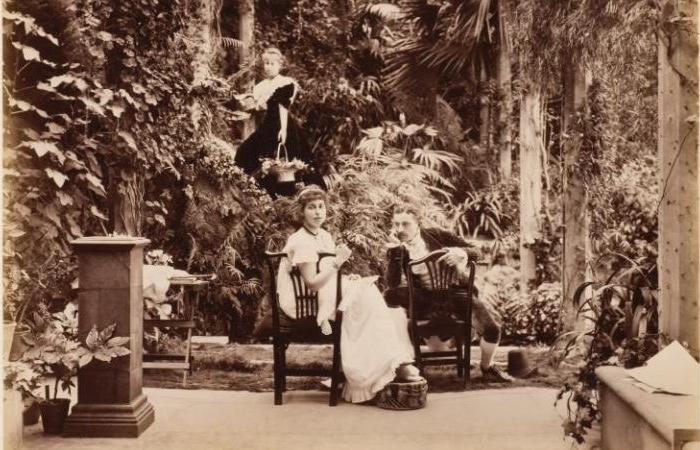

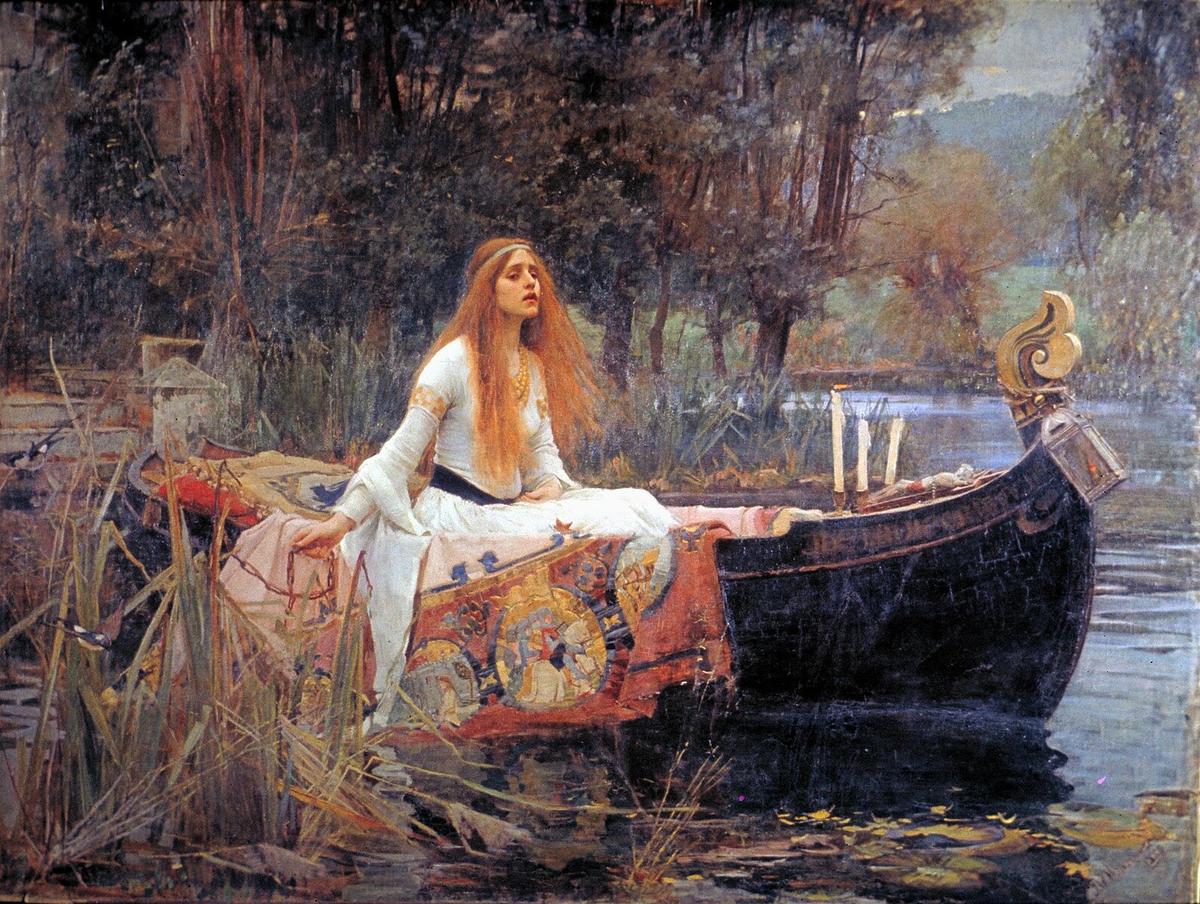
In England, Waterhouse assisted his father in his studio until he entered the Royal Academy art school in 1870. Early on, his work reflected the classical themes that were popular at the time. While he continued to paint mythical scenes, such as Ulysses’s encounter with the sirens, he also embraced the Pre-Raphaelite interest in medieval subjects and the medieval-inspired literature of writers such as Alfred, Lord Tennyson. For instance, in 1888 he exhibited his now-famous “The Lady of Shalott,” a subject drawn directly from the Arthurian-inspired poetry of Tennyson.
The tragic Lady of Shalott appeared again in Waterhouse’s paintings in a 1915 rendition. She sits at her loom, which she uses to weave images of the world reflected in a mirror. Waterhouse took the title for this painting directly from Tennyson’s verse: “ ‘I Am Half Sick of Shadows,’ said the Lady of Shalott.”
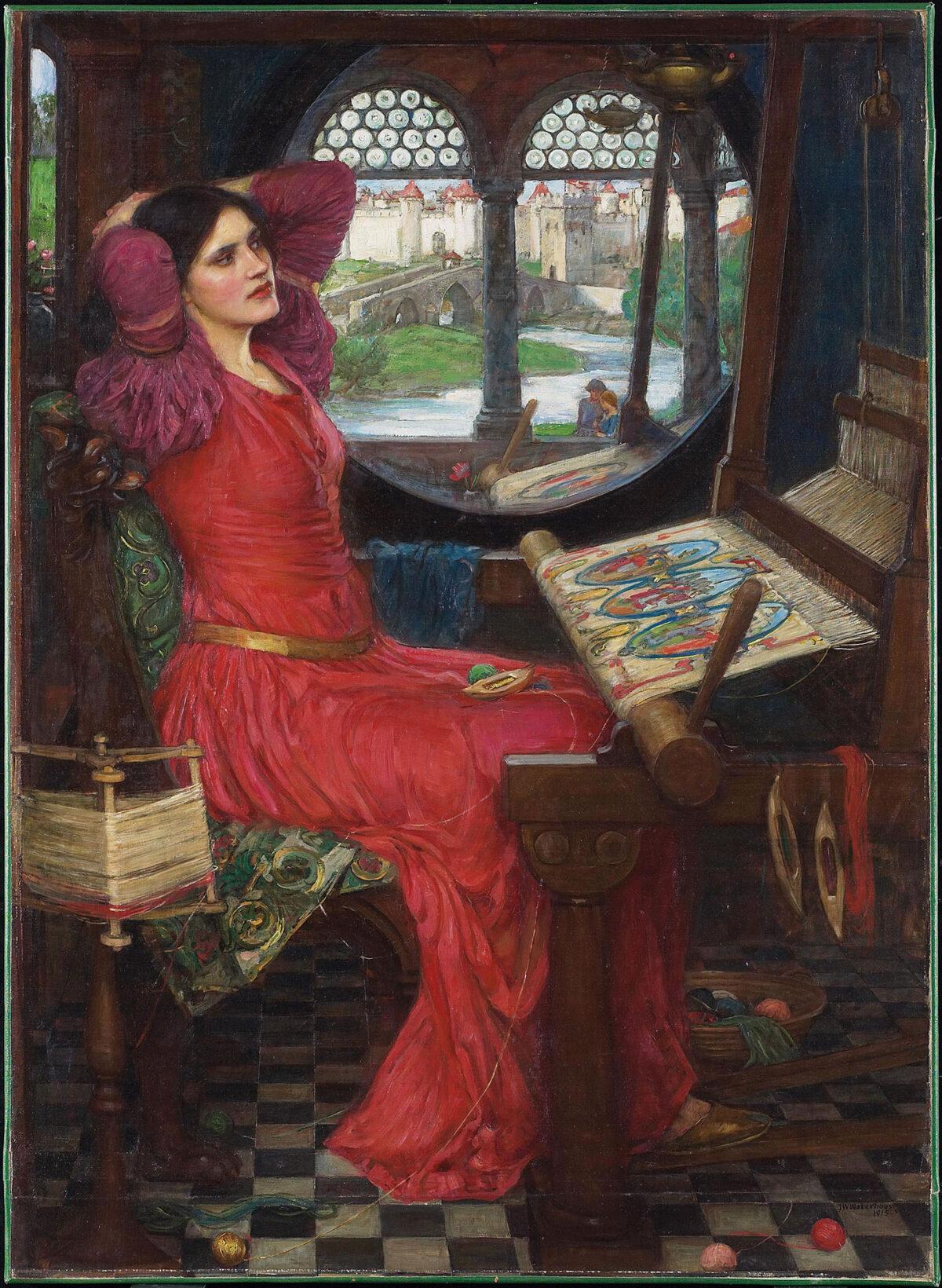
"'I am half sick of shadows,' said the Lady of Shalott," 1915, John William Waterhouse. Oil on canvas. Art Gallery of Ontario, Toronto. Public Domain
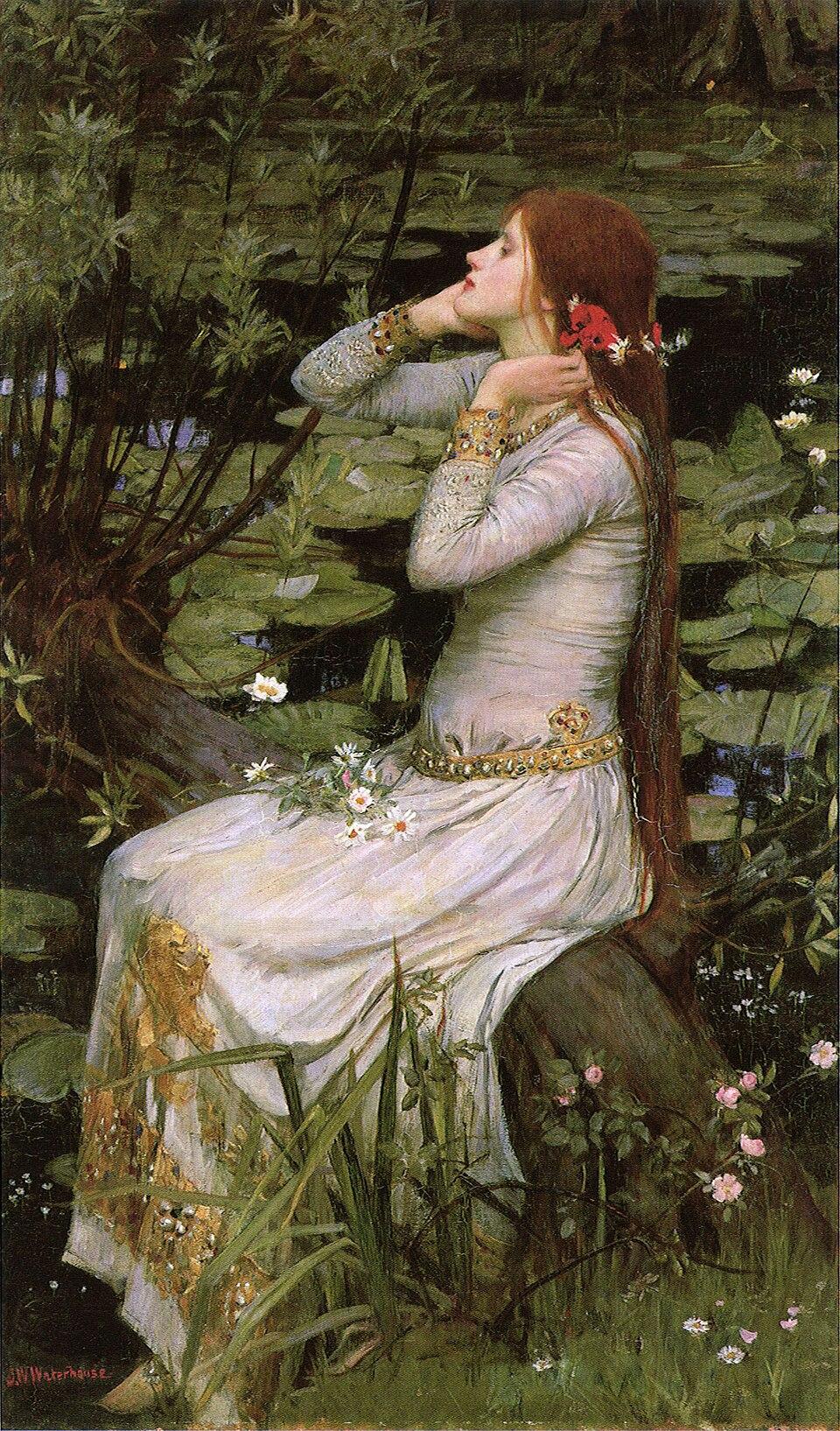
In 1885, Waterhouse became an associate of the Royal Academy and offered an 1888 painting “Ophelia” for his RA diploma (in place of another painting that wasn’t completed in time). “Ophelia”—another Shakespeare heroine—was a favorite subject of Waterhouse’s; he painted three different versions of her, one in 1889, one in 1894, and one in 1910.
The first depicts her lying somewhat listlessly in a woodland field of flowers, her white dress glowing intensely against the green. In the second, she sits on a log beside a lily pond, smoothing back her hair and fiddling with flowers in the final moments before her tragic death. Her costly dress contrasts with the wild background, though its wet and disheveled state, as well as the flowers in her lap and hair, begin to blend her into that wildness. This shows her transition from the civilized court to the wild woodlands. It in turn reflects her transition from sanity to madness and from life to death. The 1910 depiction shows Ophelia striding toward the viewer, even more abundantly adorned with flowers, an intense and troubled expression on her face. She is about to step into the water.
An Artistic Life
In 1883, Waterhouse married Esther Kenworthy, and the couple took up residence at Primrose Hill Studios. They had no children. We don’t know much about Waterhouse’s private life as only a few of his letters survive. However, a fellow Primrose Hill artist did record that “Waterhouse’s studio was a never-failing place of meeting, and he and his wife the best of hosts.”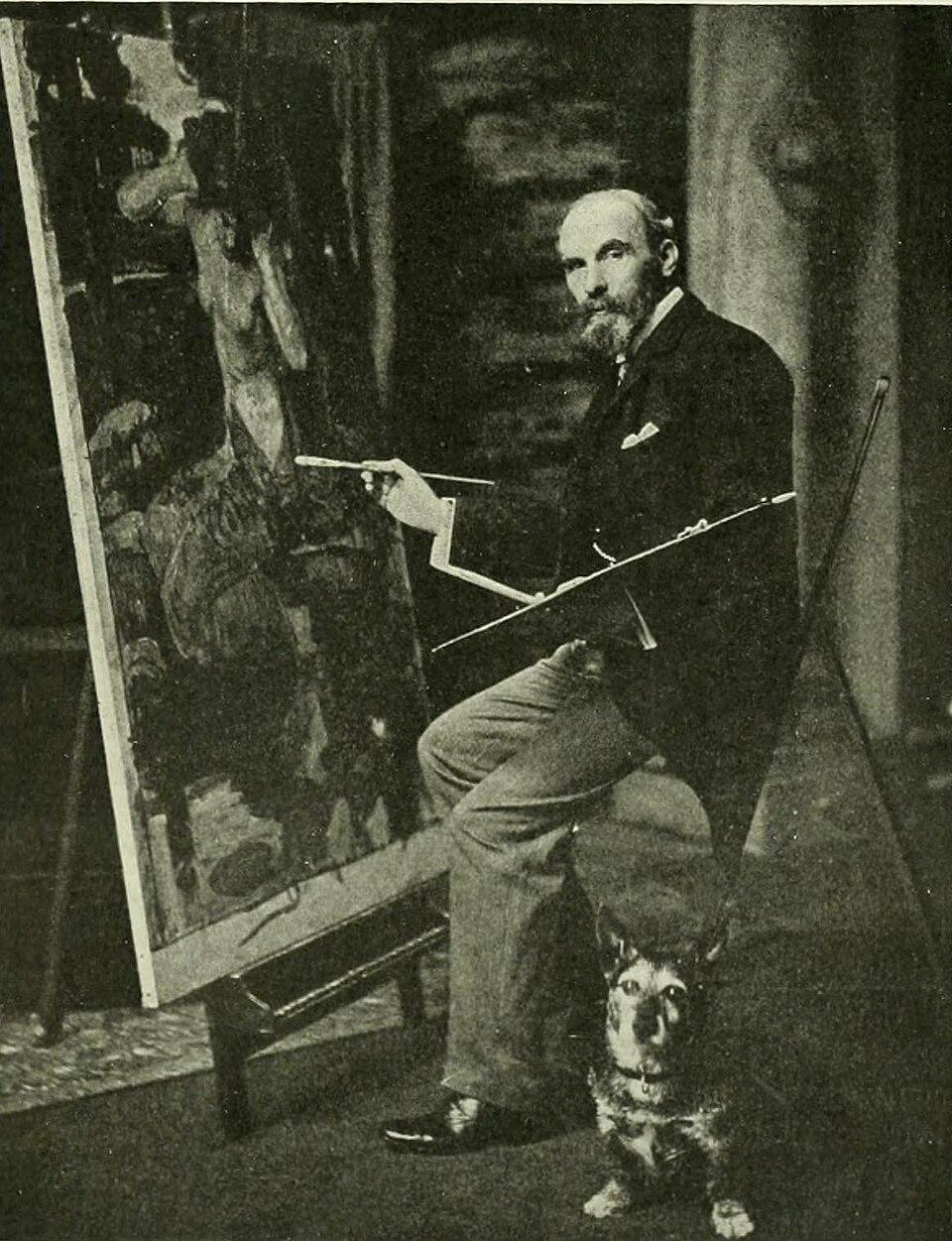
John William Waterhouse in his studio, circa 1912. (Public Domain)In 1901, Waterhouse moved to St John’s Wood and he served on the advisory council of the St. John’s Wood Art School, mentoring younger artists. He continued to paint into old age despite his failing health. “Miranda” dates from this period (1916), just a year before his death in 1917 from cancer. His work—along with most Victorian painters—fell out of favor with the transition into more modern art styles in the early 20th century, but his work experienced a revival of popularity in the late 20th century.
In 1886, The Art Journal captured well the appeal of Waterhouse’s work: “Mr. Waterhouse adds to his designs a certain mystic suggestion—a touch of that sad wonderment which troubles the deep thinker.”
Waterhouse certainly had an eye for the mystical and the wonderful, particularly as it is expressed in myth, legend, and poetry. He did an extraordinary job bringing to life many of the greatest works of English literature through his vibrant paintings that continue to entrance viewers today.