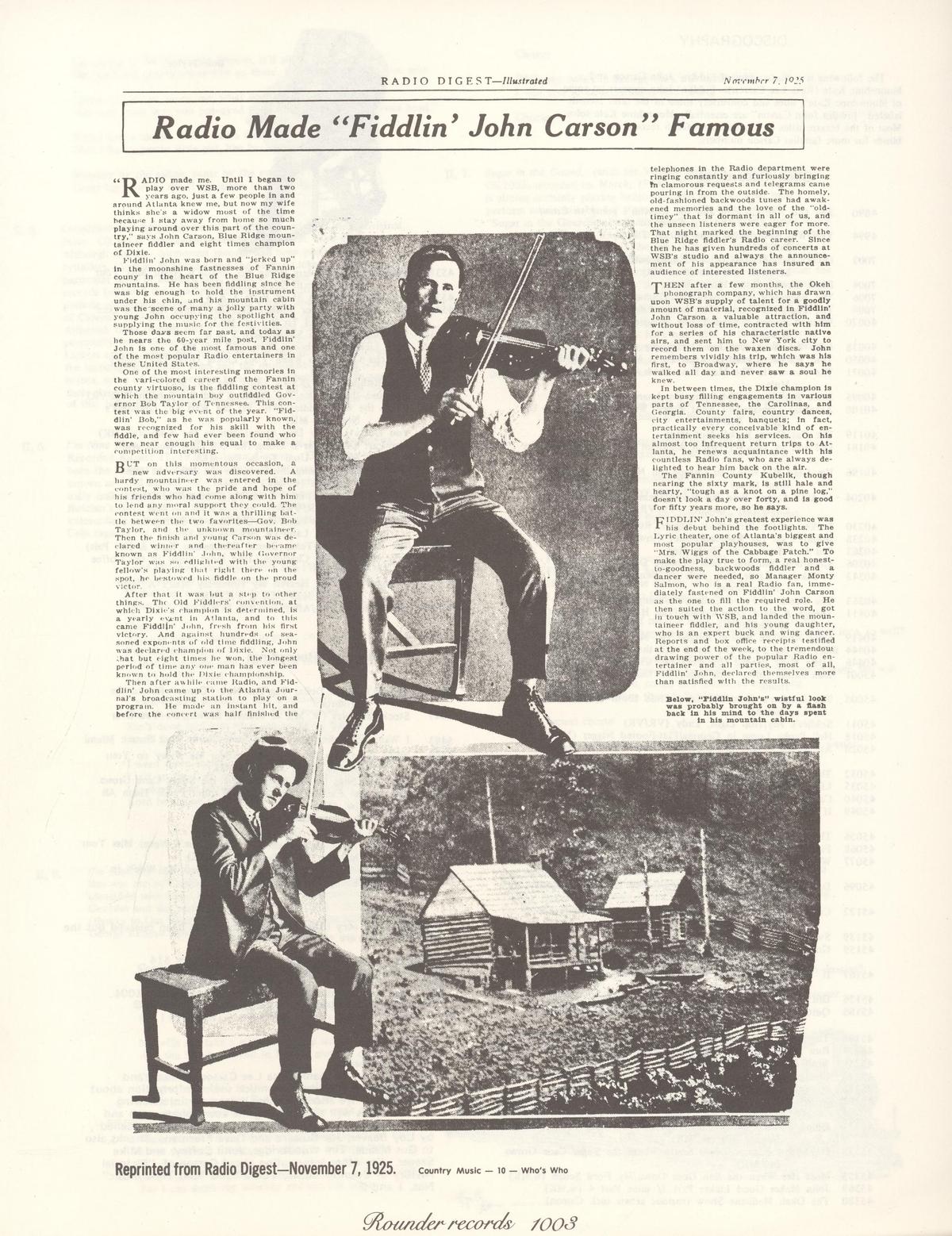
Country music’s earliest, most popular recording sounds different than today’s country hits. When Fiddlin’ John Carson recorded “The Little Old Log Cabin in the Lane” in 1923, he didn’t realize the Appalachian-tinged tune would become a timeless part of the genre’s history. His producer, Country Music Hall of Fame inductee and businessman Ralph Peer, ordered a mere 500 copies of the song to be distributed for sale.
The record contained one other song played by the fiddler, “The Old Hen Cackled and the Rooster’s Going to Crow,” but it was “The Little Old Log Cabin in the Lane” that stole the show. When Fiddlin’ John Carson’s copies quickly sold out, Peer hired him for more recording sessions. What would become the country music genre was introduced to a mass audience in America for the first time.
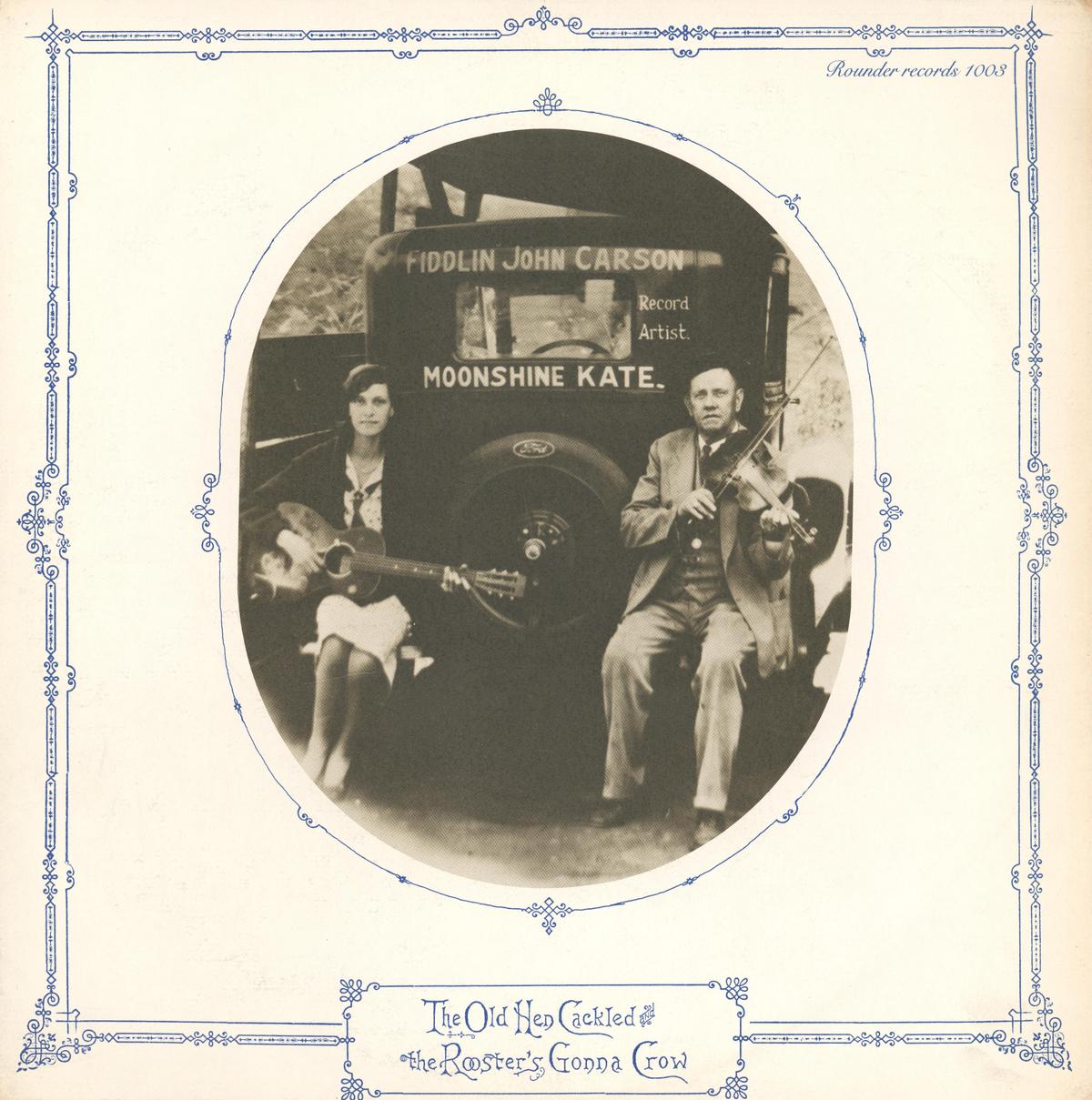
Carson’s playing is distinctly Appalachian, but the performer spent much of his time in Georgia. His lineage traces back to Ireland, a country that influenced the formation of the country music genre.
America experienced an influx of Irish immigrants from the 17th century to the 19th century. Populations like the Ulster-Scots were originally from Scotland, but they lived in the Ulster area of Ireland for some time before immigrating to the United States. In the 1600s, English and native Irish populations sailed to America, too.
When the Great Potato Famine struck Ireland in 1845, more sought refuge across the Atlantic.
‘The Most American Tradition in Music’
While covering the history of country music, the British Country Music Festival featured a quote by Ray Benson, the frontman of Western swing band Asleep at the Wheel:
“Fiddling is an American tradition. I think it’s the most American tradition in music, and it goes back to our founding. They all brought their fiddles over because it was easier to carry a guitar and a fiddle than a piano and a brass band,” Benson said.
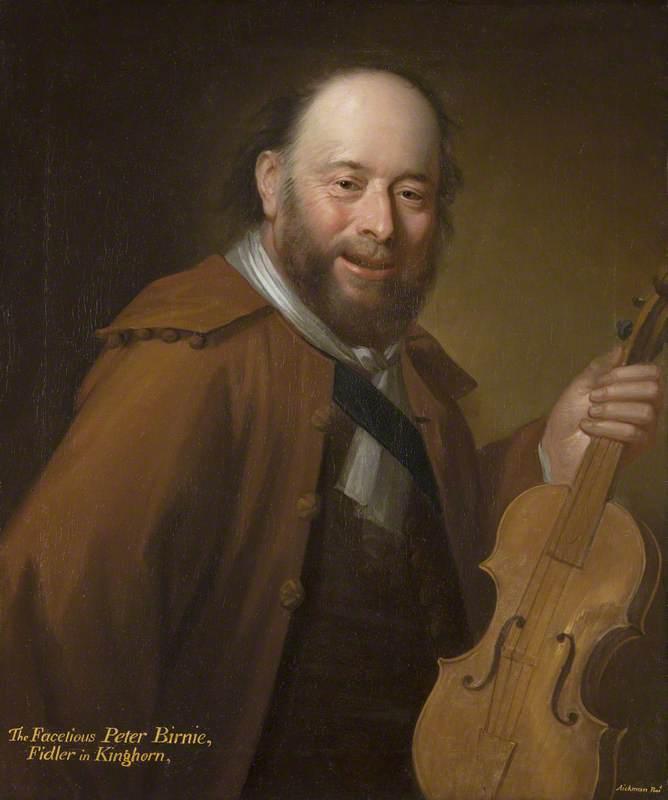
National Galleries Scotland, Edinburgh. Public Domain
During America’s Colonial period, the fiddle was more than a musical instrument; it was a cultural symbol. Though European immigrants could generally bring only portable instruments with them due to the long journey across the Atlantic, they nonetheless brought immaterial riches. They remembered a plethora of hymns and folk songs because much of their history revolved around passing down music by ear.
Scottish musician and composer Phil Cunningham notes, “The songs were the only bit of home they had to hold on to.”
‘Old-Time Music’
While Fiddlin' John Carson sawed on his violin in Atlanta, a folk song collector from England named Cecil Sharp and his colleague Maud Karpeles traveled the Appalachian area in search of America’s folk music players. Eventually, the popularization of folk music led to the formation of country-western stylings popular in the 1940s.But in the early 1900s, folk music and its iterations were still called “hillbilly music,” “mountain music,” or “old-time music.”
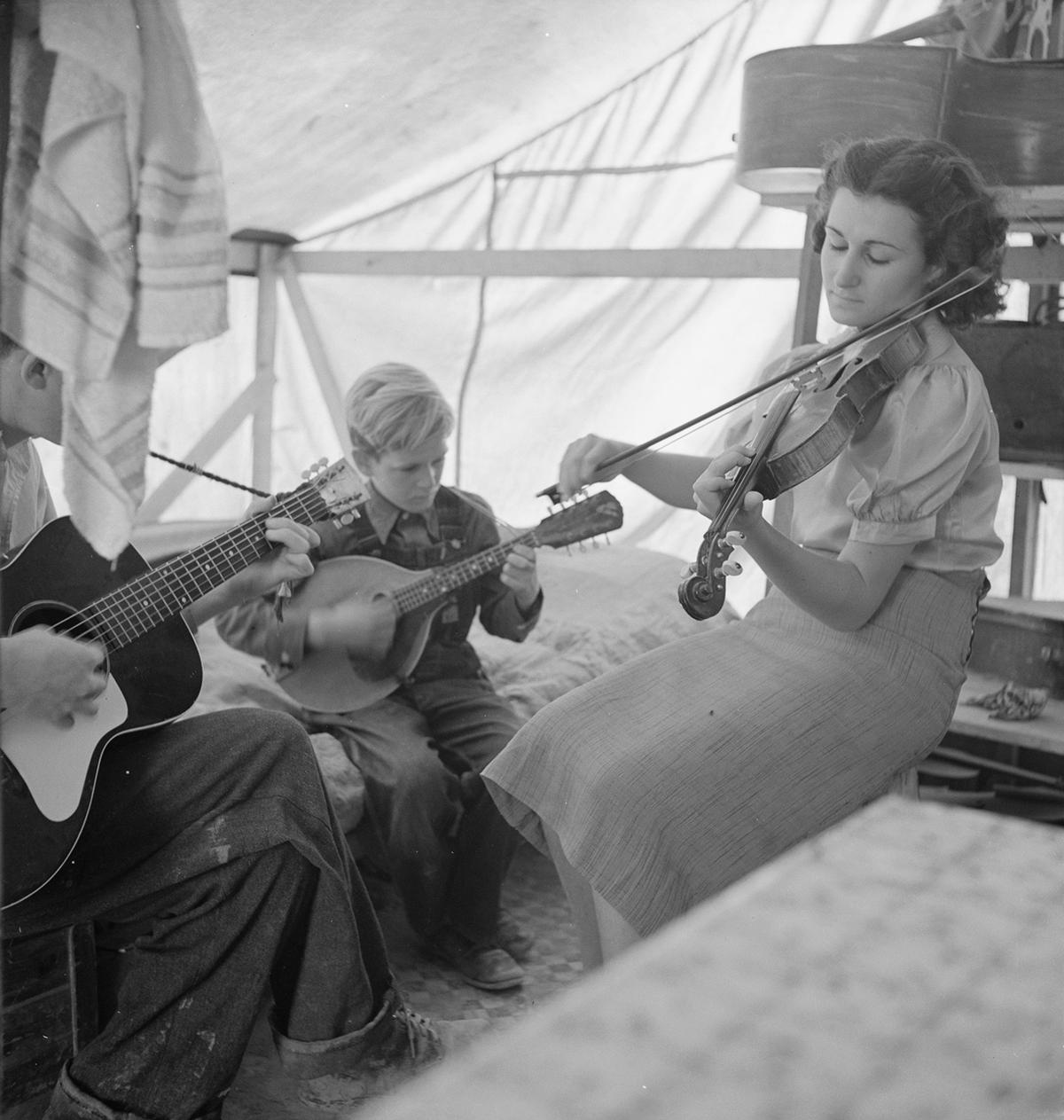
According to the British Country Music Festival site: “The folk songs Sharp had been noting down in England had been assimilated from Scotland … which bled into the northern English counties.” Sharp then followed the songs’ migration to the United States.
Sharp once shared that “no two singers ever sing the same song identically the same way.” He noted that the Appalachian culture brimmed with “good talkers with elemental wisdom, abundant knowledge and intuitive understanding.” He felt this came from a close connection to the land around them and the courage to come “face to face with reality.”
In the introduction to “English Folk Songs From the Southern Appalachians,” Karpeles writes that the everyday musicians of the culture “maintain a sense of continuity … by strengthening, instead of destroying, their traditional culture.”
‘Human Feeling and Imagination’
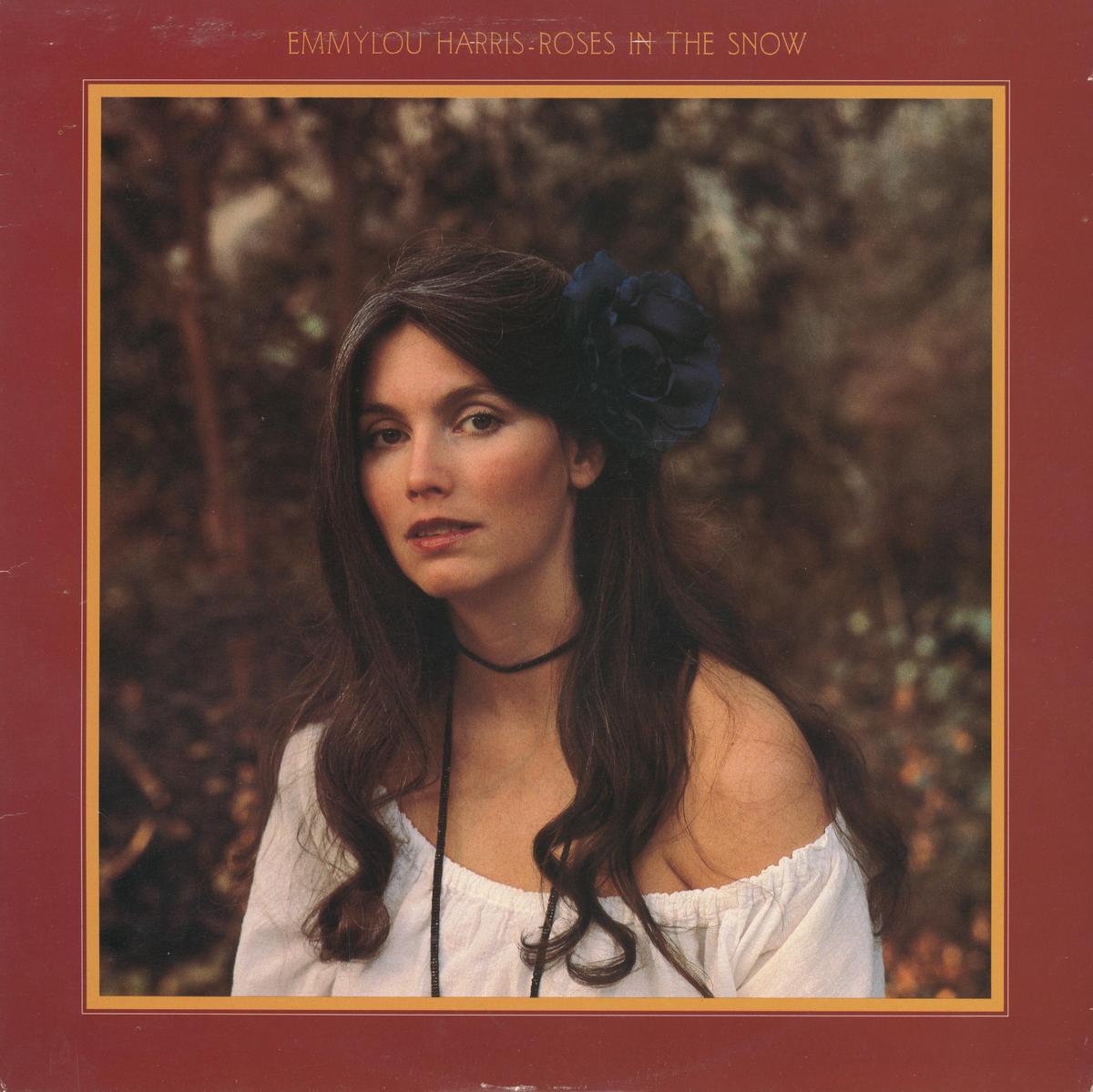
In one of their releases, Sharp and Karpeles state that music and poetry is derived from “the true, sincere, ideal expression of human feeling and imagination.” More than anything, it is the “insistent human demand for self-expression” that is most important in folk songs.One of America’s most enduring folk songs full of expression and feeling, “Wayfaring Stranger” has Scottish roots. Country singer Emmylou Harris made the song a Top 10 country hit in 1980. But long before it was a hit, its lyrics circulated throughout the Appalachian area in the mid-1800s. Its haunting melody dates back much further.
The Arrival of Country Music
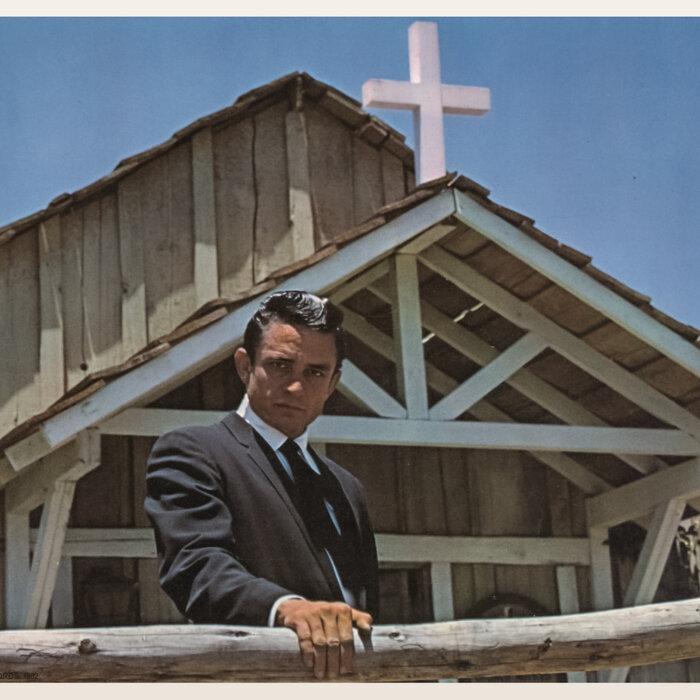
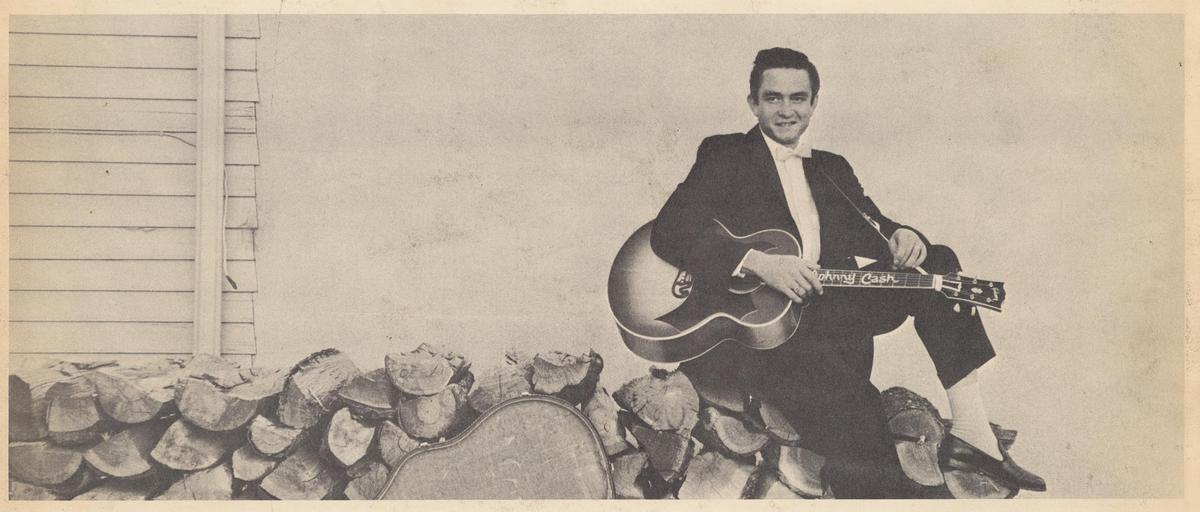
When Peer kickstarted the country genre as we know it today with foundational acts like The Carter Family, Jimmie Rogers, and Fiddlin’ John Carson in the 1920s, it would be another 20 years before the musical stylings were renamed “country and western.” By the end of the 1940s, thanks to Billboard’s use of the term, “country and western” music experienced a rise in popularity.By the 1950s, country music officially arrived when artists like Johnny Cash paired country-western, Appalachian bluegrass, and folk stylings with Southern gospel and blues.
Today, country music is a booming business. In America, the musical genre reportedly brought in just over $1 billion in revenue in 2022 alone. The epic rise of country music wouldn’t have been possible without the musical contributions of the determined immigrants of the British Isles who vowed to make America their home. The saying goes, home is where the heart is. And for cultures like the Scots-Irish, their hearts sought shelter in melody.