Latin may be a dead language, but it gave vibrant life to the unexpected friendship between the beloved author C.S. Lewis and the canonized Italian priest St. Giovanni Calabria. Though the two men never met, they exchanged numerous letters between 1947 and 1961—all written entirely in Latin, a task well-suited to a learned classicist and a Roman Catholic priest.
Moynihan was delighted to discover the existence of letters from Lewis to “a correspondent in Italy” in the archives of Wheaton College. There were 25 of Lewis’s letters, written in impeccable Latin, one or two per year between 1947-a and 1961. However, no copies of Calabria’s replies still exist. Moynihan explained that Lewis’s custom was not to preserve letters he received for long, and he had burned Calabria’s letters not because he didn’t value them but because he thought they deserved the respect of silence. In his own words, “For nowadays investigative researchers dig out all our affairs and sully them with the poison of ‘publicity’—to give a barbarous thing a barbarous name.” Lewis didn’t want Calabria to suffer this disgrace, and so he did not preserve the priest’s letters to himself.
An Unexpected Latin Connection
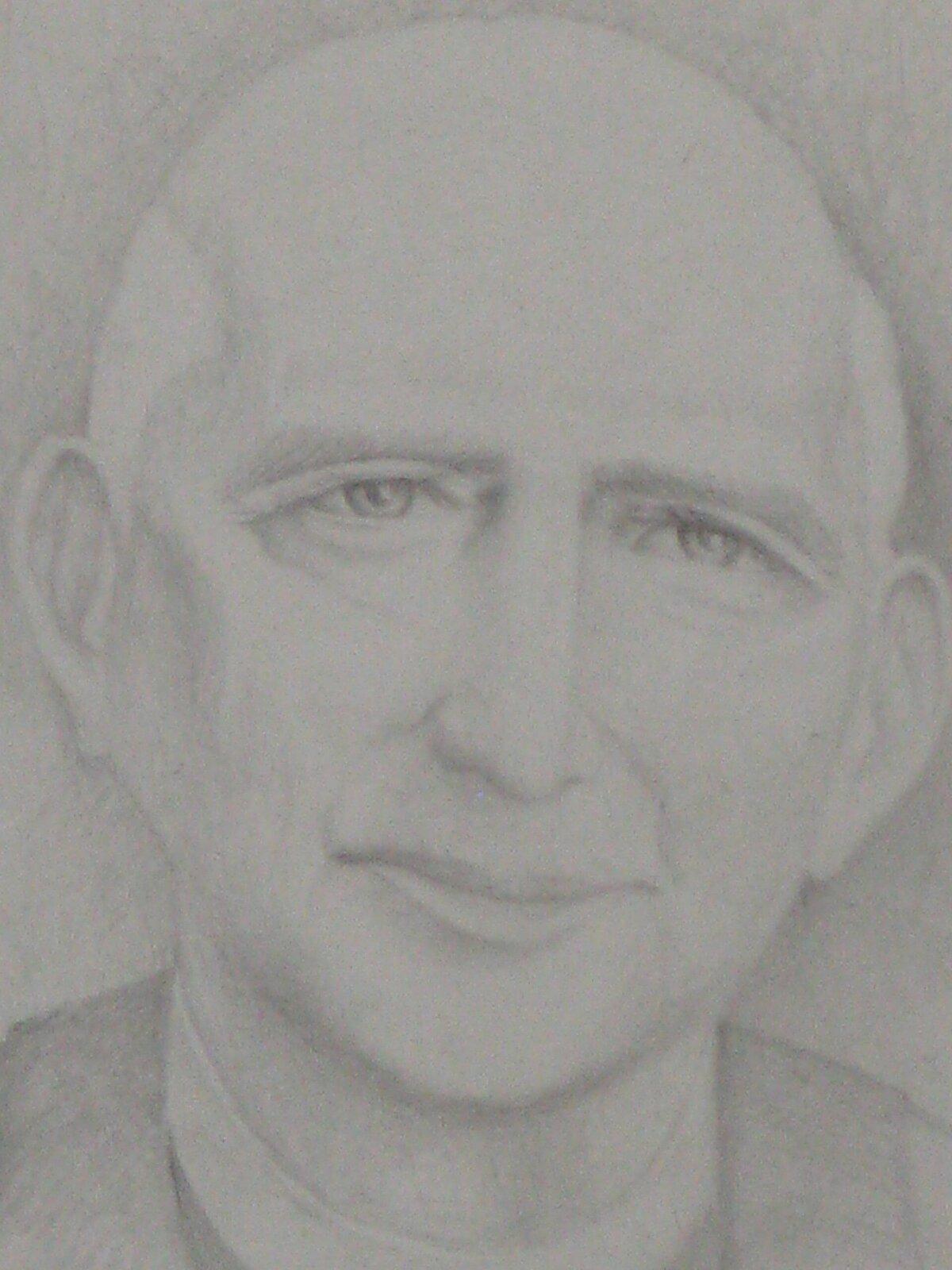
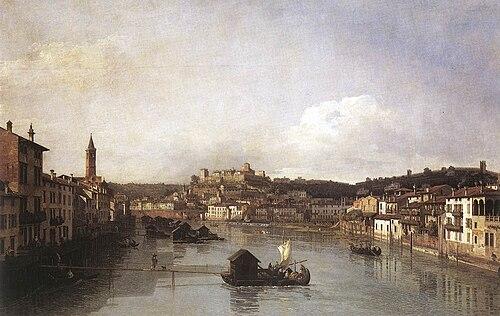
Calabria was an Italian priest living in Verona and the founder of two religious congregations, the Poor Servants of Divine Providence and the Poor Sisters Servants of Divine Providence, as well as orphanages and homes for abandoned teens.
Calabria was born in 1873 and ordained a priest in 1901. An episode that occurred while he was in seminary, training to become a priest, revealed Calabria’s compassioned heart. During a frigid night in November 1897, while he was in seminary, after a visit to the sick at the hospital, Calabria encountered a young boy cowering and shuddering on his doorstep, fleeing from someone who he feared would beat him. Calabria took the boy in, and this marked the beginning of his care for the orphaned and abandoned.
After ordination, Calabria began his work as confessor and curate of St. Stephen’s Church in Verona, where he labored to hear confessions, perform acts of mercy, and reach out to the outcasts and the forgotten.
Calabria’s labors in the winding, sun-blanched streets of Verona made it unlikely that he would cross paths with an Oxford don. But in 1947, an Italian translation of Lewis’s “Screwtape Letters” found its way into Calabria’s hands. The priest promptly decided to write to the book’s author.
But there was only one problem: He knew no English. He rightly guessed, however, that Lewis, an esteemed classicist, would know Latin. And so, on Sept. 1, 1947, he wrote to the professor entirely in the ancient tongue. To his delight, Lewis responded, and an epistolary friendship was kindled. The men found in one another a kindred soul, and their conversation glided over many topics, both personal and theological.
Spiritual Kinship in a Changing World
A recurring theme involved their mutual desire for unity among Christians. For Calabria, this foundation of unity was to be found in the papacy. Lewis, as an Anglican, likely had a different idea of the substance of Christian unity, yet he, too, prayed for unity among the different denominations. Lewis seems to have seen in the friendship between himself and the priest a small sign of the type of reconciliation he hoped would one day occur between all Christians, calling it“a wonderful thing and a strengthening of faith that two souls differing from each other in place, nationality, language, obedience and age should have been led into sweet familiarity: so far does the order of spiritual beings transcend the material order.”
He also noted that confronting common enemies might help provide common ground among Christians, and he cited the persecutions of Hitler as a concrete example. “Those who suffer the same things from the same people for the same cause can hardly fail to feel love among themselves.”
“What you say about the present state of mankind is true: indeed, it is even worse than you say.
For they neglect not only the law of Christ but even the Law of Nature as known by the Pagans. For now, they do not blush at adultery, treachery, perjury, theft, and the other crimes which I will not say Christian doctors, but that pagans and the barbarous have themselves denounced.
They err who say “the world is turning pagan again”. Would that it were! The truth is that we are falling into a much worse state.
“Post-Christian man” is not the same as “pre-Christian man”. He is as far removed as virgin is from a widow: there is nothing in common except want of a spouse: but there is a great difference between a spouse-to-come and a spouse lost.”
Lewis understood, however, that the remedy for the evils of the world begins with addressing the problems in one’s own back yard. Improving the lot of mankind begins with improving the lot of one’s local neighbor. “Let us beware lest, while we torture ourselves in vain about the fate of Europe, we neglect either Verona or Oxford,” he warned.
The two men also exchanged more personal reflections, such as when Calabria lamented his own sinfulness to the point that Lewis felt he had to warn him not to fall into sadness or anxiety because of them. For his part, Lewis shared with Calabria the sorrow caused by the illness of his beloved Joy (Lewis called it, in Latin, her “letalis morbus,” or “lethal disease”). Even then, however, Lewis noted that those dark days of sorrow and sad parting were not unalleviated by joys and consolations. “And what wonder?” he wrote. “For has He not promised to comfort those who mourn?”
Some comments were of a more lighthearted nature, however, such as when Lewis said he hadn’t been able to respond more quickly because he was experiencing “the curse of our First Parent”—by which he referred to the burden of earning a living by dealing with a flood of undergraduates returning at the beginning of an academic term.
Moynihan summed up the correspondence between Lewis and Calabria like this: “Looking back over it all you see that Lewis and Father John unite with each other in teaching a ministry of charity.” That virtue seems to gleam and give light throughout the words these men wrote, as well as the lives they lived.
Their exchange continued until the Calabria’s life came to its conclusion. He died on Dec. 4, 1954, having offered his life to God in the place of the ailing Pope Pius XII (who did recover and live another four years).
After Calabria’s death, Lewis continued corresponding with other members of Calabria’s congregation until the early 1960s. Calabria was canonized by Pope John Paul II in 1999.
The Lost Art of Rumination
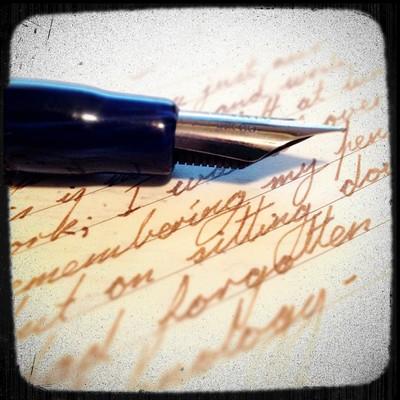
In addition to the testimony to the fraternal hearts of two good men, this unique exchange of letters between Lewis and Calabria has a certain literary value as well, in that it reminds us of the (somewhat lost) art of letter writing.“The rhythmic correspondence of the Oxford don and the priest of Verona reminds us, among other things, of the collapse of letter writing as a litmus of culture. For many now, the only mail is e-mail. Text messaging deletes rumination, and blocks any inner Cicero.”
The consistency and effort these two put into their letters help remind us of the dignity that can accompany even “casual” communication.
Not to mention that it recommends to us the study of Latin—you never know when you might need it.