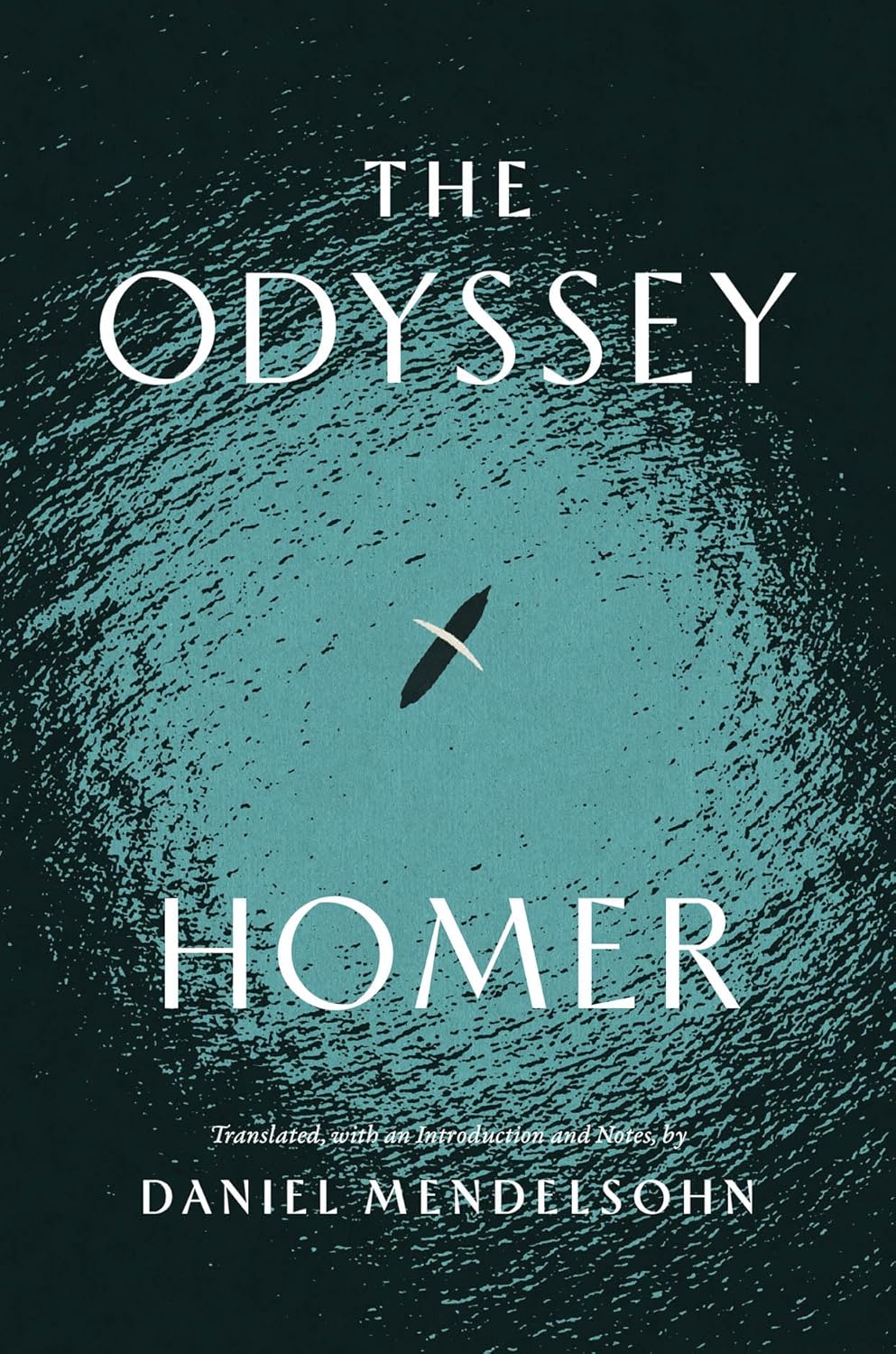
Since George Chapman published the first English translation of Homer’s “The Odyssey” in 1615, more than 60 translations have followed. Homer’s “Iliad” received more than 100 English translations in the same period. Daniel Mendelsohn, professor of literature at Bard College and one of the leading scholars on Greek literature, has added his name to the list of translators with his recent translation of “The Odyssey,” published by University of Chicago Press.
“There’s always been a very strong demand for the classics, especially Homer,” Mendelsohn said in an interview with The Epoch Times. “Homer is the beginning of Western literature.”
He noted that all tragedy and all comedy flow from “The Iliad” and “The Odyssey,” respectively. In these two works, Homer was able to capture the human experience—family, ambition, adventure, hardship, and mortality.
“They are, for good reason, fundamental to our understanding of what it means to be human and understanding our own cultural traditions,” he said. “If you are at all interested in literature, or interested in your culture as a Westerner, you have to reckon with these two texts.”
How is it, though, that after nearly 3,000 years, Homer’s works still command our attention? Along with the numerous translations, modern Western popular culture, from film to novels to commercials, continue to reference these ancient stories. Mendelsohn suggests the answer is quite simple: Aside from technology, nothing about human nature has changed.
Yes, we are the same as the Ancient Greeks. Homer’s “Odyssey” does capture, though certainly far more fantastically, our human experience. For this reason, we should read the story the way Mendelsohn believes everyone over the millennia has read the story: allegorically.

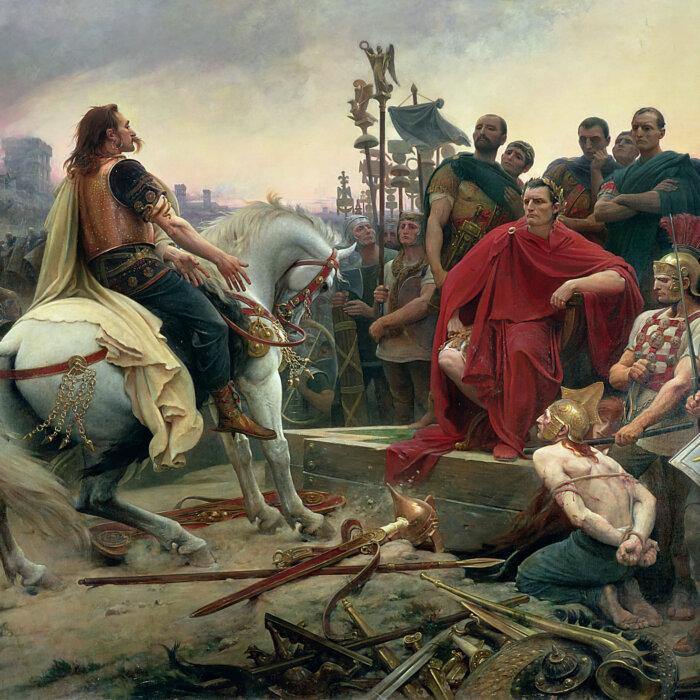
“If Odysseus is the Everyman, then you do have to ask, ‘What do these adventures represent?’” he stated.
Death as Defining
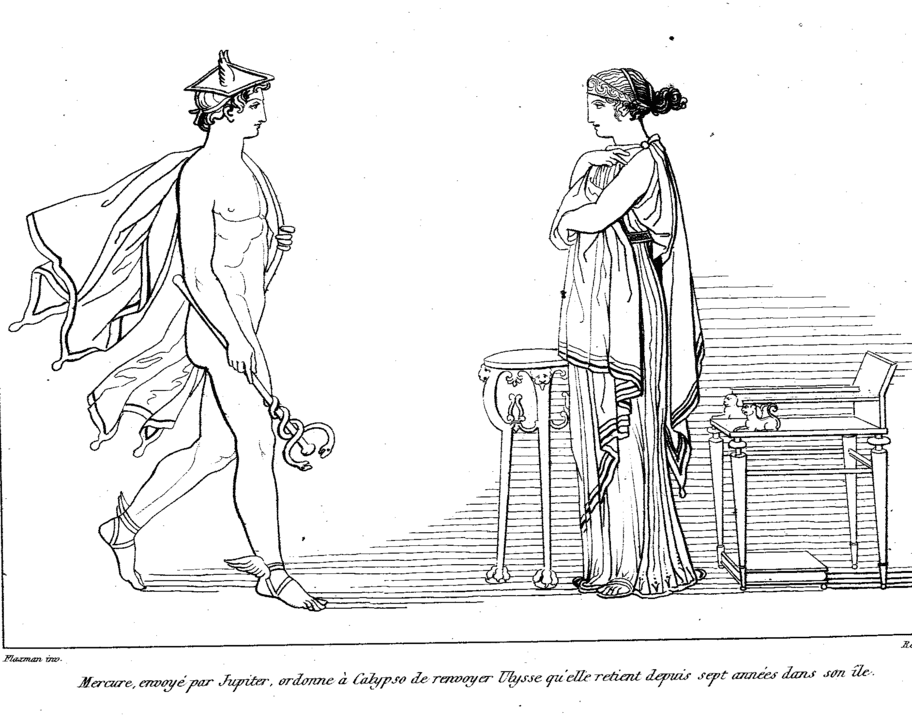
There is a defining moment in the classic epic poem when Odysseus is offered a chance at what seems to be eternal bliss. For seven years, he is held captive on a beautiful island with the lovely nymph, Calypso, who is infatuated with the Greek warrior. This arrangement seems like anything but captivity. Odysseus, however, longs for his home in Ithaca and his loving wife, Penelope. Calypso offers him the gift of eternal youth if he will remain with her on the island.
Mendelsohn, who has been teaching “The Odyssey” since 1989, laughed when thinking of his students’ reactions when they learn Odysseus refuses the equivalent of paradise, and thus chooses mortality and the ensuing difficult and uncertain journey home.
“The students can just never understand why anyone would do that,” he commented. “His rejection of Calypso is not just a romantic gesture—in other words, ‘There is only one girl for me and I’m sticking with her.’ I think it’s more profound than that. It’s a recognition of the proper life for a human, which has to end. That’s what gives our life flavor.”
Certainly, life for a mortal in Homer’s works (indeed, in life itself) is brief and troublesome. They are at the mercy of the gods, a fact borne out in Odysseus’s trials. The gods control or, at least, strongly sway the outcomes of the Greeks’ lives; but it is the fact that the immortal gods are so invested and involved in the lives of mortals that provides the clue to what Homer was always strongly hinting at.
“Immortality is very boring. Between ‘The Iliad’ and ‘The Odyssey,’ one gets a very strong sense that what makes the human life very interesting is that we are going to die,” Mendelsohn said. “I think Homer is trying to suggest that eternal life and youth are a dead end. One senses in Homer that the gods are jealous of mortals because our lives have meaning.”
More Translations, Please
But why add to the list of translations? Certainly, Mendelsohn is correct that there is always a strong demand for the classics, but aren’t there enough translations already? When asked this question, Mendelsohn echoed the same answer that Cynthia Damon gave in our discussion about her translation of “Caesar Gallic War.” Both classicists stated: the more translations, the merrier.The richness of the Greek language is more or less spelled out in these many translations. Mendelsohn stated it isn’t possible for one translation to convey everything.
“Whenever someone asks, ‘What is “The Odyssey” really like in Greek?’ I always say, ‘Get five translations, and, so to speak, superimpose one on top of the other.’ The differences among them gives you a sense of how rich the original is,” Mendelsohn said.
He added that translators are not in competition with one another. In his view, the entire translation enterprise is a collaborative effort. Mendelsohn spent six years producing his translation. He said the effort is too strenuous and time-consuming to simply try to “one-up somebody else.”
An Alien, Yet Universal Story
As indicated in his “get five translations” recommendation, no translation is the same. Each varies in some way, and each according to the translator’s vision of what “The Odyssey” is. For example: Alexander Pope’s 18th-century translation is highly poetic while Emily Wilson’s 2017 translation is much less so. Mendelsohn’s translation is certainly a combination of poetry and prose.“This is a poem, so each line is a poetic line. Every one of Homer’s lines has a very specific rhythm,” he said.
Although he worked to recreate those lines in English, he did not attempt to “imitate” Homer’s “very special kind of poetic language” in diction and word choice. He noted that even among the Ancient Greeks, Homer’s Greek was not what the everyday Grecian spoke. What he did commit himself to doing was matching the classic meter found in the epic poem.
“All classical epics—Greek and Latin—are written in this one meter, this one rhythm. It’s unique to epic,” he said. “The length of the line is very long, theoretically. Eighteen syllables. It’s part of what gives the grandeur of the subject. It’s not, ‘I once knew a girl from Nantucket.’ It’s a very, very, very long line, and the length gives it a sense of importance.”
He elaborated: “I don’t see it as my job to edit the original, or to streamline or comb out the subtleties to make it more—what is that word my students always use?—relatable.”
To Mendelsohn’s earlier point, human nature has not changed over 3,000 years. But he is quick to admit that much of what is in “The Iliad,” and certainly “The Odyssey,” is very alien to modern readers. This “alienness,” however, should not induce a translator to alter the story. It is this “alienness” that encourages us to learn not just about these ancient cultures, but also about ourselves.
“The original has a kind of integrity. It is universal but is also the reflection of a particular moment, a particular language, a particular mindset. I think the work that needs to be done is to understand the original,” he said. “I believe in ‘The Odyssey.’ If people read it, they are going to love it, so you might as well give them all of it.”