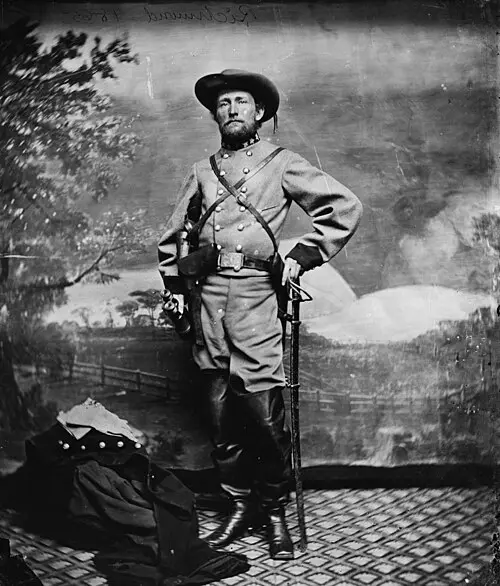
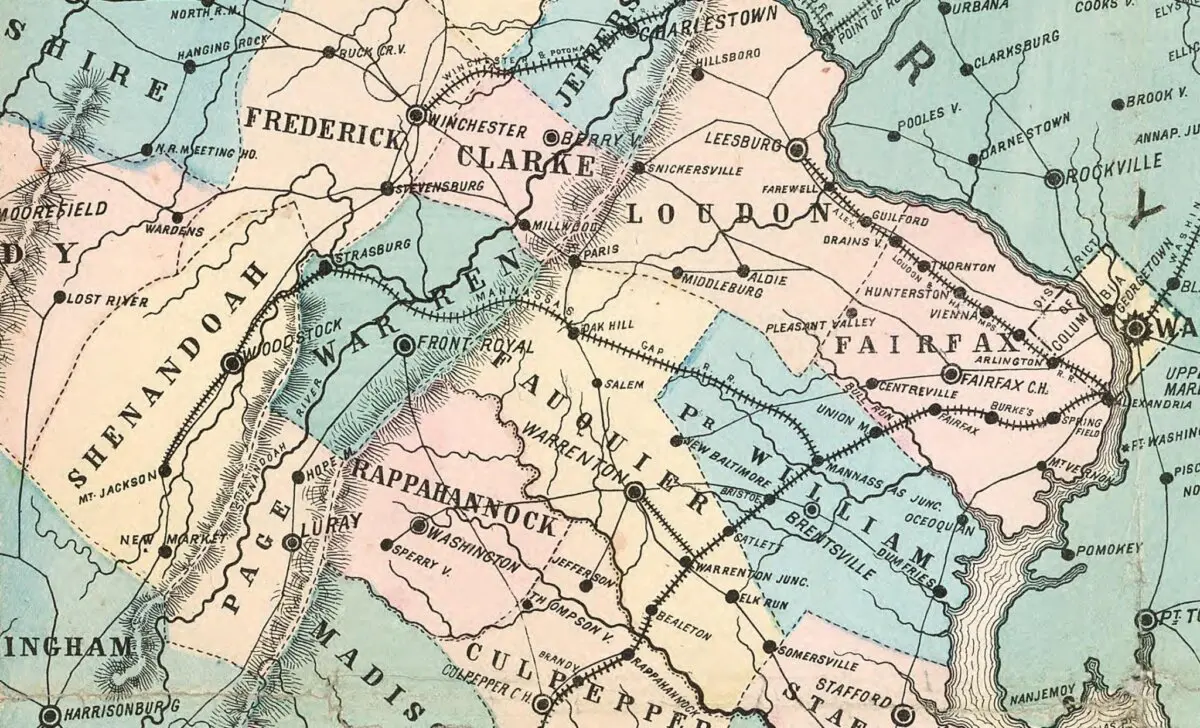
First came the Confederacy, those states from Florida to Virginia and westward to Arkansas and Texas that seceded from the Union when Lincoln was elected president. And then there was “Mosby’s Confederacy,” that region of northern and north-central Virginia stretching from the upper tip of the Shenandoah Valley to touch the outskirts of Alexandria.
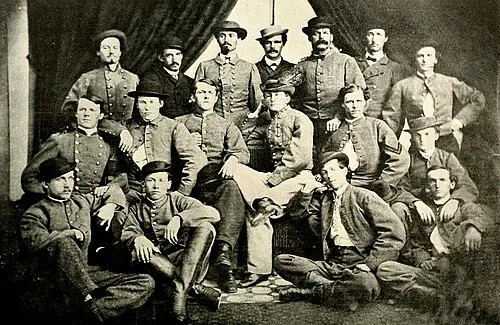
Here, John Singleton Mosby (1833–1916) and his hard-riding Rangers seemingly appeared out of nowhere to strike at a camp of Union soldiers or to seize one of their supply trains before disappearing back into the forests and hills they knew so well. They had no permanent encampments and no formal lines of supply, depending instead on locals and the enemy for food, horses, and other necessities. Union troops stationed in Mosby’s Confederacy slept uneasily, aware that at any moment a band of pistol-waving rebel horsemen might interrupt their dreams.
By late 1864, the war in this arena took a cruel turn. Following Mosby’s Berryville Wagon Train Raid in August, during which his men seized a large inventory of supplies and livestock, Union Gen. George Custer had five civilian houses burned. About a month later, another general had six of Mosby’s irregulars hanged or shot. After a conference with Gen. Robert E. Lee, Mosby hanged seven Union soldiers, after which the cycle of reprisals ended.
At war’s end, Mosby disbanded his men. But with a price on his head, he was unable to get a parole and went into hiding near Lynchburg, Virginia.
Before the War
The man who led these partisans was often sickly and bedridden as a child and turned to reading rather than rough play for entertainment. According to Mosby biographer James Ramage, Mosby’s favorite book as a child told the story of Francis Marion, South Carolina’s “Swamp Fox,” whose exploits wreaked havoc on the British army during the Revolutionary War.
Bullied in school for his frailty, Mosby chose to stick up for himself rather than run away and learned to fight with his brains rather than with brawn. Later, at the University of Virginia, he got into a fracas with yet another bully, a bigger student with a bad reputation who threatened to beat him. Mosby borrowed a pepper-box pistol, and when threatened physically, he shot his adversary. The man lived, but the university expelled Mosby, and a local court sentenced him to jail.
There, he asked his prosecutor, William Robertson, if he might read some of his law books. After Mosby’s early release due to ill health and the entreaties of friends and family, he studied law with Robertson and joined the Virginia bar. In 1857, he married Pauline Clark, a woman who matched her husband in determination and courage.
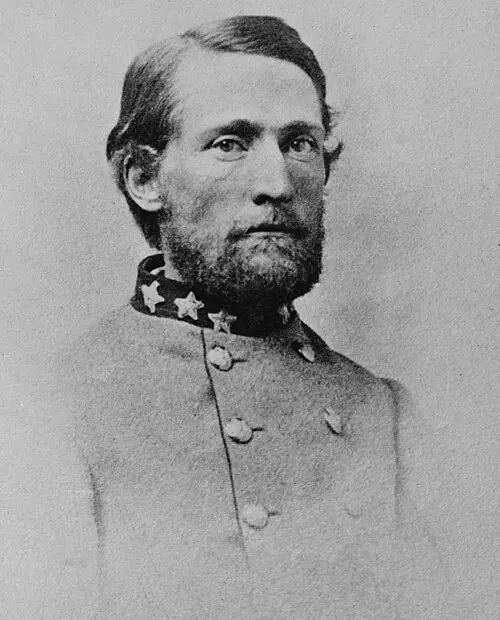
Before war broke out, Mosby was an ardent Unionist, yet like Lee, his first loyalty was to his state. Later, he wrote in his memoirs: “Virginia went out of the Union by force of arms, and I went with her.” He served in various capacities, most notably as a scout, before entering partisan warfare that made him both famous and a wanted man.
Pauline Takes a Hand
On June 16, 1865, nearly two months after Lee’s surrender at Appomattox and following some complicated negotiations regarding Mosby’s formal surrender and parole, Gen. Ulysses S. Grant personally intervened and granted Mosby a parole. He resumed his law practice in Warrenton, Virginia, in September 1865. Yet whenever his legal practice called him to other counties, Union commanders in control of these towns harassed him, and he was arrested or threatened with arrest several times despite his parole.
Both Ramage, in his biography “Gray Ghost: The Life of Col. John Singleton Mosby,” and historian David Goetz, in a C-Span video titled “Post War Relationship Between Mosby and Grant,” relate what happened next: the story behind Mosby’s parole and his friendship with Grant.
In January 1866, anxious over her husband’s continual harassment, Pauline told him that she was taking a train to Baltimore to shop for furniture. Accompanied by their 5-year-old son, Beverly, she boarded the train but disembarked in Washington and went straight to the White House.
There she met with President Andrew Johnson, who supported Confederate paroles but despised guerrilla fighters. His flat-out refusal to help left Pauline in tears. An officer who encountered her asked why she was crying, and when she explained, he led her directly to Grant’s office. The general greeted his one-time adversary’s wife with warmth and heard her out. He then took a sheet of paper and wrote an order that not only prohibited any military arrest of Mosby but also gave him the liberty to travel wherever he wished in the United States.
Ramage writes of Mosby that, “the handwritten order would be one of his most cherished possessions for the rest of his life.”
War, like politics, can make strange bedfellows.
Outcast
In addition to his admiration for Mosby as a soldier, Grant also understood that welcoming prominent Confederates like him back into the Union was an important step in healing regional tensions and engendering unity.
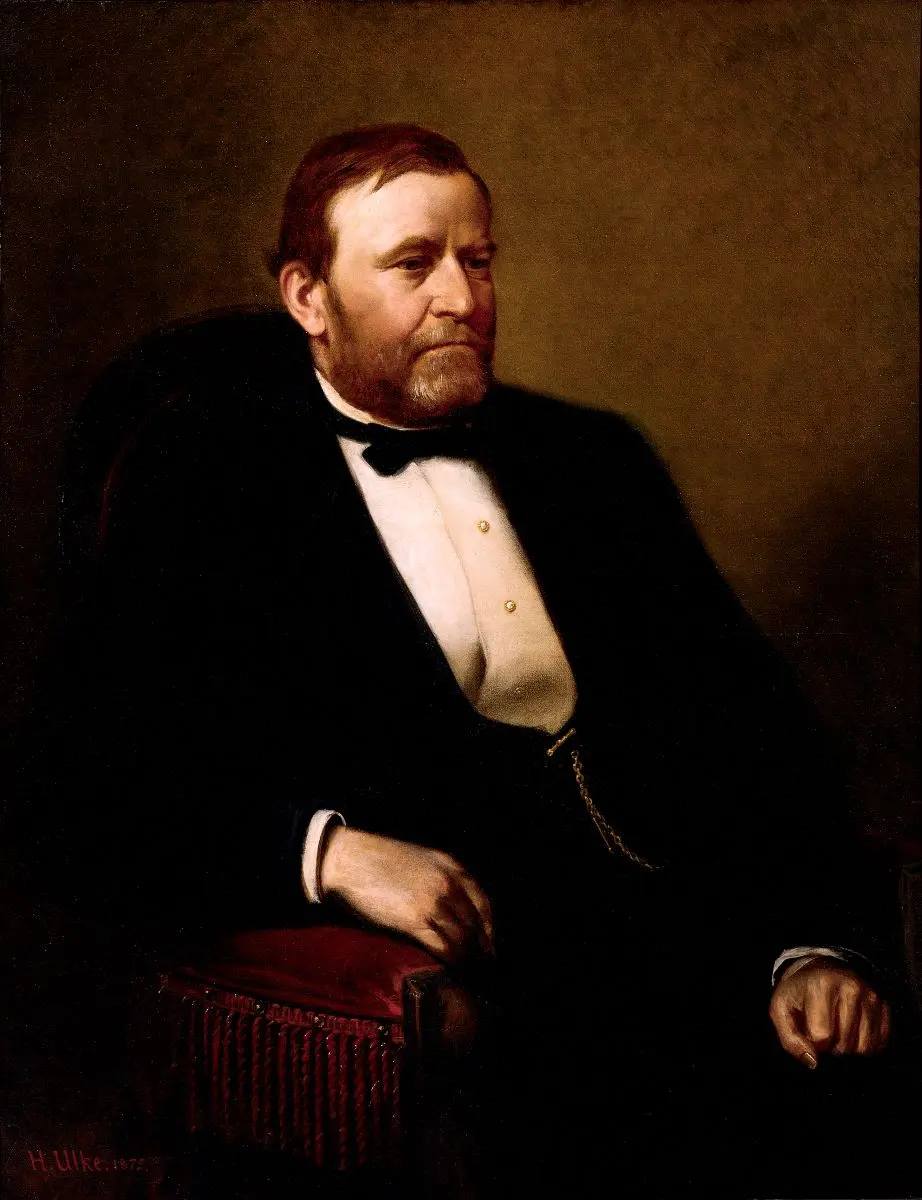
It was this desire, plus his singular act of grace and charity, that led Mosby to reestablish contact with Grant. In the spring of 1872, accompanied by his son Beverly, he called on Grant, who was then well into his first term as president. During their meeting, he urged Grant to restore citizenship rights to Confederate soldiers by supporting and pushing through the Amnesty Bill then before Congress. In exchange, he promised Grant that he would support him in Virginia during his next run for the presidency. A deal was struck, and both men adhered to its terms.
Grant did win Virginia, though, as Ramage notes, Mosby was of little help because most white voters stayed home. Yet Grant considered him both a great help and a major figure in his hopes for regional reconciliation.
The Southern press and Southerners in general took a more acerbic position. Virginia’s newspaper Bristol News declared that both Grant and Mosby were “an overrated pair of antipodal military hacks.” Mosby’s support for Grant damaged his law practice and social standing in Warrenton and made him a figure of derision and hatred. When Grant left the White House in 1877, he was left adrift in the political world, a Republican in a state where white voters universally despised that party.
Yet Mosby still had connections in Washington. After Pauline’s death in 1876—he grieved her and never remarried—he served as U.S. consul in Hong Kong from 1878 to 1885, where he battled rampant corruption among his fellow civil servants. Moving next to California, where he enjoyed living, Mosby worked as an attorney for Southern Pacific Railway, a post obtained for him by Grant as one of his last acts before death. During the presidencies of William McKinley and Theodore Roosevelt, other government positions came his way.
More Battles
Throughout his postwar life, Mosby remained a figure of controversy. In the South at that time, Lee had attained saintlike stature, immune to criticism. Yet Mosby wrote and, in 1887, published “Mosby’s War Reminiscences and Stuart’s Cavalry Campaigns,” in which he tried to remove the blame for the South’s failure at Gettysburg from the great cavalry commander J.E.B. Stuart. This move then placed the responsibility for that loss on Lee.
And though Mosby had kept a slave at his side during the war, he disagreed with other Southerners about the cause for the war. He believed and publicly stated that the main cause of the conflict was slavery, not tariffs or states’ rights. In an 1894 letter, he wrote: “I always understood that we went to War on account of the thing we quarreled with the North about. I never heard of any other cause of quarrel than slavery.”
In Mosby’s old age, many of his fellow Virginians regained their respect for him and tried to pay him honor, but he remained wary, no doubt remembering the harm done to him and to Pauline when he had supported Grant.
Goetz tells us in his video that near the end of Mosby’s life, a minister paid a visit to his house and tried to convince him to take an interest in the afterlife, asking whether he didn’t at least believe in hell. Mosby promptly replied, “Hell is being a Republican in Virginia.”
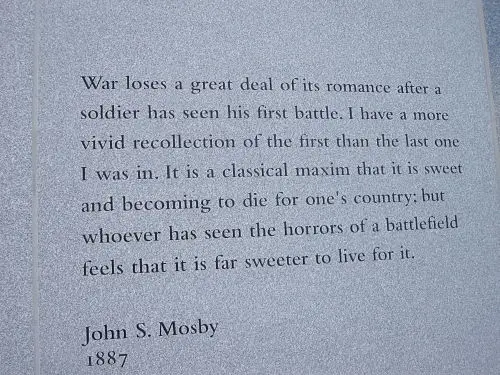
Yet when he died, 3,000 people attended his funeral in Warrenton, where he was buried with full military honors. Included in this gathering, Ramage notes, were 27 of his Rangers. We remember Mosby today as the “Gray Ghost” of the Confederacy.
Given the divisions in our country today, however, perhaps we should also honor him for his attempts at reconciliation. He was able to say of Grant, his wartime enemy, “He was the best friend I ever had.”
John Mosby died during surgery on May 30, 1916, fully aware as he entered the operating theater that it was Memorial Day, which then symbolized “forgiveness and reconciliation” between North and South.