Lithe and supple, strong and aerodynamic, the fly rod is the inseparable companion of the fly angler—his tool, weapon, and necessary gear.
A Centuries-Old Art
Fly rod making has been a serious art and a science for centuries. Fly-fishing originated with ancient Macedonians, and its tackle has evolved alongside the sport. Roman writer Claudius Aelianus explained how the Macedonians used hazelnut rods, horsehair lines, and artificial flies that mimicked insects. According to Aelianus, these rods were six feet long.The earliest European references to fly-fishing appear in the works of Renaissance English writers. A 1496 text, “A Treatyse of Fysshynge wyth an Angle,” is considered the oldest English fishing guide, providing remarkable detail on techniques and tackle. It includes information on constructing rods and lines, 12 fly patterns, and fishing destinations, advising a nine-foot rod made of hazel, aspen, or willow.
Before the 18th century, fly-fishers primarily used short, six-foot rods reminiscent of the original Macedonian design or long, 16-foot “loop” rods. Early European fly rods were made of solid wood, which made them heavy and unwieldy. In the 17th century, rod makers began hollowing out heavy branches to improve agility. Eventually, bamboo emerged as an even better solution because it was both light and tough.
The invention of the reel in the 18th century transformed rod design, allowing anglers to fish with greater finesse using shorter rods. The extra line needed for “fishing fine” could be stored on the reel instead of on the lengthy rod.
American Innovation
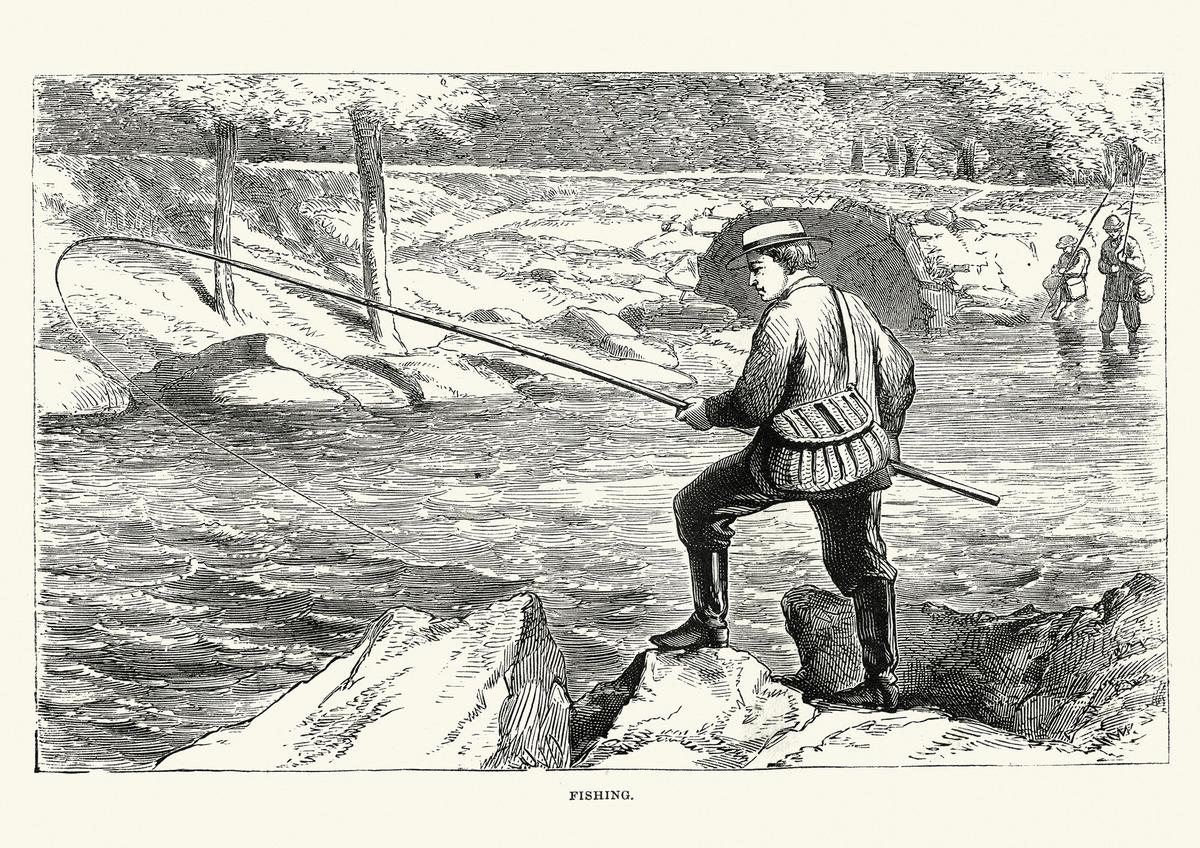
Eventually, fly-fishing came to the United States. Records in the United States before the early 1800s are rare, but the nation’s rushing mountain streams, hidden woodland creeks, and placid glacial lakes proved fertile ground, and the sport grew rapidly.

In the early 20th century, researchers discovered that fiberglass was an excellent material for rods. This reduced production costs and made them more widely available. Until the 1950s, rods were still fitted with braided horsehair or silk lines, later replaced with vinyl-coated nylon that floated much better. In 1973, the first graphite fly rods hit the market, offering anglers an even more lightweight and responsive material for casting.
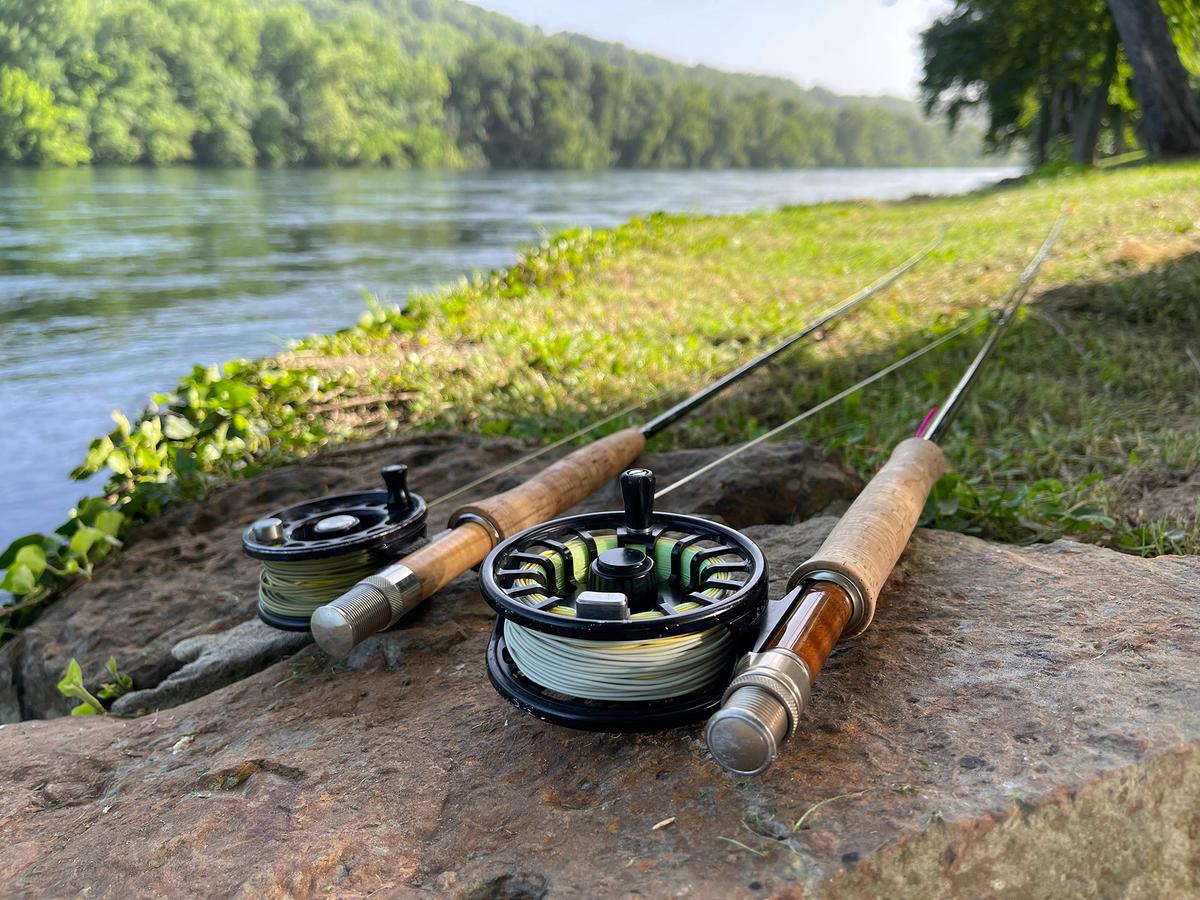
Today, most modern rods are made of graphite, yet handsome, handmade bamboo rods remain ever-popular and sought-after. Bill Oyster, owner and founder of Oyster Bamboo Fly Rods, continues to make custom bamboo rods using traditional techniques. His process begins with a two-meter (6 1/2-foot) virgin bamboo stalk, which he heat-treats to improve its density and strength. Next, he splits the stalk into several pieces and cleans off the char with a cabinet scraper. Nodes on the bamboo are also removed and heat-treated before the strips of bamboo are tapered with a planing form.
Oyster constructs his rod using the hexagonal split-strip method described above, in which six strips are planed into triangles and glued back together with wood glue. After the glue sets, guides for the fly line are attached using thread, and the handle is formed from cork, lathed into a smooth oblong shape, then wrapped in rattan. Oyster carefully cuts etchings into the metal reel seat below the rod handle. The process can take up to 250 hours of work.
Modern bamboo rods are not just tools for catching fish; they are elegant works of art. Woven into their tough fibers are hundreds of years reflecting centuries of fly-fishing and rod-building history.