“Clad in a light gown of gauze or taffeta, she [Marie Antoinette] was compared to the Venus de Medici, to the Atalanta in the gardens at Marly,” wrote Marie Antoinette’s lady-in-waiting Madame Campan.
The myth and, often, awe surrounding Marie Antoinette (1755–1793) survives centuries after the queen’s execution at 37 years old.
London’s Victoria and Albert Museum celebrates the 270th anniversary of the French queen’s birth with the “Marie Antoinette Style” exhibition. Surprisingly, it’s the first UK exhibition dedicated to the famous queen and her enduring influence on art, music, film, theater, photography, decorative arts, home and garden design—and, of course, fashion.
Contemporary couture pieces from European fashion houses such as Dior, Chanel, and Valentino, and Oscar-winning period costumes and accessories from Sofia Coppola’s 2006 movie “Marie Antoinette,” feature among the stylish exhibits.
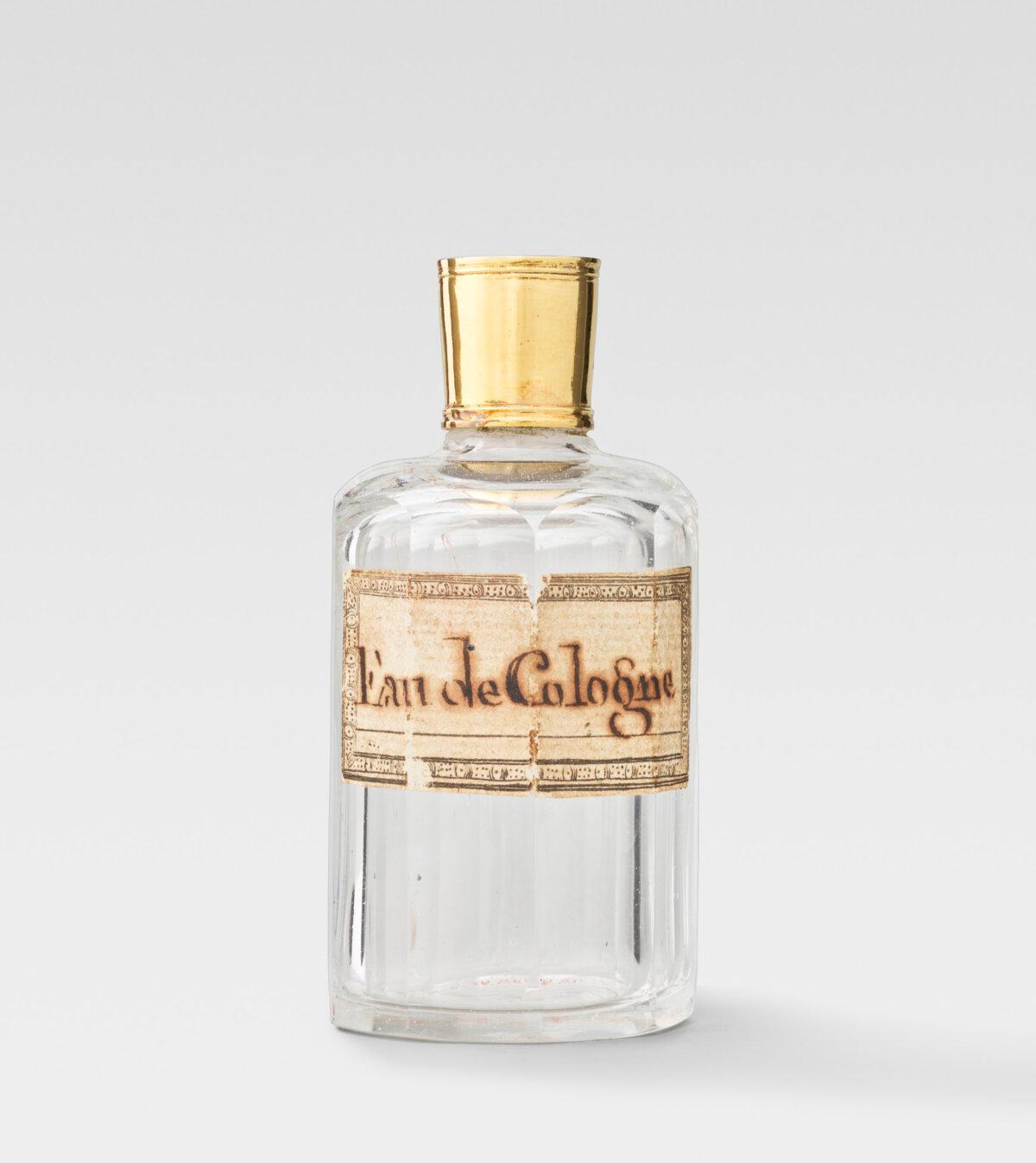
One of the most fascinating facets of this gem of an exhibition is Marie Antoinette’s belongings. The queen’s silk slippers, a rich fragment of her silk dress, and jewels from her personal collection are rare mementos of the stylish French queen. Her Petit Trianon dinner service and toilette case items, including an eye bath and crystal perfume bottle, leave Versailles for the first time.
A Patriotic Patron
Marie Antoinette’s role as queen required her to patronize French artists, artisans, and manufacturers. She did so in style—and a lot of French silk. The moment the 14-year-old Austrian archduchess stepped onto French soil, she was swept off to her marriage in a French silk wedding dress.
Louis XVI and his queen led by example. When officials of commerce saw the decline of the French silk industry in the late 1770s, they urged the monarchs to wear “rich clothing with gold and silver.” The queen responded by forbidding anyone wearing the informal “robe à la polonaise” to see her. The overskirt of the polonaise gown was draped and swagged (hung from hooks or ribbons at the waist or just below) to reveal the petticoat or underskirts and the ankles.
She also ordered gold and silver silks for court. According to an anonymous chronicle “Secret Memoirs Serving as a History of the Republic of Letters in France”: “There is no doubt that this example will revive taste for this type of magnificence which simple, plain silks had replaced.”
In the exhibition book, exhibition curator Sarah Grant defined Marie Antoinette’s style:
“The style is elegant, fresh and feminine, characterized by naturalistic floral patterns, a palette both pastel and bright, of embroidered silks, printed cottons, diaphanous muslins and blonde lace, white biscuit porcelain, white and gold panelling, real and silk flowers, and wood marquetry. Over time, elaborate powdered coiffures and glittering parures [jewelry sets] gave way to more natural hair and simple jewels. Interiors and furniture became intimate in size and purpose. Fashions became increasingly streamlined and relaxed.”
A Wardrobe Fit for a French Queen
Marie Antoinette ordered around 108 new dresses a year. They consisted of three main weaves: taffeta for summer, satin for winter, and twill for autumn and spring. For each of these three fashion seasons, she ordered 36 dresses: 12 “grand habit” gowns, 12 rich gowns, and 12 informal gowns. These figures didn’t include the queen’s everyday cotton or muslin dresses that she wore for many years.Ladies reserved their rich velvet and silk dresses, brocaded with metal threads, for court and church services. Few of these dresses survive, due to wear and tear or seamstresses reusing the expensive metal threads when a dress style fell out of fashion.
Members of the royal family and court wore a formal court dress called the “grand habit” or “robe de cour,” consisting of a stiffened bodice (“grand corps”) and a skirt with a detachable train. The gown, with tiered lace sleeves, sat over three or four panniers covered in silk or canvas. Panniers were hoops shaped wide at the hips and flat at the front and back. Sumptuous brocaded or embroidered silks with exquisite trimmings bedecked the gown, including fur, bows, ribbons, jewels, scalloped silver lace, and gold and silver thread embroidery.
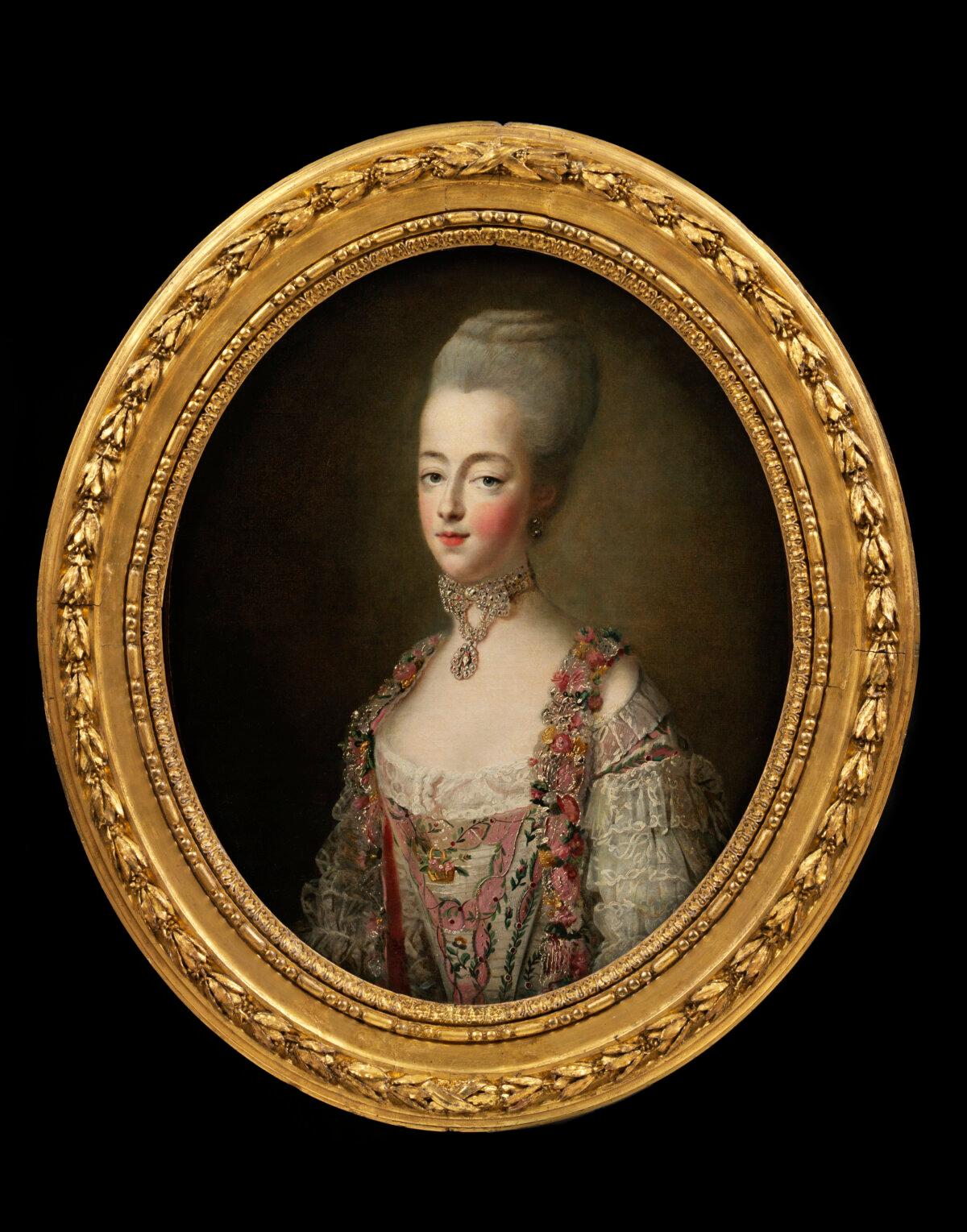
François Hubert Drouais’s portrait of the 17-year-old Marie Antoinette, titled “Queen of France in a Court Dress,” depicts the tiered lace sleeves and the delicate floral motifs and metallic embroidery on the silk bodice of her grand habit. Her diamond necklace completes the elegant attire.
The Queen’s Original Dresses
None of Marie Antoinette’s dresses survive, but fragments of fabric and portraits of the queen give glimpses into her exquisite wardrobe.The queen’s painter, Elisabeth Louise Vigée Le Brun, created two portraits of the queen in 1783: “Marie Antoinette in a Muslin Dress” and “Marie Antoinette With a Rose.” These portraits, in particular, show how Marie Antoinette challenged French court etiquette, favoring the more relaxed Austrian court.
She flouted the formal portrait tradition with “Marie Antoinette in a Muslin Dress.” In a bid to appeal to her subjects, and perhaps allay fears of her lavish spending, the queen posed in an informal “robe en chemise”—a white muslin dress with a gold sash, and a straw hat.
When the portrait was exhibited at the Paris Salon in 1783, it was deemed shocking. Some said the queen appeared to be in her undergarments, and others questioned why she was “wearing a chambermaid’s dust cloth.” Another commented that the “portrait ought to have been titled ‘France Dressed as Austria, Reduced to Covering Herself With Straw.’”
Vigée Le Brun quickly replaced the painting with the more traditional portrait “Marie Antoinette With a Rose,” depicting the queen in a blue-gray satin “robe à la française.” The robe à la française consisted of a bodice covered by a long decorative stomacher. The gown parted at the front to reveal a petticoat. At the back, two wide box pleats fell from the shoulders to the hem.
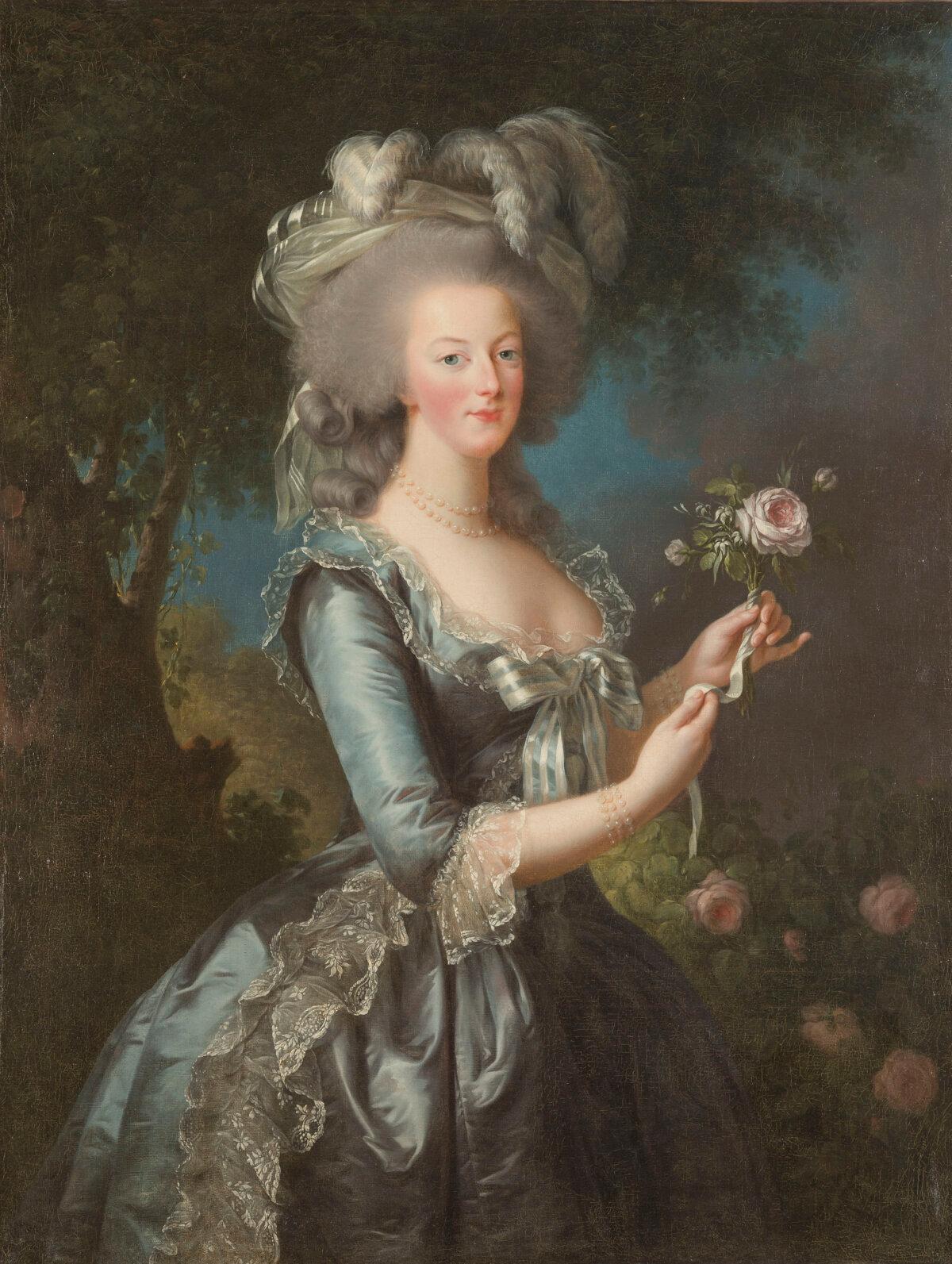
The queen complemented her dress with a two-strand pearl necklace and a three-strand pearl bracelet on each wrist. She wrapped a transparent striped turban with ostrich feathers over her coiffured and gray-powdered hair.
She holds a pink rose, which appears in many of her portraits. According to the National Trust: “From the Middle Ages onwards, roses symbolised the love, purity and grief of the Virgin in religious art and literature.” The rose also symbolized the queen’s Habsburg family heritage.
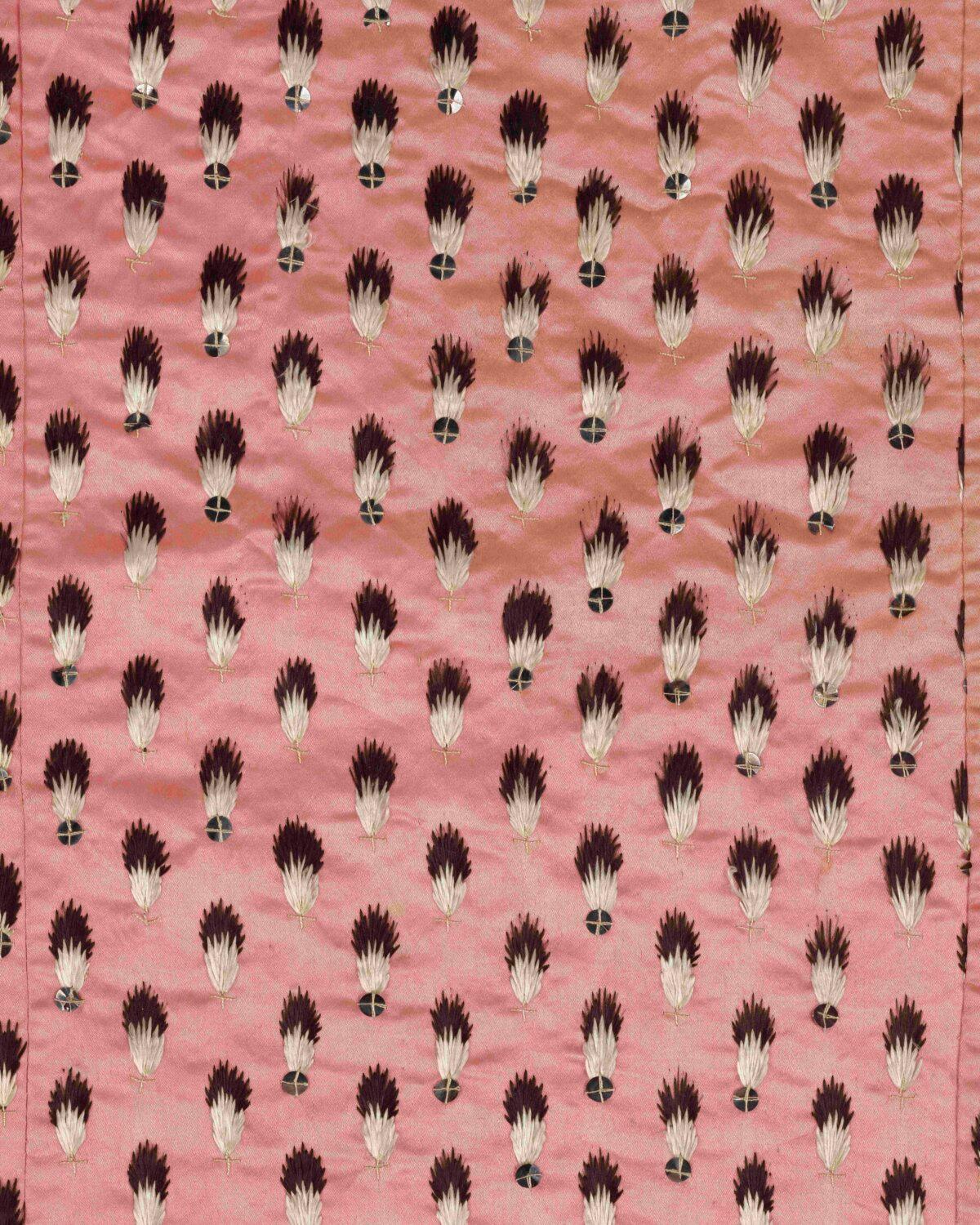
A salmon-pink silk fragment, believed to be part of the queen’s “robe à l‘anglaise,” embellished with pure silver spangles and embroidered ermine tails shows the high quality of French craftsmanship and the popularity of animal prints in the 1780s. The ermine specifically relates to royalty and symbolizes purity. The robe à l’anglaise style had a pointed bodice with an overskirt that was often parted at the front to reveal a matching petticoat.
The Dazzling Queen
“I saw the Queen in her grandest dress; she was covered with diamonds, and as the brilliant sunshine fell upon her she seemed to me nothing short of dazzling,” wrote Vigée Le Brun in 1835. Marie Antoinette often sparkled from head to toe. Such was the queen’s love of jewels and design details that her chambermaid embroidered 88 small jeweled motifs on the heels of Marie Antoinette’s slippers—44 motifs made of rubies and diamonds and 44 made of emeralds and diamonds.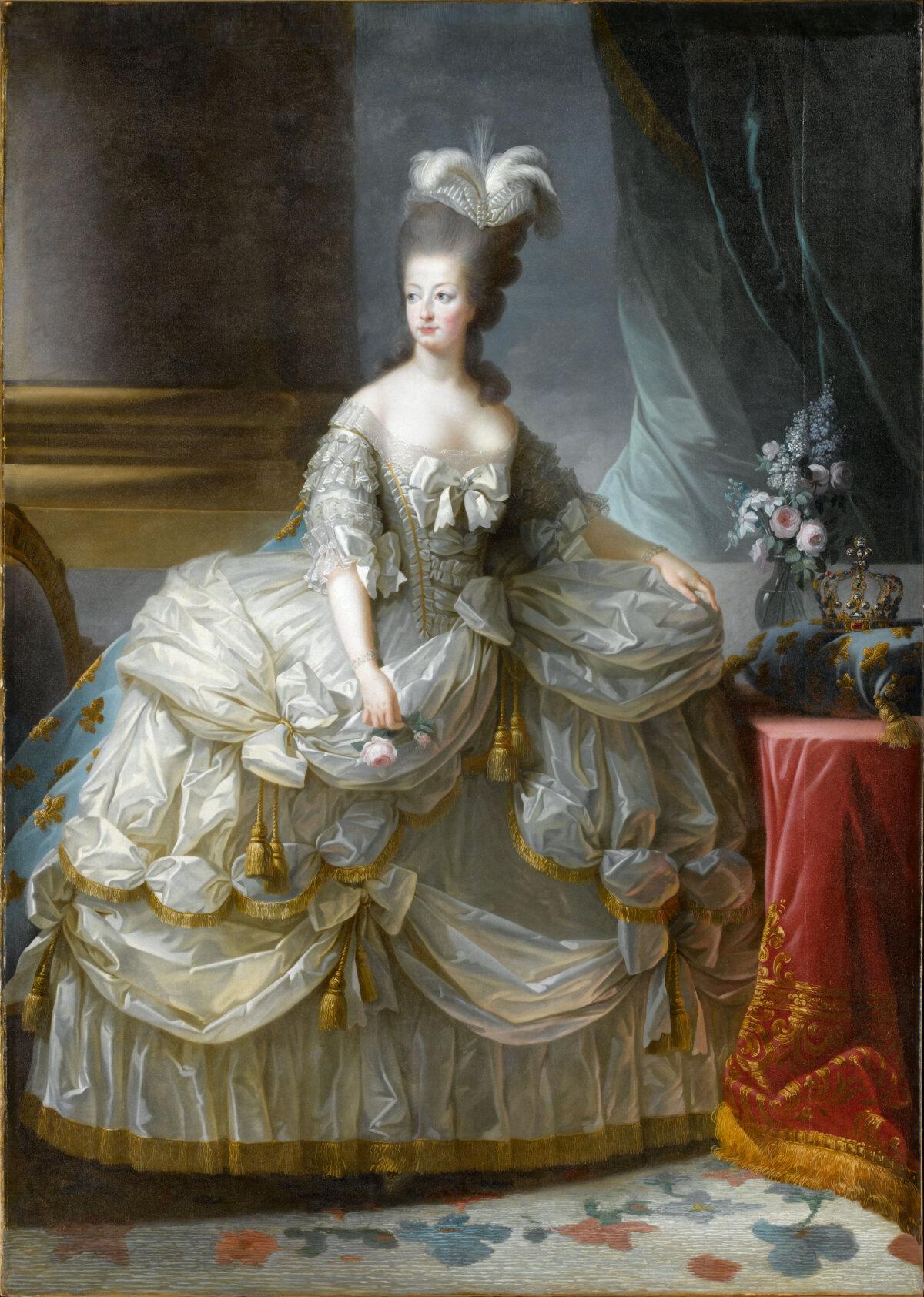
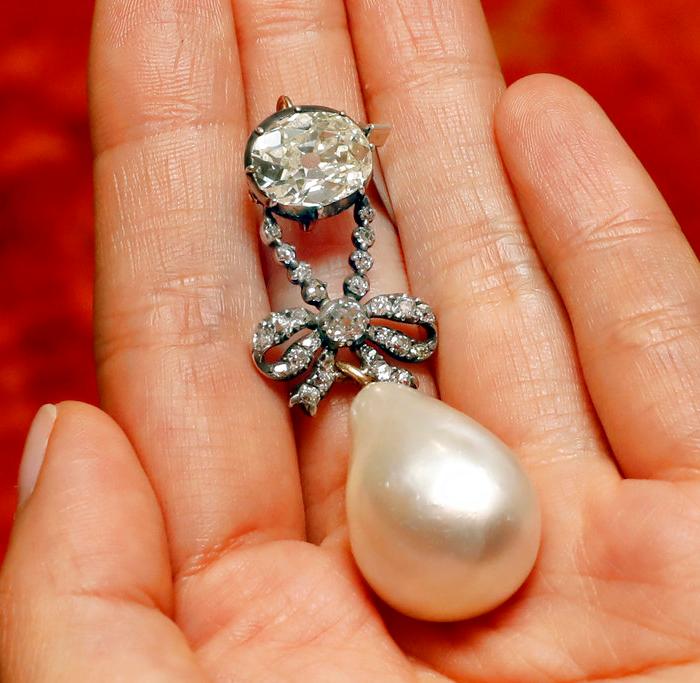
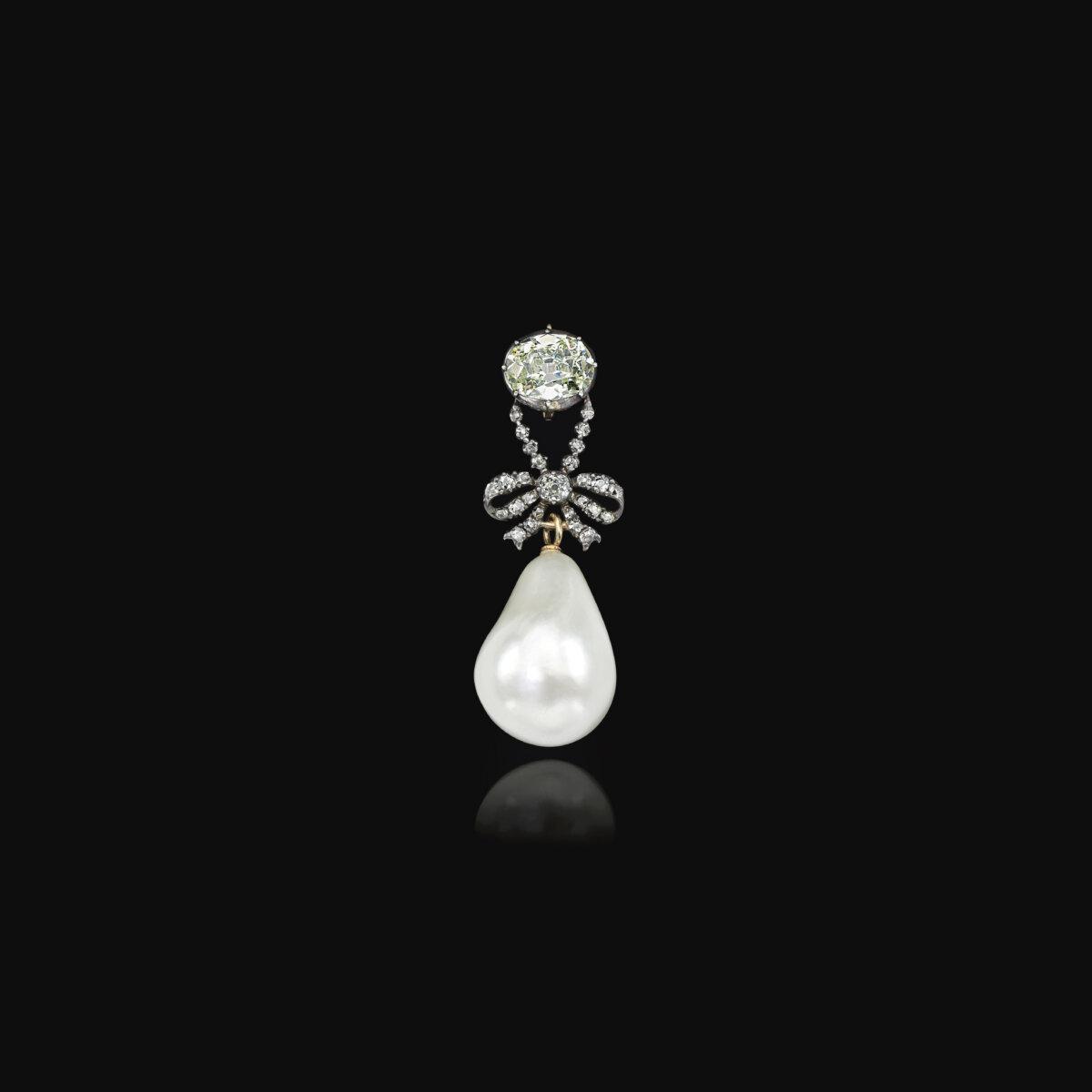
The queen’s exquisite bow pendant, consisting of an oval diamond supporting a diamond bow and a natural pearl, features in the exhibition. She wore it on a three-strand pearl necklace. Experts believe the pendant was among the items smuggled out of the besieged Tuileries Palace in 1791 as the king and queen were about to escape the revolutionaries. Marie Antoinette’s nephew, the emperor of Austria, Francis I, safeguarded the pendant. Now in a private collection, the pendant broke the auction record for a natural pearl when, in 2018, it sold at Sotheby’s Geneva for $36 million.
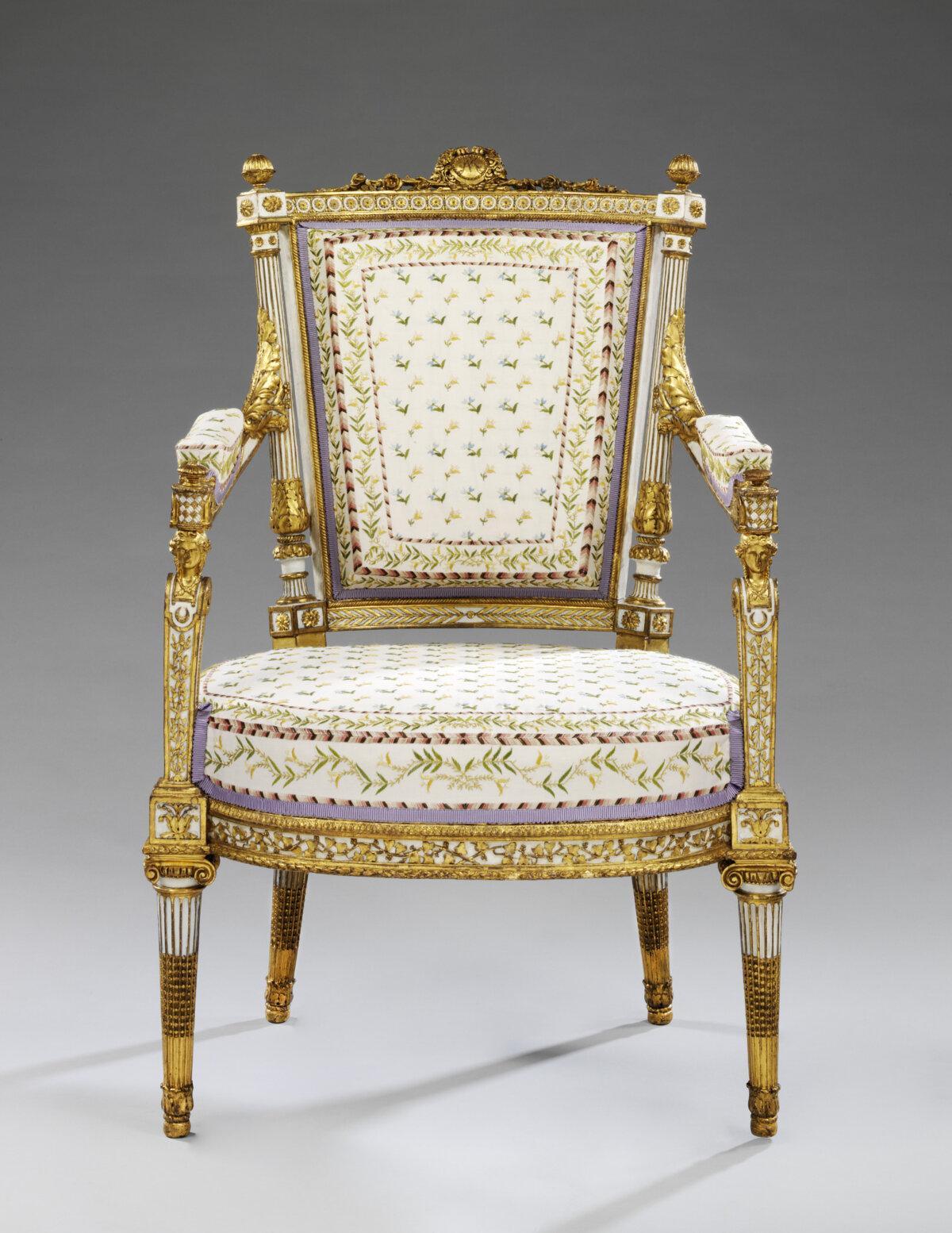
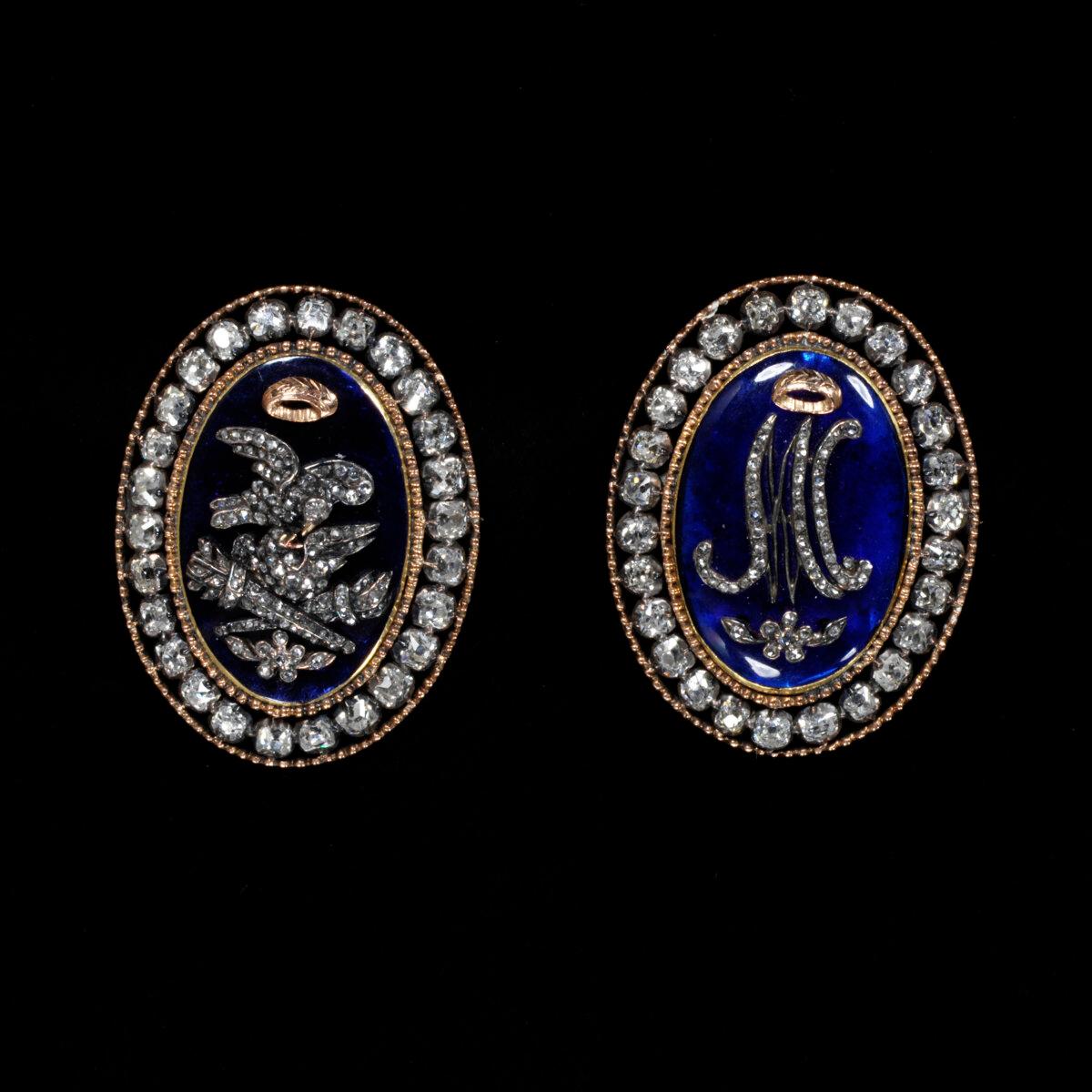
Also on display are a pair of Marie Antoinette’s gold, diamond, and blue paste (glass) bracelet clasps. One clasp is decorated with hymeneal torches (after the Greek god of marriage, Hymen) and a turtle dove (often symbolizing the Holy Spirit, purity, peace, and divinity). The other clasp is monogrammed “MA.” The queen’s monogram can be seen on everything from jewels and personal items to interior decorations, furnishings, and furniture, such as Jean-Baptist-Claude Sené’s 1788 carved, gilded walnut armchair from Château de Saint-Cloud.
A Majestic Style Legacy
Luxury shoe designer Manolo Blahnik sponsored the exhibition. “I have been obsessed with Marie Antoinette for as long as I can remember,” he wrote in the exhibition book’s foreword. His mother passed her love for the French queen down to him. He and his sister watched the 1938 movie “Marie Antoinette,” starring Norma Shearer. At bedtime, his mother read to them Stefan Zweig’s biography, “Marie Antoinette: The Portrait of an Average Woman,” and that started Blahnik’s lifelong love of the queen who influenced his collections.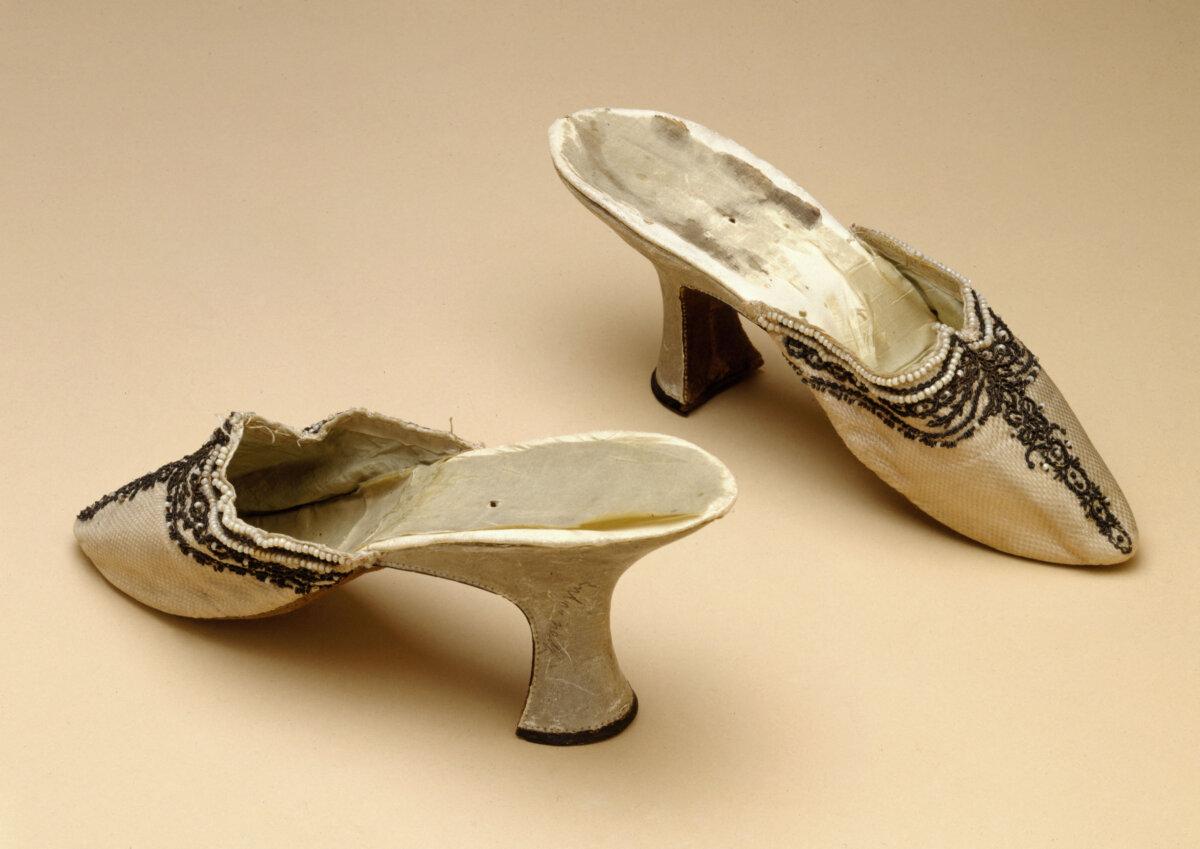
Director Sofia Coppola commissioned Blahnik to design the shoes for her 2006 film “Marie Antoinette.” His workmanship and attention to detail echoes the ethos of 18th-century craftsmen in the queen’s day. “I made the shoes myself, by hand in England, using the most exquisite Lyon silks from Claremont and sumptuous English embroideries from Stephen Walters. Details like the rosettes on the shoes and the silks I frayed myself. I instinctively knew how they needed to be created,” he wrote.
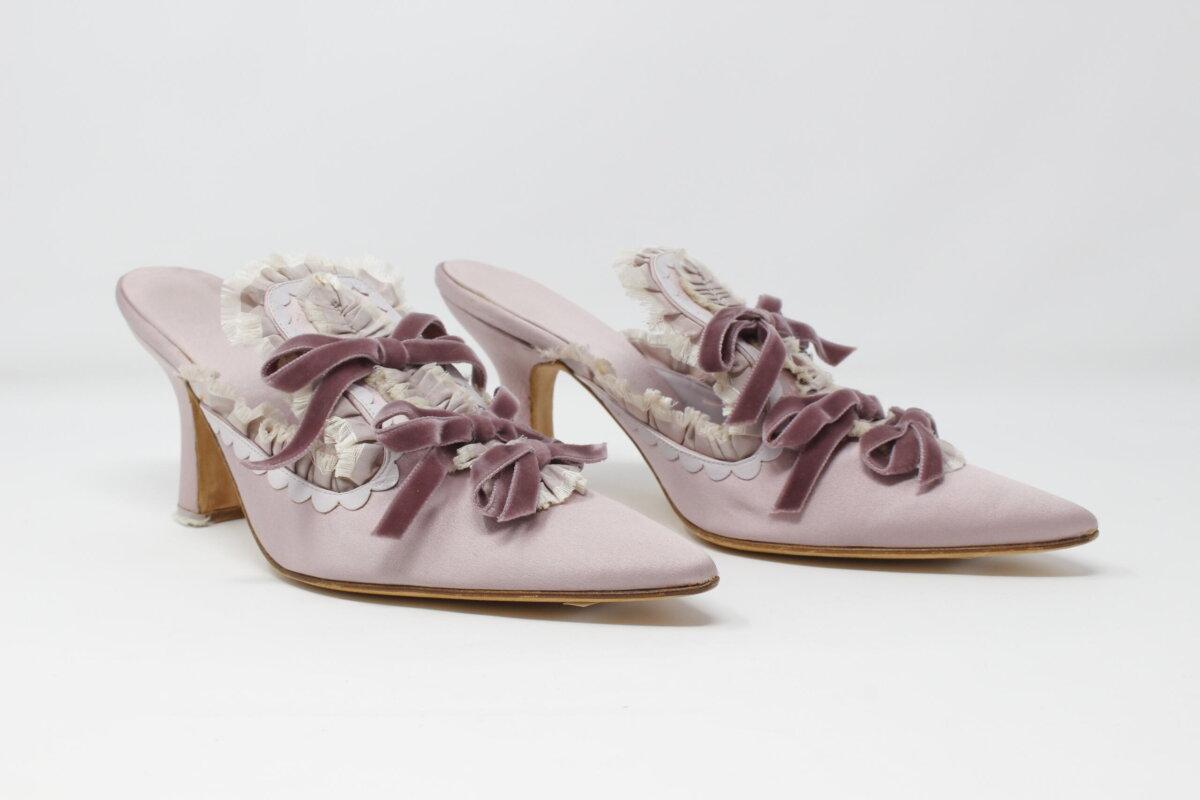
Eminent designers such as Blahnik continue to follow in Marie Antoinette’s stylish footsteps, influencing all aspects of culture—from clothing, shoes, and jewelry to art, theater, and architecture. Marie Antoinette’s style lives on in each and every one of those creations.