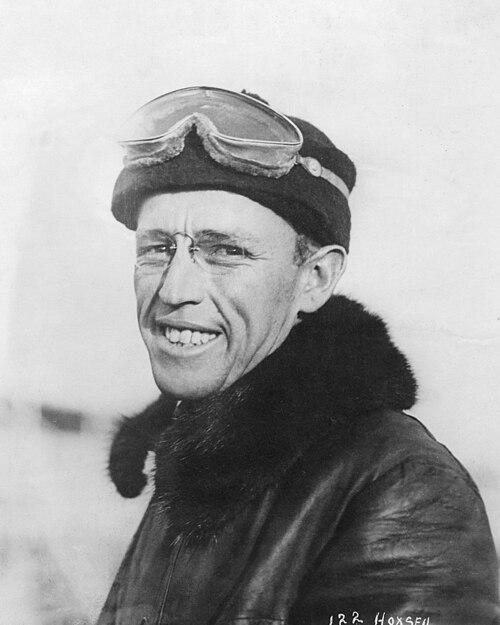
Archibald “Arch” Hoxsey grew up during the height of America’s Second Industrial Revolution. For a boy who loved technology and adventure, his birth in 1879 was well-timed. The end of the 19th century and the beginning of the 20th became an era of speed and altitude with the advent of automobiles, dirigibles, and airplanes. It was with the latter that Hoxsey would carve his name into history.
Though born in Illinois, his time in the Midwest would be relatively brief. The family soon moved to California. Hoxsey developed an affinity for machines. When his father, Archibald, died in 1892, young Hoxsey and his mother, Minnie, moved to Pasadena. A year later, America’s first gas-powered automobile was introduced, but on the other side of the country in Massachusetts.
The Wright Choice
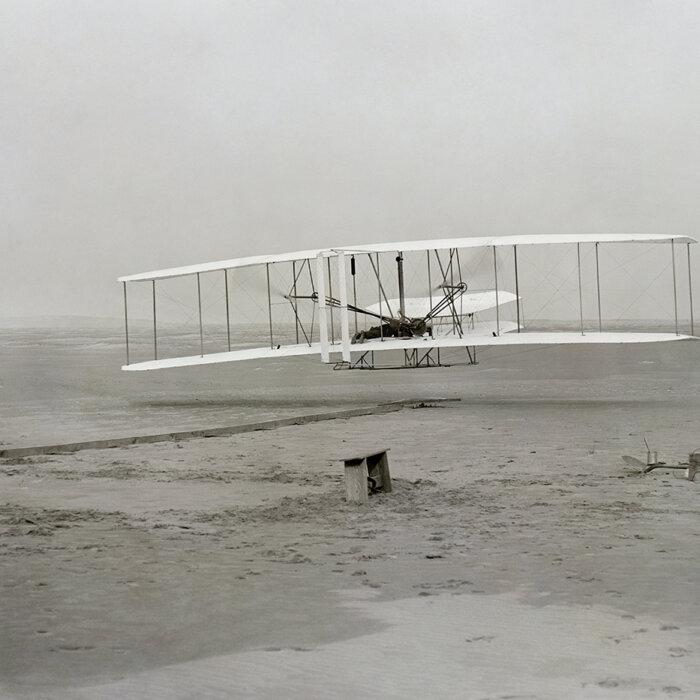
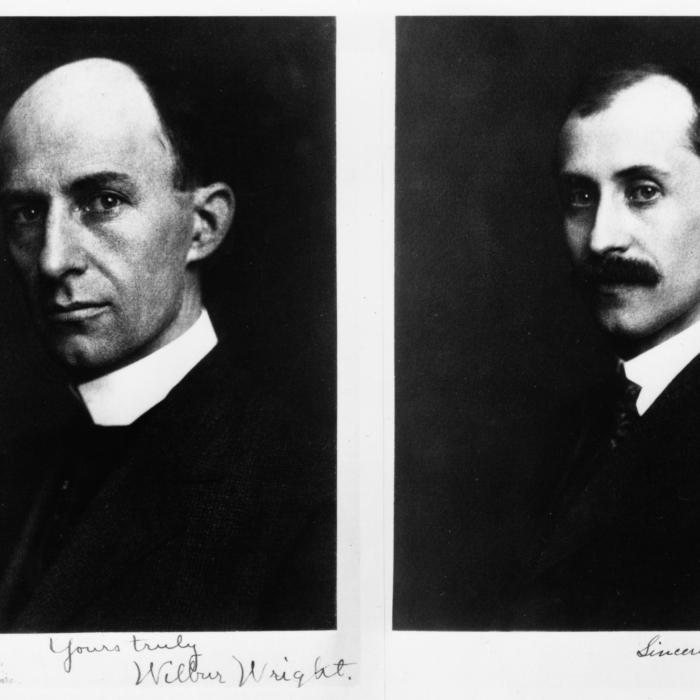
Hoxsey’s gift for driving and automobile mechanics soon drifted toward a new technological development: the airplane. In December 1903, Orville and Wilbur Wright conducted the first successful test flight at Kitty Hawk, North Carolina. Aviation enthusiasm spread across the country, leading others to attempt building their own planes. By the end of the decade, the Wright Brothers’ plane monopoly was dissipating, leading them to file many patent lawsuits against other builders. This competition also forced them to improve as well as further market their Wright Flyer.One of the most influential pilots to contribute to the plane’s development and marketing was Hoxsey, who eventually began working for the Wright Company as a mechanic, pilot, and instructor. With years of mechanical experience, he became arguably the company’s best engine mechanic.
Making a Name
A few months later, near Montgomery, Alabama, the Wright brothers purchased an old cotton plantation, cleared three square miles, and constructed landing strips. In March 1910, the Wrights launched the country’s first civilian pilot training school. On April 6, just 11 days after Orville conducted the school’s first flight, Hoxsey arrived to be trained as a pilot. The company’s primary objective was to increase the number of Wright pilots so they could cover more of the country to conduct flight trials, aerial demonstrations, and showcase the Wright planes’ ability during aerial meets.By the summer, Hoxsey was ready to perform some of the most daring acts. In July, Hoxsey arrived with his Wright Flyer in North Dakota for the Grand Forks Fair. Before a crowd of 10,000, Hoxsey made “swings and circles in such rapid succession that detailed description would be difficult,” a reporter noted. It would be one of several performances Hoxsey would conduct for the fair.
Hoxsey was quickly becoming arguably the country’s best pilot. This reputation was never put on display more than one October afternoon in 1910.
Flying the President
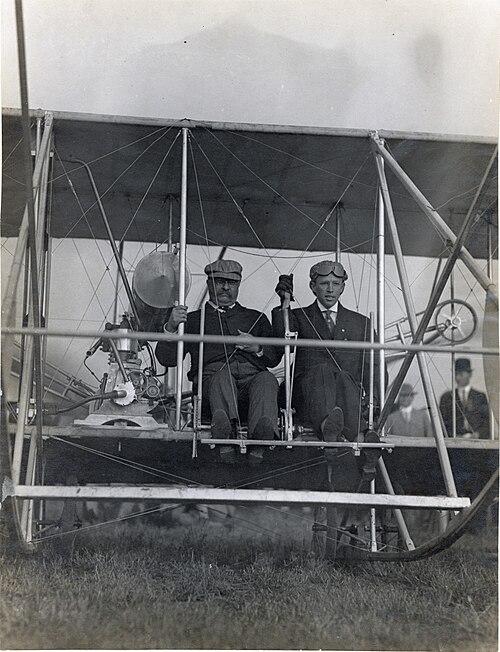
In early October, Hoxsey completed a flight from Springfield, Illinois, to St. Louis, covering 190 miles. During that stretch, he set a sustained flight record of 104 miles. The famous flyer asked arguably America’s most famous person to join him. Theodore Roosevelt had left the White House in early 1909 and immediately left for a Smithsonian-sponsored African safari. He returned to America in June 1910. Roosevelt, always looking for adventure, accepted Hoxsey’s invitation, making him the first president (former or current) to fly. The flight lasted about four minutes, though Roosevelt excitedly exclaimed, “By George, it was fine. I wish I could have stayed up an hour.”The stunt made headlines everywhere and further popularized Hoxsey and the Wright Flyer. Later that month, Belmont Park on Long Island hosted an international meet. Hoxsey, along with fellow Wright pilot Ralph Johnstone, was there to compete. The two had been dubbed “The Heavenly Twins” as they often flew together in separate Wright Flyers. They were also called “The Stardust Twins” after becoming the first pilots to fly at night.
During one of their dual flights, they reached 3,000 feet when suddenly a gale of about 70 mph began forcing their planes backward. The two planes vanished from sight, with Hoxsey forced about 25 miles away and Johnstone about 55 miles away. Incidentally, Johnstone set an altitude record of 8,471 feet thanks in large part to the wind. It was a record Hoxsey would eye.
The dangers of flying were consistently evident. A couple of weeks later, on Nov. 6, Johnstone explained to reporters why he flew: “I fly to survive, If I were not obliged there, I would not do it. I am fatalistic. I believe that the hour of each one is fixed in advance, but for those which are attracted by the plays of the sky, it comes very early.”
Pursuing the Record
Johnstone’s death was not an anomaly. Planes were still a new technology with a high mortality rate. Nonetheless, the following month Hoxsey looked to achieve what he had been pursuing: the altitude record.Over the Christmas weekend at Dominguez Field in Los Angeles, Hoxsey attempted to break the record during another international meet. The bitter cold at the elevated height and “a cutting north wind” had forced him down. On Dec. 26, he felt he was prepared and tried again. By day’s end he had set the altitude record at 11,474 feet and won $6,000.
“It was the most terrifying cold I have ever felt, but I wanted the record, and I knew that I must face stern conditions to get it,” he wrote the following day for the Los Angeles Herald. “I wanted to go still higher, and know I could have stood it a while longer … Of course, two miles high, one feels the lightness of the atmosphere, but with a good, strong heart and a good pair of lungs, that isn’t to be minded.”
Five days later, he attempted “to go still higher.” It would not be the cold and decreased oxygen that would prove fatal. At approximately 660 feet, Hoxsey lost control of his plane, meeting the same fate as his friend Johnstone.
On March 10, 1911, Thomas Jackson, a representative of the Wright Company, wrote to Theodore Roosevelt, informing him that “your trip with Arch Hoxsey at St. Louis was the pride of that unfortunate boy’s whole life … no matter what his subsequent records amounted to his flight with you as his passenger was the record of which he was the most proud.”
Hoxsey’s funeral service was held in Atkinson, Nebraska, where his ashes were placed near his father’s grave.