The Long, Complex Path to Creating the Defense Intelligence Agency

In ‘This Week in History,’ WWII highlighted intelligence deficiencies, leading numerous administrations to try to fix the problem.
The Long, Complex Path to Creating the Defense Intelligence Agency
(Left) One of the Defense Intelligence Agency's 24/7 watch centers. (Right) Official portrait of the founder of the DIA, Robert McNamara. Public Domain
|Updated:
0:00
President Franklin D. Roosevelt was precise when he stated that Dec. 7, 1941 would be “a date which will live in infamy.” It was a day that would force Congress into a declaration of war after the country “was suddenly and deliberately attacked by naval and air forces of the Empire of Japan” at Pearl Harbor. One of the infamous aspects of that attack was how unprepared the military base at Pearl Harbor had been.

A glaring issue within America’s intelligence community was that there was not enough intelligence gathering taking place. Indeed, there were not enough intelligence agencies to perform the internationally complex work.

The intelligence arms of the Army and the Navy—the country’s original intelligence agencies—had long been in competition with each other. These two arms were less than cooperative with each other, nor did they always disseminate their intelligence to the right decision-makers in a timely manner. Additionally, their underestimation of Imperial Japan’s capabilities certainly contributed to a lack of urgency.

The Need for Centrality

Before America entered the war, there was plenty of wartime information coming through Washington, but properly analyzing it all was nearly impossible due to a lack of manpower, poor methods of coordination, and minimal analyzing experience. Indicative of how difficult it was to trust incoming intelligence, Roosevelt was forced to rely heavily on feedback from British and American friends traveling through Europe.

In July 1940, upon the recommendation of Secretary of the Navy Frank Knox, Roosevelt sent decorated World War I veteran, William J. Donovan, to England to gather intelligence on German subversion in Europe. The following year, he was sent to the Mediterranean, the Balkans, and the Middle East.
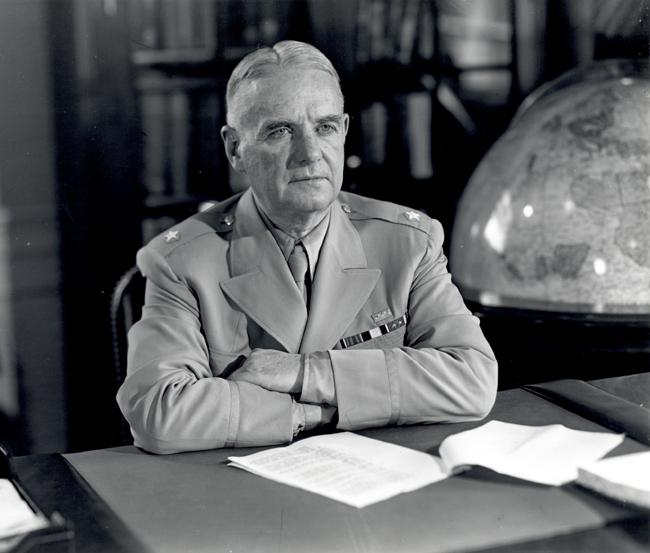
William J. Donovan, head of the OSS, at his desk, circa 1945. (Public Domain)
William J. Donovan, head of the OSS, at his desk, circa 1945. Public Domain
Upon his return, Donovan encouraged the president to “set up a central enemy intelligence organization which would itself collect either directly or through existing govdepartments of the government, at home and abroad, pertinent information.” Roosevelt proposed the establishment of the Office of Coordinator of Strategic Information, a proposal that was met with pushback from the Army and Navy, which feared the office would usurp their authority.

Readjusting the framework, on July 11, Roosevelt established an executive branch position for Donovan entitled Office of Coordinator of Information (COI), which would collect, analyze and collate intelligence from the varying agencies with the objective of coordinating and correlating defense information for national security. It was a mountain to climb for Donovan.

Recalling how utterly unprepared America was on the foreign intelligence front, Dean Rusk, who was an Army intelligence officer in World War II and would later become secretary of state, commented:
“When I was assigned to G-2 in 1941 … I was asked to take charge of a new section that had been organized to cover everything from Afghanistan right through southern Asia, southeast Asia, Australia, and the Pacific. Because we had no intelligence organization that had been giving attention to that area up to that time, the materials available to me when I reported for duty consisted of a tourist handbook on India and Ceylon, a 1924 military attaché’s report from London on the Indian Army, and a drawer full of clippings from the New York Times that had gathered since World War One.”

Oversaturated Intelligence

If the problem at the start of WWII was not enough capacity to gather and collate intelligence, then the problem became an oversaturation of intelligence shortly after the war’s end. The need for analyzing intelligence data remained just as urgent with the onset of the Cold War and the Soviet Union’s military and nuclear capabilities. The problem now became how best to organize and disseminate intelligence, especially with competing military intelligence groups.

During the war, the COI became the Office of Strategic Services (OSS), which grew to approximately 13,000 personnel. Shortly after the war’s end, it was briefly changed to the Strategic Services Unit (SSU), until President Harry S. Truman established the Central Intelligence Group (CIG) in January 1946, which was managed by the simultaneously established National Intelligence Authority (NIA), composed of the Secretaries of State, War, and Navy, and Fleet Admiral William D. Leahy, as the president’s personal representative. The CIG expanded the previous intelligence capabilities of the OSS, but was constrained by the NIA. It lasted a year and was the true predecessor of the Central Intelligence Agency (CIA).

In 1947, the National Security Act (NSA) was passed, establishing the CIA and the office of Director of Central Intelligence (DCI), who would lead the CIA and the country’s intelligence community (IC) within the executive branch. The Act reformed the Joint Chiefs of Staff as an advisory body; established the National Security Council; established the Air Force as its own branch; and merged the War Department, the Navy Department, and the Air Force into the National Military Establishment (NME).
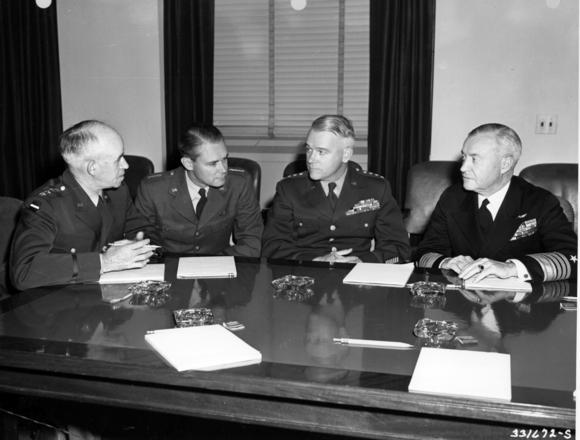
The Joint Chiefs of Staff during its early days in 1949. Truman Library. (Public Domain)
The Joint Chiefs of Staff during its early days in 1949. Truman Library. Public Domain

The Hoover Commissions

That same year, Truman requested former president Herbert Hoover to chair a commission on how to improve government efficacy. Among the many problems it identified, the approximate 500-page report identified “disturbing inadequacies” within the IC. Due to “too many disparate intelligence estimates” by different agencies that “have often been subjective and biased” leading to misinterpreted “capabilities of potential enemies,” the Hoover Commission recommended “a better mechanism than now exists for coordinating the service intelligence agencies in the [Defense] Secretary’s office.” This meant giving more authority to the secretary.
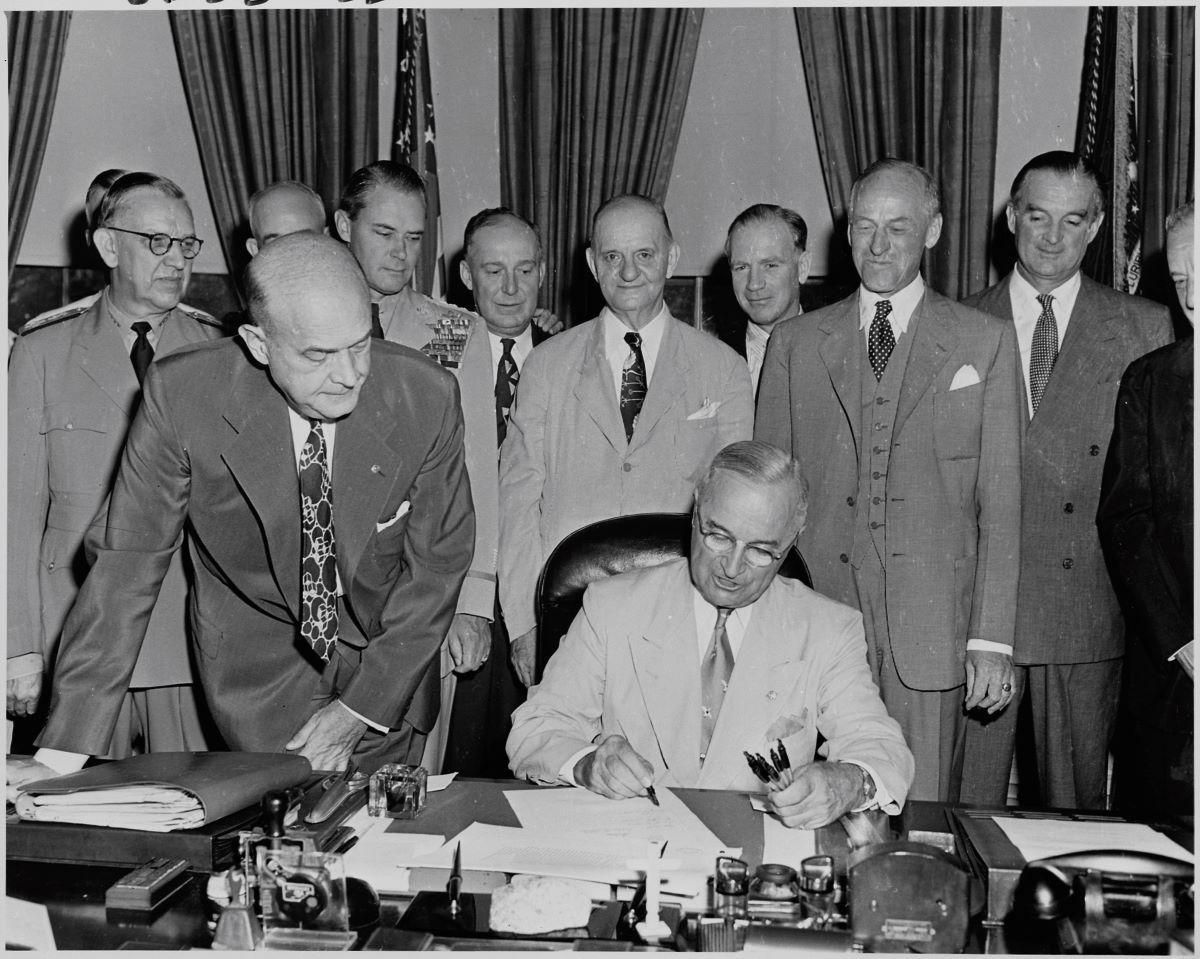
Truman and Congress accepted many of the recommendations and passed the National Security Amendments Act of 1949. The NME was reformed as the Department of Defense (DOD), the military branch secretaries lost their cabinet positions, ultimately making each of those secretaries subordinate to the secretary of Defense (who was given a cabinet position in 1947). The NSA amendments also further empowered the CIA in its activities.
President Truman signs the National Security Act Amendment of 1949. National Archives and Records Administration. (Public Domain)
President Truman signs the National Security Act Amendment of 1949. National Archives and Records Administration. Public Domain

It was not the last time Hoover was called upon. In 1953, President Dwight D. Eisenhower requested another review for government improvements. The second Hoover Commission lasted two years and used hundreds of volunteers.

Among its 20 task forces was the Task Force on Intelligence Activities. It had originally been assigned to primarily study the CIA, but it later expanded to study all of the federal government’s intelligence activities to make recommendations for how to “promote economy, efficiency, and improved service.” The expansion proved necessary as the Task Force quickly discovered, and mentioned in their report, that the CIA was “veiled in secrecy, and it is virtually a law unto itself.”
The second Hoover Commission was not as influential as the first, with less than 30 percent of its recommendations acted upon. Its recommendations on cutting red tape for the sake of efficacy, however, were largely implemented.

‘Defense Reorganization’

There was still plenty of red tape though. John T. Correll, the long-time editor-in-chief for Air Force Magazine, recalled this period as being an era when “the war-making powers of the United States were vested in the President, the Secretary of Defense, and eight warlords.”

These “eight warlords” were the U.S. military’s combatant commands: U.S. European Command; U.S. Pacific Command; Caribbean Command; Continental Air Defense Command; Alaskan Command; U.S. Naval Forces, Eastern Atlantic and Mediterranean; Strategic Air Command; and Naval Forces Japan. These commands—six of which were strategically located throughout the globe—were focused primarily on the Soviet Union due to its continual geographical expansion and its technological achievements (specifically missile and satellite technology).

Eisenhower made it very clear in his 1958 State of the Union address that the “threat to our safety, and to the hope of a peaceful world” was “communist imperialism.” He thus presented eight items for how to address this ongoing threat, and the first on the list was “Defense Reorganization.” The urge to reorganize was based on removing service rivalries that often promoted differing defense doctrines in order “to achieve real unity in the Defense establishment.”

“The Congress willing,” Eisenhower stated, “we will free the flow of military commands from unified authority down to the man with a gun.”

Congress proved willing and passed the Defense Reorganization Act, which reorganized the Pentagon to streamline the chain of command, giving more authority to the secretary of Defense over the military branches and their aforementioned combatant commands. While the Joint Chiefs of Staff maintained their advisory role, the Act also increased the size of the Joint Staff from 210 to 400 supporting officers.

In December 1958, Defense Secretary Neil McElroy iterated the streamlined communication system: “The chain of command runs from the President to the Secretary of Defense and through the Joint Chiefs of Staff to the commanders of the unified and specified commands.”

Channeling Military Intelligence

Much had been accomplished since the end of WWII to reduce the service rivalries, eliminate differing doctrines, and promote unity. There was still the problem, however, with intelligence gathering from the civilian (CIA, FBI, National Security Advisor, Atomic Energy Commission, etc.) and military branches.

In 1960, the outgoing Eisenhower prompted another review. Known as the Joint Study Group (JSG), its objective was a common one: how to modernize and streamline the intelligence systems of the military branches. The JSG submitted their findings in December, which showed, among other issues, great inefficiency due to duplicated and, at times, conflicting intelligence reports. The findings were presented to the incoming administration of John F. Kennedy.
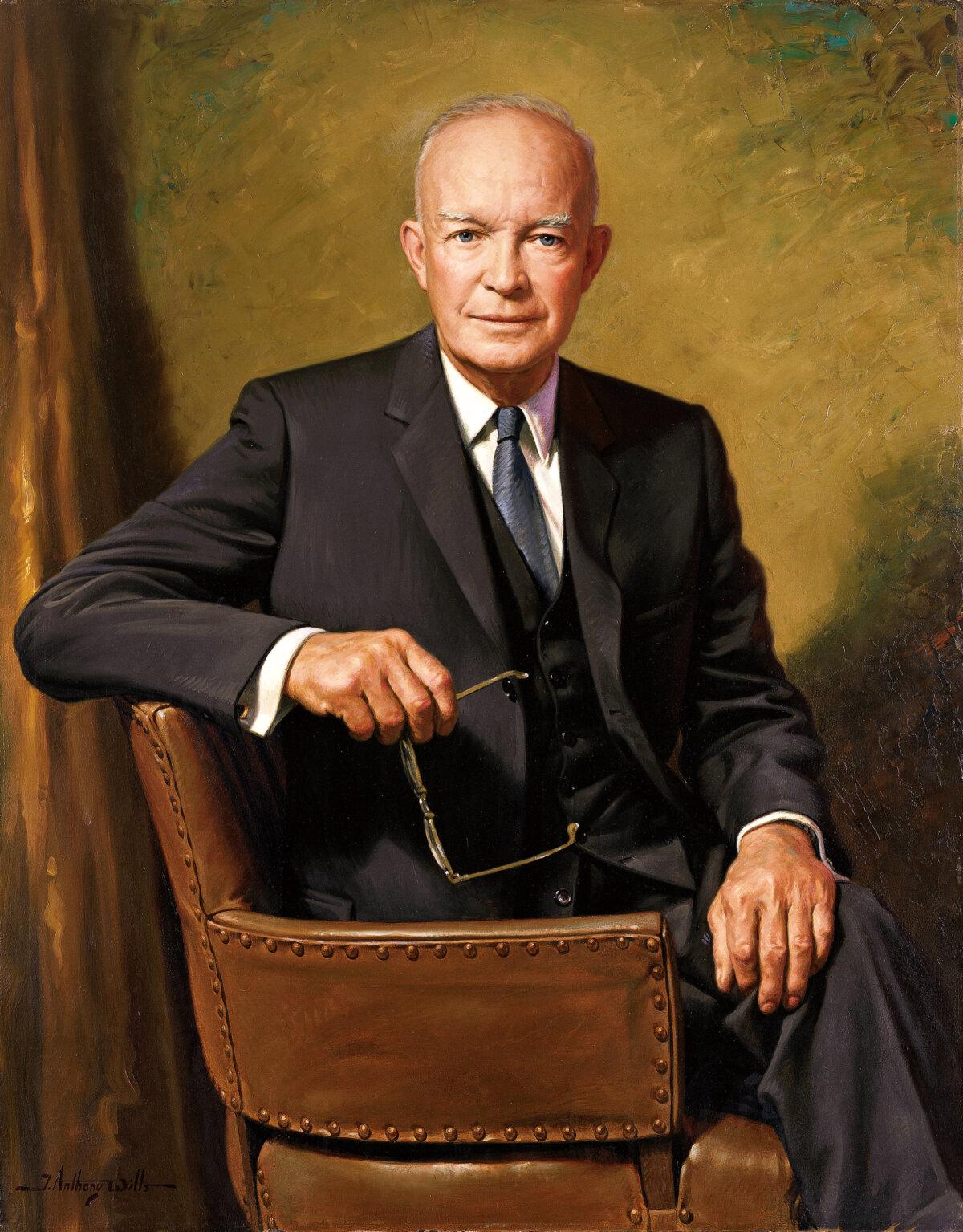
The official presidential portrait of Dwight D. Eisenhower, circa 1960, by James Anthony Wills. (Public Domain)
The official presidential portrait of Dwight D. Eisenhower, circa 1960, by James Anthony Wills. Public Domain
After reviewing the study and its recommendations, and consulting with the JCS, Kennedy’s secretary of Defense, Robert McNamara, ordered the creation of a new agency within the DoD for “collecting, processing, evaluating, analyzing, integrating, producing, and disseminating military intelligence throughout [the department].” It was during this week in history, on Aug. 1, 1961, that Secretary McNamara established the Defense Intelligence Agency (DIA).
Two months later, on Oct. 1, the DIA began operations in a borrowed space of the Pentagon with 25 personnel. Since then, it has continued “to manage and direct an increasing array of missions and functions that provide intelligence support to the national command authority and the warfighter” with responsibility “for over 80 critical national security and defense functions.”
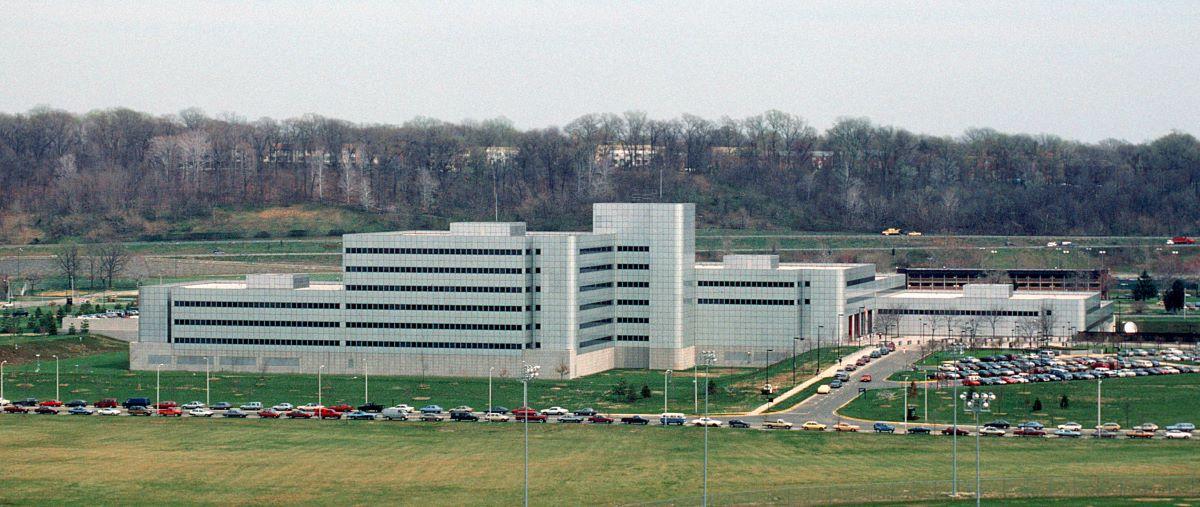
In the 1980s, DIA moved into the newly built Defense Intelligence Agency Headquarters (seen here in 1988), which now represents only one wing of the sprawling complex. (Public Domain)
In the 1980s, DIA moved into the newly built Defense Intelligence Agency Headquarters (seen here in 1988), which now represents only one wing of the sprawling complex. Public Domain
Never miss a This Week in History story! Sign up for the American History newsletter here.
What arts and culture topics would you like us to cover? Please email ideas or feedback to [email protected].
Google LogoMark Us Preferred on Google
Dustin Bass
Dustin Bass
Author
Dustin Bass is the creator and host of the “American Tales” podcast and cofounder of “The Sons of History.” He writes two weekly series for The Epoch Times: Profiles in History and This Week in History. He is also an author.