There is a rich art historical tradition of depicting this event, but Bellini’s interpretation has no precedent. “St. Francis in the Desert,” circa 1475–1478, reflects the artist’s genius in the burgeoning medium of oil paint to depict color, light, religious iconography, and the natural world—all with great beauty and detail.
Scholars believe that Sicilian artist Antonello da Messina’s visit to Venice around 1475 may have played a pivotal part in Bellini’s switch from tempera to oil. Antonello was an early Italian practitioner in the medium. This new technique allowed for more precise detailing and richer colors that, in Bellini’s hands, were luminously saturated.
St. Francis of Assisi
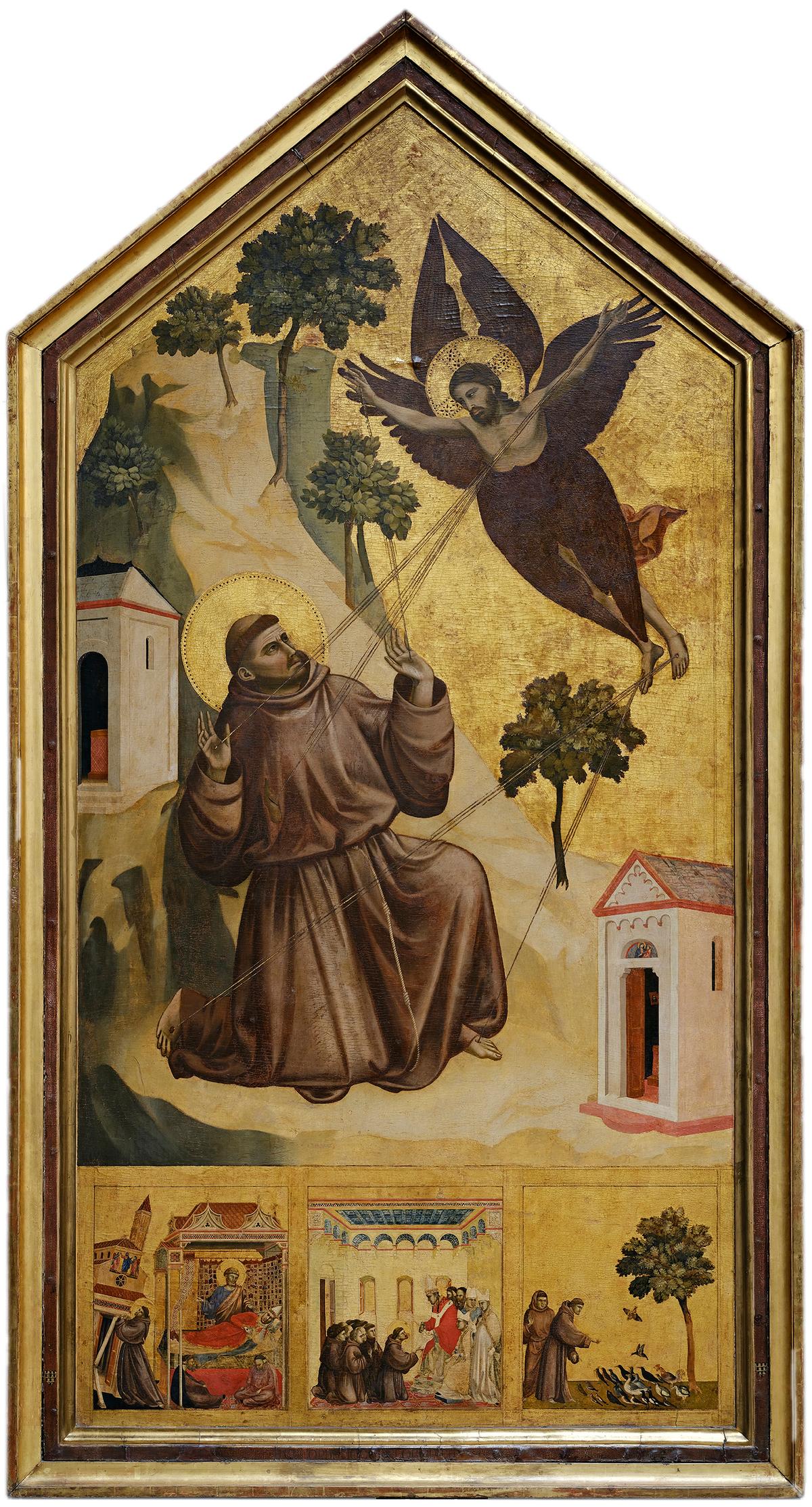
There is an immediacy to Renaissance portrayals of St. Francis, as he lived shortly before the Early Renaissance began. Francis (circa 1181–1226) was born to a wealthy merchant family in the town of Assisi in Italy’s Umbria region. As a young adult, he rejected his worldly possessions to live a Christian life of poverty in dedicated service to the poor and all creatures. He founded the Franciscan Order, which continues to play an influential role in the Catholic Church.
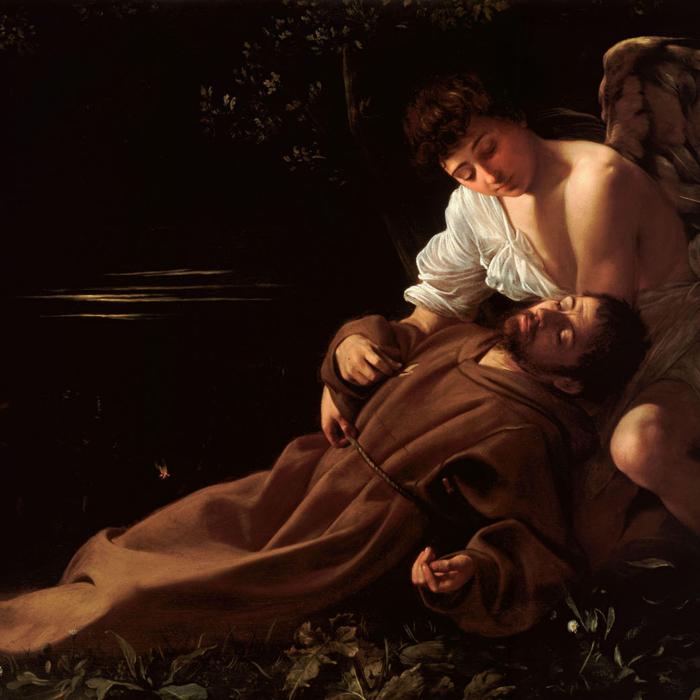
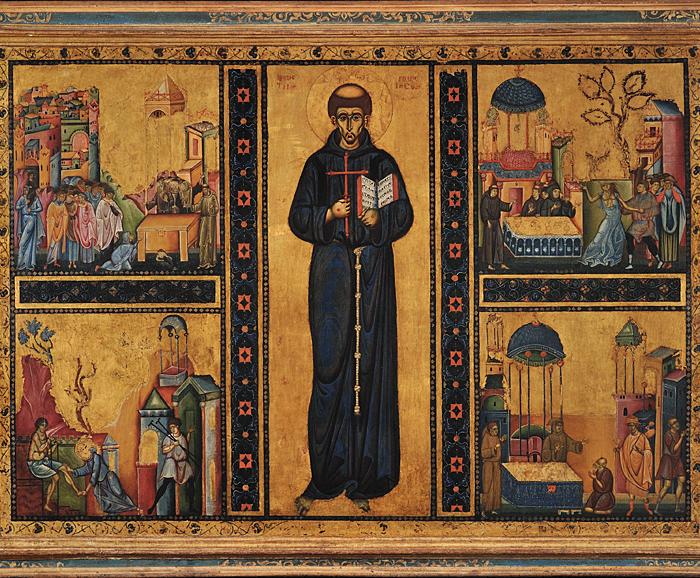
Bellini’s unconventional version features Francis in a rocky, austere wilderness, but does not show a seraph. Recent scientific examination of the painting has confirmed that while a portion of the canvas’s top edge was cut off at some point, it is highly unlikely that it contained a seraph.
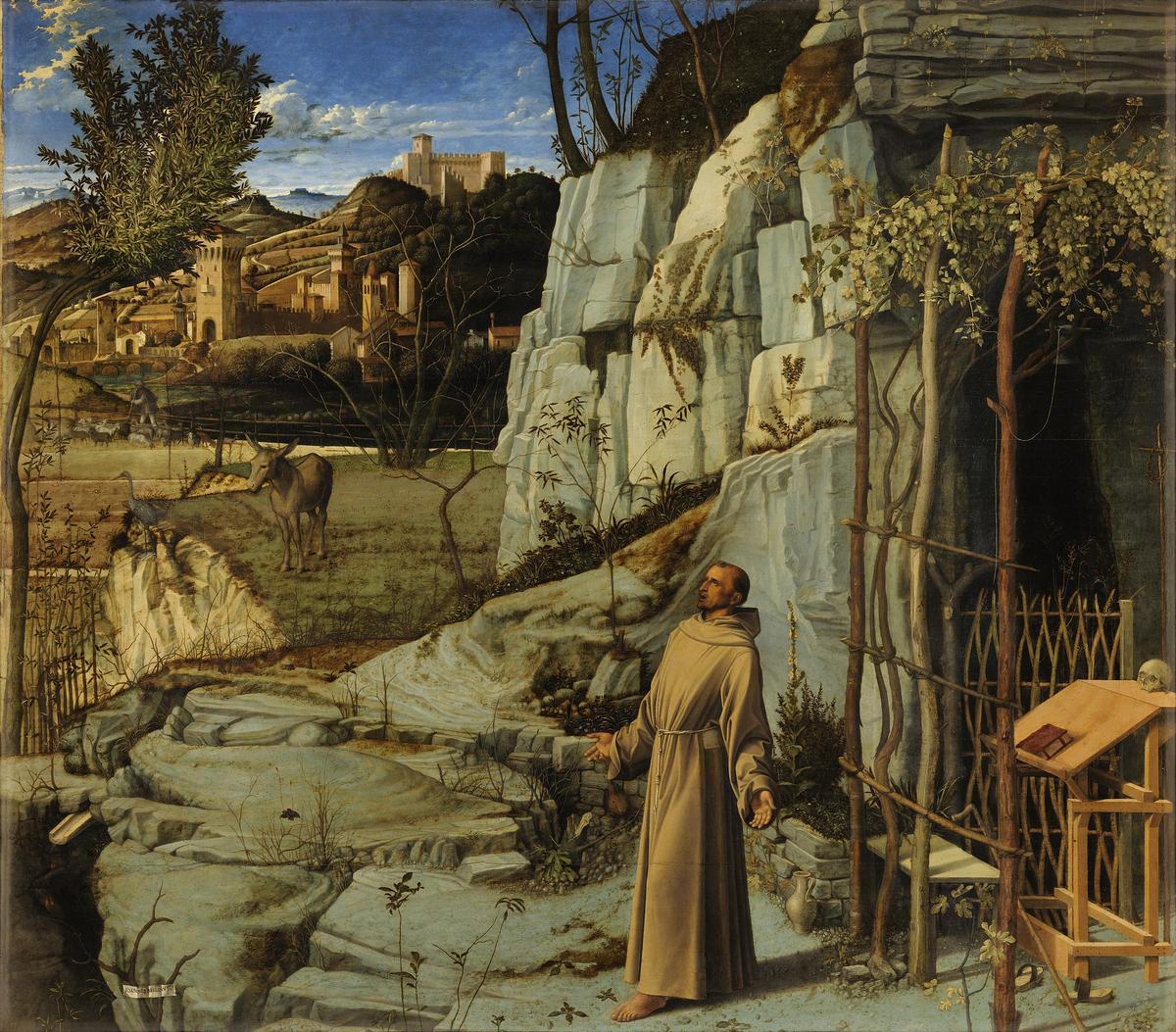
Francis is usually illustrated in a kneeling position receiving five stigmata, but Bellini depicts him standing with open arms. Today, only two stigmata are visible, on the palms of his hands. However, the technical investigation revealed a wound on the left foot. Due to abrasion over the centuries, it is no longer visible without high magnification.
The special, harmonious relationship between the saint and the natural world is highlighted in this panel by the inclusion of meticulous landscape details. There are animals, such as a donkey and rabbit, birds, including a heron and kingfisher, and plants, like a fig tree and flowers. Behind the countryside is a medieval walled town. Nearby is one of the few signs of human life, aside from Francis: a shepherd bringing his flock along a river.
The painting was commissioned by Venetian nobleman Giovanni Michiel, and it stayed in the city in various prominent family collections for over 330 years. After extended time in private French and British collections, it was bought in 1915 for $170,000 ($5.45 million) by Henry Clay Frick and installed in his mansion’s living room. It remains there today as part of his eponymous museum and is a favorite artwork of many visitors.