NR | 1h 52m | Action, Adventure, Drama | 2022
Looking at tomorrow through the dusty lens of yesterday offers a weird thrill that can make retro-futuristic cinema far more interesting than standard sci-fi movies. “Shin Ultraman” is one such film.
Filmmakers Hideaki Anno and Shinji Higuchi reunited to cook up another tokusatsu (TV film with practical special effects) reboot after their massive success with 2016’s “Shin Godzilla.”
The film shows a future seen entirely through the artifacts of the past. Viewers experience a wonderful temporal collision. This is so different from standard sci-fi adventures that paint cohesive, hyper-advanced worlds that are more easily digestible.
Retro-futuristic movies don’t hold the hand of the imagination. This can confuse some viewers, since the stories are usually harder to figure out. The viewer’s mind will burn extra energy trying to process things it can’t immediately grasp in an attempt to orient itself in a reality where a noisy fax machine may sit right next to intergalactic technology.

Silver Giant Meets Rising Threats
Those pesky giant kaiju monsters are at it again. Japan is so used to them by now that the government treats these bothersome beasts like rotating cases of bad weather.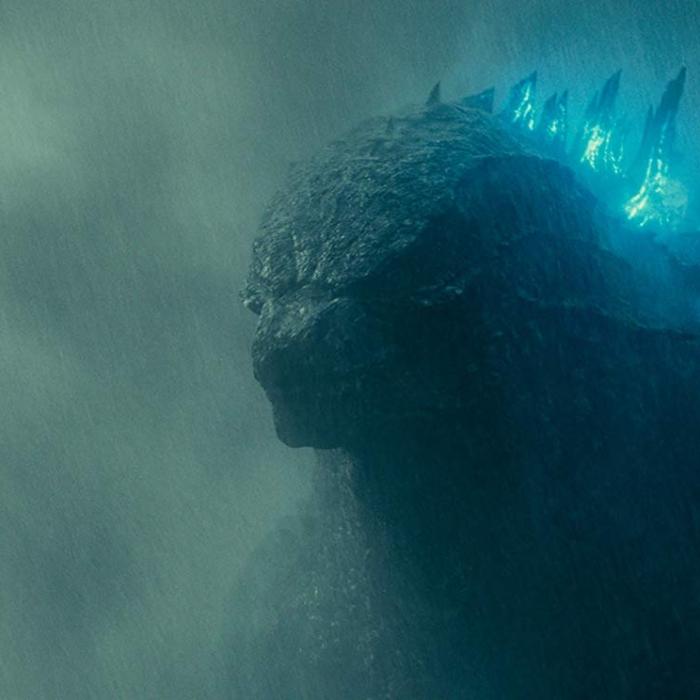

To handle this persistent nuisance, they’ve formed the S-Class Species Suppression Protocol, or SSSP. Leader Kimio Tamura (Hidetoshi Nishijima) relies heavily on his main agent, Shinji Kaminaga (Takumi Saitoh), and a new federal investigator named Hiroko Asami (Masami Nagasawa).
Asami quickly realizes that the job runs on incomplete answers and fast decisions. Early cases include Neronga, a bizarre creature that interferes with power absorption and visibility, and Gabora, a burrowing threat that makes the ground in entire areas unstable.
During a particular kaiju rampage, Kaminaga bravely runs straight out into the destruction to reach a stranded child. Then, a towering silver humanoid suddenly crashes down from space and obliterates the monster with an intense beam of light.
The aftermath raises more questions than relief, as Kaminaga takes a direct hit during the incident. He later returns to work with no clear explanation for how he survived. Asami files the report on the event and gives the humanoid being a name: Ultraman.
Old and New
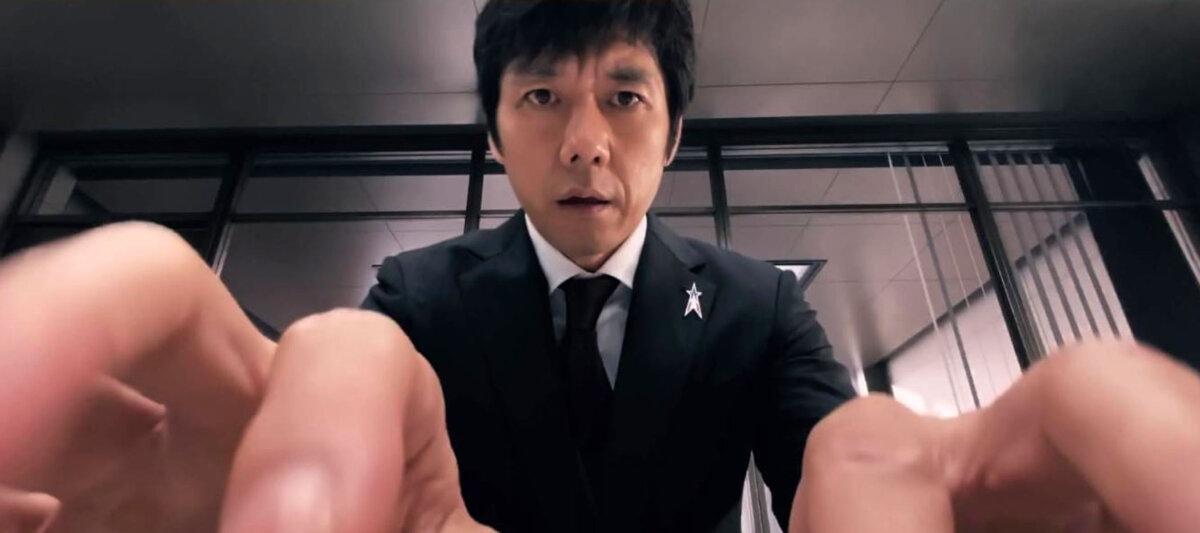
“Shin Ultraman” is shot in a way that feels restless but fits the material. Cameras sit low under desks, peek through monitors, and hover in odd positions that make even a simple meeting feel slightly off.Then it flips into wide, towering views during the big kaiju encounters, where scale stretches until buildings resemble props. Gigantic bodies move with an exaggerated sense of power and reach.
The mix of close framing and over-the-top perspectives gives the film a strange rhythm that keeps shifting. It never settles into a single visual language; that instability ends up working in its favor.
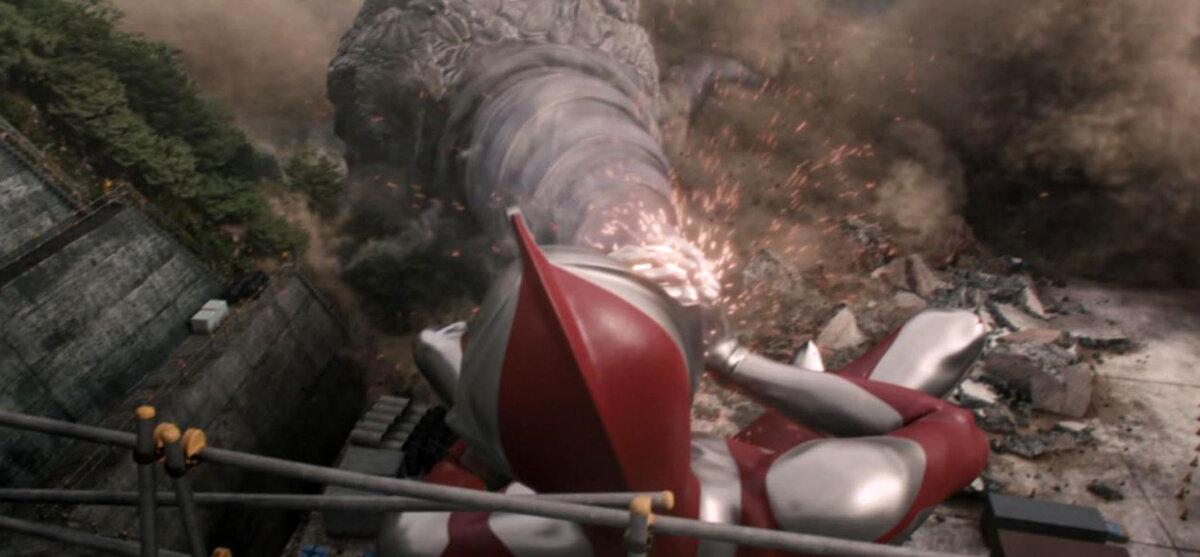
The special effects follow that same logic. The creatures and Ultraman are rendered digitally, yet their movement carries that old tokusatsu stiffness from earlier productions. Hits connect with a sense of physical force even when the images themselves are clearly constructed. Fight scenes feel tactile without hiding their artificiality.
The film also knows when to be funny and fully commits to it. There’s plenty of rapid-fire dialogue, endless meetings full of silliness, and duplicitous officials who scheme and scramble to keep up with events; this all builds into something that edges toward satire without tipping over into full-on camp.
The only drawback is where characters speak so quickly that viewers may find themselves chasing the subtitles while also trying to follow the visuals.
“Shin Ultraman” is a curious combination of eras that never fully settles into either one. It pulls from older instincts, runs them through modern tools, and leaves the seams visible instead of hiding them.
That friction gives it a distinct retro-futuristic identity and keeps it from slipping into routine. It’s worth checking out if you’re open to something that plays by its own rules and ultimately offers a hopeful view of humanity.