Sardonyx Cameos of Emperor Augustus

These magnificent museum gemstone cameos depict Augustus as a heroic leader and imply his equality with the gods.
Sardonyx Cameos of Emperor Augustus
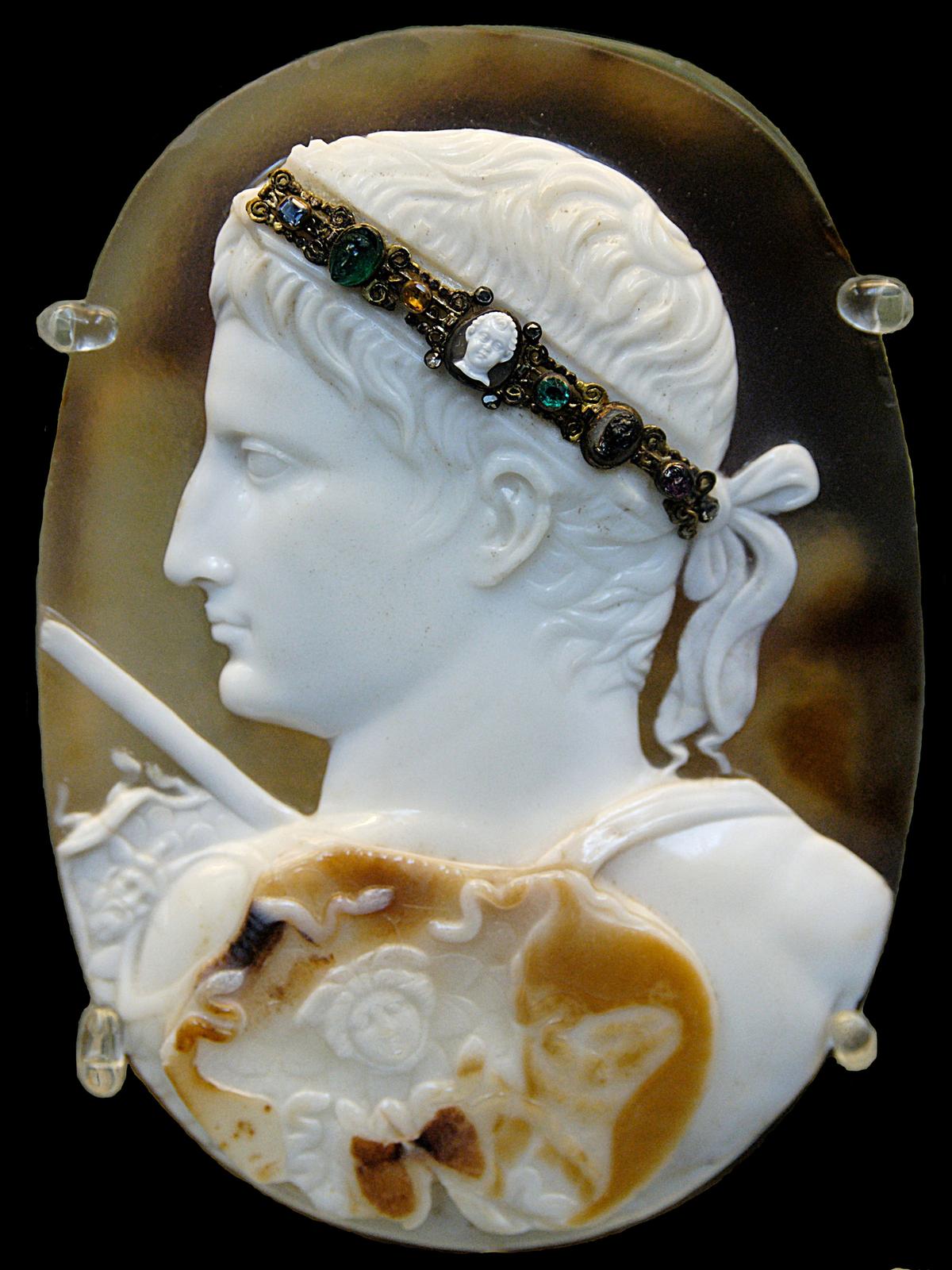
Sardonyx cameo portrait of the Emperor Augustus, circa AD 41–54. The Metropolitan Museum of Art, New York City. Public Domain
|Updated:
0:00

Augustus (63 B.C.–A.D. 14) was the first emperor of Rome. Born Gaius Octavius, he was later adopted by his great-uncle, Julius Caesar, and then known as Octavian. After Caesar’s assassination, Octavian joined forces with Mark Antony to avenge the murder. However, rivalries between the two led to civil war.

Octavian was the victor, defeating the alliance of Antony and Cleopatra. He took control of the entire Roman world, made Egypt one of its provinces, and added further territories. Octavian replaced the previous Roman republic system of government with a form of autocracy that strove to preserve the illusion of republican ideals to placate the people.

At the start of his reign in 27 B.C., Octavian took the name Augustus, meaning lofty or serene. Augustus prided himself on his frugality. As a result, many coins and statues promoted a modest and restrained image of the emperor to ingratiate him with those who wanted to return to a republic. However, just as he was ultimately an absolute ruler, some artworks exalted him, especially after Caesar was deified, since Augustus claimed descent from him. A few months after Augustus died in A.D. 14, he was deified as well.
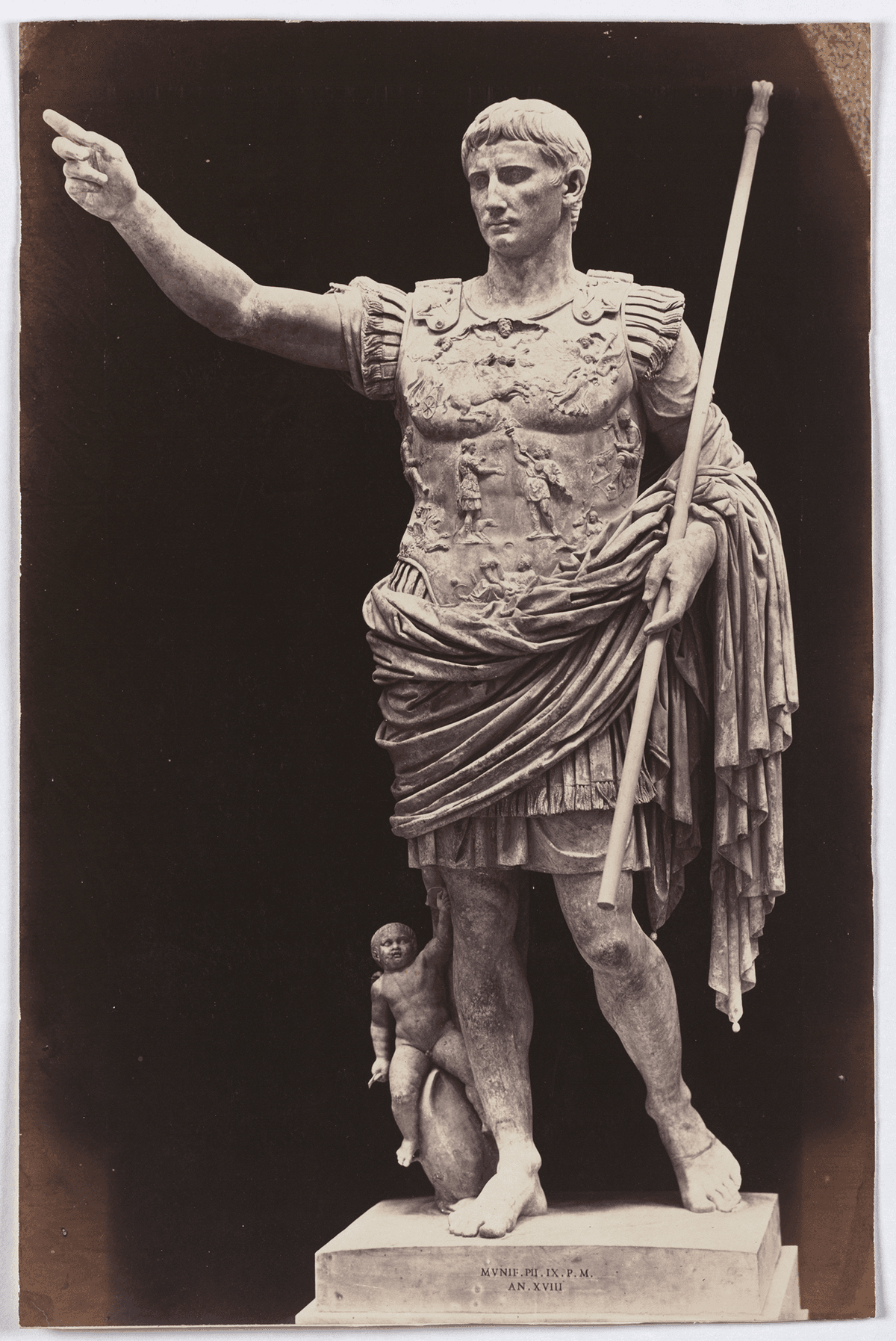
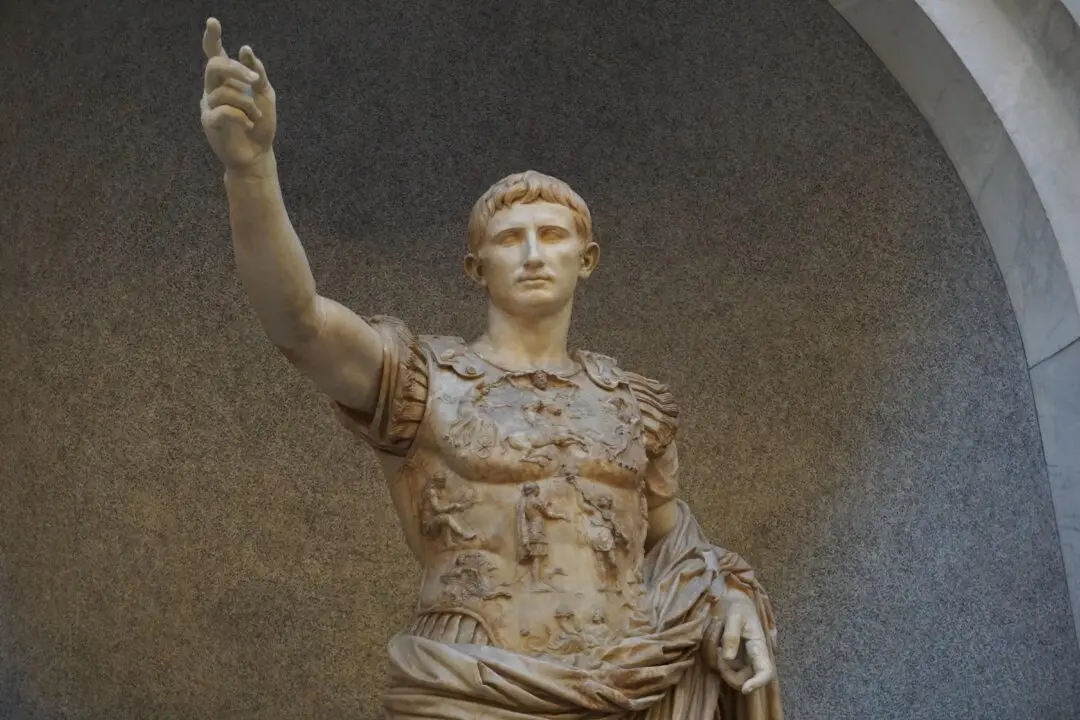
One of the most famous statues from the ancient world is the Vatican Museums’s “Augustus of Prima Porta.” Believed by art historians to have been modeled after a now-lost bronze original from Augustus’s lifetime, this monumental marble was likely commissioned by his stepson and heir, Emperor Tiberius, for his widow, Livia, Tiberius’s mother. This sculpture includes attributes of divinity.
An early photograph of the "Augustus of Prima Porta" statue found in the 19th century. Städel Museum, Frankfurt. (Public Domain)
An early photograph of the "Augustus of Prima Porta" statue found in the 19th century. Städel Museum, Frankfurt. Public Domain
This association with the divine is also found in small-scale portrait works of Augustus, specifically sardonyx cameos, which were likely intended to be viewed only by the imperial family’s inner circle. A cameo is a material, such as stone, shell, or glass, that has been carved away to produce an image in relief. Typically, the image is of a portrait in profile with a contrasting background color. Sardonyx refers to onyx with parallel layers of sard; it is an opaque gemstone that is usually reddish-brown with white layers.

Augustus Cameos

"The Blacas Cameo," A.D. 14–20. Sardonyx; 5 inches by 3 3/5 inches. The British Museum, London. (<a title="User:Jastrow" href="https://commons.wikimedia.org/wiki/User:Jastrow">Marie-Lan Nguyen</a>/ <a class="external text" href="https://creativecommons.org/licenses/by/2.5/" rel="nofollow">CC-BY 2.5</a>)
"The Blacas Cameo," A.D. 14–20. Sardonyx; 5 inches by 3 3/5 inches. The British Museum, London. Marie-Lan NguyenCC-BY 2.5

London’s British Museum has a cameo portrait of Augustus that dates to A.D. 14–A.D. 20. It is called “The Blacas Cameo” as it was purchased in 1867 from Louis, Duc de Blacas d’Aulps (1815–1866). A previous owner was a member of the famous Florentine Strozzi family. A fragment that was originally part of a larger portrait, the cameo is carved from a three-layered sardonyx.
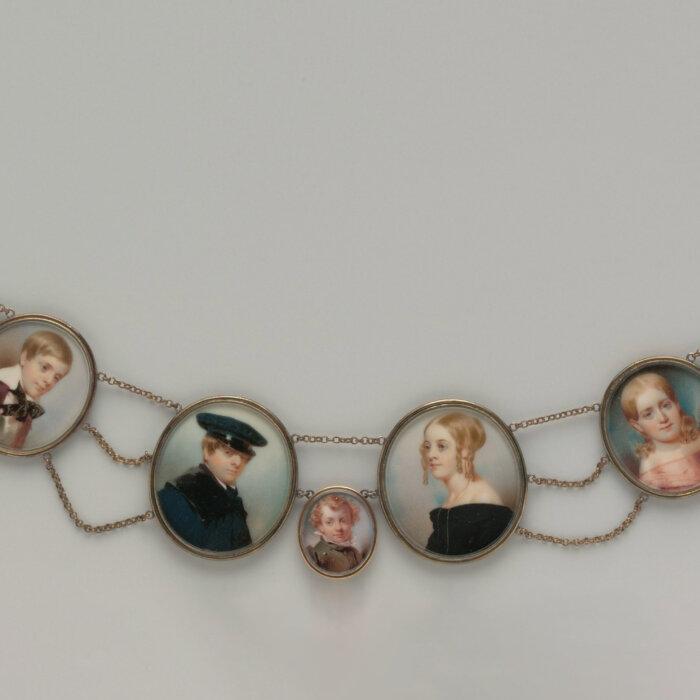
In the surviving image, the emperor is shown wearing an aegis—a shield, breastplate, or cape associated with the Roman god Jupiter and the goddess Minerva. The inclusion of a sword-belt, presumed from the strap over his right shoulder, alludes to Augustus’s military authority. The jeweled headband was added probably in the Middle Ages. The cameo artist originally carved a laurel wreath, a symbol of victory.

A later sardonyx cameo that dates to the reign of Emperor Claudius, Tiberius’s nephew, is part of the collection of the Metropolitan Museum of Art. The Met’s cameo shows Augustus wearing an aegis as well. This one is decorated with an image of the head of a wind god at left. Scholars believe it may reference summer winds that brought Egypt’s corn fleet to Rome and, hence, an allusion to Augustus’s annexation of the country. Additionally, it shows the head of Medusa on the right.
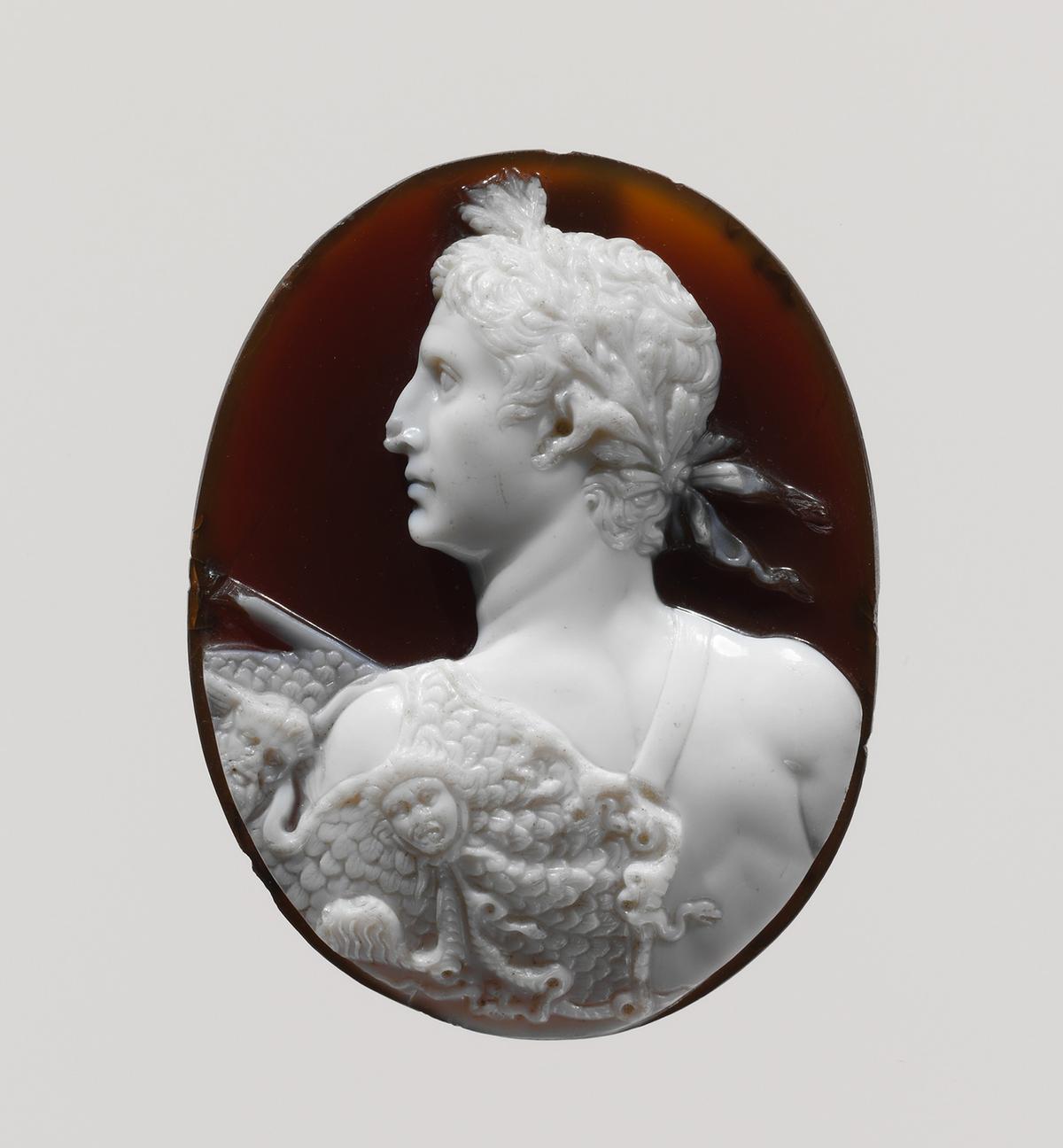
Sardonyx cameo portrait of the Emperor Augustus, circa A.D. 41–54. Sardonyx; 1 7/16 inches by 1 1/8 inches by 5/16 inches. The Metropolitan Museum of Art, New York City. (Public Domain)
Sardonyx cameo portrait of the Emperor Augustus, circa A.D. 41–54. Sardonyx; 1 7/16 inches by 1 1/8 inches by 5/16 inches. The Metropolitan Museum of Art, New York City. Public Domain
The museum notes that Augustus, wearing a laurel wreath, is depicted as a “triumphant demigod,” and that this artwork is one of hundreds that “overtly portray him” in this manner.

This cameo had several prominent owners before The Met acquired it: Thomas Howard (1585–1646), Earl of Arundel, who was one of the great English art collectors of the early 1600s; the Dukes of Marlborough, a family with a famous collection of cameos and intaglios; and Sir Arthur Evans (1851–1941), the archeologist best-known for his excavations of Knossos, Crete.

“Gemma Augustea,” the second largest surviving ancient cameo, is considered the most important ever created during antiquity. It extols the leadership of Augustus and Tiberius. The former is portrayed enthroned in the upper panel. Augustus’s divinity is emphasized by his attire and pose, which harken to Jupiter. At Augustus’s right is the patroness of Rome, the goddess Roma.
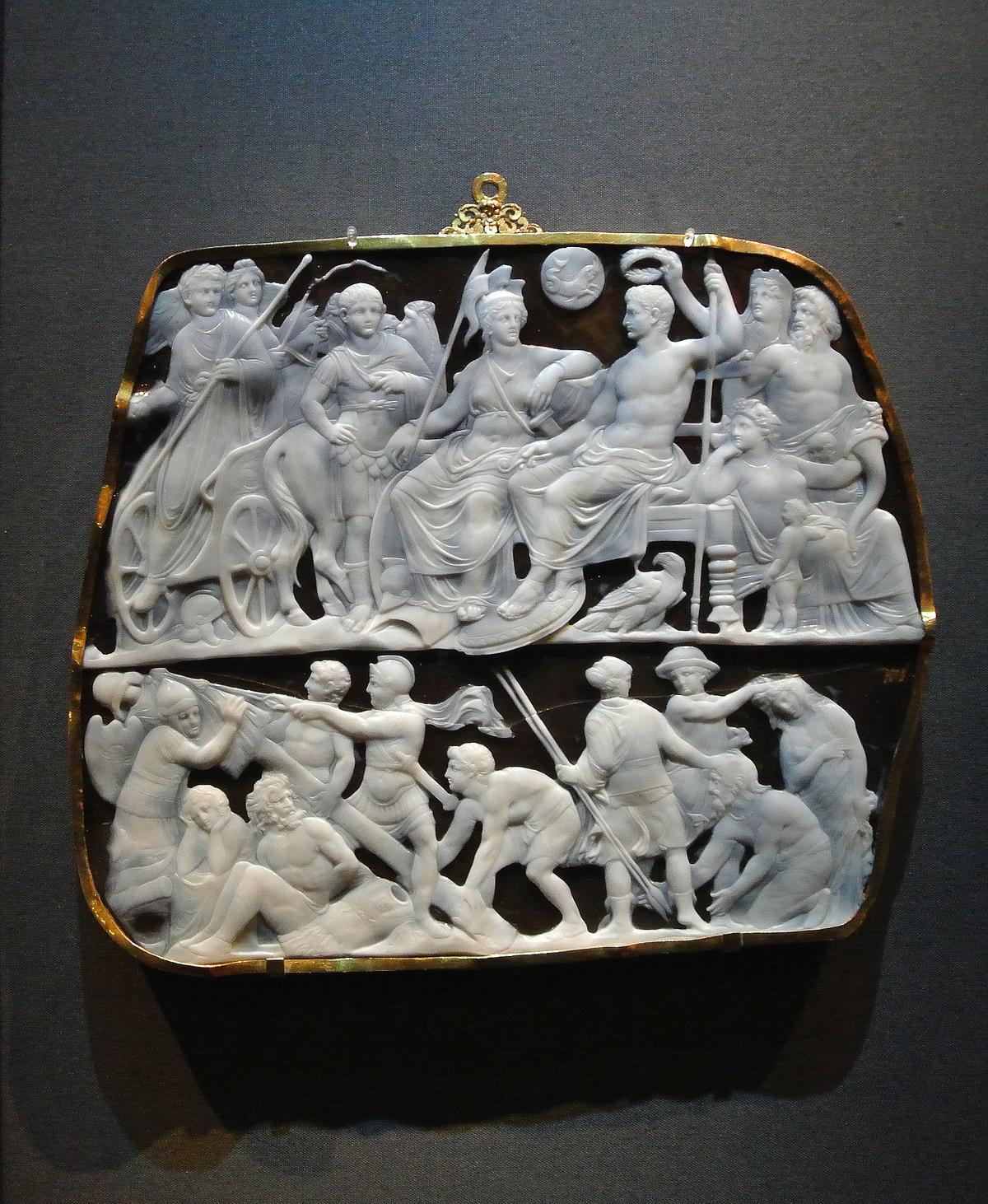
Dioskourides, “Gemma Augustea,”  A.D. 9–12. Onyx, two-layered, in gold band; 7 1/2 inches by 9 inches. Kunsthistorisches Museum, Vienna. (<a title="User:Jdsteakley" href="https://commons.wikimedia.org/wiki/User:Jdsteakley">James Steakley</a>/<a href="https://creativecommons.org/licenses/by-sa/3.0/deed.en" target="_blank" rel="nofollow noopener">CC BY-SA 3.0</a>)
Dioskourides, “Gemma Augustea,”  A.D. 9–12. Onyx, two-layered, in gold band; 7 1/2 inches by 9 inches. Kunsthistorisches Museum, Vienna. James Steakley/CC BY-SA 3.0

Between them is the constellation sign of Capricorn. The emperor believed this was his lucky star sign, so it was used as an imperial symbol, including on cameos. An example of this can also be found at The Met.
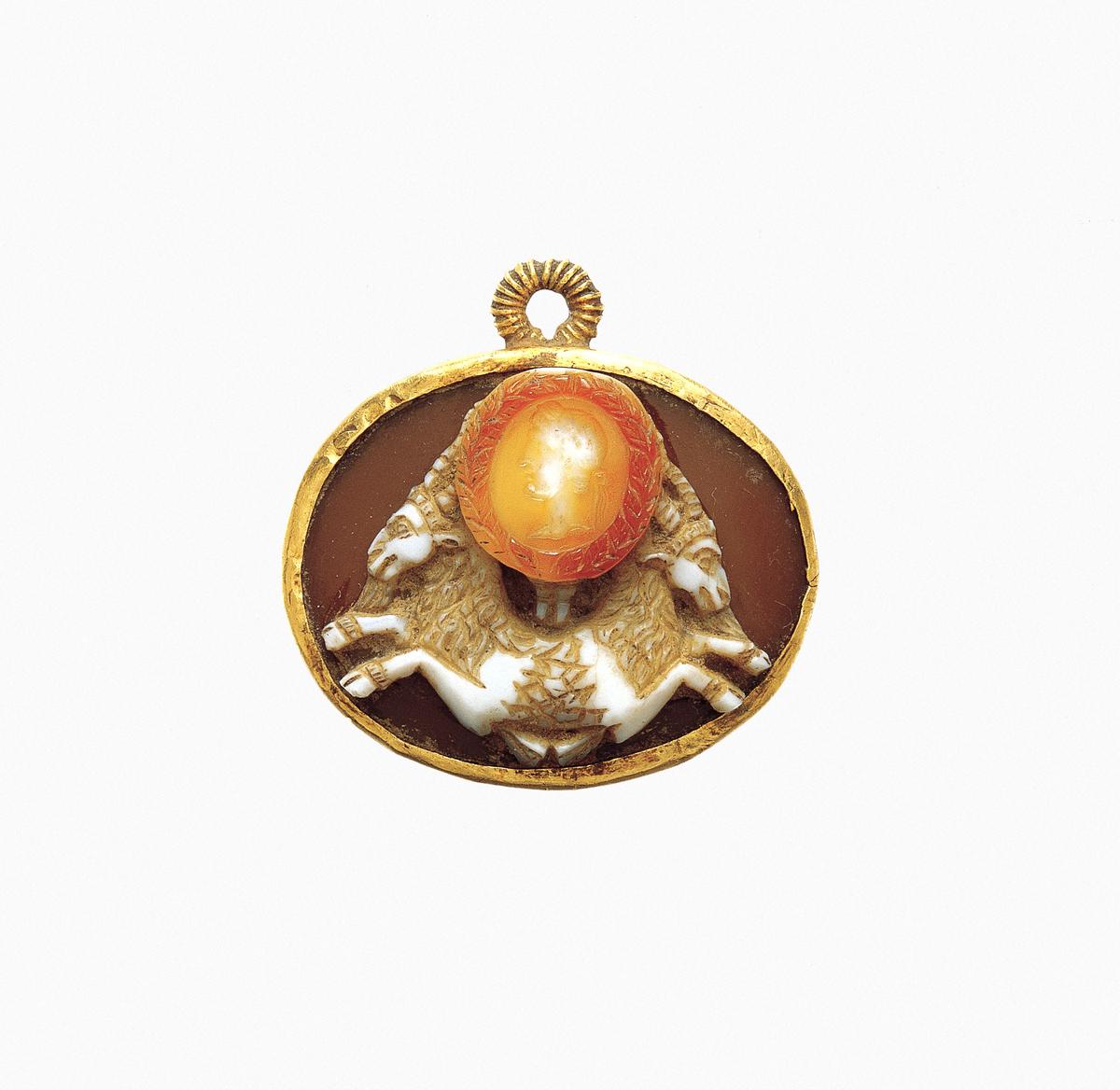
Sardonyx cameo of a double capricorn with a portrait of the emperor Augustus, circa 27 B.C.–A.D. 14, in Rome. Sardonyx, gold; 1 1/8 inches. The Metropolitan Museum of Art, New York City. (Public Domain)
Sardonyx cameo of a double capricorn with a portrait of the emperor Augustus, circa 27 B.C.–A.D. 14, in Rome. Sardonyx, gold; 1 1/8 inches. The Metropolitan Museum of Art, New York City. Public Domain

Tiberius is represented on the upper left of “Gemma Augustea”; he dismounts from a chariot whose reins are held by Victoria, goddess of victory. In the lower panel, it appears that gods have taken barbarians captive and are erecting a victory monument, called a tropaion. It glorifies a military triumph, perhaps the suppression of the Dalmatian Revolt, undertaken by Tiberius at Augustus’s order.

This masterpiece, about 7 1/2 inches tall by 9 inches wide, is believed to have been created in the imperial cameo workshop founded by the great Greek carver Dioskourides; he is credited with making Augustus’s personal seal. The first written record of “Gemma Augustea” is in an inventory of Toulouse, France’s Saint-Sernin Monastery in 1246. By the start of the 17th century, it was part of the collection of the Habsburg Holy Roman Emperor Rudolf II. It remained the property of the imperial family and is now on display at Vienna’s Kunsthistorisches Museum.

Augustus was admired in his lifetime and beyond for bringing peace to the fractured Roman Republic. In addition, he expanded the Roman Empire into western and central Europe and north Africa. The empire that he started lasted until its fall in A.D. 476. These magnificent museum gemstone cameos depict Augustus as a heroic leader and imply his equality with the gods. Initially made for intimate viewing by the privileged few, they are now accessible to all via public display or an online search.
What arts and culture topics would you like us to cover? Please email ideas or feedback to [email protected]
Google LogoMark Us Preferred on Google
Michelle Plastrik
Michelle Plastrik
Author
Michelle Plastrik is an art adviser living in New York City. She writes on a range of topics, including art history, the art market, museums, art fairs, and special exhibitions.