NR | 1h 23m | Adventure, Drama, Western | 1950
“Rocky Mountain” (1950), produced by Warner Bros., doesn’t so much gallop as wander into view, looking slightly confused about what genre it belongs to. Director William Keighley is a journeyman more comfortable with wartime flag-waving than sagebrush grit.
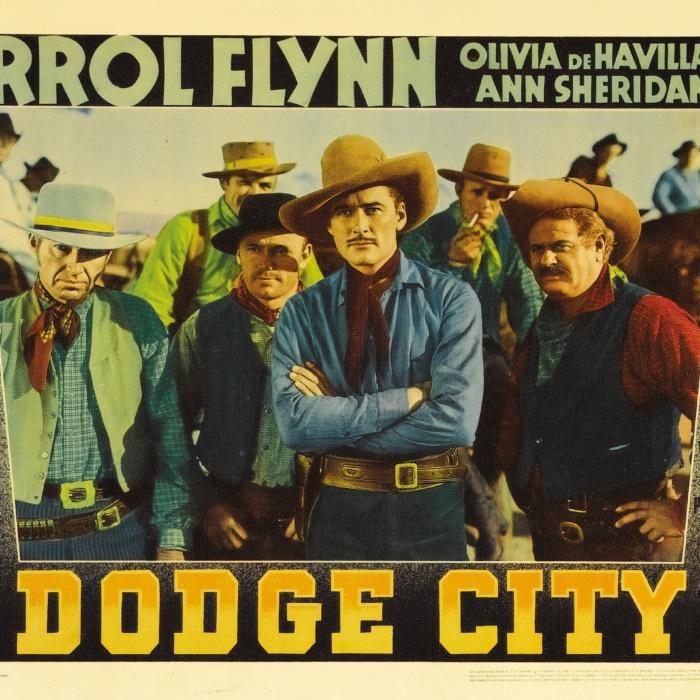
Starring Errol Flynn, the film is an oddball entry in the Western canon. Flynn, of course, was Hollywood’s golden corsair in the 1930s, a man who made swinging from chandeliers look like second nature. But toss him on a horse, slap a dusty coat on him, and suddenly he looks like someone cosplaying as a character in the Wild West.
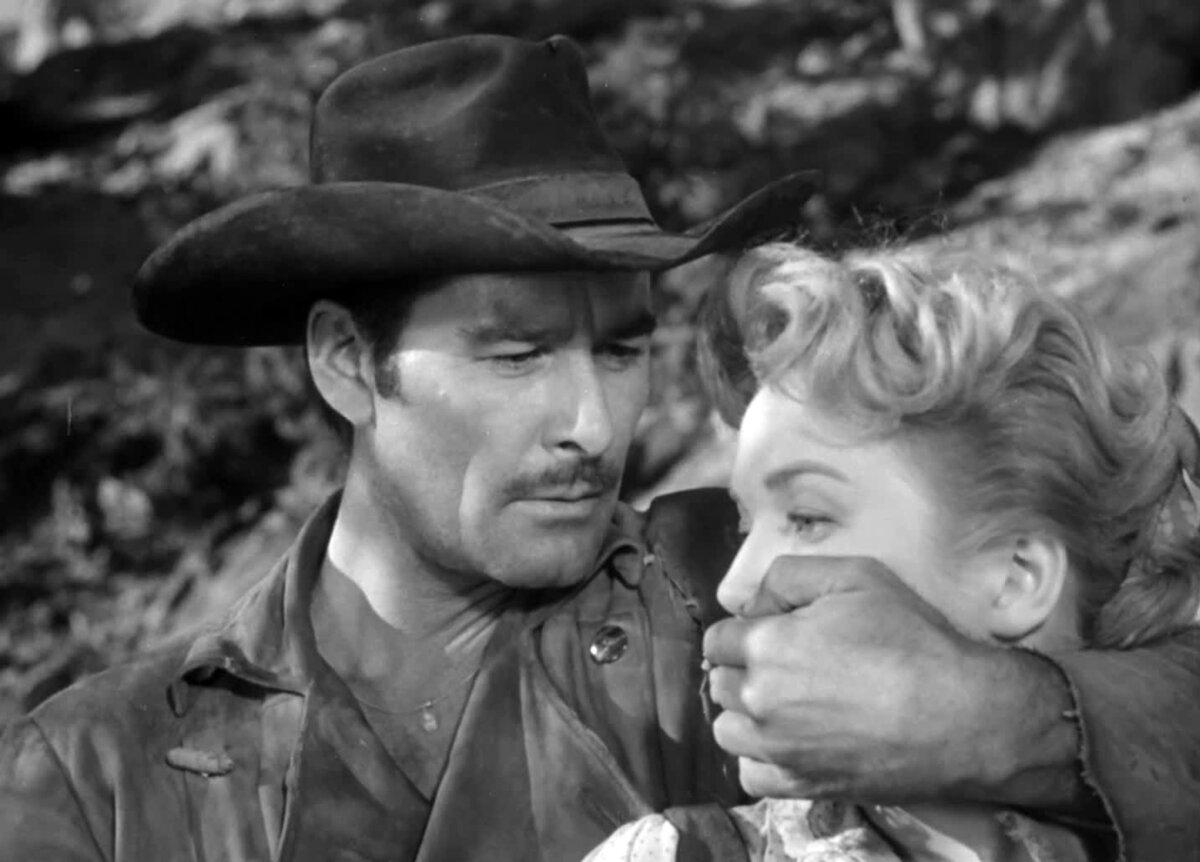
“Rocky Mountain” was Flynn’s final ride through the West, and it came at a time when the man’s luster had clearly dulled. The scandals, the years of excess—they'd taken a heavy toll.
But strangely, Flynn’s weariness works. He’s no longer trying to fake cowboy swagger; instead, he leans into a kind of reluctant gravitas. It’s not great acting, but it’s compelling in a blink-and-you’ll-miss-it way. His performance is like a faded marquee blinking back to life just long enough to remind you of what it once was.
Rebels With a Cause
As the Civil War drags toward its uncertain end, a band of eight Confederate riders moves across the parched edges of Southern California. Leading them is Capt. Lafe Barstow (Flynn), the group is tasked with a quietly grim mission. They must reach a shadowy contact who claims he can ignite a local uprising in the West. Their destination, a desolate rise known as Ghost Mountain, feels less like a waypoint and more like a warning. It’s wind-beaten and exposed, a place where ambitions dry up and disappear.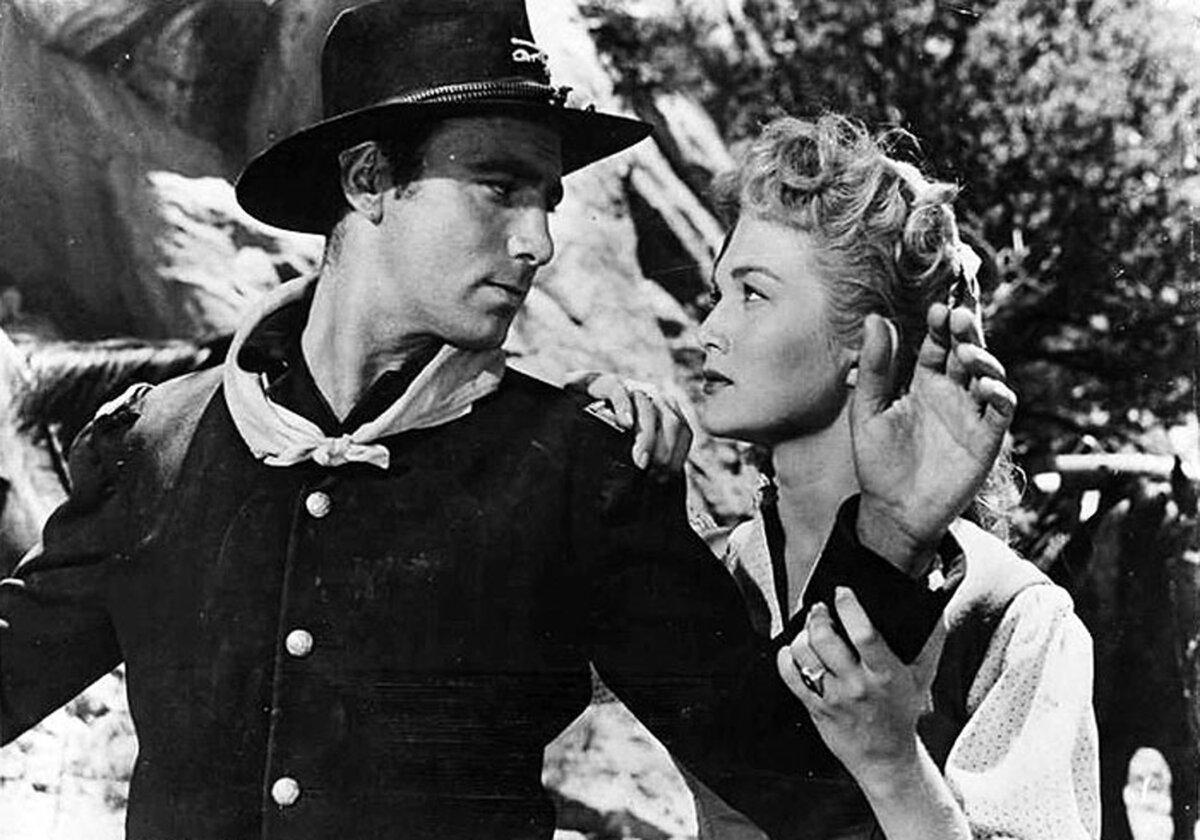
While scouting from their perch on the ridge, Barstow’s men spot a stagecoach under attack, kicking up dust and gunfire. Acting on instinct more than orders, they charge in fast and loud. They break up the ambush and pull two shaken survivors from the wreck: grizzled driver Gil Craigie (Chubby Johnson) and Johanna Carter (Patrice Wymore), a traveler headed to reunite with her Union fiancé.
Back at camp, the Confederates consider what to do with their unexpected guests. Soon after, a Union patrol follows Johanna’s trail straight to their hideout, led by the clean-cut Lt. Rickey (Scott Forbes). The newcomers are quickly disarmed and detained, intensifying a mission already straining under distance, dwindling rations, and the silence where support was supposed to be.
A Western Without Illusions
This film isn’t just a good-looking Warner Brothers production or one that marks Errol Flynn’s final western. It’s the way all these parts come together in service of something restrained and surprisingly mature. There’s a clean, unfussy economy to the filmmaking, both in the storytelling and the visual language. The decision to shoot in black and white feels less about a budget compromise and more like an aesthetic one. “Rocky Mountain” strips away any illusion of glamor, leaving only faces marked by dust, doubt, and grit.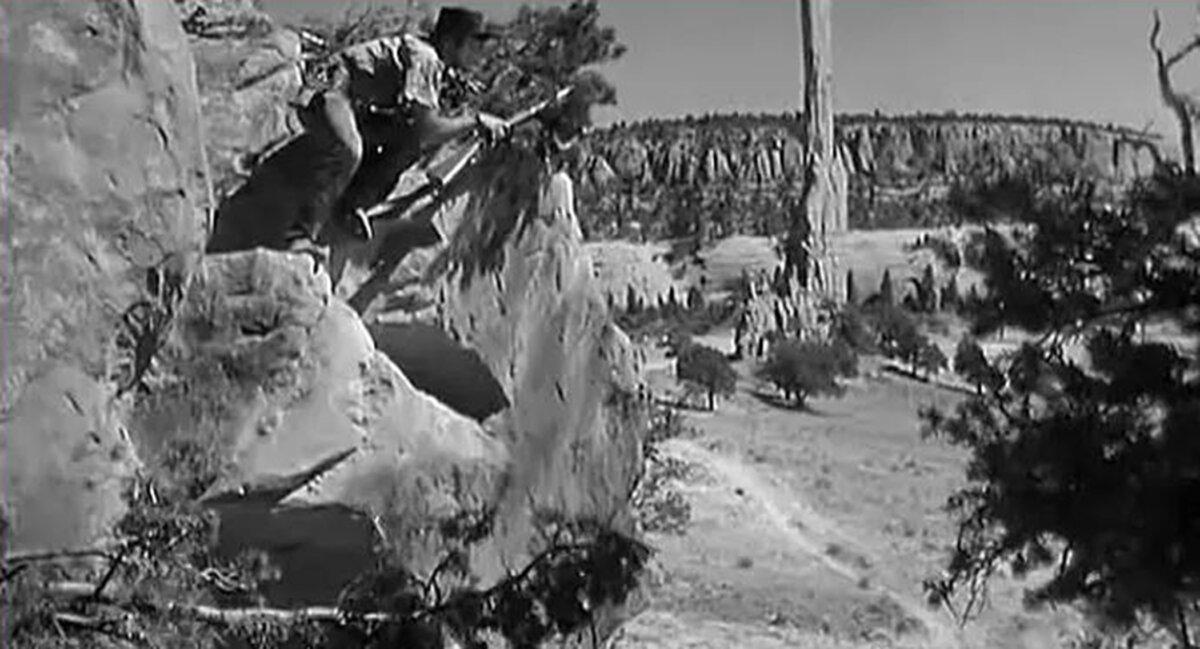
Barstow is a man who knows the world is already past him. Flynn’s performance doesn’t lean on charm or bluster but on a sort of exhausted clarity. There’s no phony heroism here. Barstow feels out of place in his own uniform. This is not because Flynn doesn’t commit, but because the character is out of time.
In that sense, it might be one of Flynn’s more honest performances. He’s surrounded by a cast of rough-edged soldiers and dusty companions. Actors Slim Pickens and Sheb Wooley keep things grounded, while Guinn “Big Boy” Williams brings a quiet grizzle instead of his usual booming energy.
Carter is the outsider who shifts the rhythm of the camp. She doesn’t steer the story, but her presence alters it; she reminds the soldiers of what’s waiting beyond the next ridge, or what might never come. Rescued from an ambush by Barstow’s unit, she becomes an unexpected guest in a world governed by loyalty and risk.
Keighley’s direction favors quiet gestures over spectacle. He lets the silence stretch and the terrain speak. “Rocky Mountain” may not be about grand victories, but it honors courage, the kind that holds fast when danger closes in.