Roughly every six months, there are periods where the Earth, moon, and sun align perfectly in space and then begin casting gargantuan shadows over each other. These periods are called eclipse seasons.
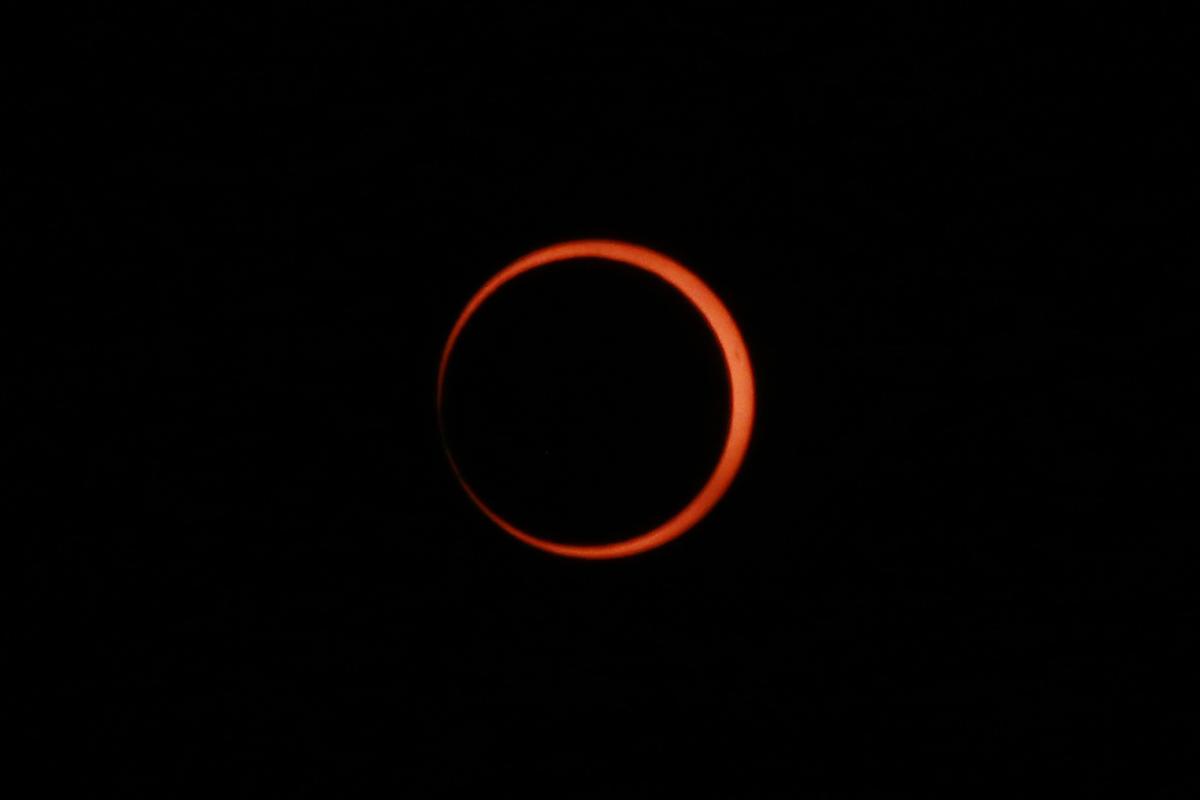
Next month will kick off the year’s first with a solar eclipse, when the sun will cast the moon’s shadow upon Earth’s far Southern Hemisphere. But because this moon will be a micromoon—and will look tiny—it will trigger an annular solar eclipse, where a “ring of fire” flares up around the moon.
On Feb. 17, a huge swath of shadow, cast by the moon, will blanket large areas of the Antarctic Circle. In the vast majority of this shadow the sun will appear partially obstructed during the eclipse while the ring of fire mainly will not be visible. Only within a very narrow and short band of ice-covered land and ocean will the moon be seen crossing near the sun’s center, so this ring appears. So unless you’re an Antarctic researcher or extreme traveler, the only way you'll see it could be via livestream—though even this might prove impossible.
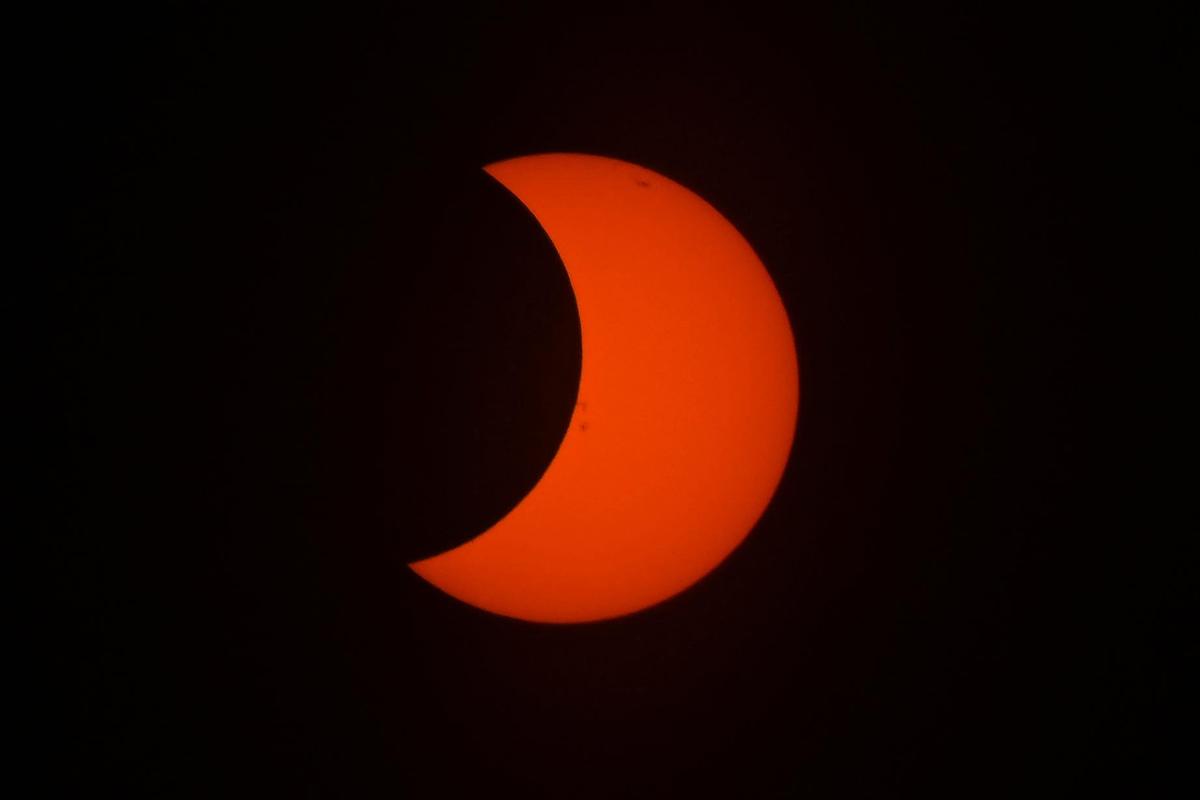
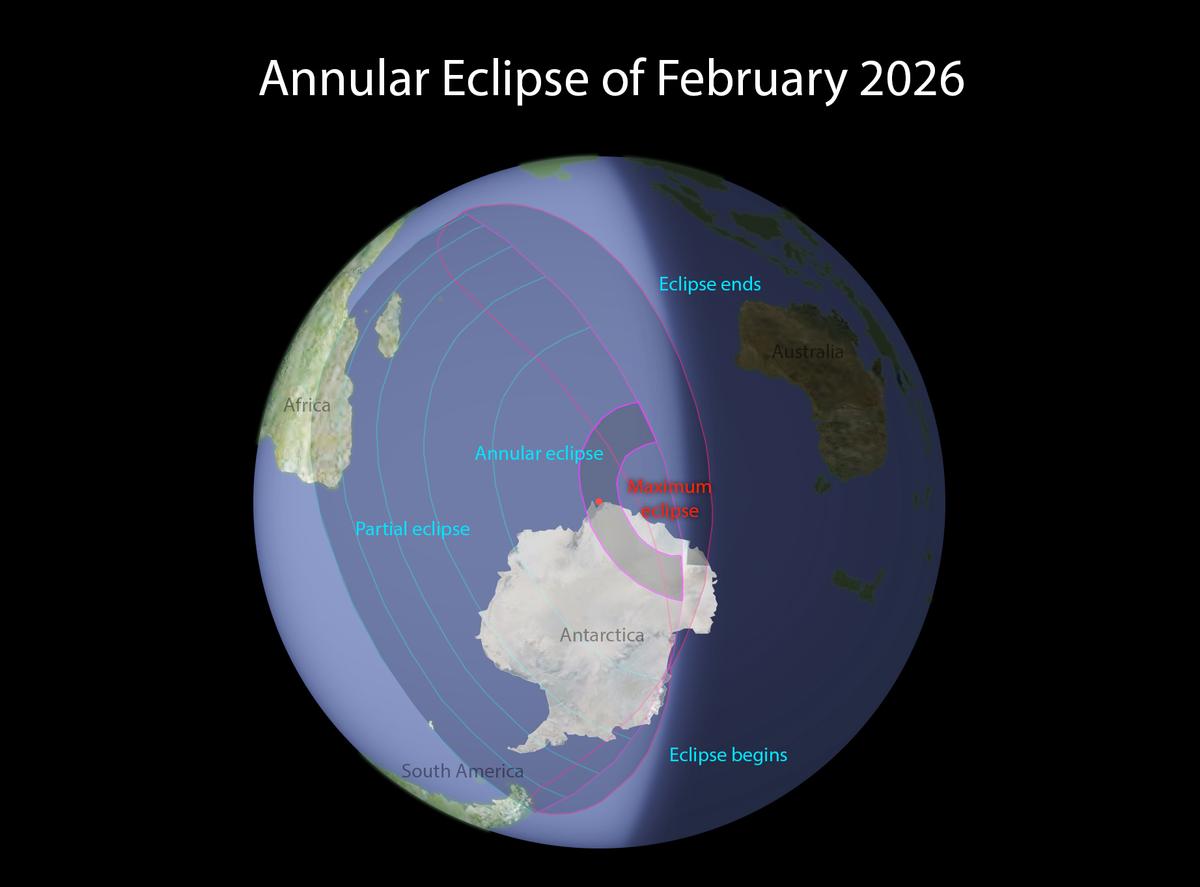
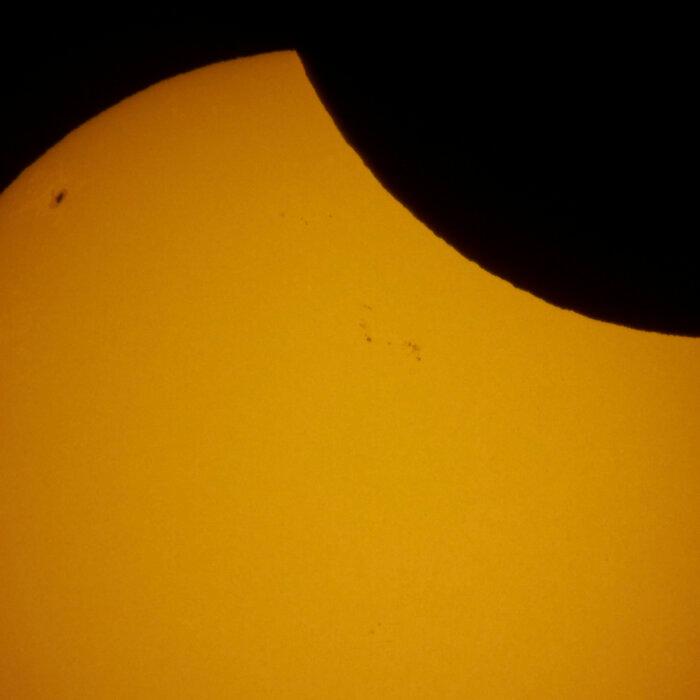
Starting at 4:56 a.m. EST, the large shadow caused by this partial eclipse will darken skies over the southern tip of South America, the Southern Ocean, and Antarctica. To observers in Chile it may look like the moon took a “bite” out of the sun. As this behemoth shadow swoops southeastward and then northeastward, it will leave South America to engulf most of Antarctica and several countries in southern Africa.
Beginning at 6:42 a.m. EST, the ring of fire, also called annularity, will appear in specific locations, arcing briefly along coastal Antarctica and turning northward into the Davis Sea. Viewers in Antarctica’s Casey Station, directly south of Western Australia, might see as much as 91 percent of the sun go dark.
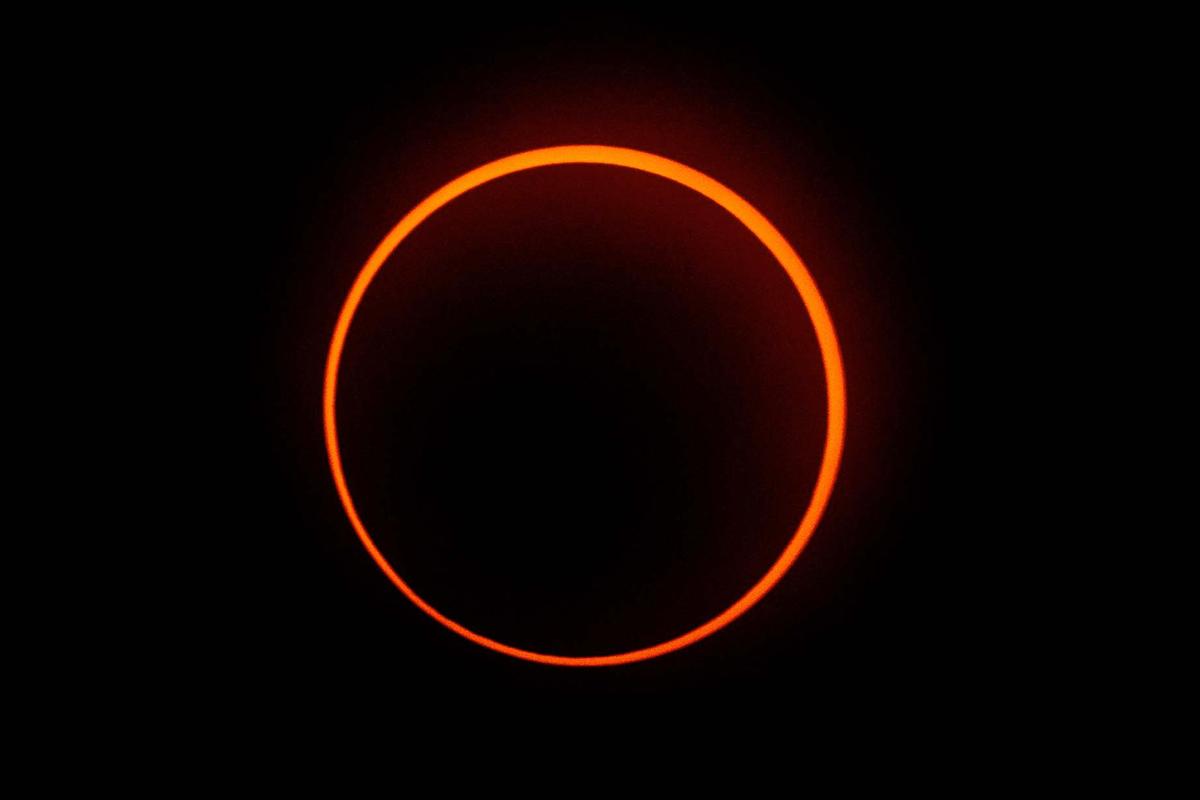
The moment of maximum eclipse (when the moon’s center crosses nearest the sun’s) will be at 7:11 a.m. EST, bisecting the two minutes and 20 seconds of annularity. A full 96 percent of the sun will be blotted out, allowing a sliver of the sun’s photosphere to shine around the moon’s circumference.
Why Do Annular Eclipses Happen?
The reason the ring of fire appears in a solar eclipse is simple: micromoons. Space would be a lot less exciting without its endless quirks, and the moon has many, including its varying size. Because the moon’s orbit is elliptical, not round, its distance from Earth changes a lot. At its farthest-away point, or apogee, it looks noticeably smaller and becomes a micromoon (the opposite of a supermoon). Because it’s smaller it doesn’t cover the whole photosphere during a solar eclipse, allowing the ring of fire to appear.During total eclipses of the sun, Earth is close enough to the moon that the darkest part of the moon’s shadow, the umbra—where no sunlight reaches—is cast upon our planet. But in annular eclipses the Earth doesn’t reach the umbra, though the antumbra—where a sliver of sun still enters—will fall upon Earth’s surface.
Why We Have Eclipse Seasons
Eclipse seasons themselves are products of quirks in the cosmic mechanism. The moon’s orbital plane comes into play here too, for it isn’t exactly flat with Earth’s orbit around the sun (the elliptic). If the two orbits were perfectly flat, we'd probably see solar ellipses every new moon. But since they’re not flat—the moon’s orbital plane is tilted 5 degrees off the elliptic—the geometry behind eclipses gets a little more complex. The moon crosses the elliptic at two opposite points, called lunar nodes. It needs to be at one of these nodes around either a full moon or new moon in order to have a lunar or solar eclipse, respectively.So that’s basically why eclipses happen only a few times a year. Lunar nodes line up for a period of about 31 to 38 days roughly every six months. Then the moon has several opportunities to be either a new moon or a full moon and create eclipses. Solar and lunar eclipses typically pair up for a total of two eclipses per season, though some seasons have three.