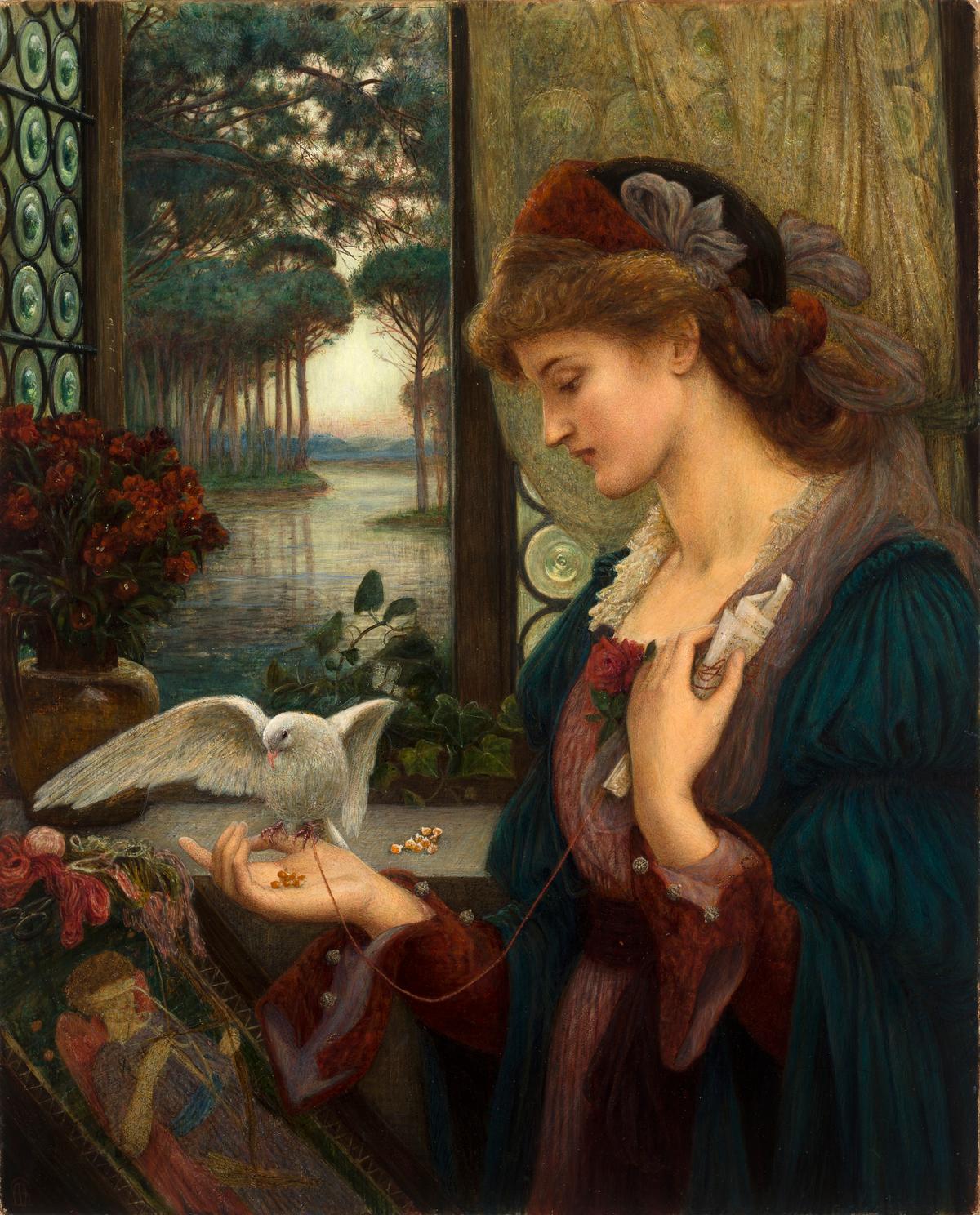
The Pre-Raphaelite Brotherhood, also known as the Pre-Raphaelites, were a group of mostly male artists in Victorian England. Their subjects, painted with realistic detail, were typically derived from religion and literature, and their style was inspired by the art of the Middle Ages and Early Renaissance. Scholars consider Marie Spartali Stillman (1844–1927) the most talented female Pre-Raphaelite artist. Her association with the movement began as a muse and model, but her lifelong love of drawing led her to become an artist herself.
Themes found throughout Spartali Stillman’s oeuvre include portraits, biblical narratives, beautiful women, and scenes sourced from Italian writers. For a long time, Spartali Stillman was best known for her portrait as rendered by prominent Pre-Raphaelites, including Dante Gabriel Rossetti (1828–1882).
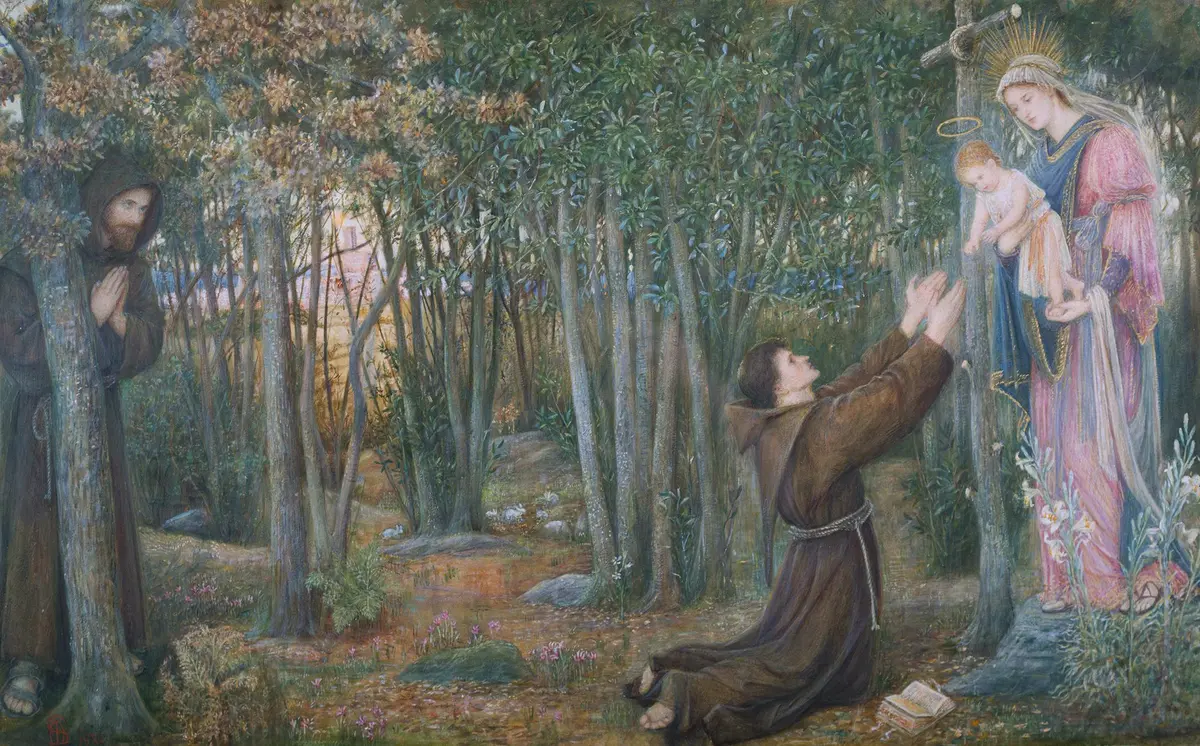
However, Spartali Stillman’s work, done mostly in watercolor, has found greater acclaim in recent years through exhibition and auction. She captured her own image in several self-portraits. An example from 1871 in charcoal and white chalk on paper is part of the Delaware Art Museum. Renowned for its Pre-Raphaelite holdings, the institution contains the largest public collection of Spartali Stillman’s art. In 2015, it presented her first retrospective.
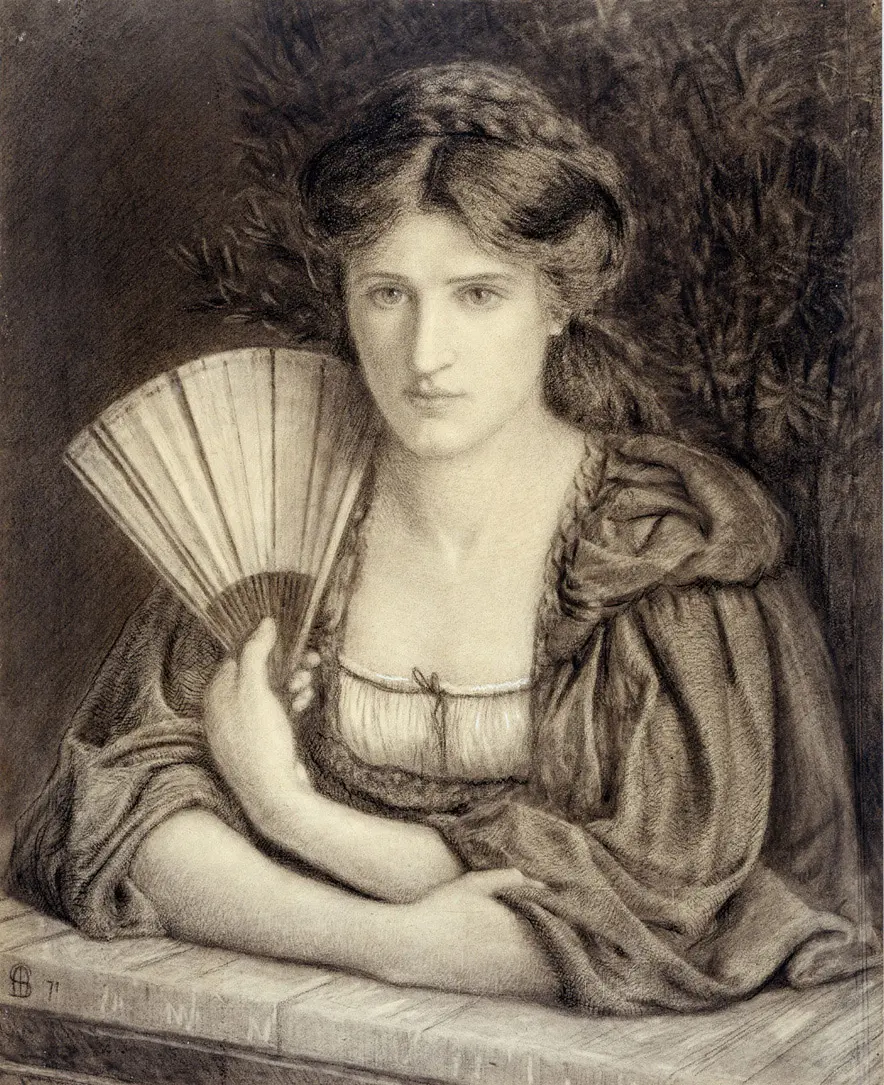
In the 19th century, it was unusual for a woman to become a professional artist. Spartali Stillman overcame her father’s resistance and became a pupil of the British painter Ford Madox Brown (1821–1893) in 1864 at the age of 20.
From 1867 on, she exhibited regularly. Her works on paper feature watercolor along with other mixed media, which was unusual. Watercolor, not oil paint, was deemed the appropriate medium for female artists at the time. Despite this constraint, Spartali Stillman pushed the limits of watercolor.
A Sotheby’s catalogue notes that she was able “to create a density of rich color and complicated textures that replicated and rivaled the effects of oil paint.” Upon closer looking, a viewer can observe that her pictures have a softer finish than if done in oil.
The ‘Stunner’ of the Art World
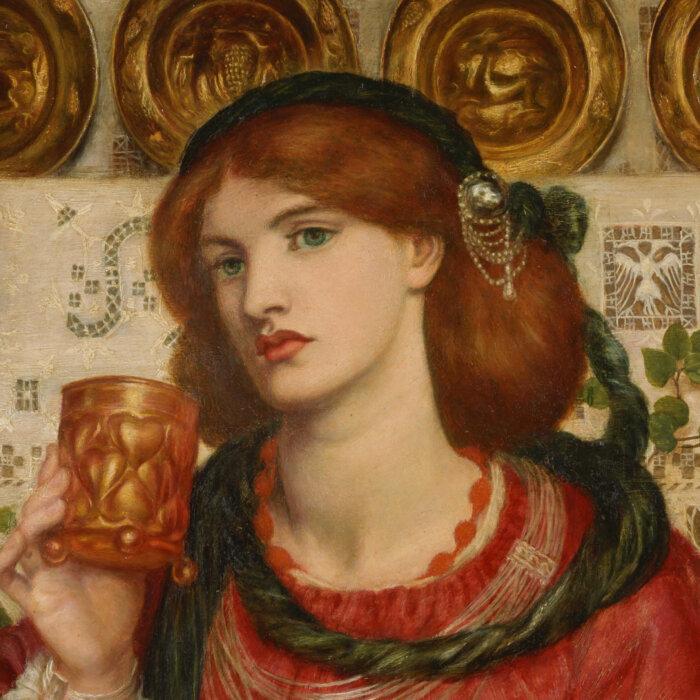
Spartali Stillman was born into a prosperous, cultured, and close-knit Anglo-Greek community that included the family of Constantine Ionides. Ionides was an influential art collector and an especially great patron of Rossetti. At a garden party held at his home, Spartali Stillman was first introduced to the Pre-Raphaelite circle. Her great beauty immediately caused a sensation, with artists eager to use her as a model. She sat for Rossetti for the first time in 1869. He described the experience: “I find her head about the most difficult I ever drew. It depends not nearly so much on real form as on subtle charm of life which one cannot re-create.”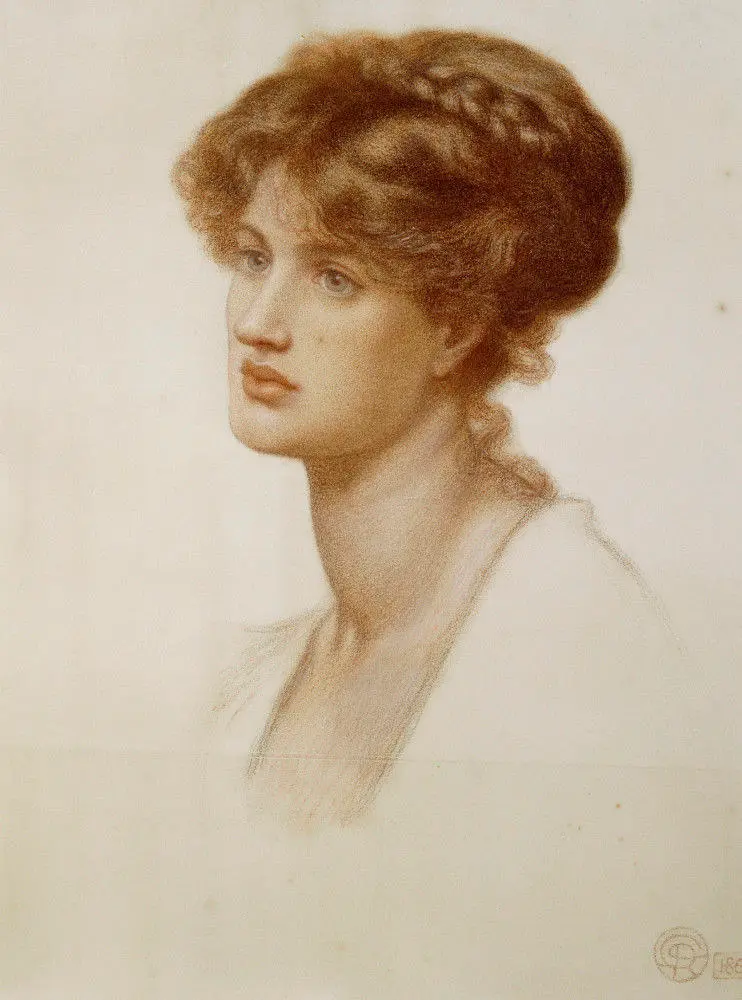
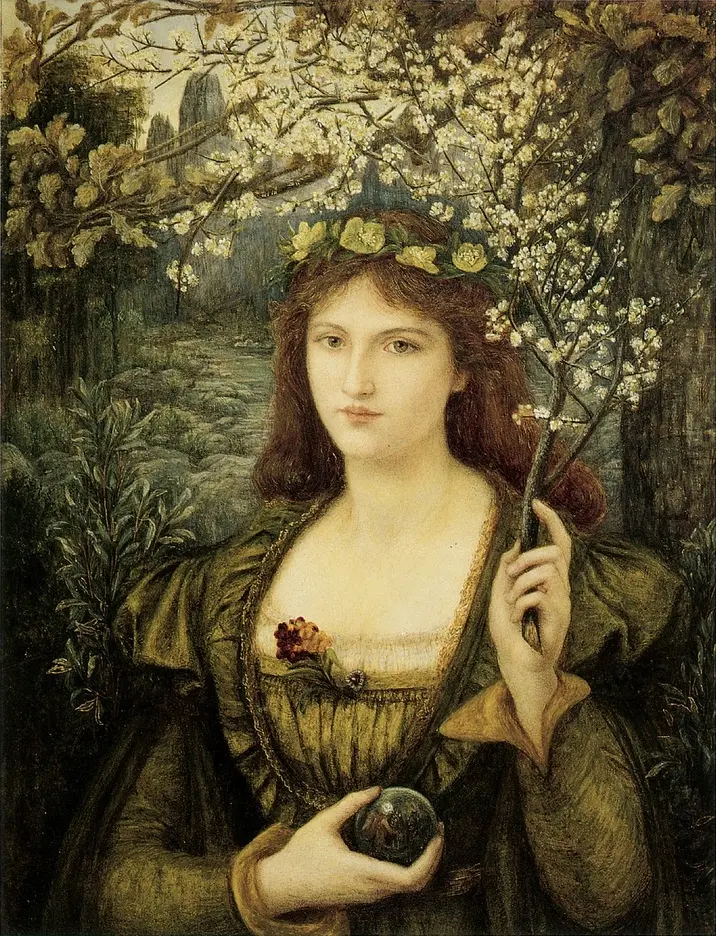
A prime example is Spartali Stillman’s “Madonna Pietra Degli Scrovigni” from 1884. Now housed in the Walker Art Gallery, the subject “My Lady Stone” is a character from a Dante Alighieri poem. In the poem, the woman is characterized as beautiful but frozen. The Gallery explains:
“The poem plays off the interaction of winter and summer, dark and light, yellow and green, themes which Spartali Stillman explores in this watercolour. She uses imagery of dead leaves, blackthorn and hellebore to symbolise coldness and winter, and the model gazes out at the viewer steadily and calmly.”
Italian Influences
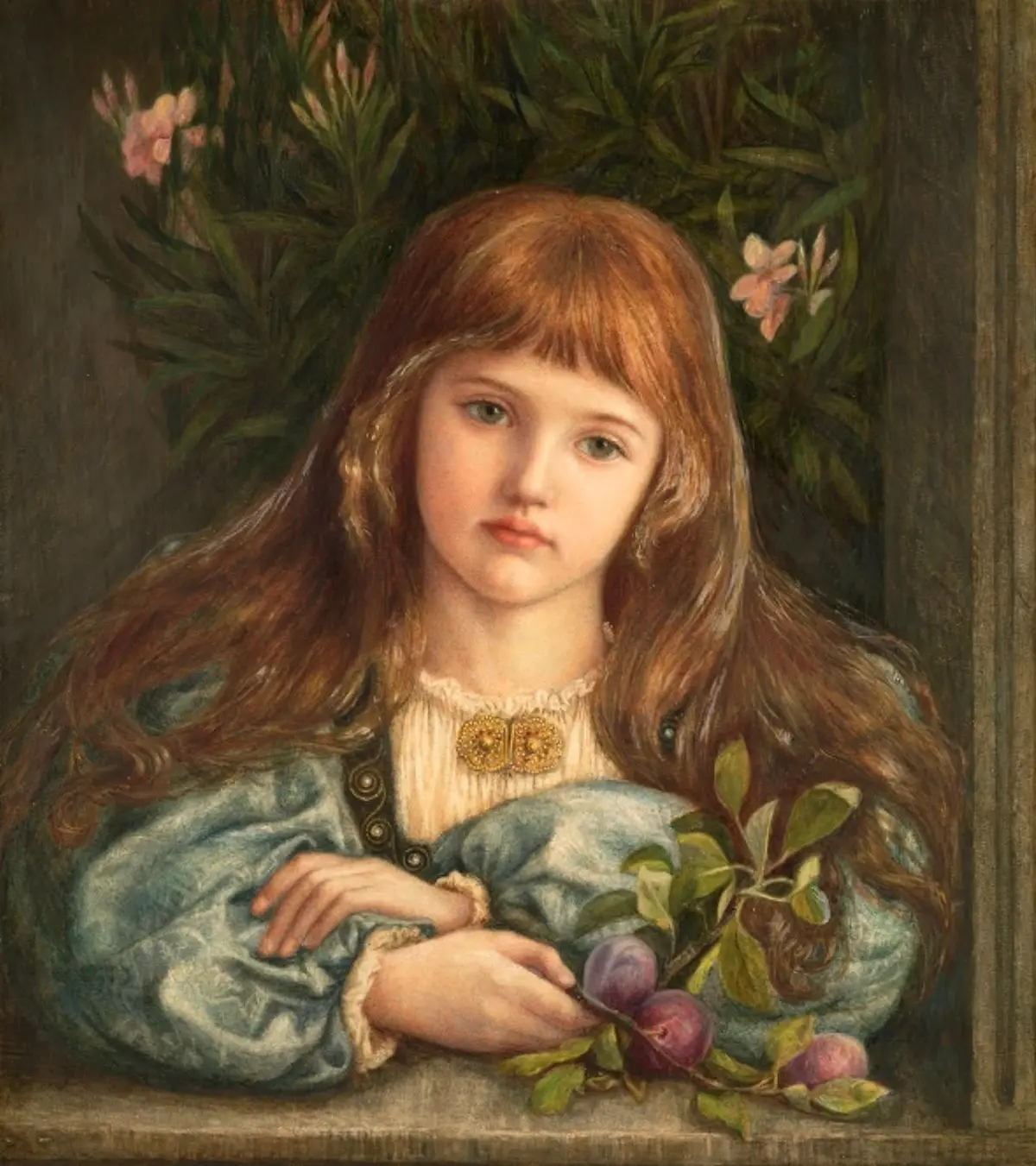
Another important influence on Spartali Stillman’s work was travel, specifically her time in Italy. In 1871, she married the American diplomat and journalist William James Stillman. Her husband, a widower with children, was a friend of Rossetti. The couple, whose family grew to include a total of six children, lived an itinerant life. They spent extended periods in Florence and Rome, along with England and the United States. Since her husband’s income was unsteady, Spartali Stillman’s art was often the family’s main source of financial support.“La Pensierosa” from 1879 is one of her best portraits. It depicts her 6-year-old daughter Euphrosyne (Effie). She went on to follow her mother’s artistic path, becoming a sculptor.
Spartali Stillman’s auction record was set in 2020 at Christie’s with the 1889 watercolor “The Enchanted Garden.” Selling for 874,500 pounds ($1.1 million), it was painted in London at the height of her career, reflecting the deep influence of Italian literature as fostered by her friend Rossetti and her time in Italy. Christie’s observes, “At thirty by forty inches, this picture is one of the most ambitious in her œuvre, and the vivid colouring and lush composition make it one of the most visually arresting.”
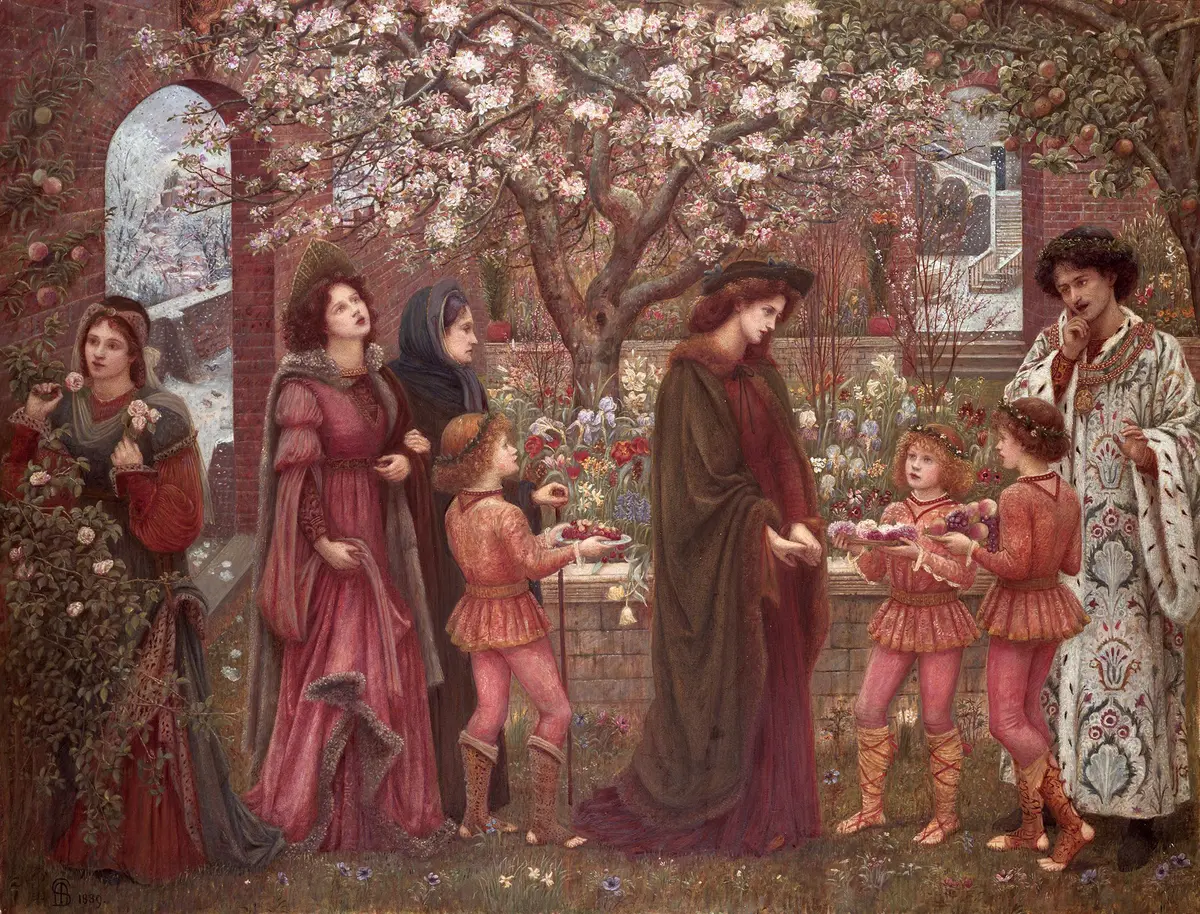
“The Enchanted Garden” portrays a scene from the fifth story on the 10th day of Boccaccio’s “Decameron,” a foundational example of early Italian prose referenced frequently by the Pre-Raphaelites. Spartali Stillman’s use of a frieze-like composition evokes the art of the Renaissance she would have seen while living abroad. The work displays her skill at depicting landscape, dress, and human psychology.
Spartali Stillman made art and exhibited her work until her death in 1927. During a career that lasted over 60 years, she created more than 170 known artworks. As her talent gains wider recognition and appreciation, more of her work will hopefully surface and further exhibitions will advance her reputation.