Spain’s Renowned Portraitist
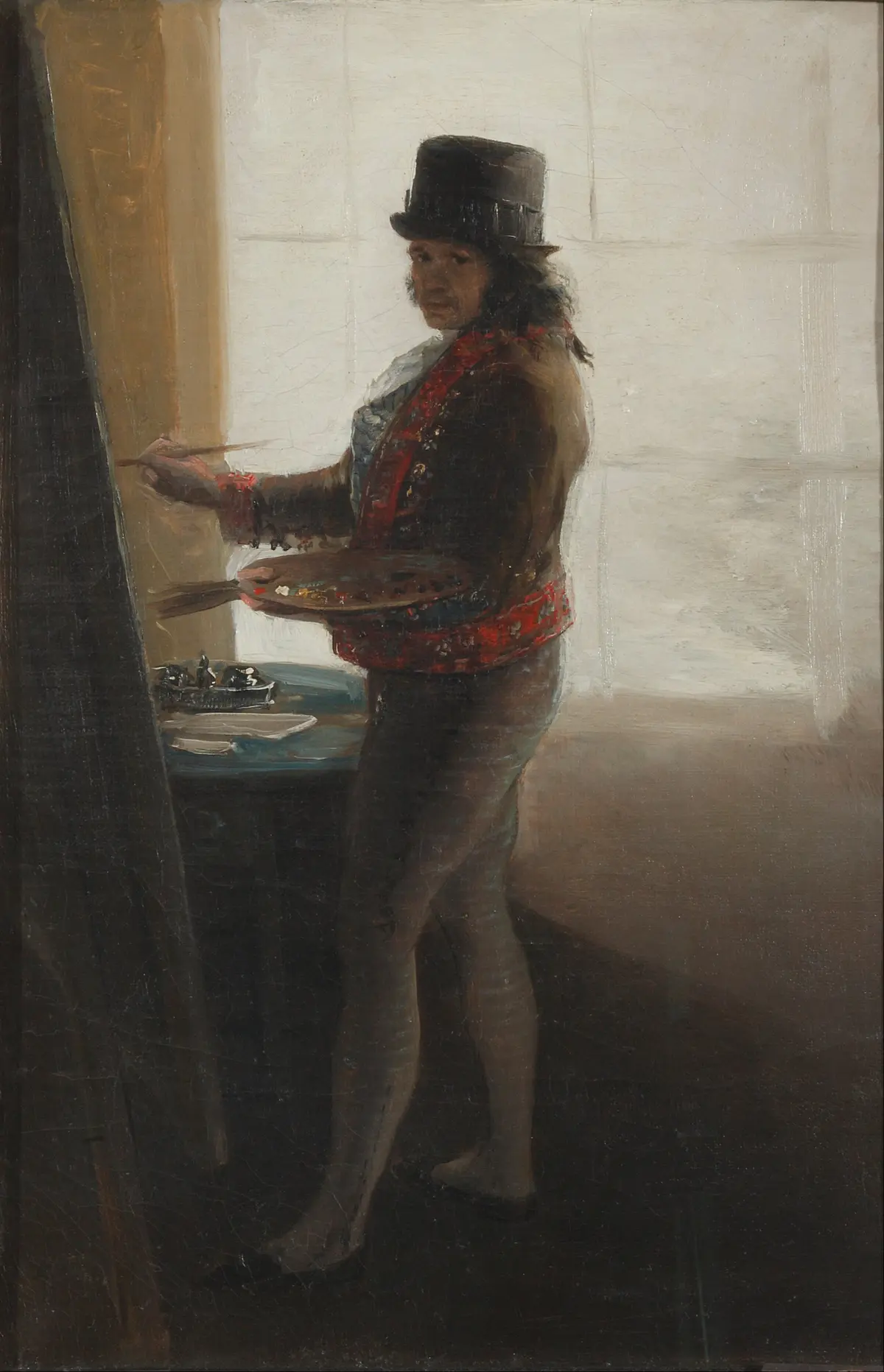
Royal Academy of Fine Arts of San Fernando, Madrid, Spain. Public Domain
Goya (1746–1828), the most important Spanish artist of the late 18th and early 19th centuries, is especially renowned for the portraits he painted over the course of his long career. Scholars cite his ability to capture a sitter’s essence with immediacy, even in distant formal portraits, as a tenet of his genius. He was born the son of a gilder in the small town of Fuendetodos, Aragon. As a teenager, Goya moved to Madrid and worked under the Neoclassical painter Anton Raphael Mengs (1728–1779).
By 1780, the year he was elected to the Royal Academy, Goya was beginning to be a sought-after portraitist favored by the aristocracy. Appointed painter to King Charles III in 1786, he was made court painter three years later by the king’s son and successor, Charles IV.
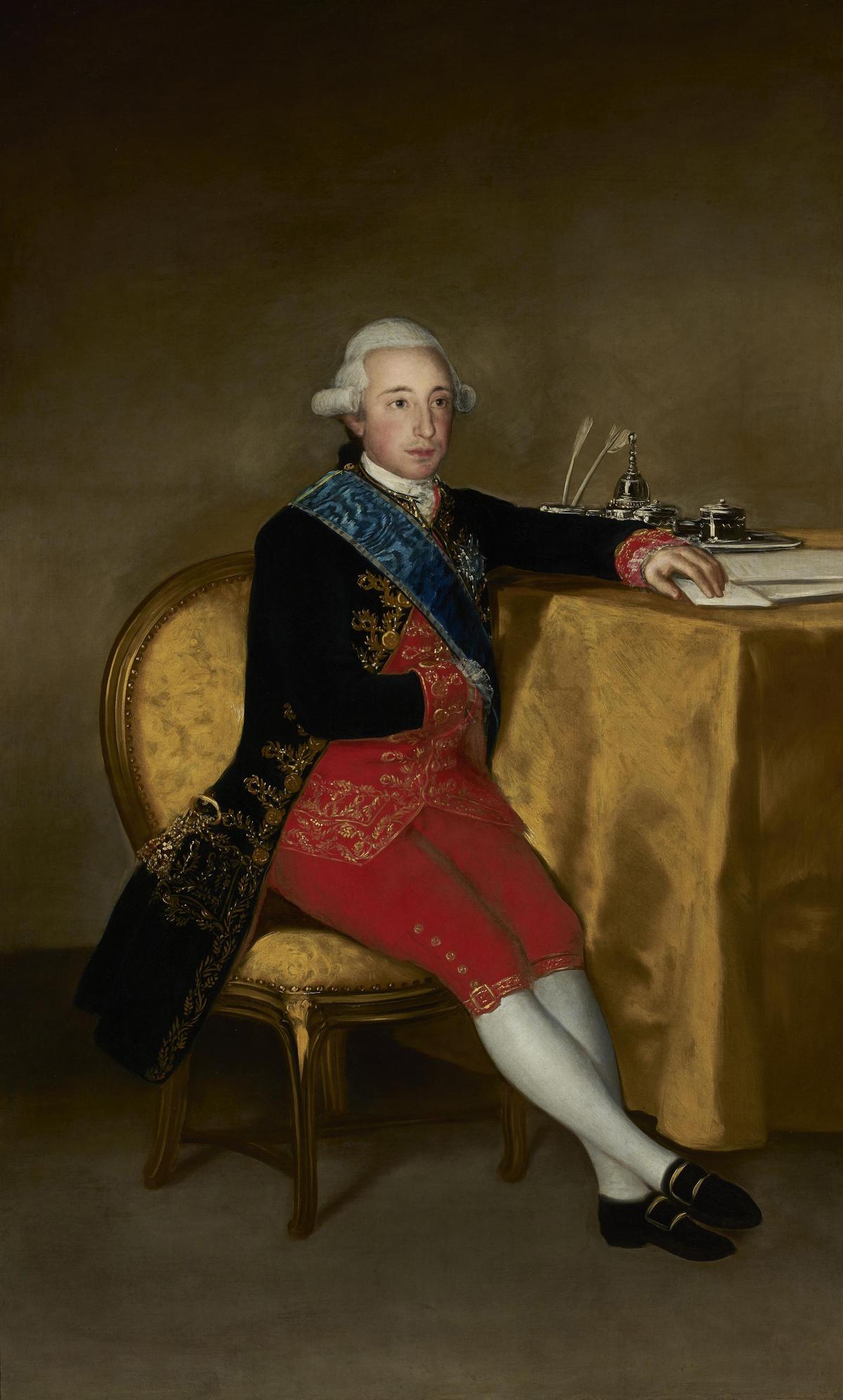
Between 1785 and 1788, Goya painted executives and their families from the Banco de San Carlos (currently called Banco de España). One sitter was Vicente Joaquín Osorio de Moscoso y Guzmán Fernández de Córdoba, conde de Altamira (1756–1816), who was little Manuel’s father. This count of Altamira, one of the bank’s directors, was the most titled nobleman in Spain, a councilor of state, a knight of the Golden Fleece, and lieutenant general of Castille and Madrid. Goya’s full-length portrait of Altamira remained the property of the bank and is still in the collection of Banco de España.
Goya’s Symbolic Portrait
Manuel is joined by a menagerie of animals. At left are three expressive cats eying the pet magpie tethered with a string held by the boy. In the bird’s beak is a depiction of Goya’s calling card and signature. At right, a large birdcage holds finches.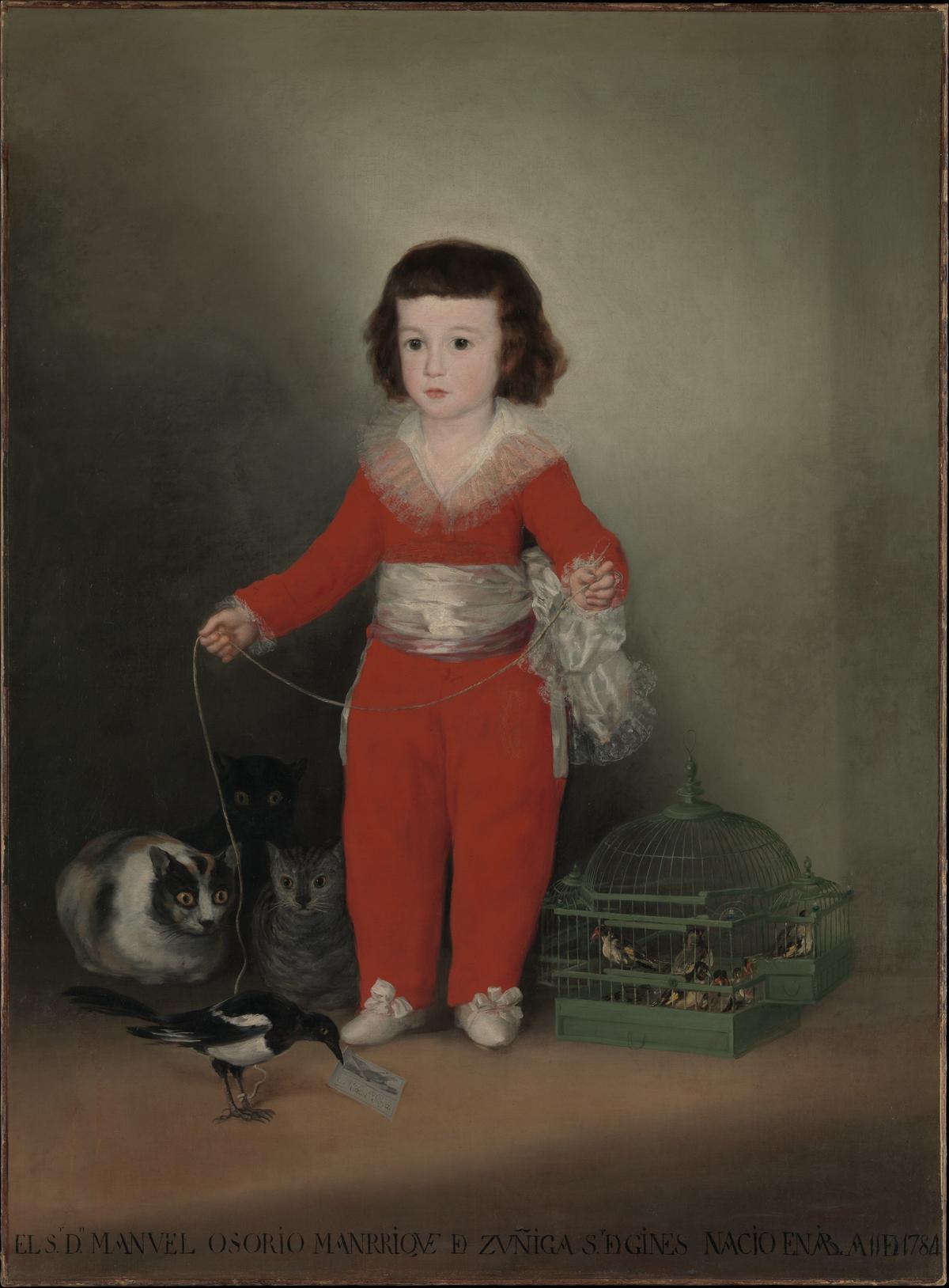
Art historians have analyzed the symbolism of these animals. The Met explains that theories include, “Goya may have intended this cast of animals as a reminder of the frail boundaries that separate the child’s world from the forces of evil, or as a commentary on the fleeting nature of innocence and youth.” Manuel died a few years after the painting was made, at the age of 8. Some scholars have suggested that the painting is actually a posthumous portrait. This has led to interpretations such as that the cat iconography is malevolent and the magpie signifies destiny.

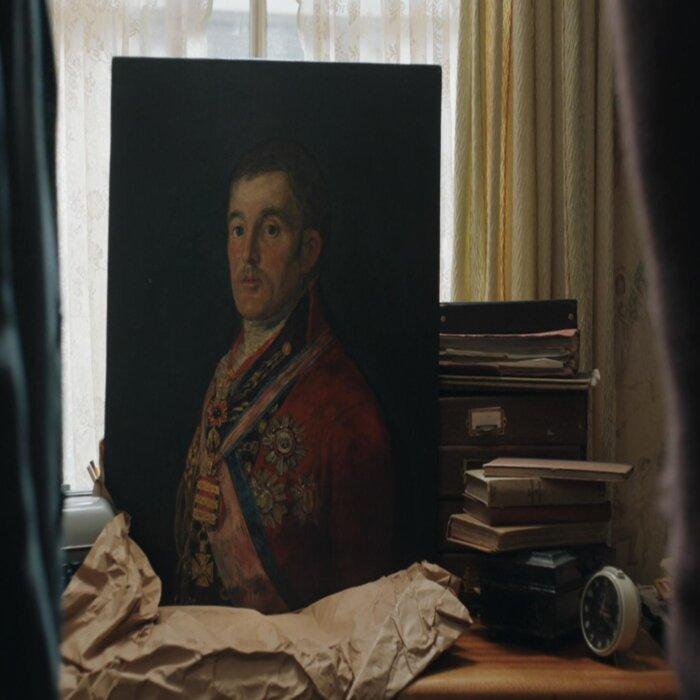
Instead of conceptualizing death, the inclusion of these animals is actually traced to historic portraiture in Europe. Precedents are in works by Goya’s teacher Mengs, the great Spanish Baroque painter Velázquez, and England’s William Hogarth. Goya continued this lineage.
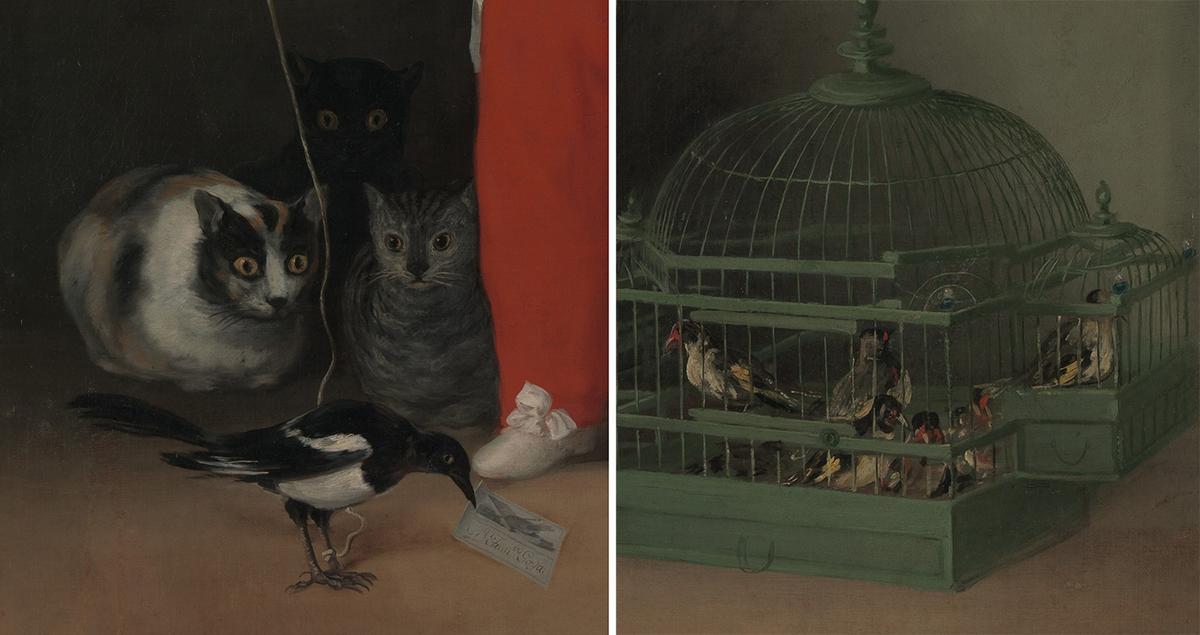
The cats can thus be viewed as mischievous, not malicious harbingers. In fact, they were common pets in Spanish households. Goldfinches were popular pets in England, Holland, and Spain due to their sweet singing and ability to learn tricks. Magpies were also found throughout European households.
Goya and the Altamira Family
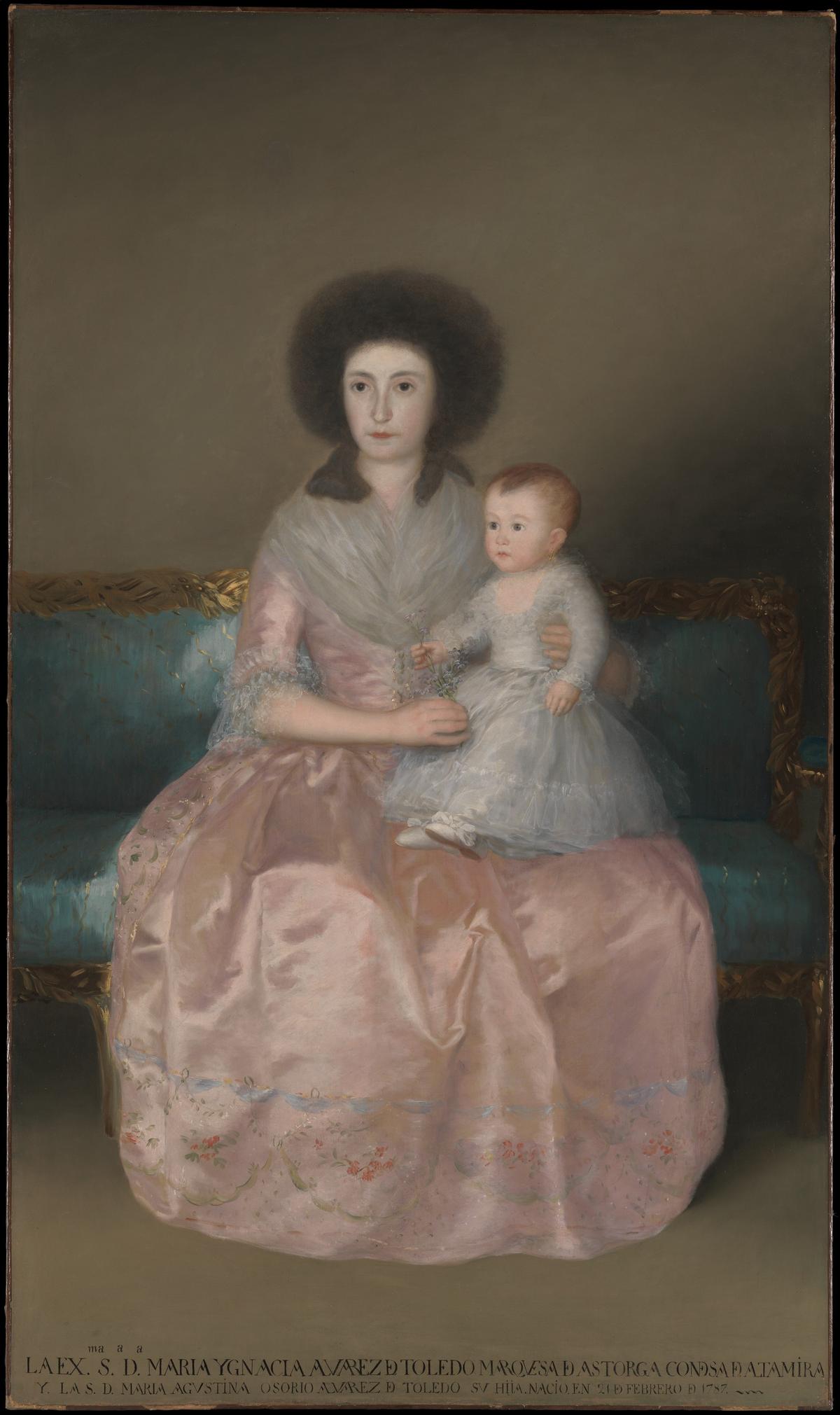
Many museum visitors may be unaware that the Goya portrait of Manuel’s mother and sister is at The Met now, albeit in a different museum wing. This is an imposing, beautiful full-length painting of María Ignacia Álvarez de Toledo, condesa de Altamira (1757–1795) and her daughter María Agustina (born 1787). The artwork showcases the artist’s “skill at capturing the sensitivity of the sitters and his mastery of a painterly technique, which portrays in broad brushstrokes the brilliance of fine clothing and other accoutrements of wealth,” The Met states.
The countess wears a shimmering pink silk gown decorated with a floral border. Seated on a gilt sofa, she holds her daughter in a space that may evoke the Altamira Palace. The pair, painted in 1787–1788, hold a small bunch of violets in their hands.
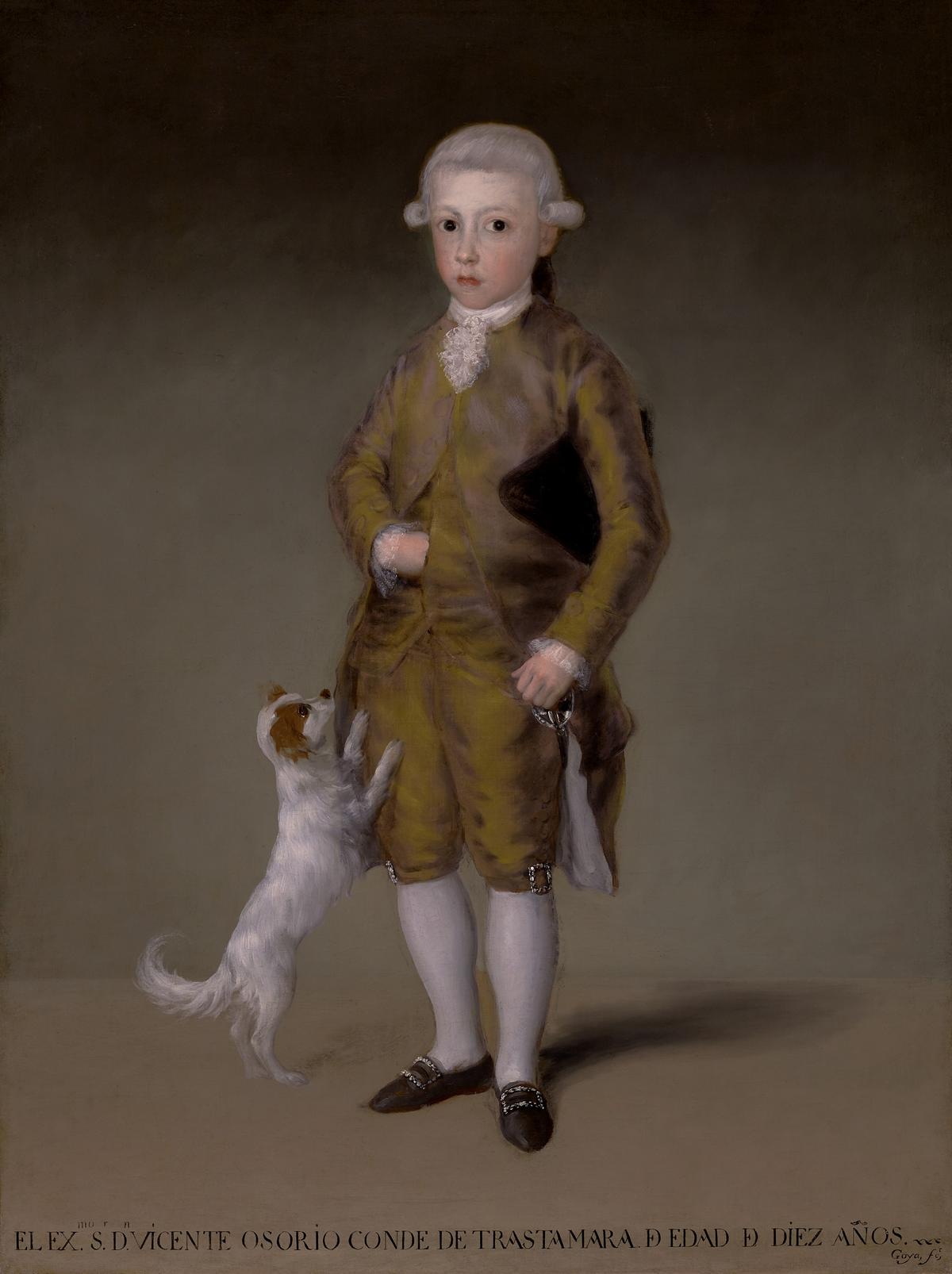
Vincente’s dignified formality is a contrast to Manuel’s less official portrayal that clearly depicts him as a child. The reason for the difference is that Vincente was their father’s heir and needed to look the part. Goya lightens the atmosphere by inserting a lively dog that suggests a childhood playmate.
In 2014, The Met held the special exhibition “Goya and the Altamira Family,” placing Manuel, his mother, and his sister in the same gallery room. Joining them was the portrait of the family patriarch owned by Banco de España and Vincente’s portrait, which at the time was lent from a private collection and is now part of the Museum of Fine Arts, Houston. It was the first time that these four outstanding works had been reunited. Today, Manuel is back in his regular Met gallery. While without his family, he is not alone. There, he is surrounded by other Goya paintings and his adoring public.