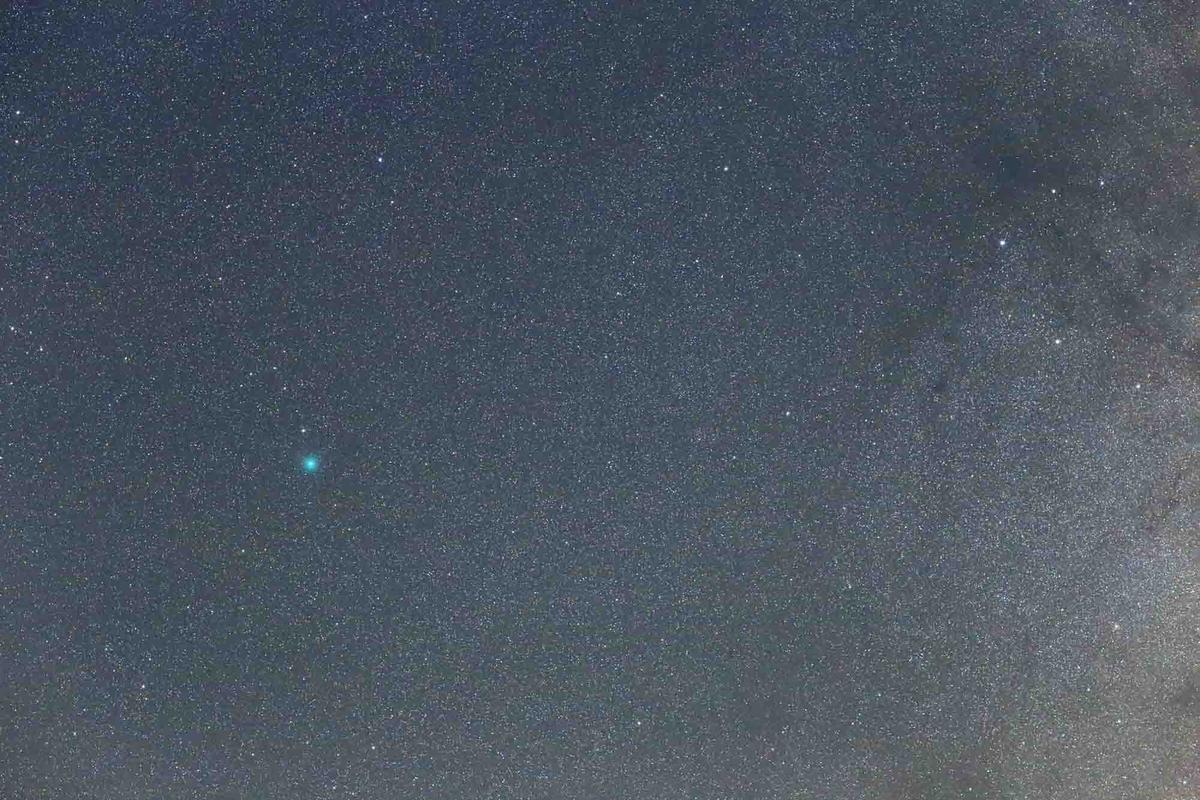
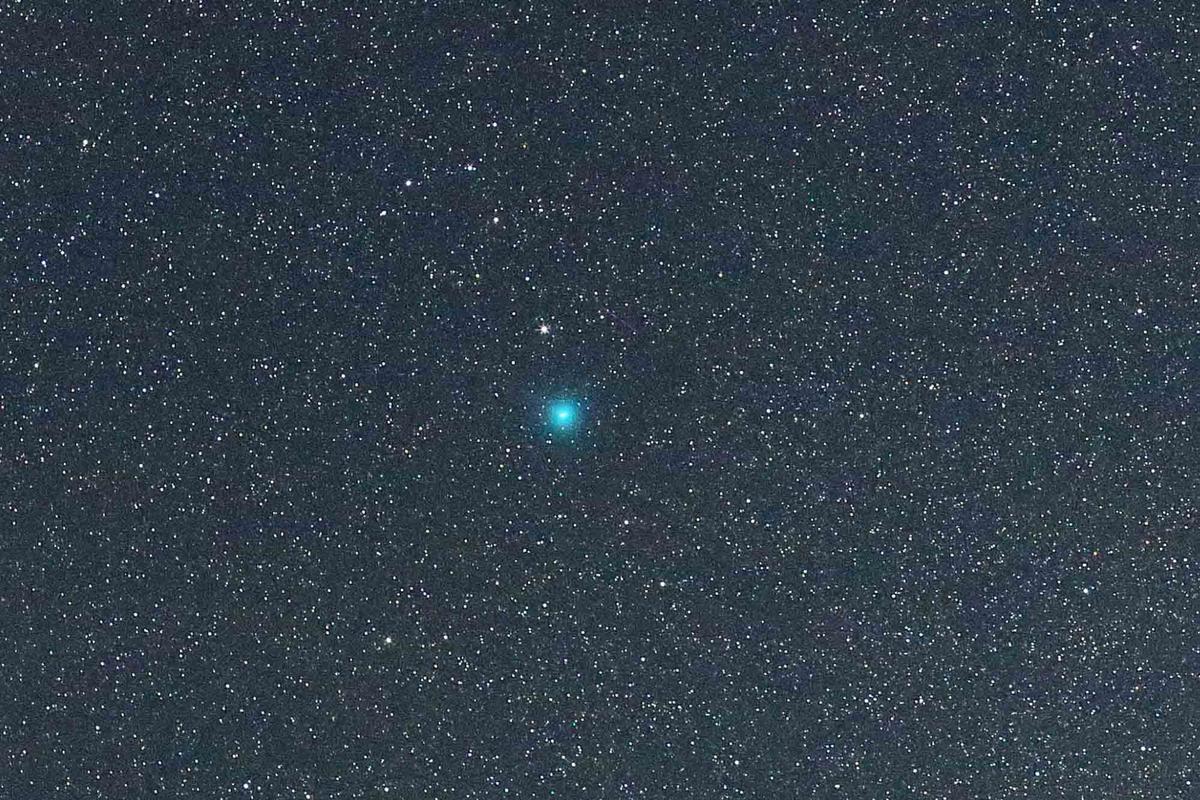
At 3 a.m., the overcast night sky above Tunisia’s Sahara Desert suddenly cleared, and astrophotographers Makrem Larnaout and Hafedh Driss spotted the glowing green Comet Lemmon through their high-powered telescopic cameras.
“The most striking feature [of Comet Lemmon] is the blue ion tail, long, straight, and delicate, stretching for millions of kilometers,” Larnaout told The Epoch Times. “This tail forms from ionized gasses, such as carbon ions, carried away by the solar wind.”
Images taken by the Tunisian photographers show fine filaments of cosmic dust smeared across outer space in the wake of the comet, its nucleus ablaze with emerald-green light. They required two synchronized RASA 8 telescope cameras—not to mention meticulous planning—to capture them.
Taking 30-second exposures, they gathered data during the wee hours and then stacked that information to create a finely-detailed picture, showing off Comet Lemmon’s impressive features.
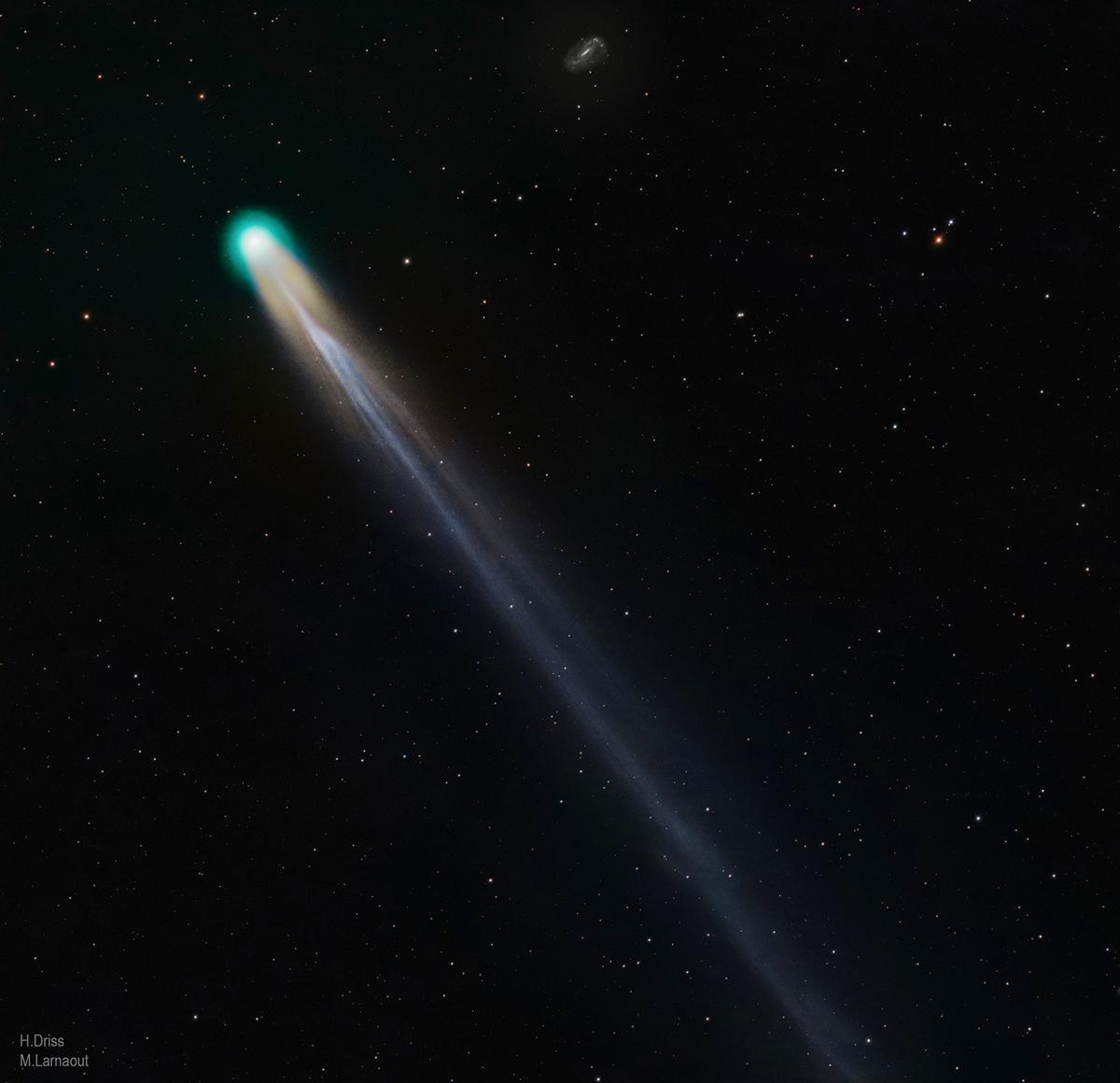
Comets are frozen conglomerations of matter that orbit the sun. When warmed by solar radiation they start to shed their particles, creating amazing fireworks. When comets periodically visit the inner solar system, a green cloud, or coma, forms around their nucleus—due to diatomic carbon and cyanogen fluorescing under solar UV light—making them seem quite alien indeed.
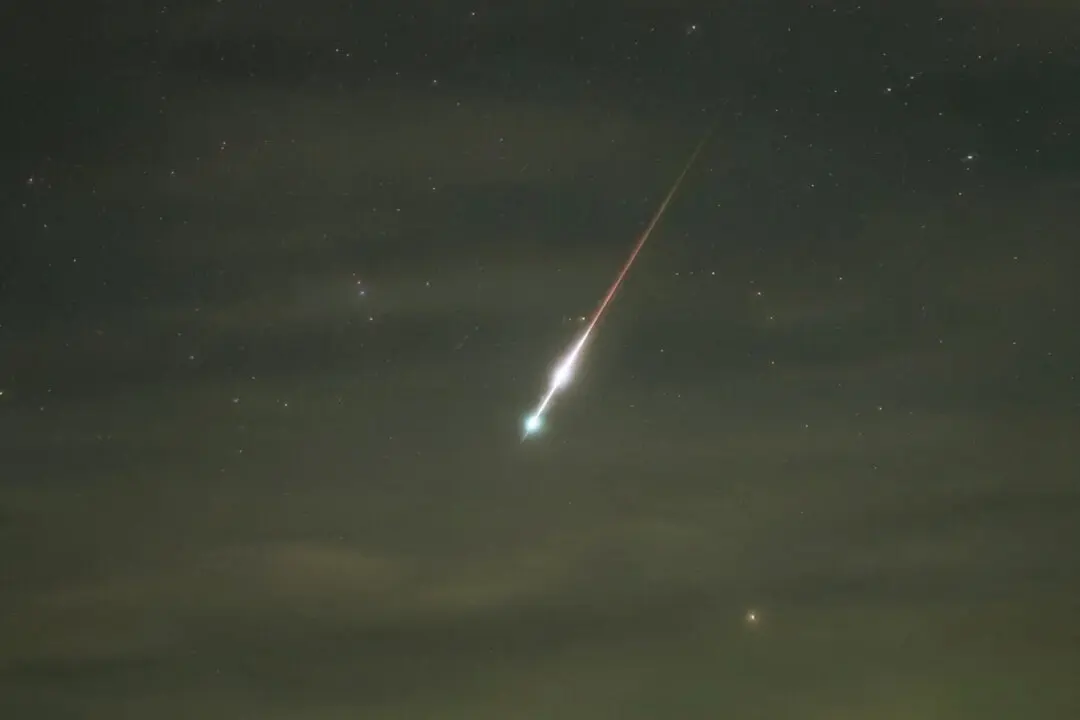
Comets are not just this nucleus, however, but are a vast complex of matter strewn through space. That matter also turns into meteor showers when it sprinkles down on Earth’s atmosphere.
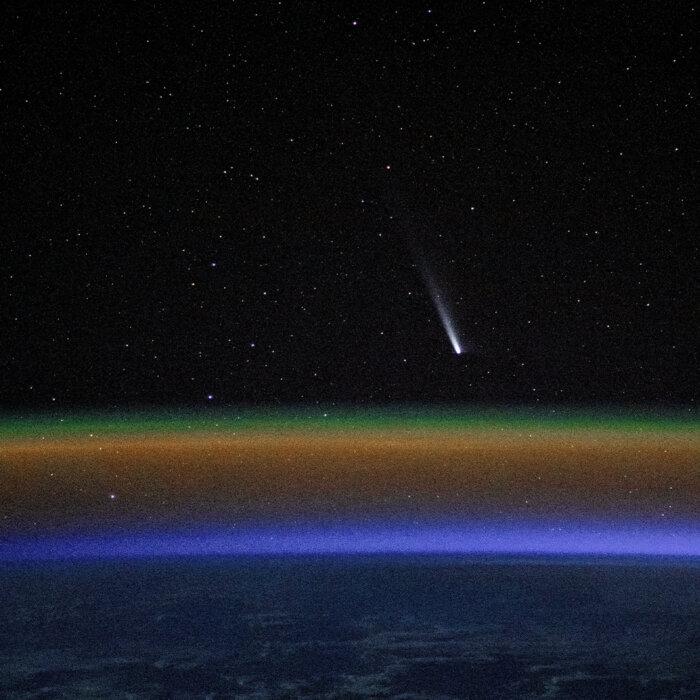
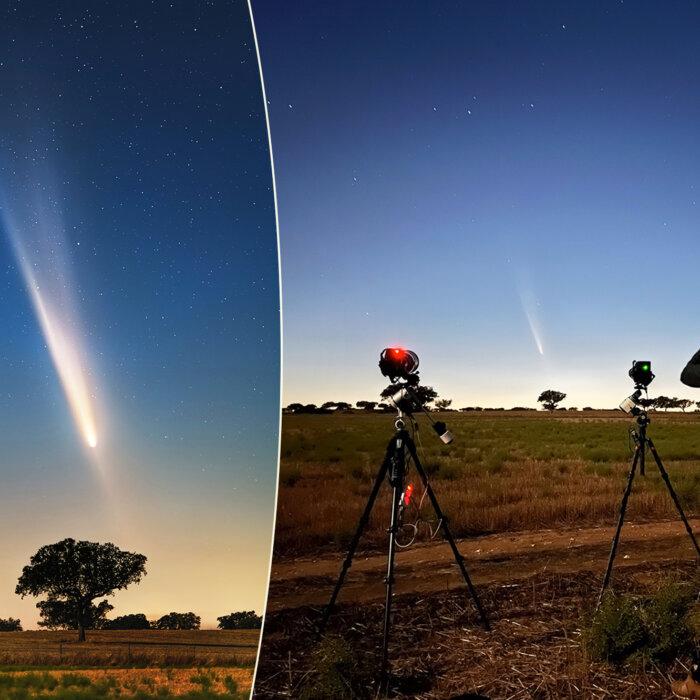
“This structure truly fascinated me,” Larnaout said, speaking of the meteors he photographs. “It’s living proof that space is not silent but alive with motion and energy.”
Since Oct. 8, Comet Lemmon (a.k.a. C/2025 A6) has been cutting a path below the Big Dipper, just above the horizon. As it draws ever closer to the sun, it grows larger and brighter in our nighttime sky. It’s now reached peak brightness and, under ideal dark conditions, should be visible to the naked eye. Cast in a green hue, Lemmon glows with a brightness of around 4.5 in magnitude.
Astronomy measures space objects in magnitude where low numbers are brighter and anything 6.5 or under my be seen with the unaided eye.
Lemmon joins at least two other comets near Earth currently being tracked by astronomers: C/2025 R2 SWAN reached perihelion, its closest point to the sun, in mid-September and is now sling-shotting its way back beyond the solar system. The ancient traveler 3I/ATLAS is one of only three interstellar comets (not orbiting the sun but transiting through deep space) ever recorded, and it will reach perihelion on Oct. 29.
Neither of these two comets will match Lemmon in brightness, however.
All three comets will pass by us harmlessly, posing no danger to Earth. While SWAN “grazed” by us some 24 million miles away, Lemmon is expected to come within 55 million miles. ATLAS kept its distance, coming no closer than 170 million miles away.
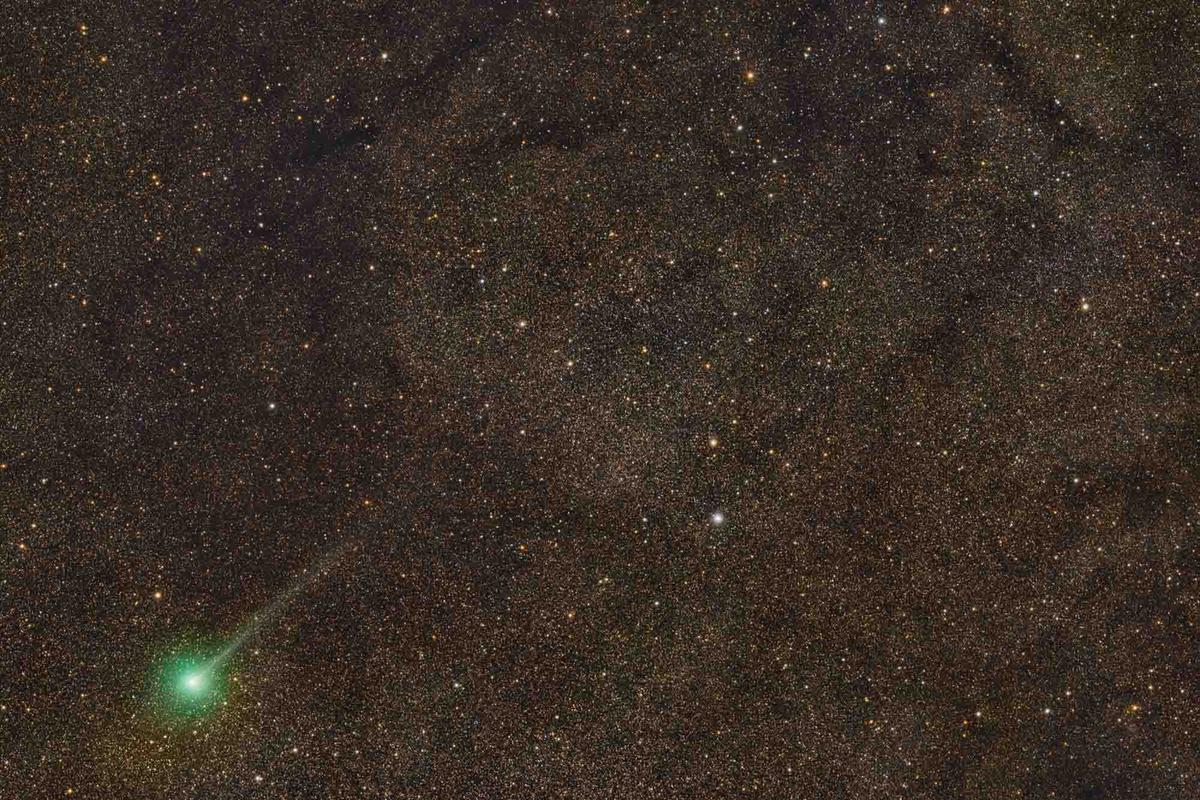
Unlike famous comets in history—such as Halley’s Comet, first sighted over 2,000 years ago—Comet Lemmon is new in our books. Astronomers normally find comets at least one year in advance, but Lemmon is even fresher; it was found by Mount Lemmon Observatory on Jan. 3, 2025, and that’s how it got its name.
Though Lemmon did appear on earlier images, it wasn’t noticed until researchers went back and checked. Using these older images plus new data, they calculated its orbit to take 1,350 years to circle the sun once. After Lemmon reaches perihelion on Nov. 9, its orbital period will change slightly, decreasing to only 1,150 years.
That means spotting Lemmon will truly be a once-ever experience.
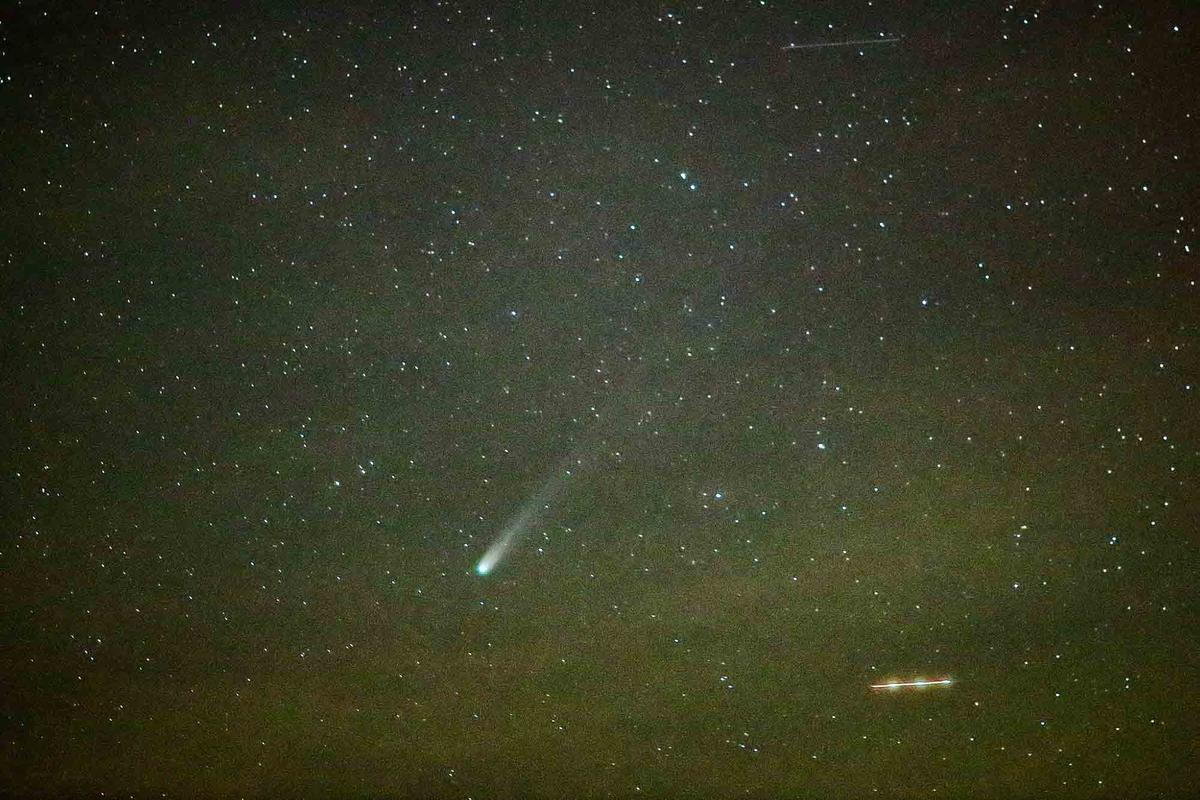
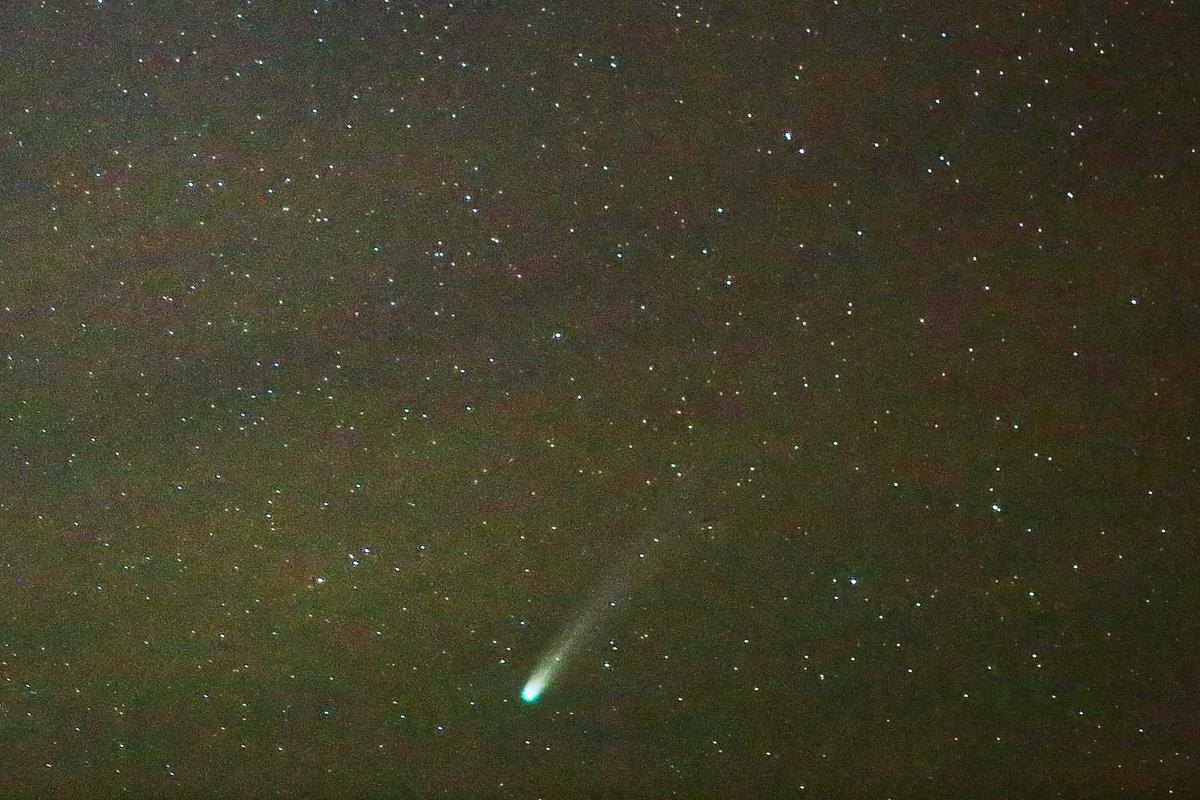
Over the past month, Lemmon crossed several constellations, from Ursa Major to Canes Venatici to Boötes, all of which favor the northern hemisphere. The comet has appeared in the mornings and evenings, dipping under the horizon in between, and could be seen across the globe. Some 5,500 miles from Tunisia, it was photographed from Kananaskis Country in Alberta, Canada, by John Andersen.
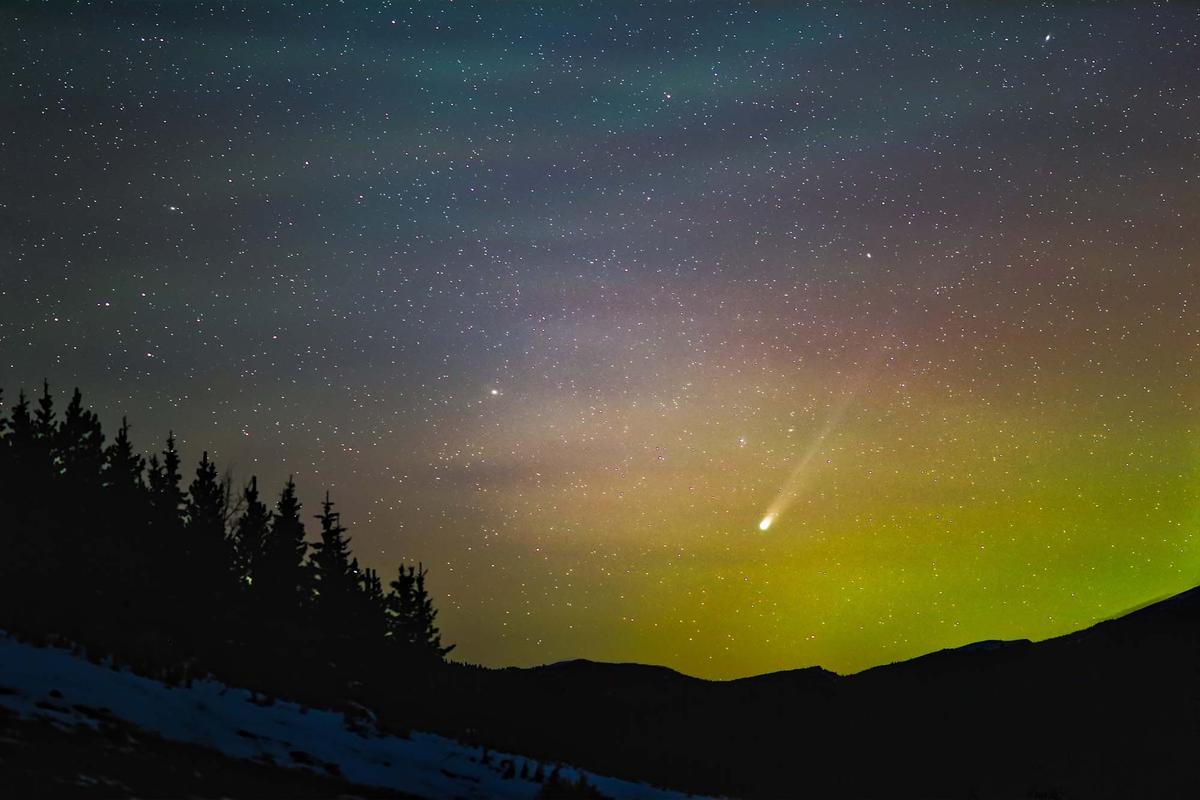
“When you can see them with your eye, it’s like wow, they’re huge!” said Andersen from Calgary, who captured Lemmon over the Rocky Mountains during a clear night on Oct. 14. He described it as a “green dot” about the size of a star. Lemmon actually has a diameter of about 0.75 miles.
Using a wide angle lens, he took several test shots to pinpoint its location before managing to capture its green, glowing nucleus and tail. The drama was even enhanced by the northern lights colouring the background.
Andersen, who’s been photographing comets for years, says he was fascinated by the cosmic trio now gracing Earth all at the same time.
“Everybody was gaga about the extrasolar comet [3I/ATLAS ],” Andersen said. “And then there was another one that they found, Comet SWAN, earlier, which was mostly visible in the southern hemisphere. And then Lemmon was that last one that they found this year.”
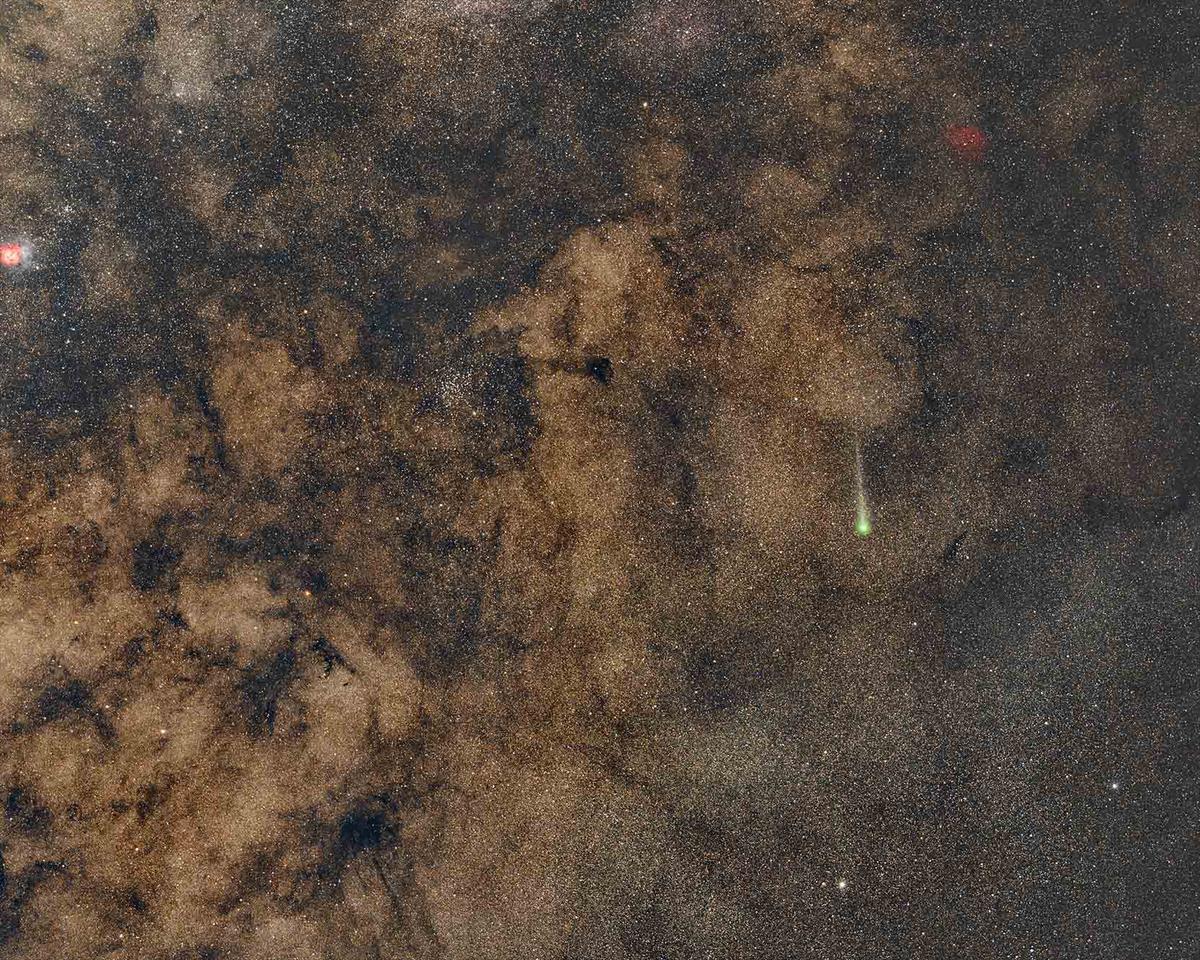
SWAN reached its closest point to Earth on Oct. 19, coinciding with Lemmon almost perfectly—a rarity indeed. It’s been seen during evening, flying in the opposite direction as the sun. On Oct. 21, Andersen captured images of SWAN while photographing the Milky Way in Kananaskis.
It appeared as “a tiny green dot visible only in camera,” he said.