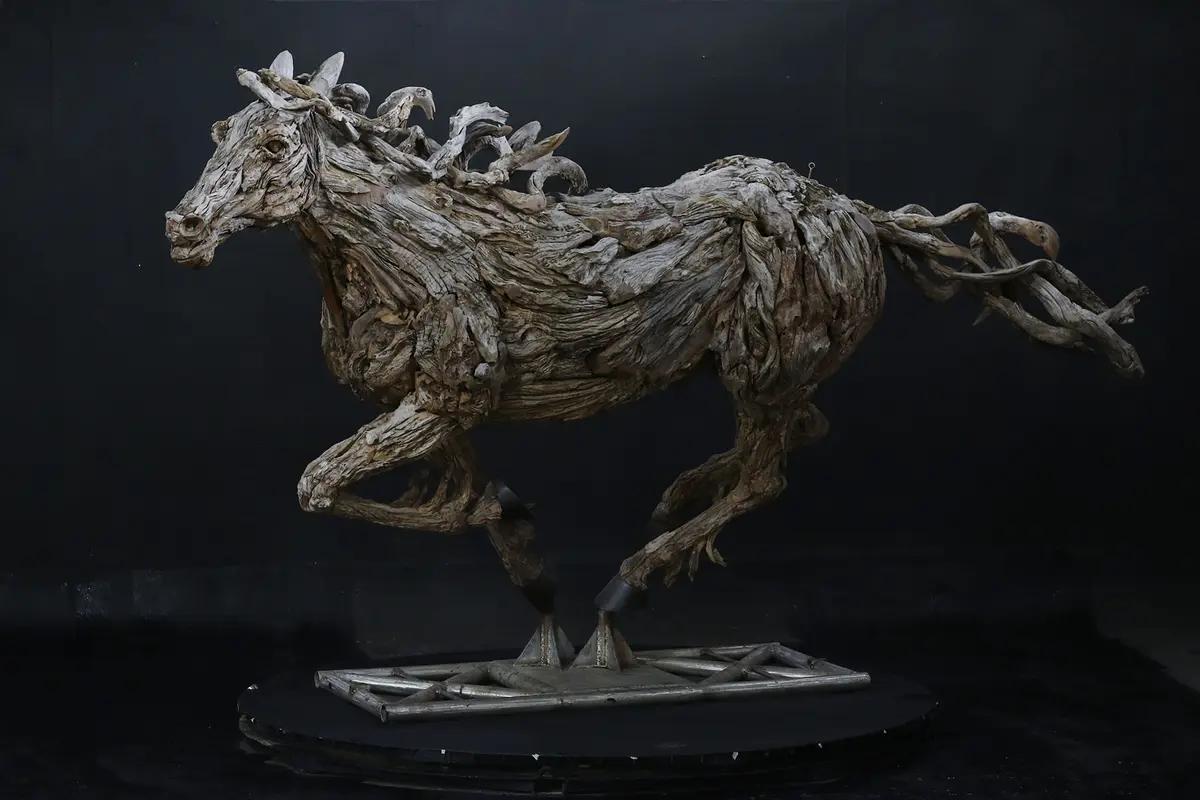
Sifting through mountains of twisted wood, James Doran-Webb hunts for what will become the bulging shoulder, or perhaps the flaring nostril, of a galloping horse. The 58-year-old sculptor, from Devon, UK, is seeking the perfect woodgrain swirl to adorn his life-sized sculpture made entirely from salvaged driftwood. The fit must be immaculate, with not even an inch of wiggle room.
“This might work,” Doran-Webb says, holding up a gnarled hunk of timber for his assistant to peruse. Around him, his team of seven local craftsmen and six welders bustle on multifarious driftwood projects inside his sprawling, multi-structure studio in Cebu, Philippines.
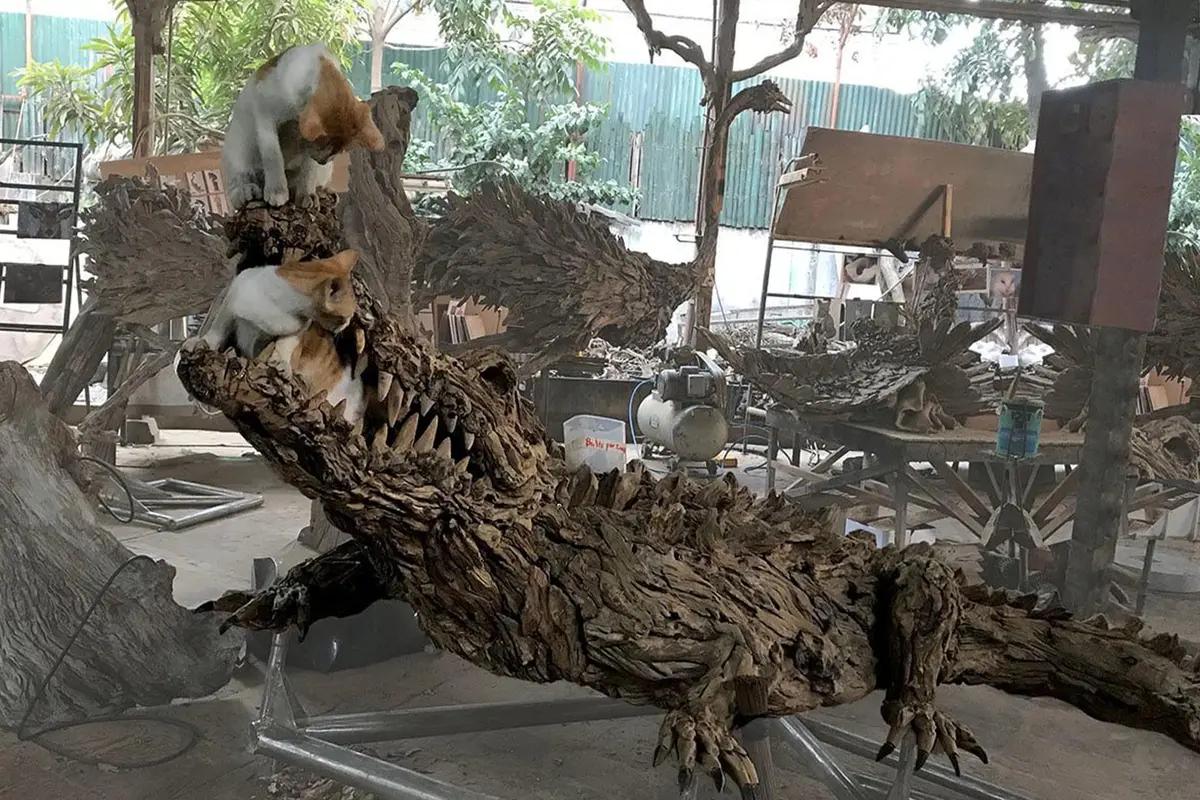
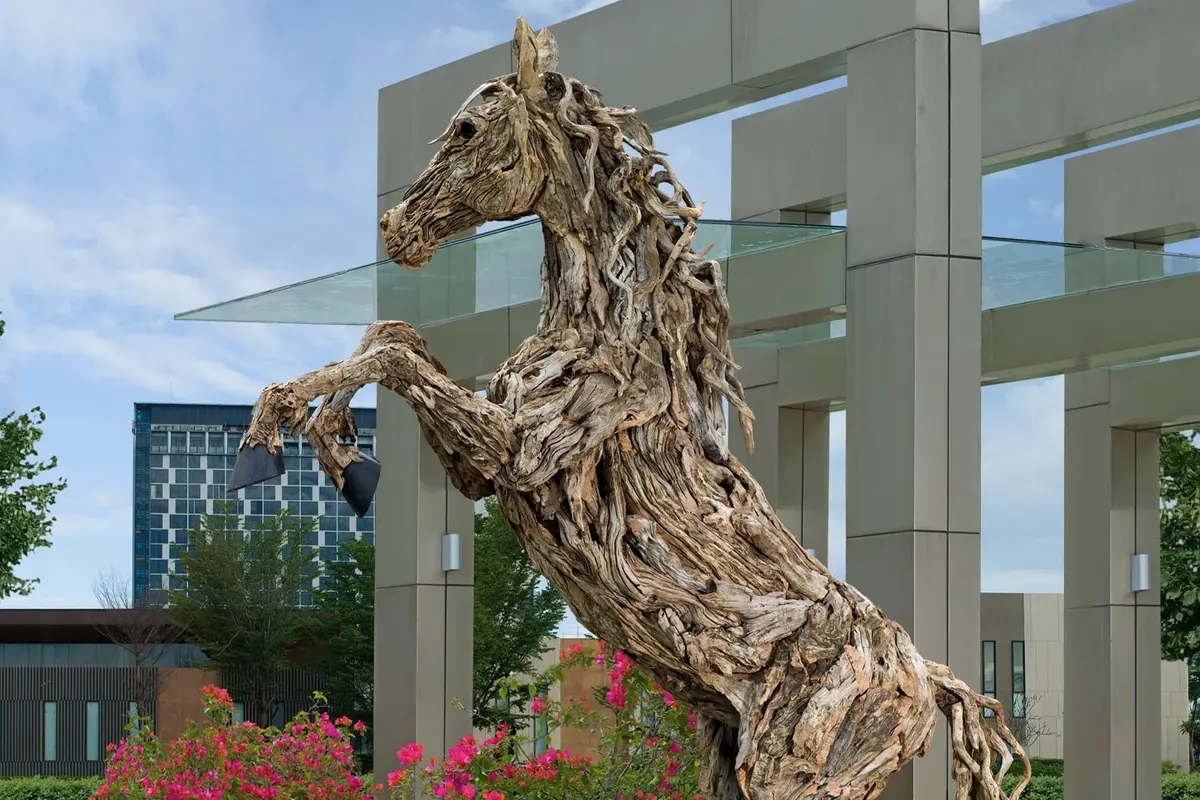
For over two decades, Doran-Webb has been shaping long-dead wood into anatomically correct wildlife art, developing a process of “welding wood” through trial and error. Each creation is anchored to an intricate steel armature connecting to ever single piece. He only uses native tugas wood—or vitex parviflora—a dense, local timber prized for its stubborn resistance to rot.
This studio is where the artist’s twisted titans are born. Stepping through the gates, a visitor is greeted by an immense pile of wonderfully-grained wood stretching from left to right, divided by a winding path down the middle. Overhead, chain hoists dangle from a 30-foot-high gantry crane system. Bandsaws, chainsaws of all sizes, and welding torches litter the workspace, each tool custom modified for the brutality of shaping salvaged hardwood.
“When I get to my workshop I’m absolutely in heaven,” Doran-Webb tells The Epoch Times.
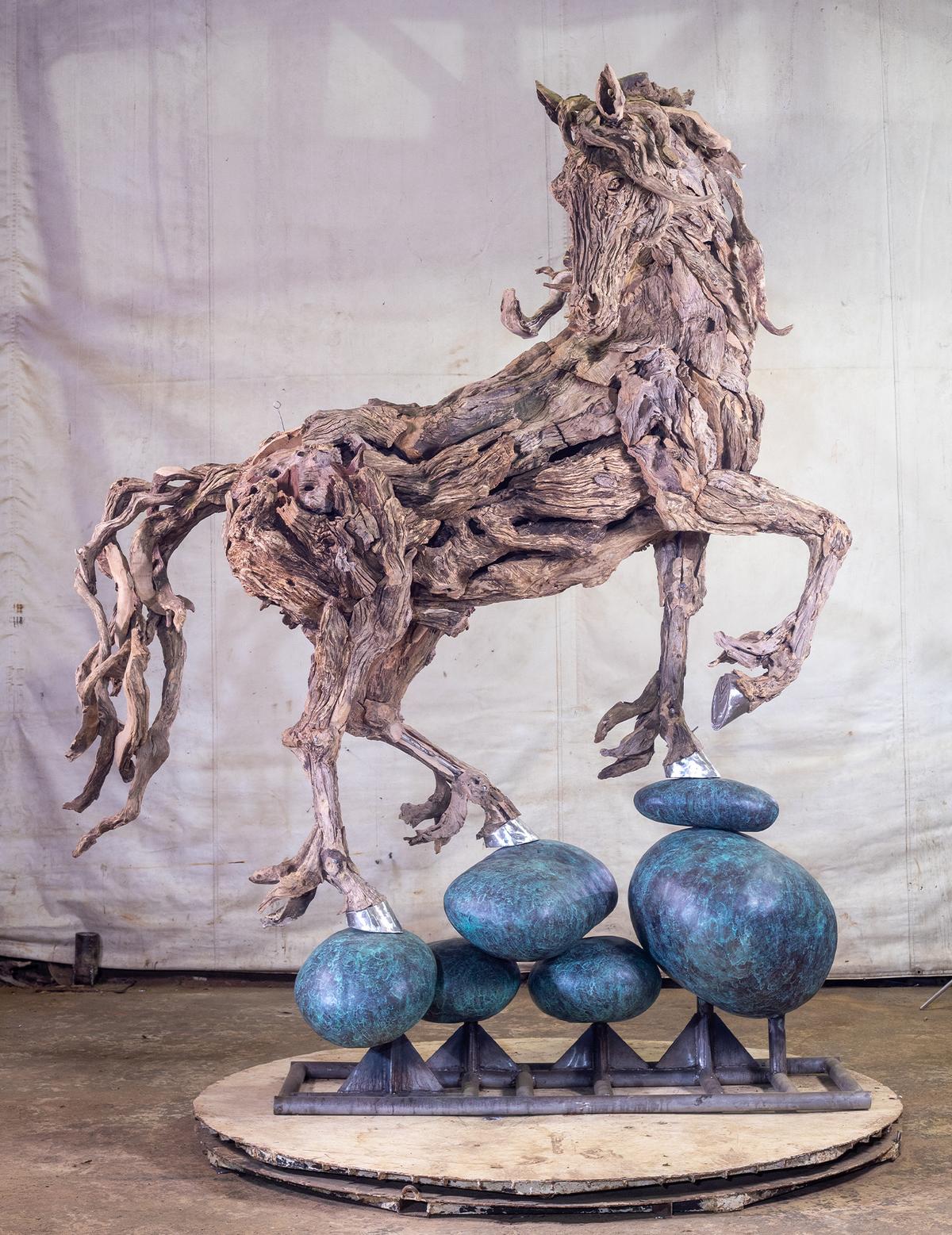
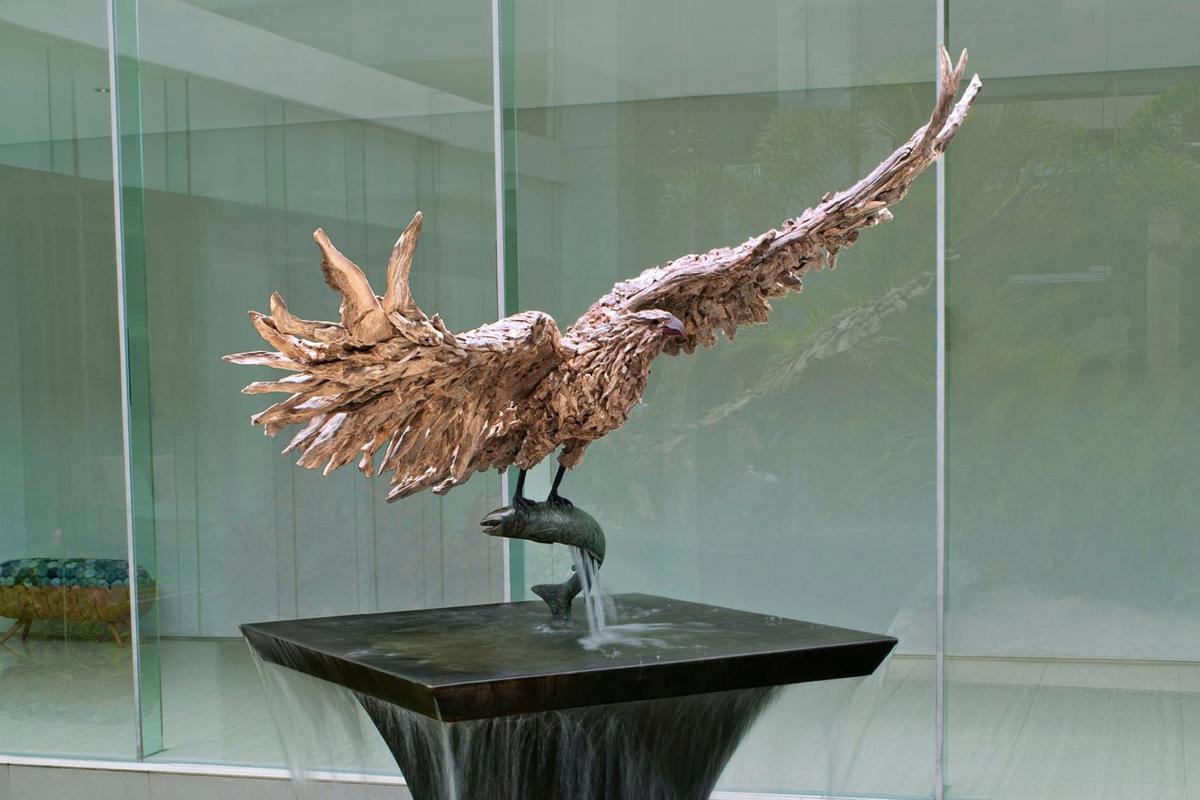
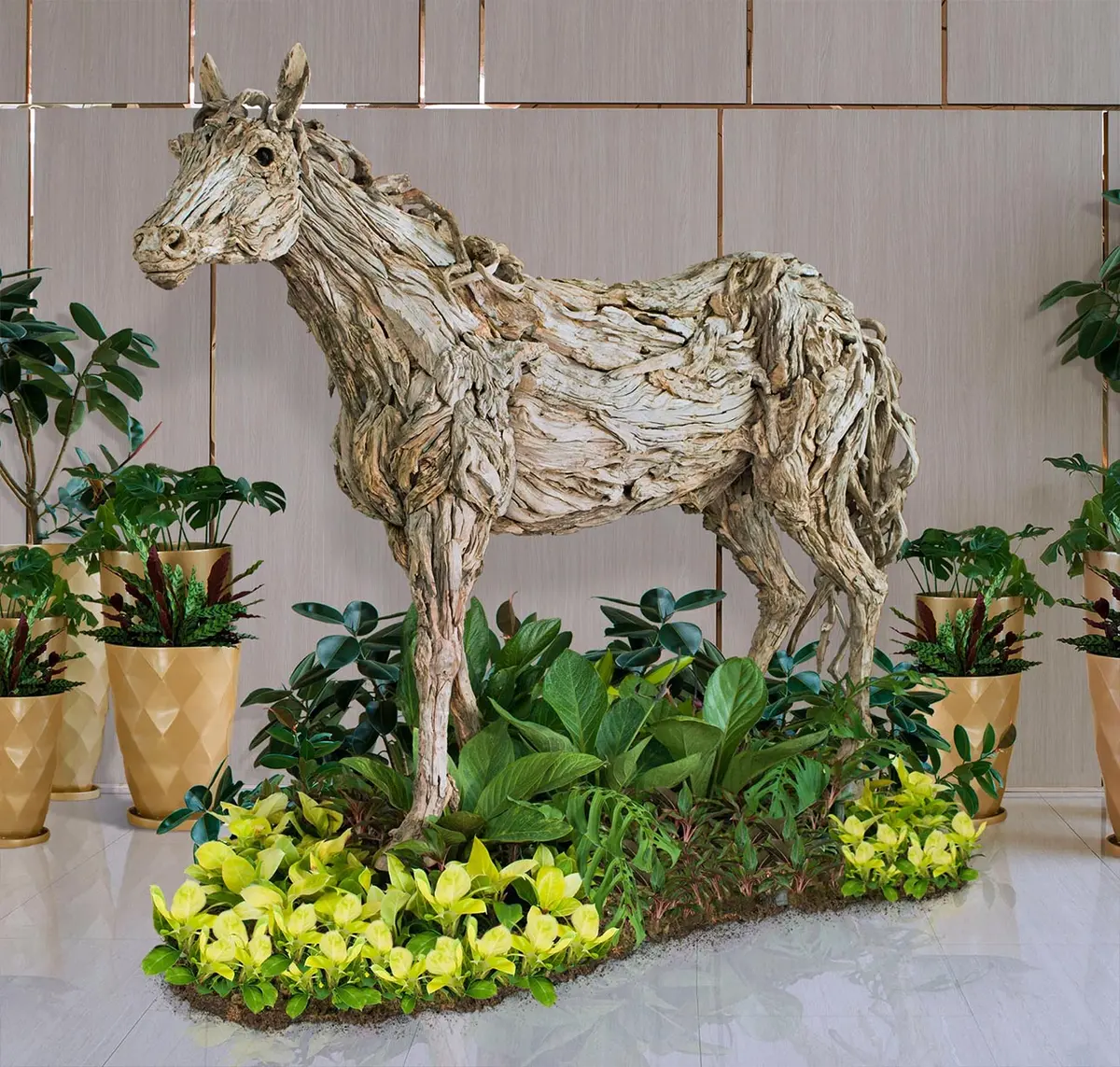
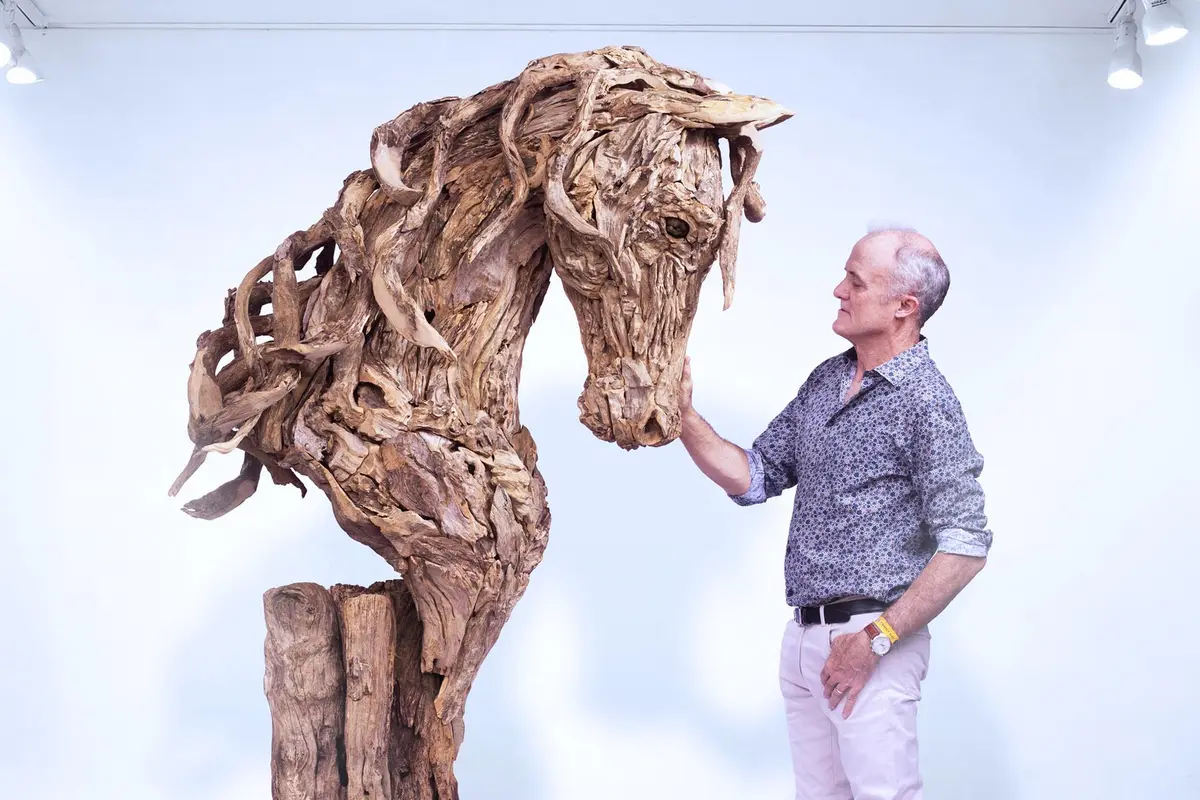
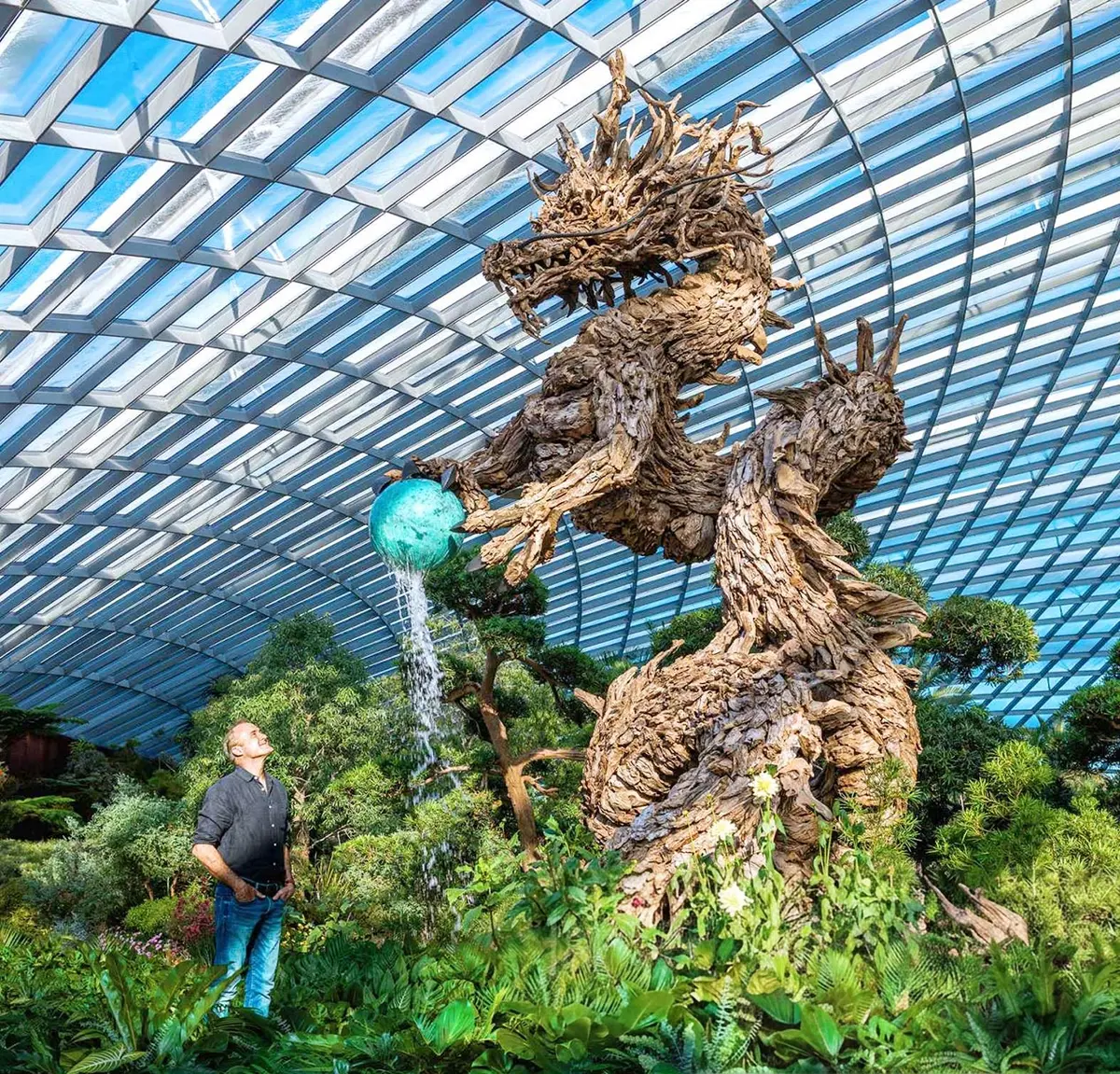
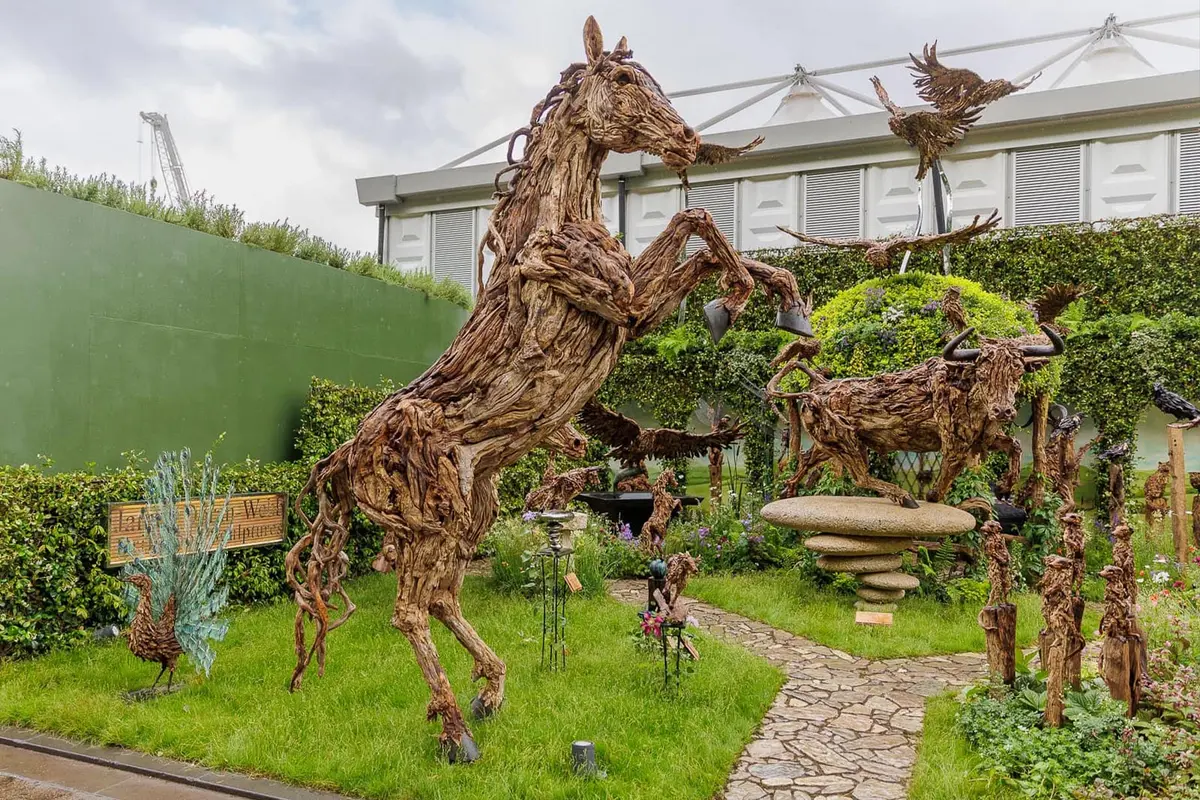
While his team works on individual sculptures Doran-Webb floats between projects, mentoring crewmen while focusing mainly on his more groundbreaking centerpieces. One year it was a 7,000-pound Asian dragon, the welcoming attraction for Singapore’s Gardens by the Bay for the Lunar New Year; this year he poured his energy into a menagerie of wild animals for London’s prestigious Chelsea Flower Show.
Having moved to the Philippines at age 22, Doran-Webb is has become part of the local community, speaking fluent Visayan. He views his crew less as employees and more as a second family. “Every one of my assistants is a craftsman who is so special,” he says. “They’ve worked alongside me as I develop my craft. I basically work with them to transfer knowledge to them, and they are masters in their own right.”
But the mastermind behind the driftwood art studio didn’t attend art school. The son of antique dealers, Doran-Webb cut his teeth as a craftsman, hawking old English chairs as a teenager, learning the trade from his father. Then he moved to the Philippines in his early 20s to apprentice under a master rattan furniture maker.
“I have huge respect for craftspeople, so if you ask me what I consider myself, I would say a craftsperson first and foremost,” he said. “But I also consider myself an artist, because, essentially, I create art.”
It was Doran-Webb’s eye for the patina of antiques that led to his discovery of nature’s finest rustic medium: driftwood. Walking the typhoon-worn beaches of the East Pacific in the early 2000s yielded marvelous shapes and textures.
“It already looks like a horse’s head, or it looks like part of the anatomy of an animal,” he recalls thinking.
Soon, his first driftwood horse was born. It did not last long.
Driftwood, he quickly learned, is a notorious rotter.
So Doran-Webb’s art had to evolve, abandoning the beaches for a more durable medium: long-dead tugas wood, traditionally favored by Cebuano locals for building homes. Tugas resists rot far better than driftwood and is legally viable to collect. Working in tandem with village elders and the Department of Natural Resources, Doran-Webb arranged to ship the heavy timber down from the hills to his studio by lorry, turning a community’s raw materials into international art.
“But I can’t call myself a ‘long-dead wood sculptor,’ because it’s not exactly a very pleasing descriptor,” he said. “I still call myself a ‘driftwood’ sculptor.”
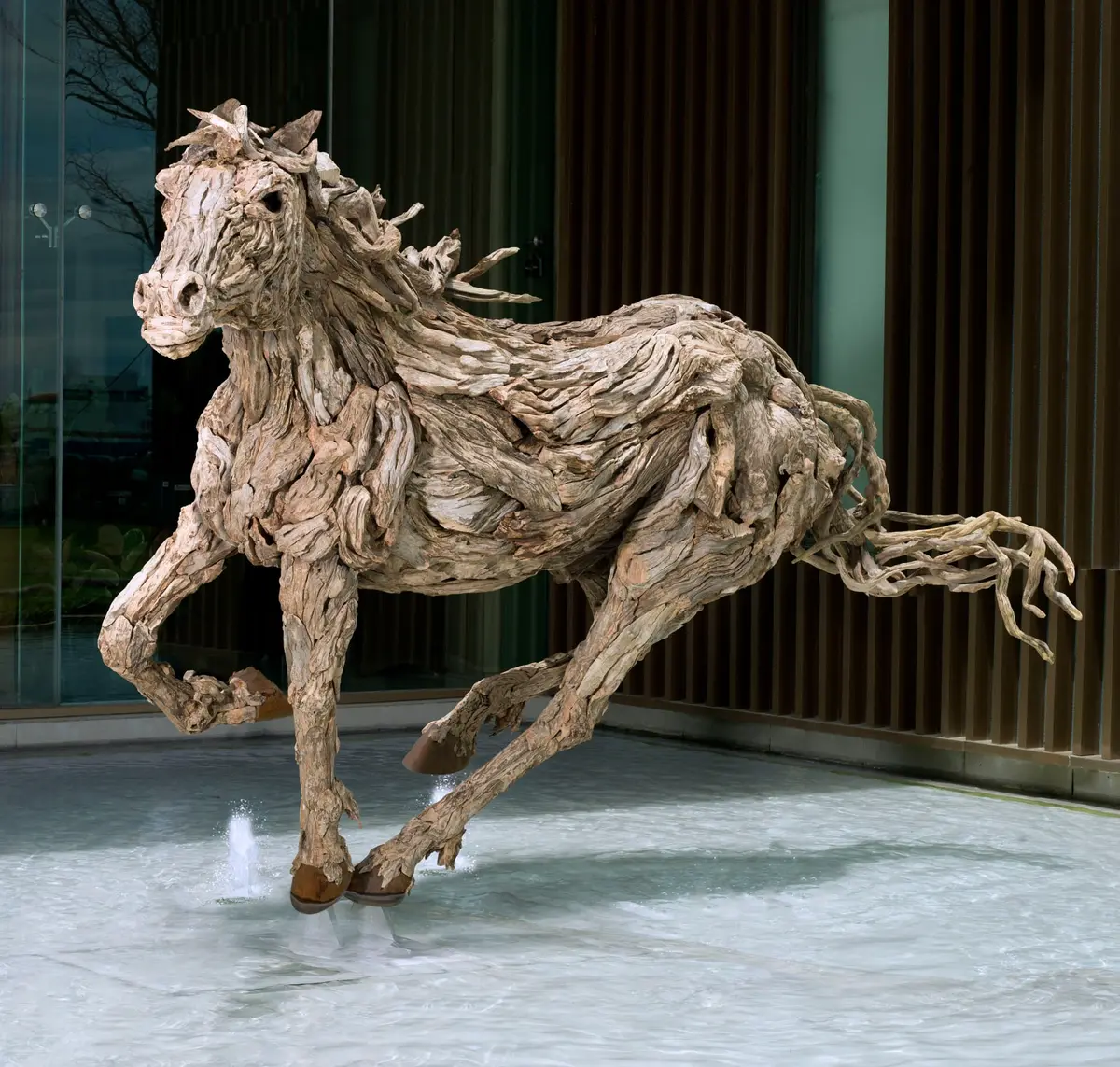
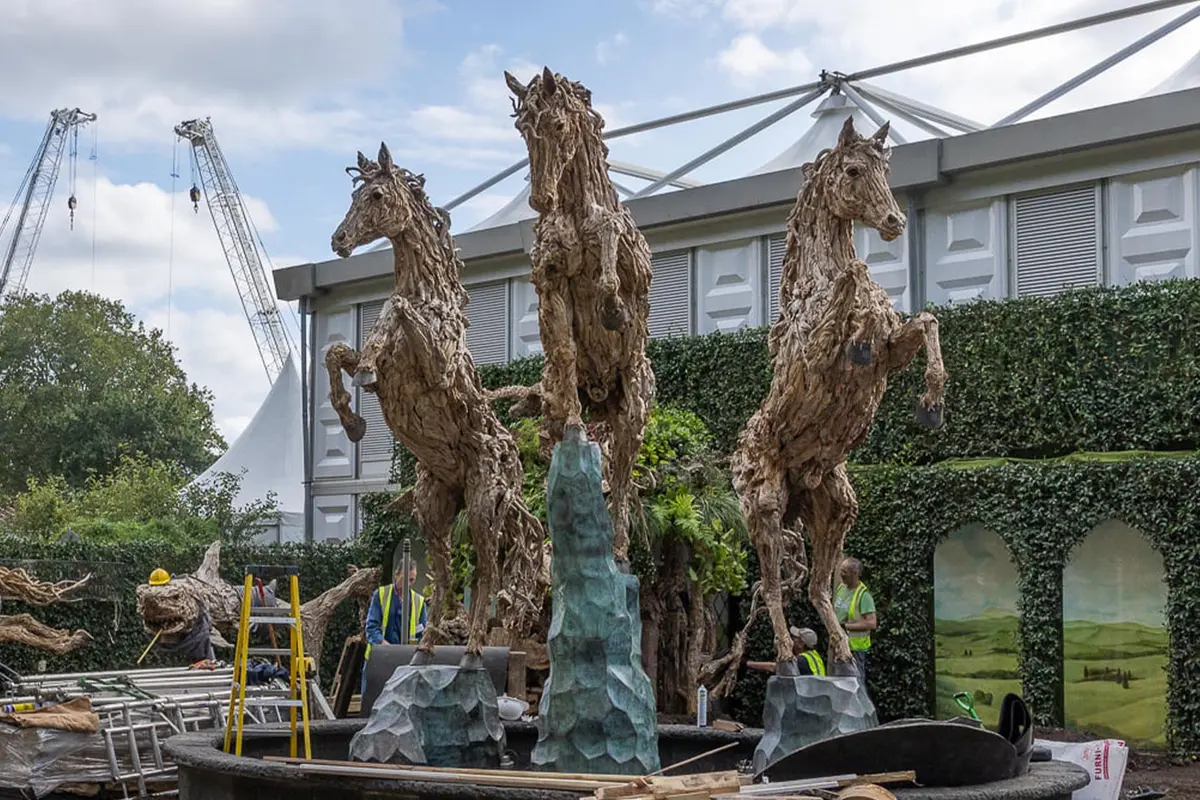
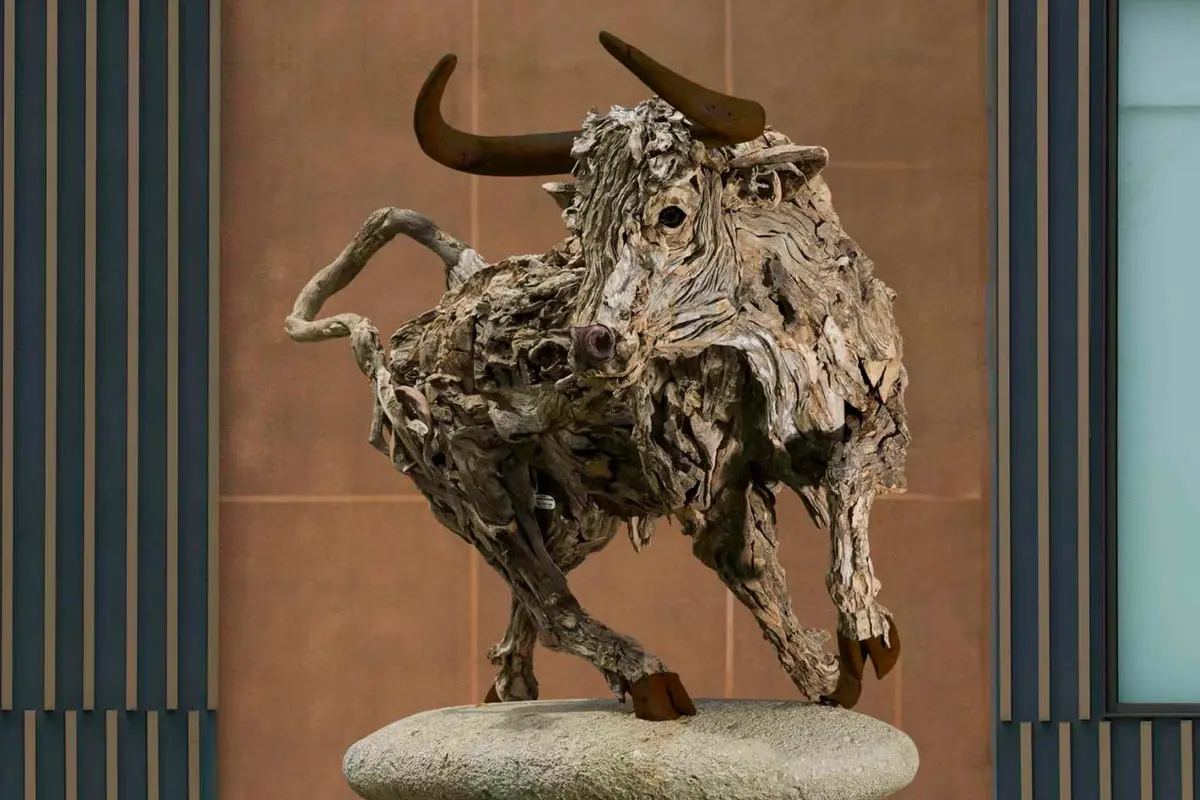
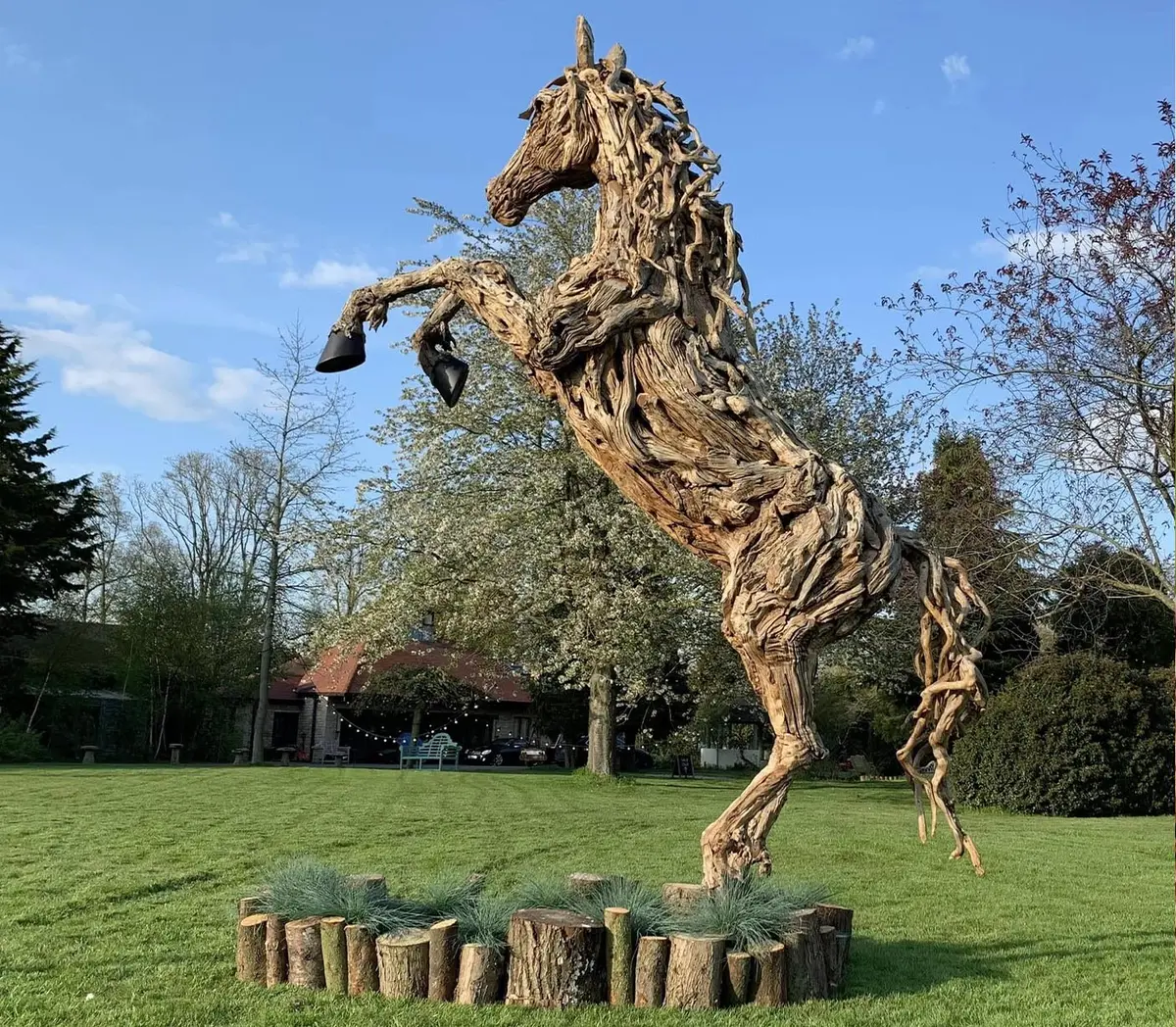
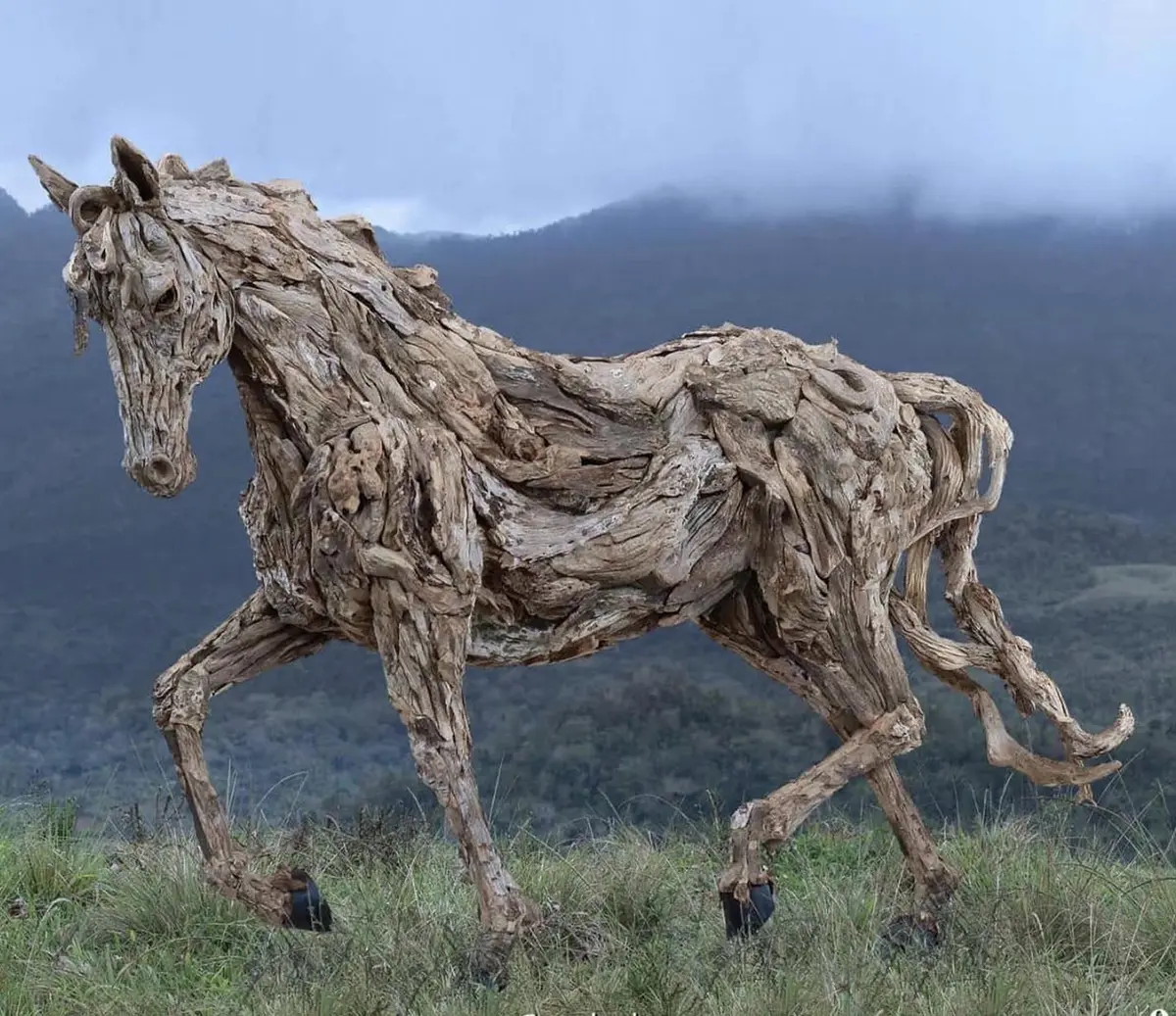
To the untrained eye, the distinction is invisible. Decades of exposure to tropical downpours and the blistering mountain sun simmer the hillside timber until it matches the exact bleached, skeletal quality of wood tossed by the sea.
This cycle of weathering and resilience mirrors the career of the artist himself. Growing up, his family bounced between what he calls “glorious poverty” and “exceptional wealth”—a volatility that followed him along his artistic journey, leading to multiple brushes with bankruptcy before finding his niche.
His breakthrough arrived in 2012. During an early exhibition at the Animal Art Fair in the UK, Doran-Webb and his family stayed in “the very cheapest hotels” they could find, he said. After selling “absolutely nothing” during the entire run of the show, and with credit cards maxed out, his wife asked for lunch money. Doran-Webb checked his pockets.
“Literally, I had something like eight pounds,” he says. Yet despite his drained savings, the artist was setting up for a new gamble in an even bigger venue where he would eventually make his mark.
“I had to transfer my unsold pieces to the Chelsea Flower Show, which was starting the following day,” he said.
Within the first hour of opening day, a buyer stopped in front of a giant centerpiece. The price tag was roughly $90,000. It sold immediately.
“That was the minute where my professional career was sealed, where I could really breathe a sigh of relief,” he says. “I was in absolute ecstasy for the following four days.”
“It’s a real spectacle,” he says, noting that the Chelsea Flower Show is “without a doubt the most prestigious” horticultural show in the world. “I’m probably one of the most memorable trade stands in the exhibition. Last year, I got the best trade stand award.”
Doran-Webb fared even better in 2026, landing the highest accolade, five stars, with judges using just one word to describe his work: “epic.”
Yet, walking among royalty and manicured lawns of London only sharpens the contrast with the life he has built across the globe. After more than three decades shaping art in Cebu, the 58-year-old sculptor says he’s starting to feel a little homesick.
“The older one gets, the more one recognizes that the cultural differences are there, but I still absolutely love it,” he says, comparing his austere British upbringing with the more easygoing Filipino community.
“I used to wander the hills of Northern Cebu with a dear friend looking for antiques,” he said, adding that they would spend weeks at a time living in bamboo houses, reliant entirely on the warmth of total strangers.
Today, as shipping containers are packed with artwork bound for prestigious London gardens, the master craftsman is still searching. He might find the perfect length of twisted timber for a new horse. Or he might find his way home.