R | 2h 13m | Drama | 1975
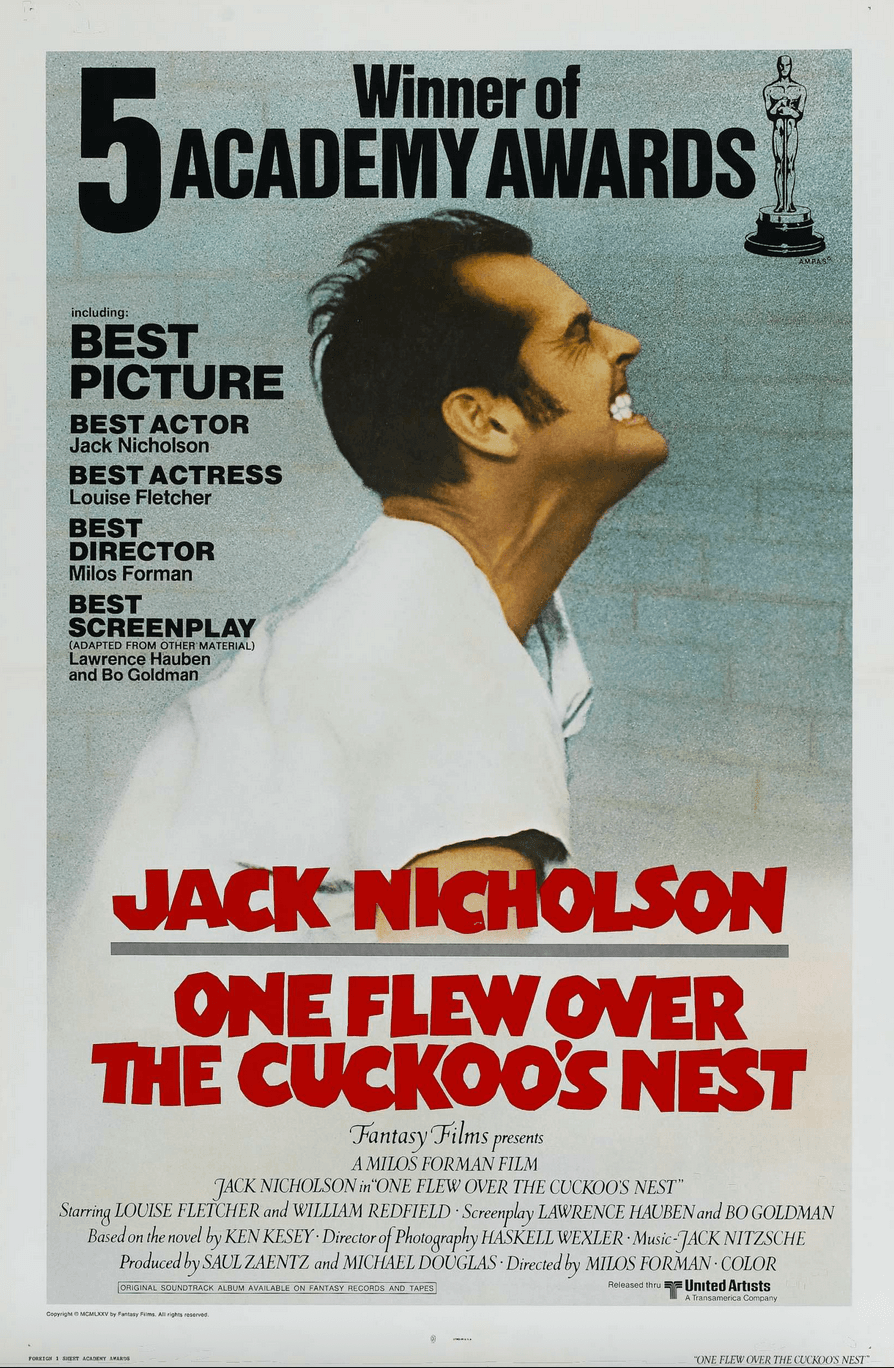
It’s the 50th Anniversary of “One Flew Over the Cuckoo’s Nest.” Starring Jack Nicholson at the top of his acting game, this multi-Oscar-winning, anti-authoritarian tale remains as exhilarating and depressing as when it was released. Its conspicuous success marked the zenith of Hollywood’s counterculture infatuation, which had begun in the late 1960s with “Easy Rider.”
There was a popular song on the radio that pre-dated the movie by a few years that serendipitously provided context for the movie, entitled “They’re Coming to Take Me Away!” (Refrain): “They’re coming to take me away, ho-ho, hee-hee, ha-ha, to the funny farm, where life is beautiful all the time, and I´ll be happy to see those nice young men in their clean white coats, and they´re coming to take me away.”
At the time, “Cuckoo’s Nest” and “It Happened One Night” were the only two films to win the Big Five at the Academy Awards: Best Picture, Best Adapted Screenplay, Best Director (Milos Forman), Best Actor (Nicholson), and Best Actress (Fletcher). These two were later joined by “The Silence of the Lambs.”
Ken Kesey
A strictly realistic approach to author (and figurehead of the counterculture movement) Ken Kesey’s 1962 novel, the film version of “One Flew Over the Cuckoo’s Nest” narrows the horizons of the book into a saner, less delirious, tragicomedy.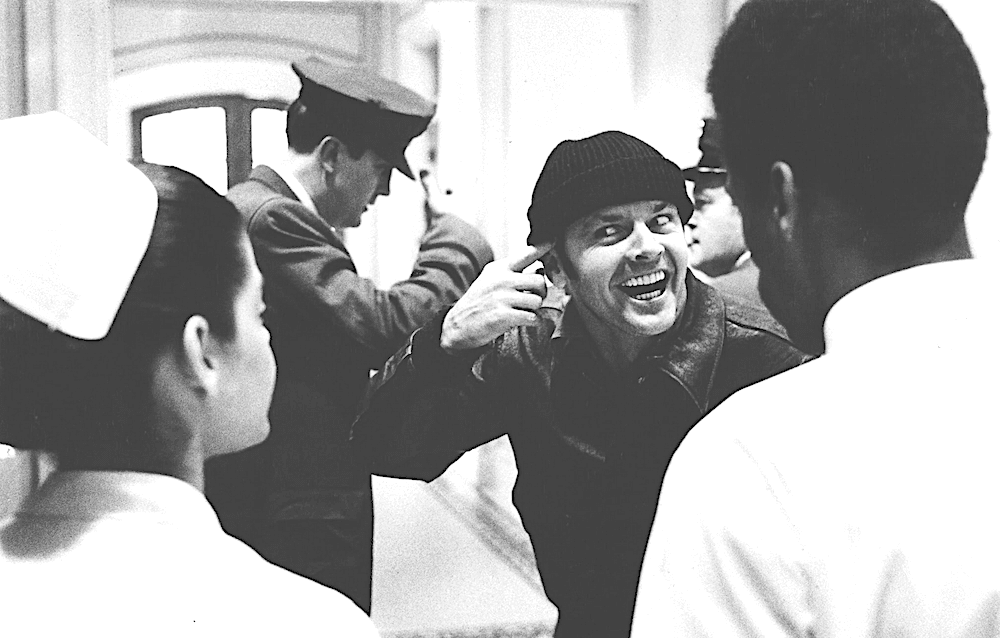
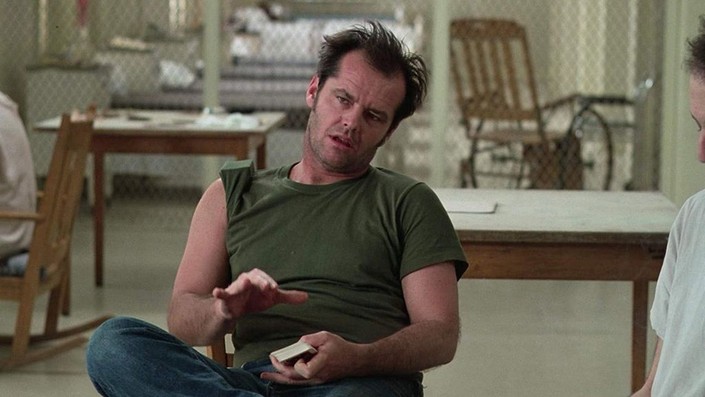
Set in an insane asylum, it critiques power structures and societal norms, especially within American institutions. It explores themes of individuality, conformity, and the dehumanizing effects of institutionalization. Oppression of the individual is a theme spearheaded by the ebullient, top-flight Nicholson—turning in the performance of a lifetime as Randle Patrick McMurphy.

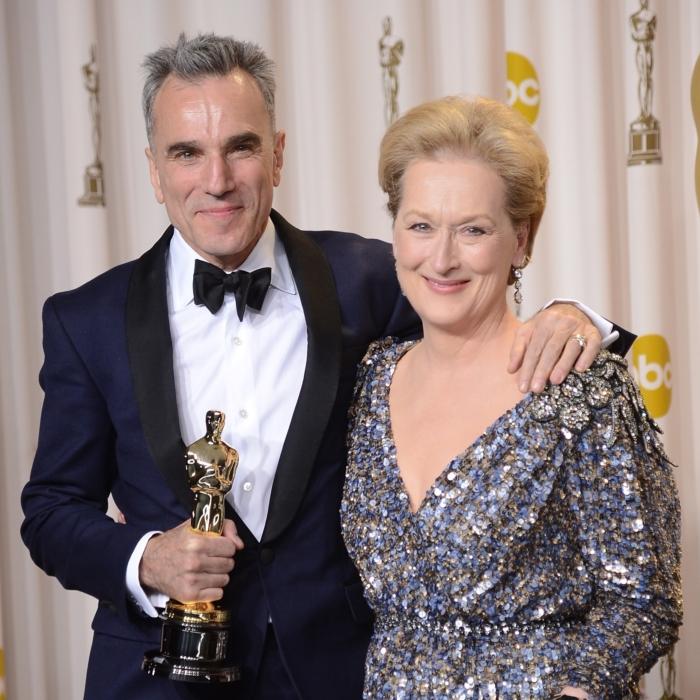
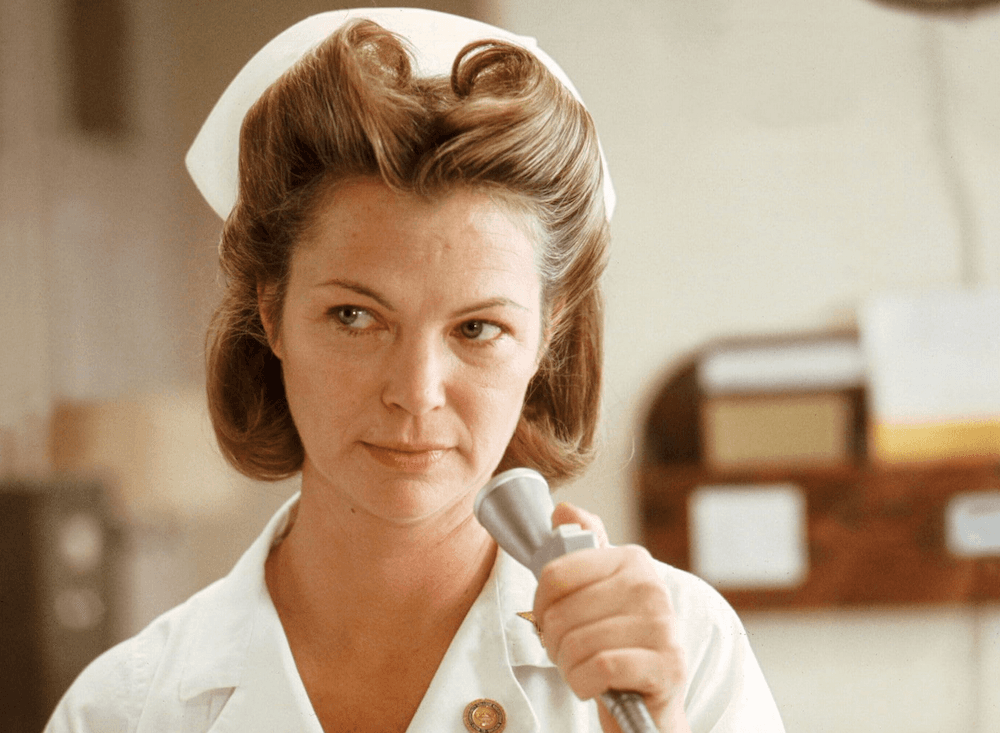
He’s a free-spirited, anti-establishment hero—as he leads his fellow-patients against the sinister but ostensibly well-meaning Nurse Mildred Ratched (Louise Fletcher). Nurse Ratched gives new meaning to the term “passive-aggressive.” Ultimately, the film is an electrifying observation of the need for reform in our mental institutions.
Chronic Ne'er Do Well
Recidivist anti-authoritarian and habitual criminal McMurphy had been serving a short sentence on a prison farm in Oregon for (allegedly unwitting) statutory rape of a 15-year-old girl. He’s transferred to an asylum for evaluation, though he doesn’t show any signs of mental illness.Rather than spending his time breaking rocks while doing hard time in prison, McMurphy decides to take the “easy way out” by committing himself to a mental institution. He hadn’t imagined that he’d run into his worst nightmare—the hyper-controlling, and ultimately deadly Nurse Ratched (Fletcher).
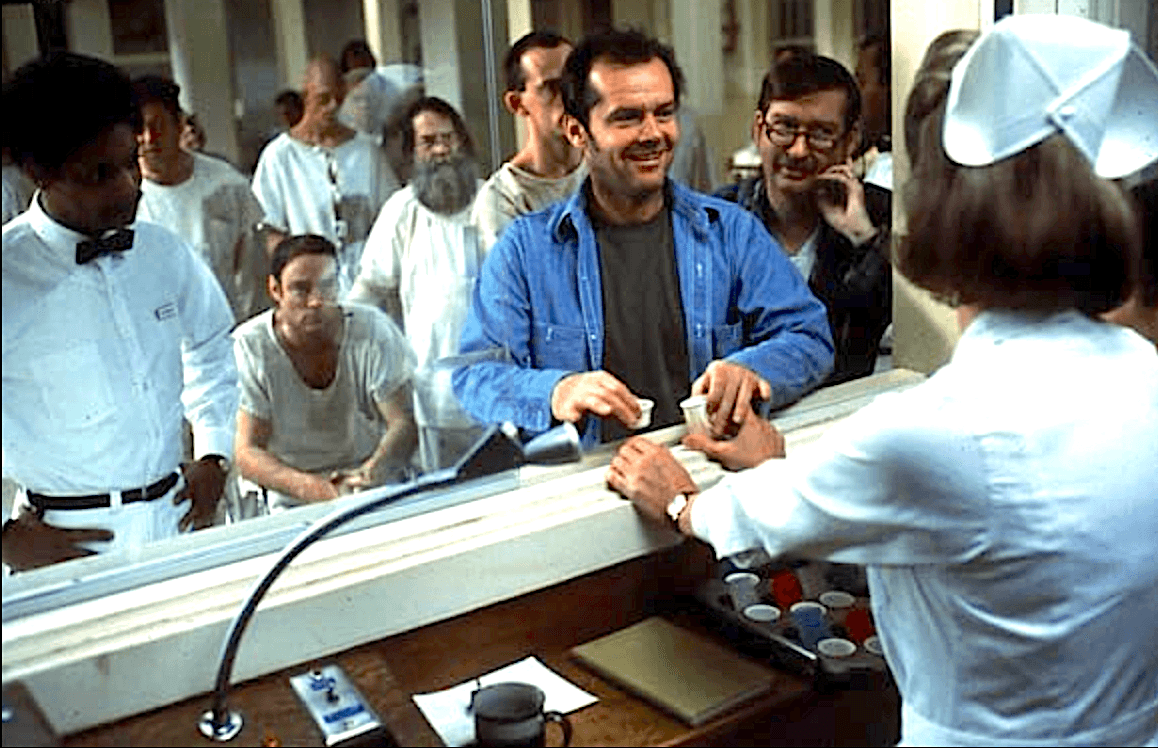
McMurphy soon establishes himself as the alpha of a clique that includes Max Taber (Christopher Lloyd), belligerent and profane; Martini (Danny DeVito), delusional; Billy Bibbit (Brad Dourif), severe mommy issues; Dale Harding (William Redfield), a high-strung paranoid; Charlie Cheswick (Sydney Lassick), a temperamental, childish man; Jim Sefelt (William Duell), epileptic; and the towering, 6-foot 7-inch “Chief” Bromden (Will Sampson), a silent Native American pretending to be deaf-mute.
McMurphy constantly needles and challenges the authority of the head nurse with acting-out and rule-breaking. He proactively attempts to thwart the oppressive atmosphere of the mental ward, winning his fellow patients over to his way of seeing things, and encouraging them into acts of rebellion, joyous freedom, and self-expression.
Eventually, McMurphy comes to realize that most of the apparent nutcases (titular cuckoo’s) are all at the asylum on a voluntary basis. The shock of this discovery quickly transitions into a disquieting realization, that, as cuckoo as all these men around him appear to be, he himself is the one who is required by law to be there.
Two Standout Scenes
McMurphy at one point breaks all the patients out of the facility, drives them to the beach in a school bus, and takes them out to sea on a chartered fishing boat so they can fish, but mainly so he can fool around with some floozy.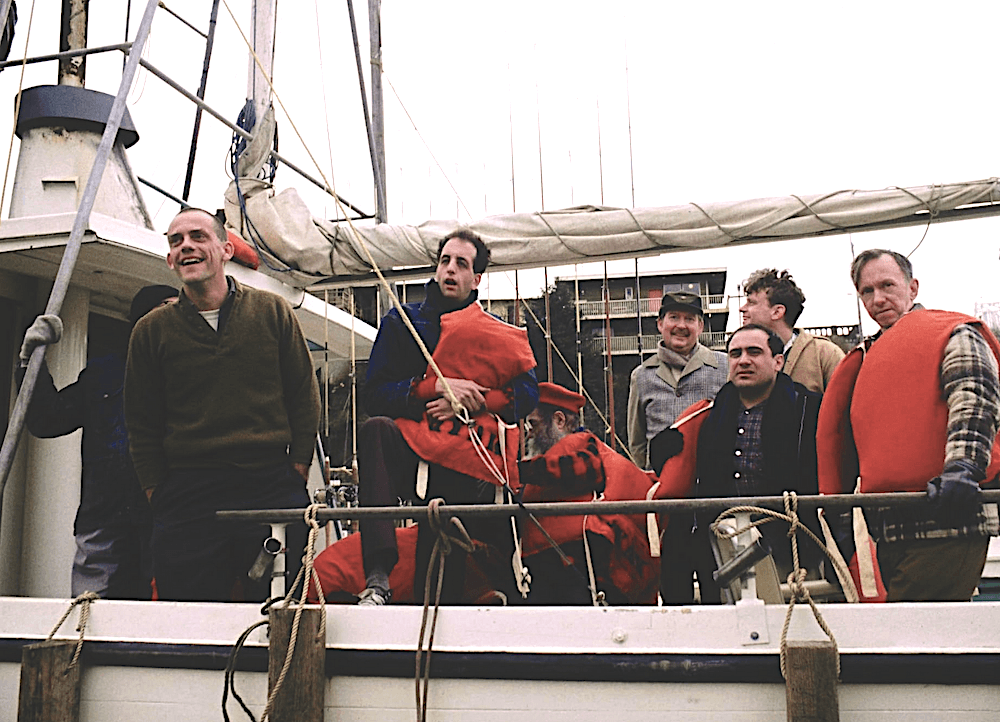
The boat owner is very suspicious of this gaggle of obviously asylum-escaped oddballs. McMurphy (with Nicholson’s trademark benign-but-devilish grin) introduces them as distinguished, doctorate-holding university faculty members. As each patient is acknowledged, his outward nuttiness instantaneously morphs and presents as great gravitas—eccentric, naturally—but clearly these men are all highly-acclaimed academics. It’s all about framing. It’s hysterical.
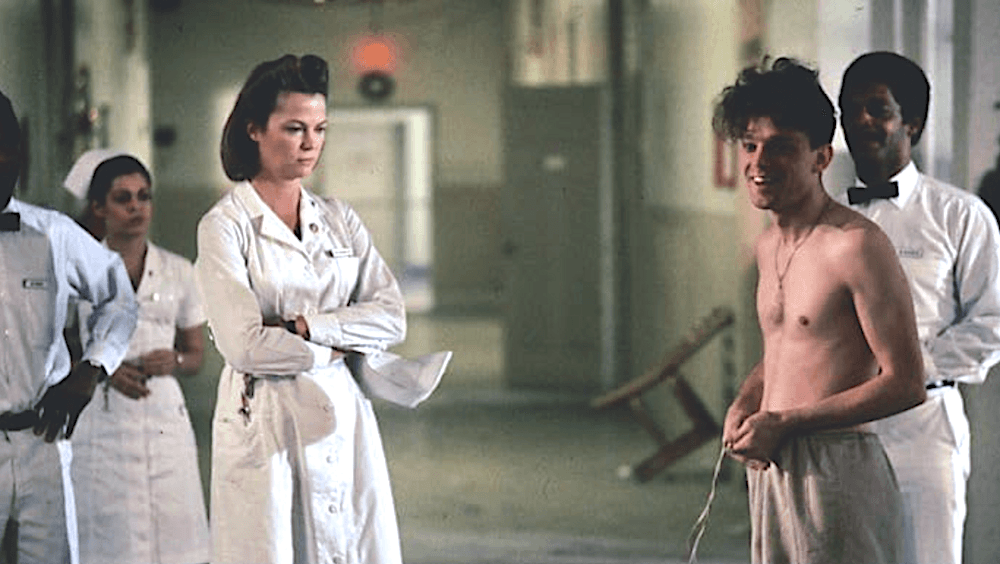
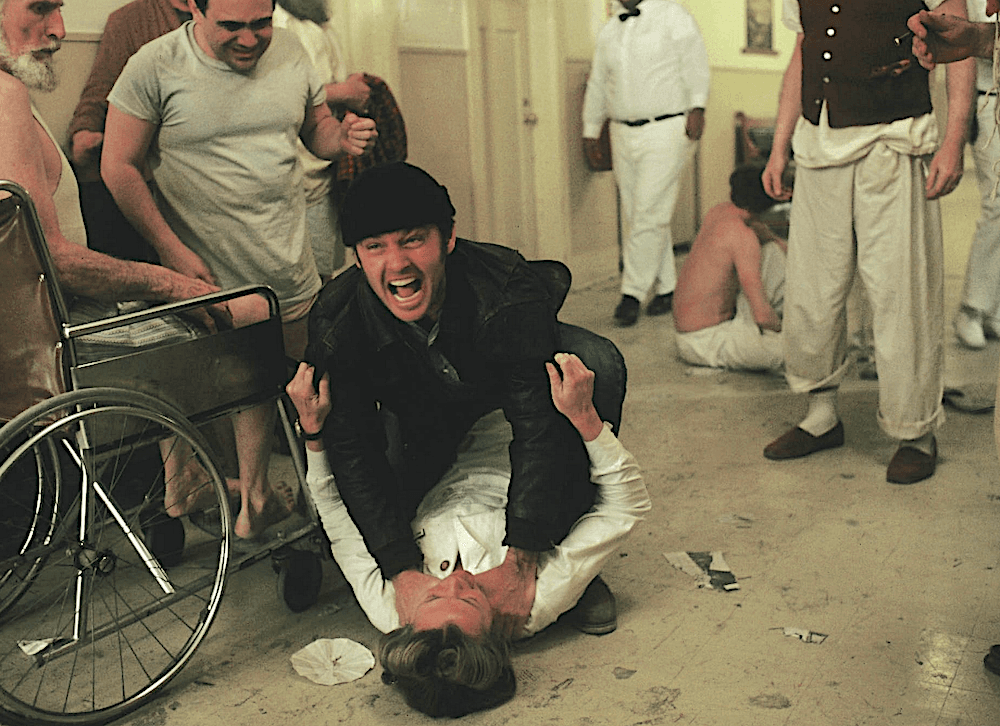
In a later dramatic scene, girl-crazy Billy Bibbitt (Dourif) who’s been sexually shamed by his mother to the point that he’s got a stutter like a mule-kick—loses his virginity. McMurphy smuggles in a prostitute to deflower Billy, who’s then discovered the next morning by Nurse Ratched, with a hooker in his bed. His stutter has miraculously disappeared. Whereupon Ratched quietly shames him to the depths of hell, threatening to tell his mother, which causes an immediate, bloody, jugular-slicing-via-glass-shard suicide. And McMurphy goes berserk. And ends up literally losing his mind—compliments of Ratched.
Overall
Apparently (so the story goes) Louise Fletcher was so good at her job as Ratched, she unnerved and depressed the film crew to the point that she hilariously decided to walk around the set on her last day, topless, so that everyone could be certain that she was just an actress, and not the personification of insidious evil.The film first stresses broad vulgarity before moving into an ambivalence where one doesn’t know whether to laugh or cry, or both. The cumulative impact is compellingly downbeat—nobody wins, everyone loses. As mentioned at the outset, “Cuckoo’s Nest” explores themes of power, control, and rebellion that resonate with criticisms of communism and other forms of authoritarianism.