Having completed our exploration of the 12 labors of Herakles, we might reasonably suppose that the numerical journey is over. Twelve, after all, is one of the great numbers of completion: 12 months in the year, 12 signs of the zodiac, 12 tribes of Israel, Twelve Apostles of Christ, and, of course, 12 Labors of Herakles.
But what happens after completion? What happens when we add one more to the dozen? Then, we arrive at 13—and immediately enter more troubled and ambiguous territory.
For many people, 13 is simply unlucky. Hotels sometimes omit a 13th floor; aircraft may lack a 13th row; and hosts have traditionally feared seating 13 people at a dinner table—a superstition Agatha Christie exploited in “Lord Edgware Dies,” published in America under the more ominous title “Thirteen at Dinner.” The fear even has its own imposing Greek-derived name: “triskaidekaphobia,” formed from the Greek words “treis,” meaning three; “kai,” meaning “and”; “deka,” meaning 10; and “phobia,” meaning fear. Yet the term itself is relatively modern, first appearing in English at around the beginning of the 20th century.
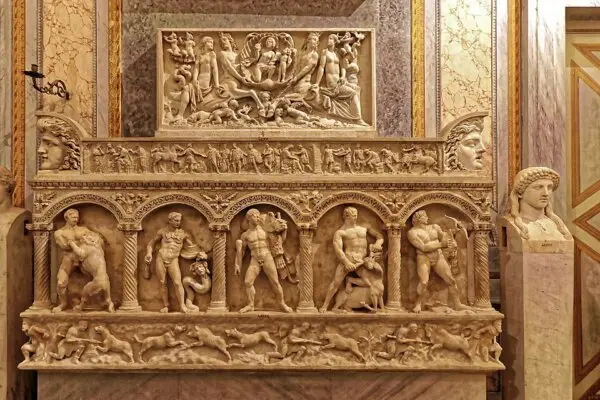
The Twelve Labors of Herakles carved on a Roman sarcophagus. While the dozen labors represented a complete cycle of mastery, Herakles’s final transformation required a passage beyond the 12—the ultimate ordeal of death and apotheosis. Burkhard Mücke/CC BY-SA 4.0
The fear is real, but its origins are far less certain than popular accounts suggest. One familiar explanation concerns the Last Supper. Christ dined with his Twelve Apostles, making 13 at the table; one of them, Judas, betrayed him. The meal was followed by the Crucifixion on Good Friday, which helps explain why Friday the 13th acquired its particularly ominous reputation.
Another widely repeated story tells of 12 Norse gods feasting in Valhalla when Loki, the uninvited 13th guest, arrived and contrived the death of Baldr, god of light and joy. It is an excellent story—but probably a later invention. Neither the Poetic Edda nor the Prose Edda, our principal sources for Baldr’s death, describes such a dinner party or identifies Loki as the 13th guest.
This is itself revealing. We create stories to explain our instinctive unease. We feel there is something wrong with 13 and therefore search the past for an event that justifies the feeling. But why should 13 trouble us? The answer may lie not in 13 itself, but in the extraordinary power of 12.

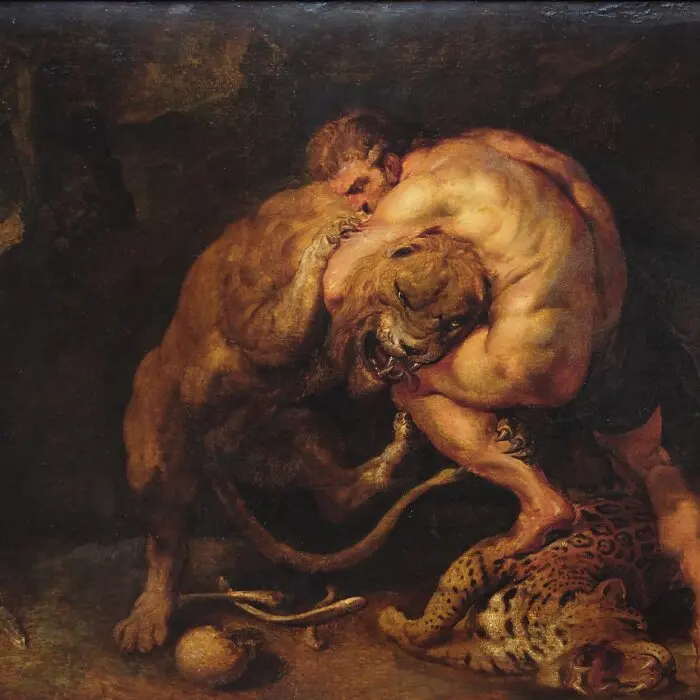
Twelve is a number that divides beautifully: by two, three, four, and six. It therefore lends itself to measurement, order, and government. Twelve months organize the year; 12 hours divide the day and night; 12 zodiacal signs map the heavens. Twelve suggests a cosmos arranged, measured, and made intelligible.
Thirteen breaks that arrangement. As a prime number, it cannot be divided evenly except by itself and one. Unlike the accommodating 12, it resists subdivision. Yet it possesses its own strange mathematical beauty: Thirteen multiplied by 13 is 169; reversing those digits gives 31, and 31 multiplied by 31 is 961: a kind of numerical palindrome. Nevertheless, aesthetically and practically, 13 remains awkward. It is the remainder, the guest for whom no place has been prepared. After 12 completes the circle, 13 steps outside it. It cannot be comfortably incorporated into the existing pattern.
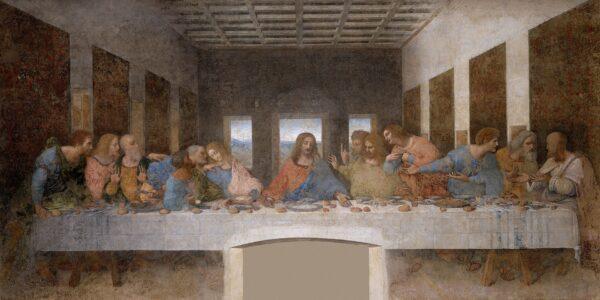
"The Last Supper," circa 1495–1498, by Leonardo da Vinci. As Christ gathered with his Twelve Apostles, an uninvited betrayer entered their company, breaking the order and setting the resurrection in motion. Public Domain
This may explain why 13 later became so frequently associated with death. In the standard tarot sequence, the 13th trump is Death. The earliest surviving tarot cards, however, were not always numbered, and their order was not yet completely fixed. A 15th-century Visconti-Sforza card now in the Morgan Library depicts Death as an elegant skeletal figure armed with a bow, confronting the observer with the impermanence of worldly rank and power. In the later tarot tradition, Death does not necessarily signify mere extinction:. One condition must end before another can begin.
Popular folklore has even given the condemned prisoner 13 steps to climb toward the gallows, though the 13-step rule did not govern actual scaffolds. The image persists because it expresses the imagination’s association between 13 and the final step beyond the ordered world of the living.
Thirteen, then, may signify not bad luck so much as transformation. This becomes clearer when we consider the moon. A lunar cycle lasts approximately 29 and a half days. Most solar years therefore contain 12 full moons, but roughly every two or three years a 13th appears—the “extra” moon commonly called a blue moon. The 13th moon disturbs the neat correspondence between the lunar and solar calendars. It is surplus to the expected order, yet it is entirely natural. Nature refuses to be contained within our convenient numerical systems.
The moon has also accumulated powerful associations with human instability and fertility. Our word “lunacy” preserves the ancient belief that the moon could disturb the rational mind. However, modern scientific research has found little evidence of any simple lunar effect upon human behavior. The menstrual cycle, meanwhile, has often been imaginatively connected with the lunar month because of their roughly comparable lengths. Whether or not the moon directly governs that cycle, the ancient association is symbolically suggestive: Blood, loss, periodicity, and the preparation for renewed fertility all belong to the mysterious rhythm by which life advances, not in a straight line, but through recurrent endings and beginnings.
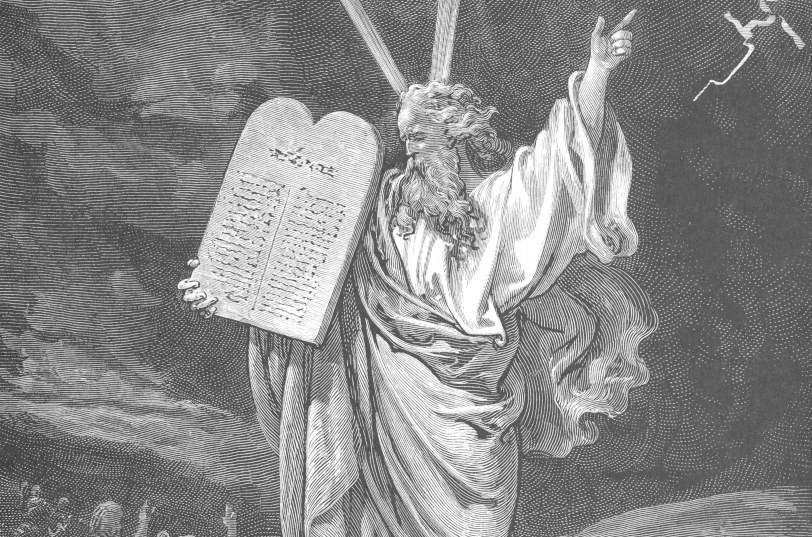
The same ambiguity appears in religion. In Judaism, 13 is not a number primarily associated with disaster. At 13, a boy becomes responsible for observing the commandments: He becomes a bar mitzvah, literally one who is subject to the divine commandments. In traditional Judaism, a girl assumes the corresponding responsibilities at age 12, with different ages reflecting the belief that girls attain maturity earlier than boys. For our purposes, however, the boy’s 13th year remains striking: Thirteen is not a curse but an initiation, the point at which childhood gives way to moral accountability. The former life ends; a new and more demanding life begins.
The founding symbolism of the United States presents another positive 13. The 13 original Colonies are commemorated throughout the Great Seal: 13 stars, 13 stripes, 13 arrows, 13 leaves, and 13 olives. Here, 13 represents not fragmentation but a new unity emerging from 13 separate political communities.
Even one of the most ominously numbered events of modern times contains the same reversal. Apollo 13 suffered its catastrophic oxygen-tank explosion on April 13, 1970—two thirteens apparently conspiring together and forcing NASA to abandon the intended moon landing. Yet through courage, ingenuity, and disciplined cooperation, the three astronauts returned safely to Earth. NASA has aptly described the mission as a “successful failure.” What appeared to be a disaster became a demonstration of human resourcefulness.
Some have gone further and deliberately adopted 13 as a challenge to superstition. The great basketball player Wilt Chamberlain wore the number throughout his career. Asked whether 13 was unlucky, he reportedly replied, “Yes, for my opponents.”
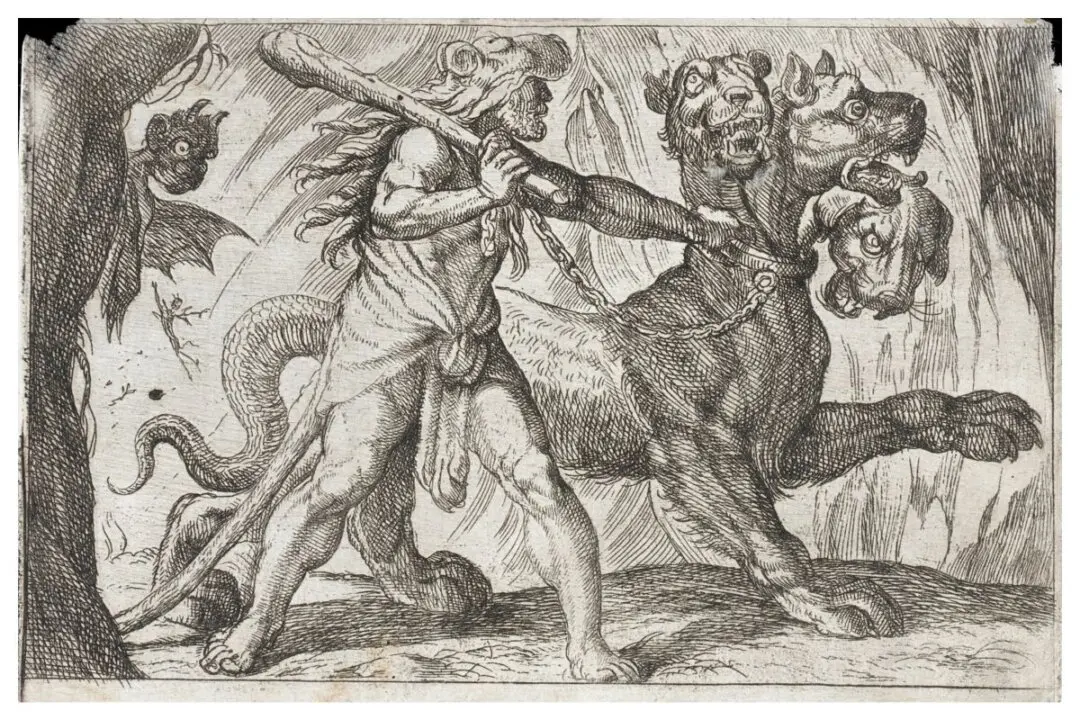
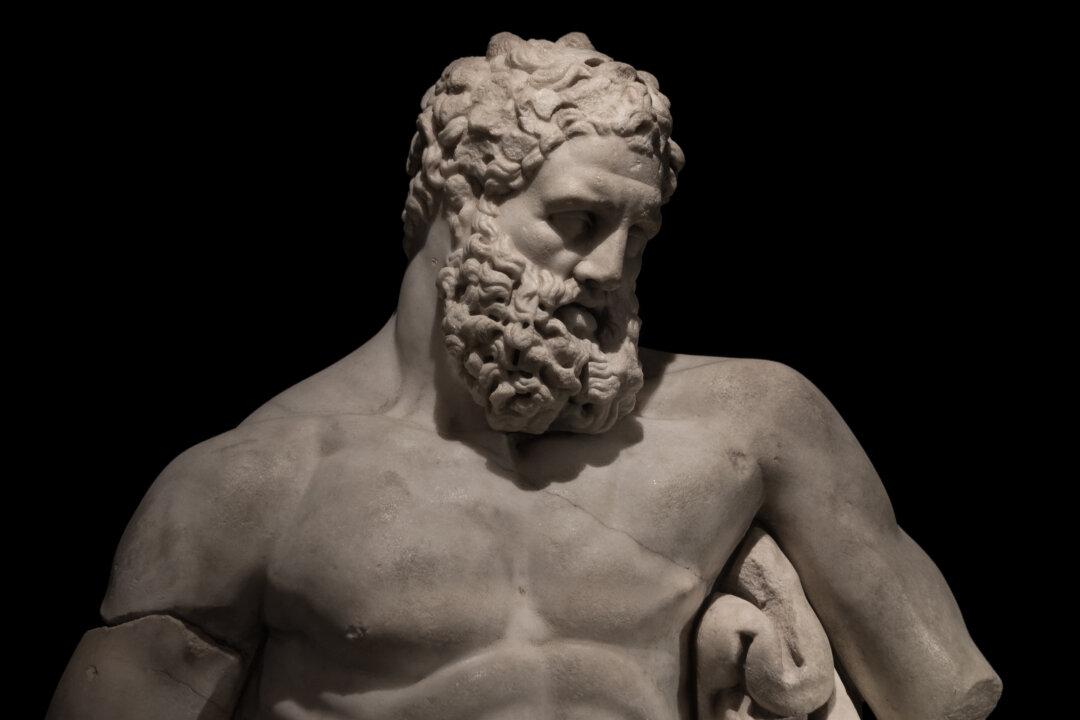
We return, finally, to Herakles. His 12 labors constitute a complete heroic cycle. Through them, he overcomes beasts, monsters, tyrants, chaos, and even death itself when he brings Cerberus from the Underworld. But Herakles’s story does not truly end with the 12th Labor. There is, in effect, a 13th: Herakles must die.

The Great Seal of the United States is woven with 13 stars, stripes, arrows, and olive leaves, signifying the transition from separate states to a unified nation. Archive Photos/Getty Images
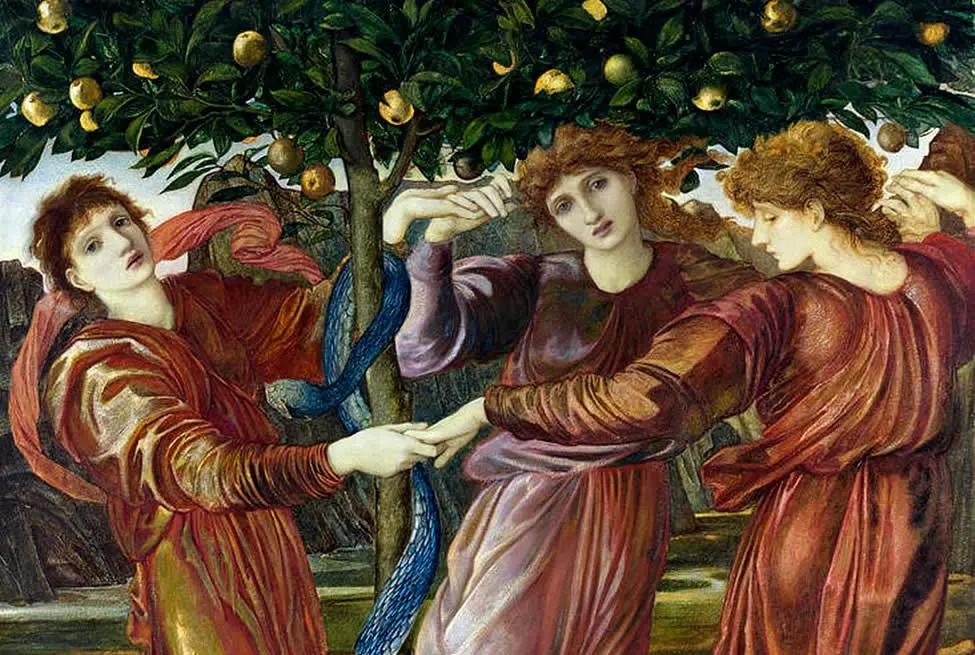
Poisoned by the blood of the centaur Nessus, Herakles orders a funeral pyre to be built upon Mount Oeta. His mortal nature is consumed in the flames—but his divine nature ascends to Olympus. There, he is reconciled with Hera, whose hostility had caused his sufferings, and receives Hebe, the goddess of youth, as his immortal bride. This is the ultimate meaning of 13. The 12 labors perfected the hero within the limits of the world; the 13th Labor carried him beyond the world.
The same pattern appears in Christianity. At the Last Supper, Christ is not one of the Twelve but the one around whom the Twelve are gathered: together they make 13. The betrayer brings death into the company, but Christ transforms that death into the passage to Resurrection. Once again, 13 breaks the settled order because it points toward an order that cannot yet be seen.
We fear 13 because we fear what lies beyond completion. We want the clock to stop at 12, the circle to remain closed, and the known world to continue indefinitely. But no human achievement, institution, or life can remain safely at 12. Every completion becomes the threshold of another beginning. The child becomes responsible; the old year yields to the new; the hero enters the fire; the seed dies in the earth. Thirteen is dangerous because transformation is dangerous.
It is unlucky for everything that refuses to change. But for those prepared to cross the threshold, 13 may not be the number of destruction at all. It may be the number of resurrection.
What arts and culture topics would you like us to cover? Please email ideas or feedback to [email protected]