NR | 2h 3m | Comedy, Drama, War | 1955
Most World War II films chase hectic beach landings, ear-splitting submarine alarms, and aerial dogfights. Men sprint through smoke, while artillery shakes the ground beneath them. “Mister Roberts” (1955) heads for a smaller corner of the war aboard a U.S. Navy cargo ship far from combat. Here, the crew’s biggest enemies are tropical heat, boredom, and their own captain.
The boat is a cruel place for ambition. A fighting man can handle danger when danger gives him a reason to get up in the morning. Instead, the men of the USS Reluctant wake up to chores, inspections, bad food, and the sour breath of a captain who seems to enjoy making everyone’s day smaller. Their ship has the nickname “the Bucket,” and the name fits.
The movie began as Thomas Heggen’s 1946 novel of the same name then became a successful stage play before Hollywood brought it to the screen. Some of those stage roots remain visible in the cramped shipboard scenes, where men argue, scheme, and lose their tempers under bad command.
The Bucket Starts Boiling
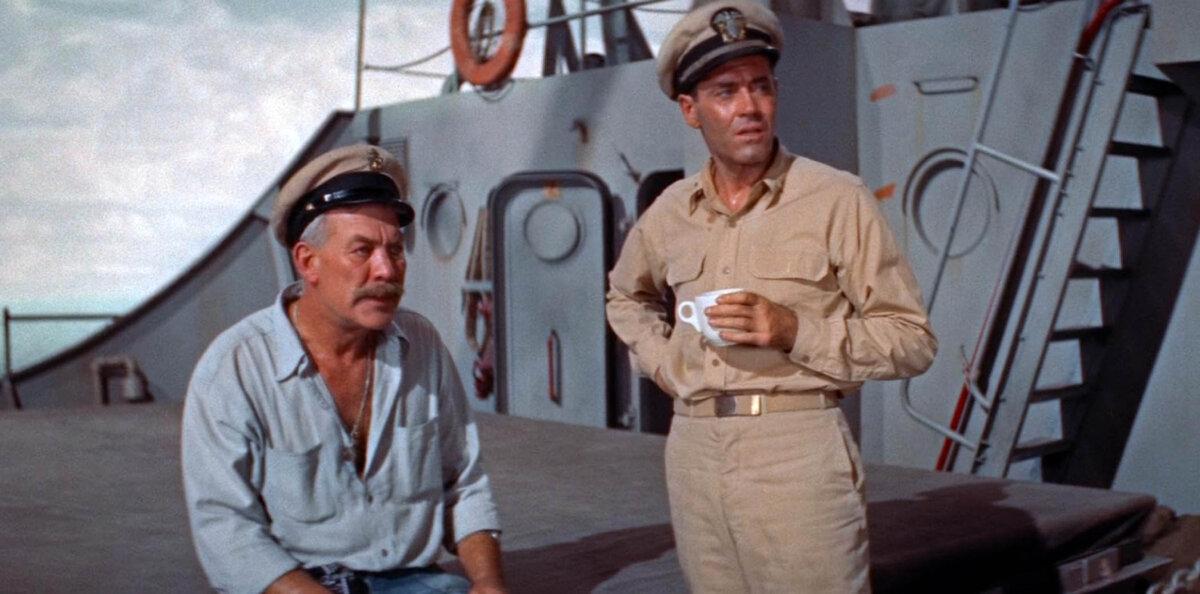
Set in April 1945, the story follows Lt. Roberts (Henry Fonda), an officer aboard the USS Reluctant, a Navy cargo vessel operating in the Pacific Theater during the final stretch of World War II.
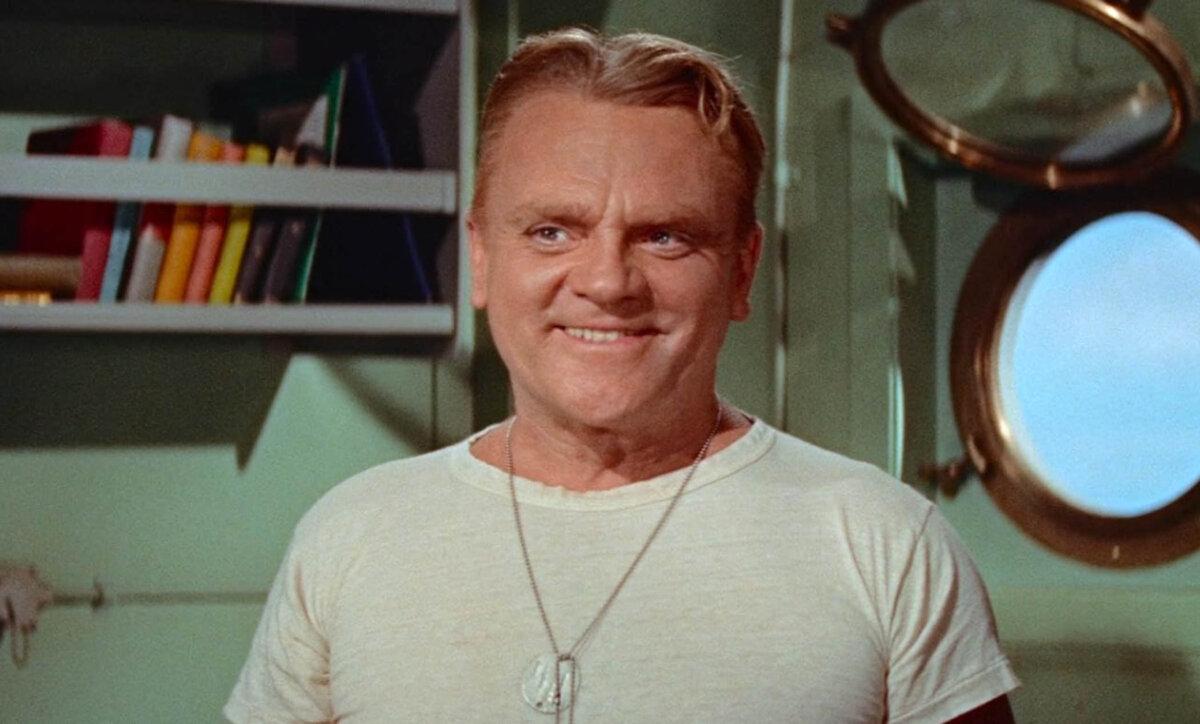
Roberts desperately wants a transfer to a combat assignment before the war ends. He keeps filing requests. The ship’s commander, Capt. Morton (James Cagney), keeps killing them. Morton does this partly because Roberts is useful and partly because he enjoys keeping the leash tight.
The crew knows Roberts as the officer who actually cares whether they get a movie night, a rare chance to go ashore, or any relief from Morton’s iron-fisted rule.
That puts Roberts in a lousy corner. To get the men a liberty, he may have to swallow an insult. To keep them from punishment, he may have to look weak in front of them. They see pieces of the fight but rarely the whole picture.
Fellow officer Doc (William Powell) reads Roberts better than most. He sees the anger under the calm and the way the ship is grinding the man down.
Ensign Pulver (Jack Lemmon), meanwhile, is a comic disaster in uniform: boastful, jumpy, and allergic to confrontation. Pulver may talk big, but his plans evaporate the second Morton gets near him.
Salt and Sore Feelings
The ship’s cramped environs do a lot to keep things lively. Every order from Morton seems designed to shave another inch off the crew’s patience, and every small pleasure becomes something Roberts has to fight for like contraband.
Cagney makes Morton’s pettiness feel almost physical. He doesn’t need a battlefield to do damage. Give him a cargo ship with a handful of bored sailors, and he can rule over it like his own little dictatorship.
Roberts moves through that bad air with his jaw clenched half of the time. Fonda gives him the look of a man trying to stay decent while being worked over by the banality of routine. He’s often irritated and running out of patience, since he knows there’s a real war happening somewhere else.
That’s the bitter joke of his service aboard the Bucket. He can endure Morton better than anyone else, which also makes him too useful to be allowed off the ship.
Meanwhile, the rest of the crew acts up because there’s nowhere else for all that caged energy to go. They gripe below decks, chase any rumors of fun, and turn denied privileges into minor naval emergencies.
Being ex-military myself, I understand how boredom can make grown men act childish and how shaky command can turn ordinary life into a slow daily grind.
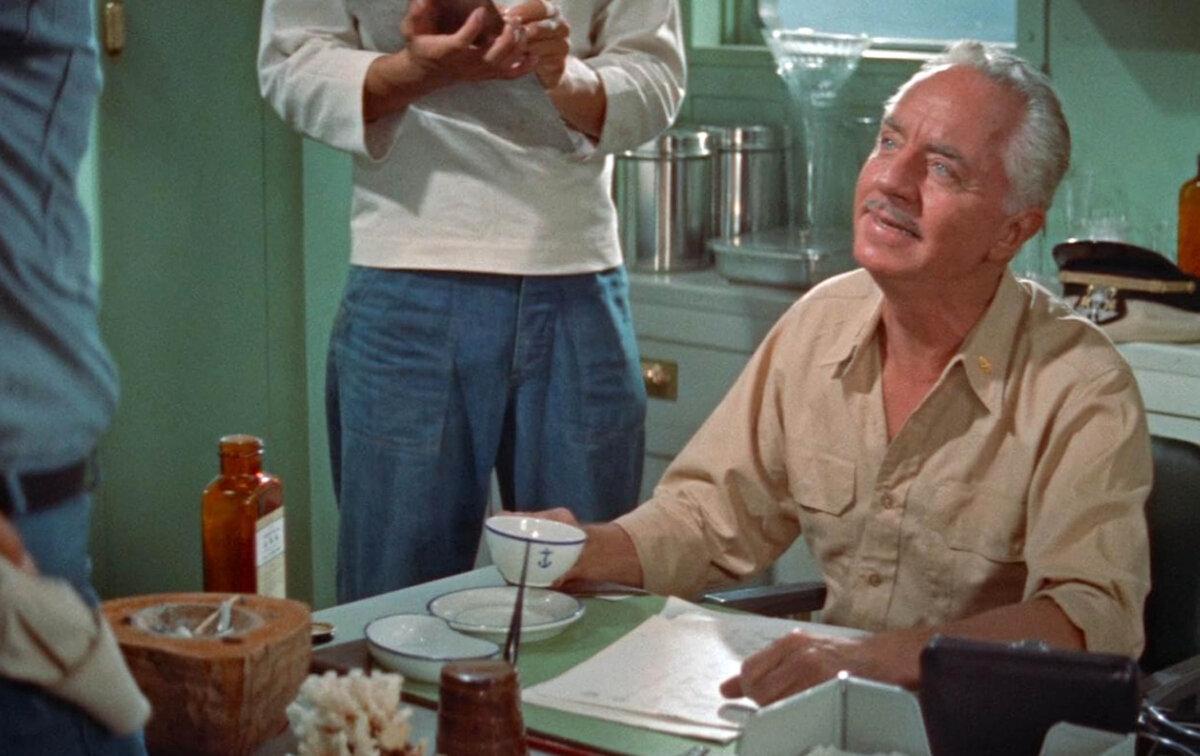
The supporting players behave under that same shipboard frustration. Doc sees what Roberts is paying before the crew fully understands it. Powell gives those moments a dry, seasoned ease.
Pulver keeps bragging about the man he plans to become while spending most of his time ducking the captain; this gives Lemmon room to be his usual ridiculous self. Pulver’s funny because he’s full of both fear and vanity at the same time, and the film gets good use out of the gap between his mouth and his spine.
“Mister Roberts” has a few stretches where the horseplay could’ve been trimmed a bit. The period humor may also test some viewers’ patience, especially when the sailors start acting like boys with no adult supervision on weekend leave.
Still, the main pleasure comes from watching old Hollywood professionals handle such a choice setup—a decent officer trying to protect his crew, a captain who treats them like his personal property, and a ship full of men ready to explode over one denied pleasure too many.