NR | 1h 40m | Drama | 1954
Director Henry Hathaway knew the attraction, too, when he made “Garden of Evil,” a CinemaScope Western also produced in 1954 (and also starring Cooper).
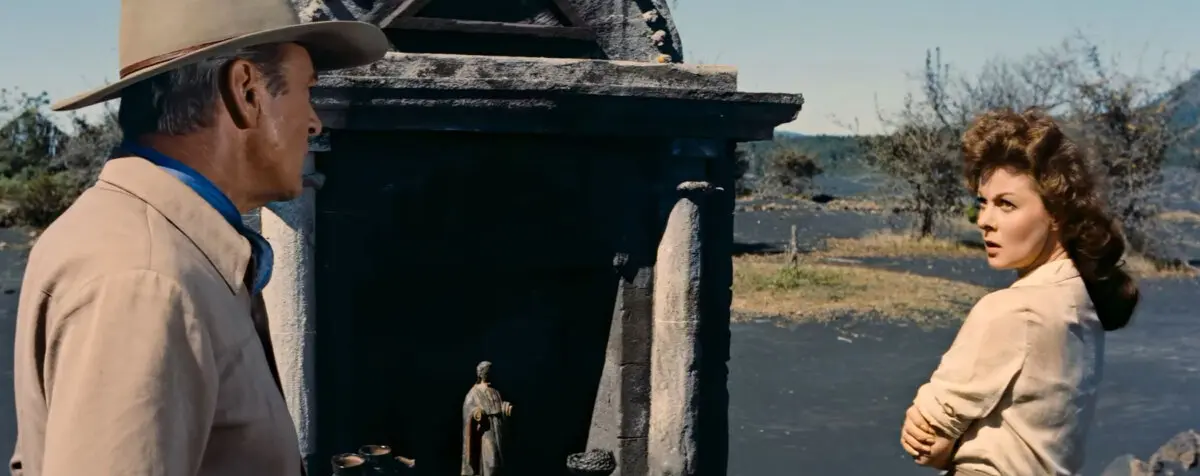
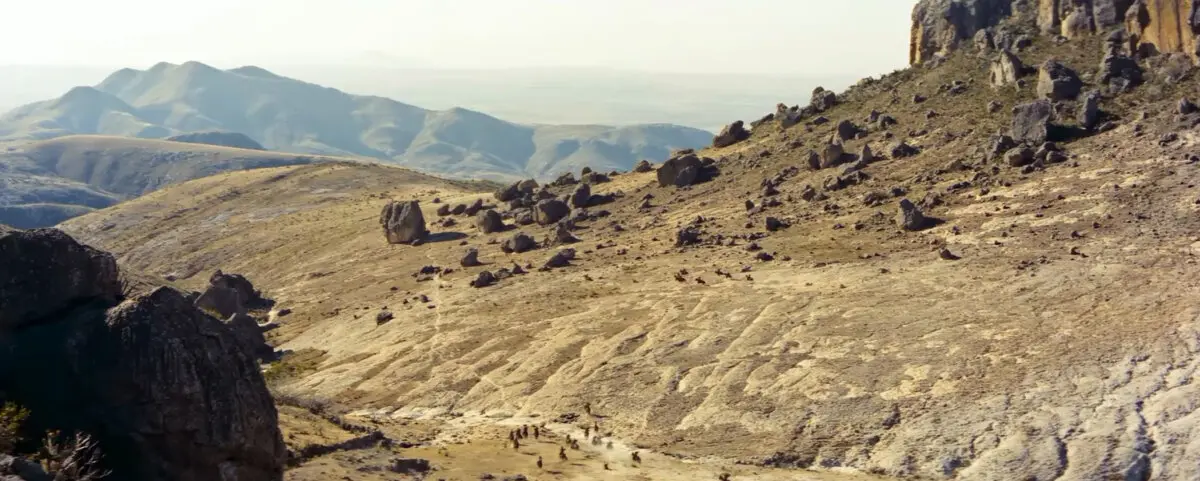
Hathaway begins his story beside the bright water of Puerto Miguel, a quaint fishing village in Mexico, where a broken steamship has left several passengers stranded. Once the film heads inland, the inviting shore disappears behind the rocky canyons of a mountain pass, with cliff roads barely wide enough for a horse. These spectacular vistas eventually give way to black volcanic country, where an eruption buried an old boomtown.
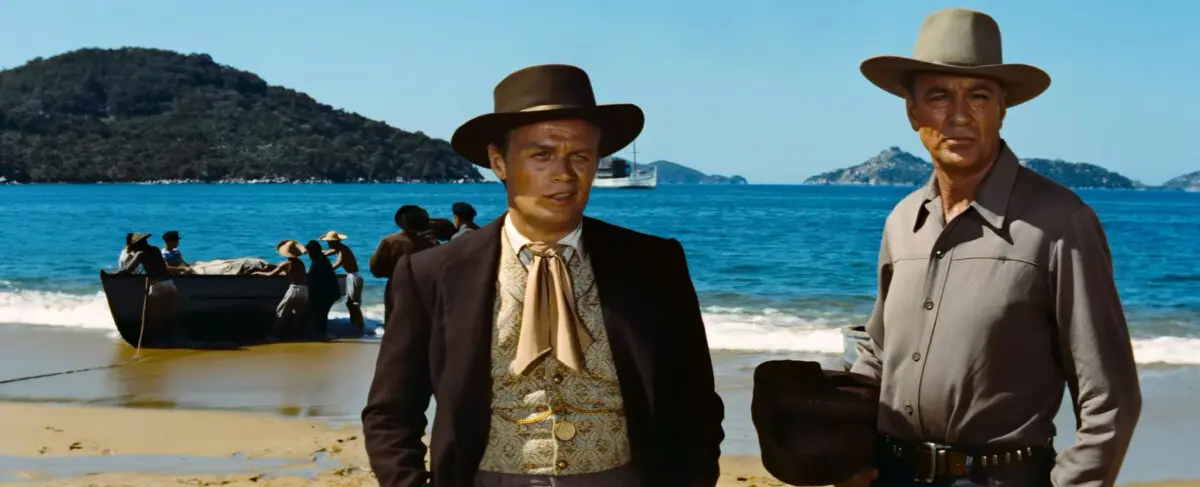
The CinemaScope photography gives Hathaway room to show how exposed these riders are once they leave Puerto Miguel. A horse and rider can occupy one small corner as cliffs, sky, and scorched earth fill the rest of the screen. Simply put, the scenery is stunning.
The Mine Beyond the Mountains
Leah Fuller (Hayward) rides into Puerto Miguel searching for men willing to cross the mountains and rescue her injured husband. John Fuller (Hugh Marlowe) lies trapped at a gold mine, far beyond any place the local residents care to visit.
Her appeal gets nowhere until she names a price hefty enough to interest the three stranded Americans. They’d been traveling toward the California gold fields and now face idle time in a fishing village with no clear departure date.
Hooker (Cooper) is an ex-lawman who doesn’t reveal much about himself. Fiske (Widmark), a gambler who treats human behavior as another game of cards, finds Hooker’s reserved nature mildly irritating. Daly (Cameron Mitchell), a bounty hunter, has plenty to say and very little patience.
The promised payment gets all three into their saddles, along with Vicente Madariaga (Víctor Manuel Mendoza), a Mexican guide who knows the hard country ahead.
Cooper Keeps His Cool
Cooper was an inspired casting choice for Hooker because the role depends on having self-command. The legendary actor’s measured delivery suits a man who takes in others before he acts, and his physical presence establishes authority. A few of the film’s lines are spoken in Spanish, which Hooker happens to understand, so he not only translates for Fiske and Daly but for viewers, as well.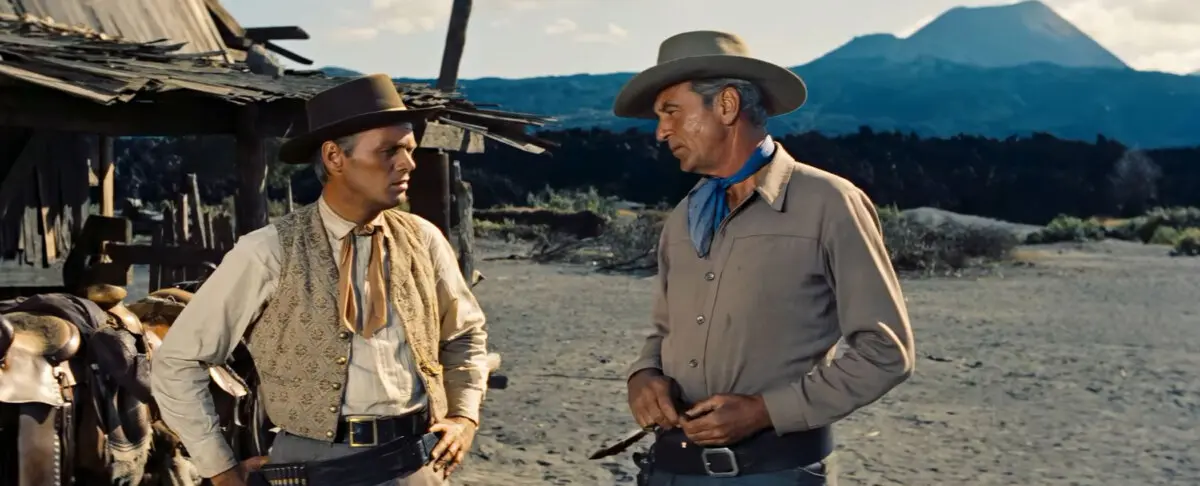
The film offers a good lesson about masculinity after Daly tries to get a little too frisky with Leah and then picks a fight with Hooker. Once Daly lies bested and bruised beside their campfire, Hooker offers him a handkerchief and water. “You’ll be alright,” Hooker says. “You just made a fool out of yourself. Don’t think it hasn’t happened to anybody else. All of us. You just didn’t understand it.”
Hooker has a strategic reason for sparing him, as well, since the expedition needs every available man. When Daly asks why Hooker let him live, the reply is practical: “I need ya.” In doing this, Hooker controls his strength, shows compassion, and puts the survival of the group ahead of his own ego.
The third act follows the adventurers away from the mine as Apache Indians pursue them through the mountains. Hathaway positions the attackers along cliff roads and ridgelines, allowing viewers to follow each assault as the route narrows around the group.
Bernard Herrmann’s score becomes forceful during these sequences and occasionally overwhelms the action, with several cues surging after arrows have flown and the riders have already scrambled for cover. Part of the story circles around the same suspicions about Leah and her husband. Several overly poetic discussions of gold and desire slow an already long ride.
Widmark gives Fiske a dry sense of humor that helps with those passages. Hayward brings fierce determination to her role, while Mitchell makes Daly a convincing source of trouble within the group and an easy bad guy to hate.
Ultimately, the outstanding cast, as well as director Hathaway’s superlative use of the Mexican locations, manages to keep “Garden of Evil” engaging through its uneven stretches, with Cooper supplying the character that the others can depend upon.