If you have ever bought silver, stashed cash, or moved assets into crypto to protect your savings from inflation and government overreach, you have more in common with an 11th-century Viking than you think. This summer, Norwegian state archaeologists confirmed that a massive hoard of 4,886 silver coins found by two amateur metal detectorists is the physical evidence of an ancient financial rebellion.
Buried around 1046 A.D., the pristine stash now known as the Mørstad Hoard represents a wealthy local merchant’s desperate, off-the-grid maneuver to hide his premium international wealth before a ruthless warrior king could force him to exchange it for devalued, state-printed currency. Evidence of this 1,000-year-old monetary struggle only recently came to light.
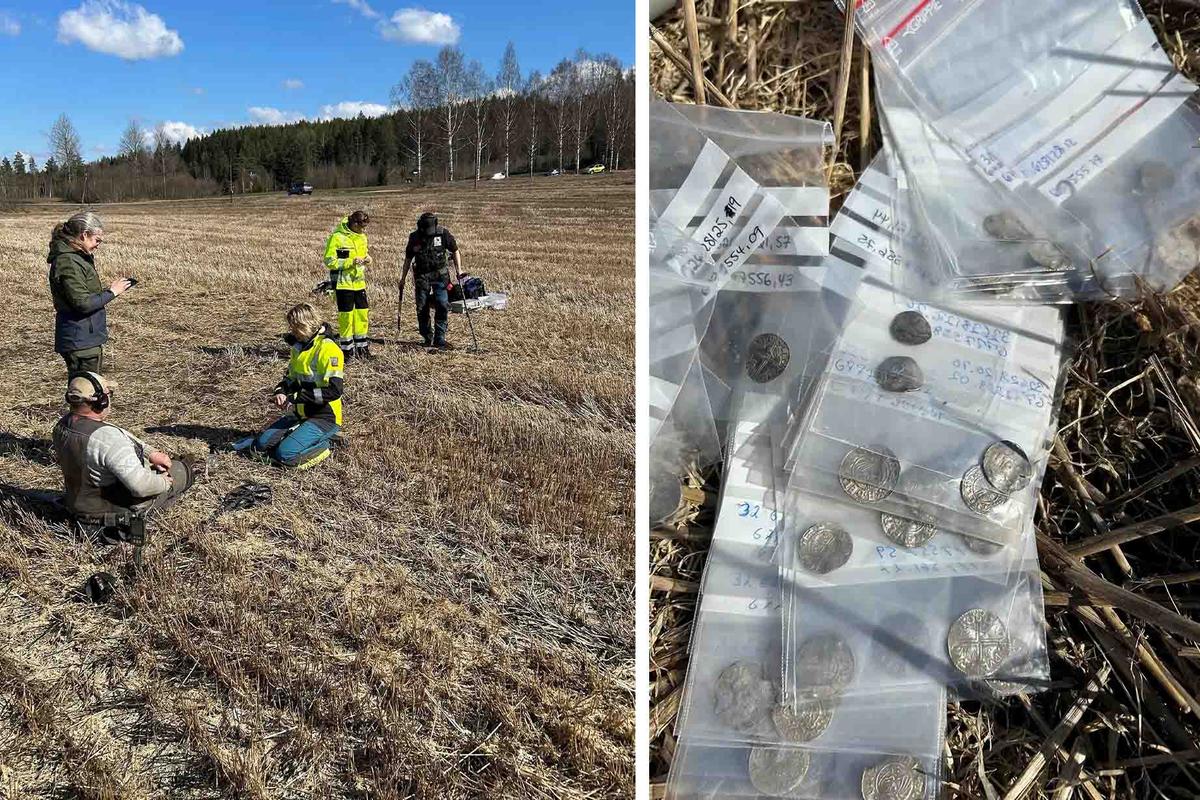
The saga began on April 10, in a remote, muddy field in Mørstad, near the village of Rena in eastern Norway. Hobbyist detectorists Rune Sætre and Vegard Sørlie were scanning the plowed soil when their machines hit a massive cluster of signals. They carefully brushed away the mud to reveal 19 gleaming silver coins. At that exact number, they hit a legal wall: under Norwegian heritage law, detectorists must immediately halt operations to protect the archaeological context. Sætre and Sørlie dropped their tools and dialed county officials.
The Innlandet County Authority (ICA) acted immediately to secure the perimeter, establishing a strict, round-the-clock physical guard over the private property. They knew this lockdown was critical to keep out “night-hawk” looters and preserve the pristine soil for incoming science teams.
That disciplined decision paid off. Within days, regional ICA researchers swarmed the site. As lead county archaeologist May-Tove Smiseth arrived to manage the extraction, the scale of the find ballooned, quickly crossing the 3,000-coin milestone.
“I could hardly believe my ears when I heard about the find,” Smiseth said in a press release. “This is both a national and an international event, and few things capture people’s imagination as much as the Viking Age in Norway.”
Then came the first major scientific twist. Experts from the Norwegian Institute for Cultural Heritage Research deployed ground-penetrating radar across the entire field. They found nothing. No Viking longhouses, no fences, and no graves. This empty radar screen spoke volumes: whoever buried this fortune had intentionally hauled it far outside the boundaries of their village. It was a calculated, off-the-grid safety deposit box designed to stay hidden even if their primary estate was ransacked or burned.
Investigators painstakingly peeled back the topsoil grid-by-grid, sifting through the loose upper layer and the underlying sandy subsoil. Field crews hoped to find the footprint of a protective chest or vessel, but the complete absence of leather or organic structures confirmed the container had rotted away centuries ago. Generations of modern mechanical tilling had caught the loose silver, dragging the coins horizontally across the field’s agricultural plow zone.
By May, the jurisdiction officially shifted to the capital, handing the collection over to academic researchers at the University of Oslo’s Museum of Cultural History. Under laboratory micro-cleaning and X-ray analysis, the coins began to tell a story of immense global trade—and deep political panic.
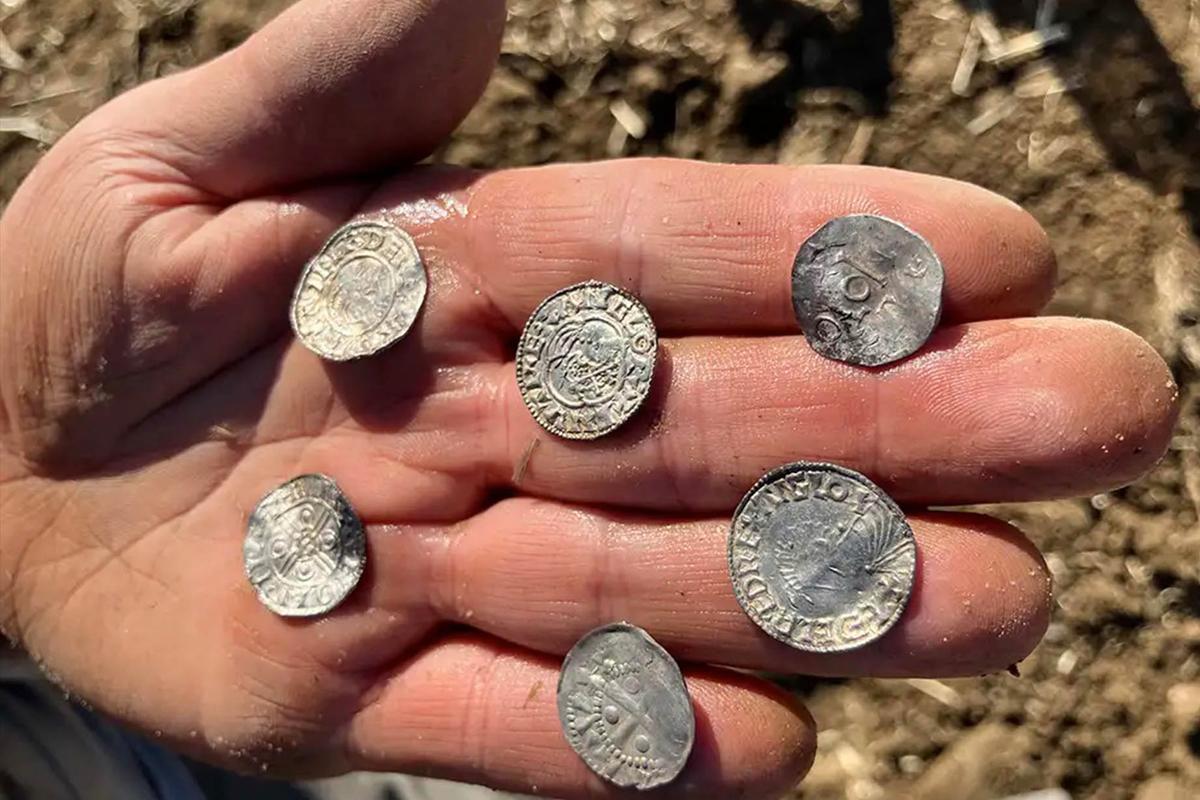
The vast majority of the treasure wasn’t Scandinavian at all. Instead, the researchers’ lab desks were covered in ultra-pure English pennies and German imperial silver. Mixed into this premium international cash was a tiny, telling handful of native coins minted by King Harald Hardrada—the legendary “hard ruler” whose death in 1066 ultimately ended the Viking Age.
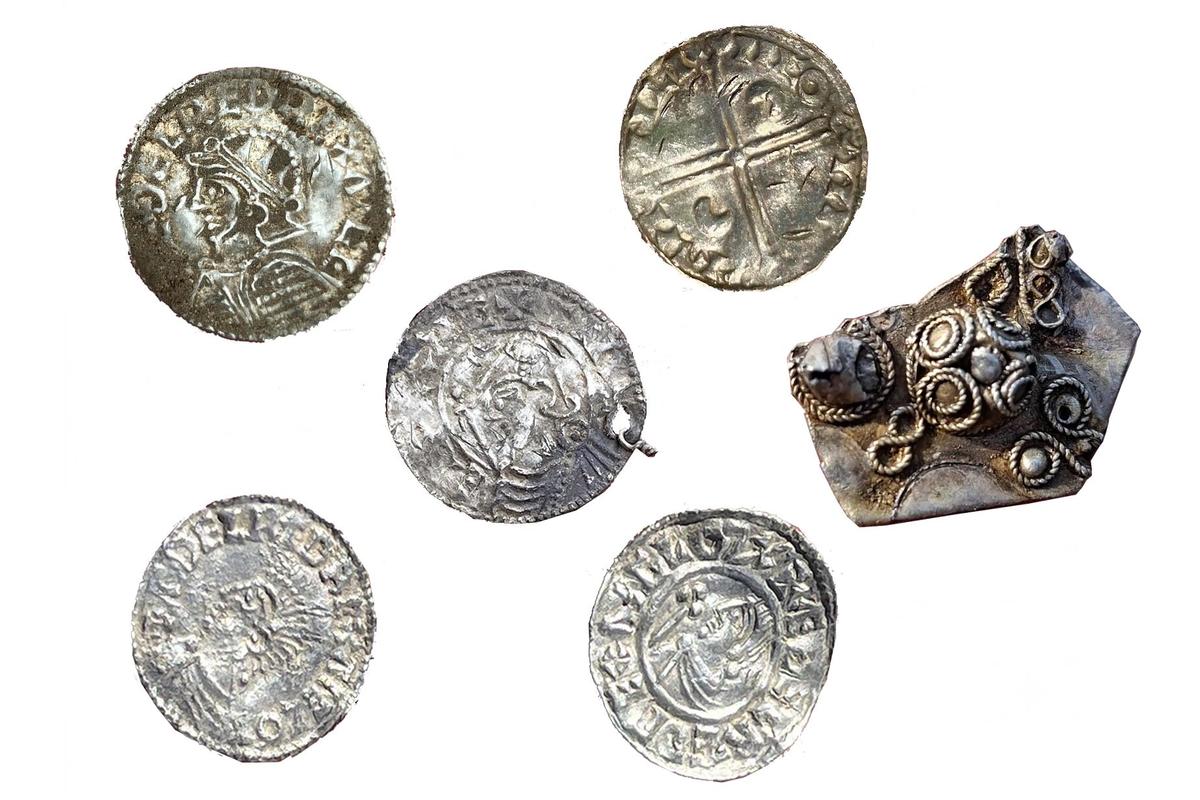
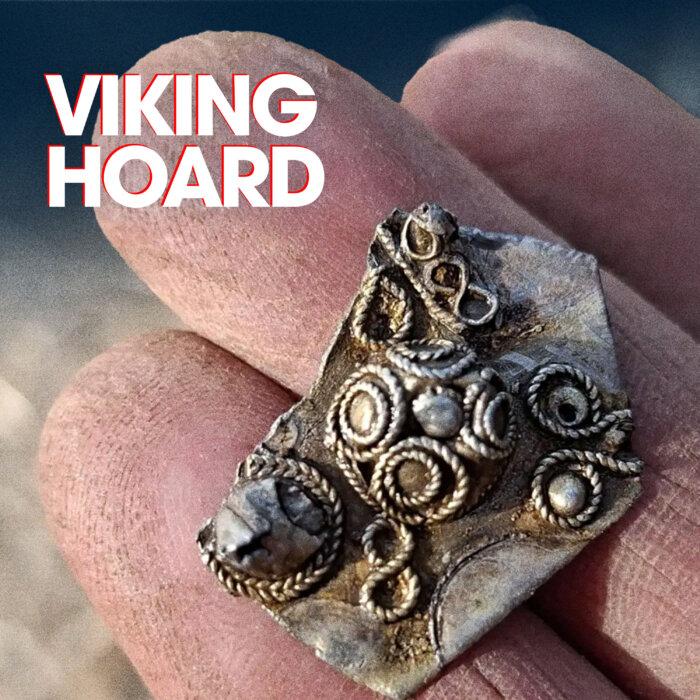
For numismatists, this unbalanced ratio of foreign silver to new native coins meant only one thing. The Mørstad Hoard matches the exact week King Harald launched his aggressive monetary monopoly, outlawing foreign coinage and forcing his subjects to accept his own heavily debased, copper-mixed royal pennies. Coins minted under Knut the Great, Æthelred II, and Otto III, as well as bits of chopped up jewelry, or “hacksilver” bullion were also found in the mix.
To the independent “Iron Barons” of Mørstad—local chieftains who grew immensely wealthy by extracting raw iron ore from the local swamplands and exporting it to mainstream Europe—Harald’s new law was a state-sanctioned confiscation of wealth. But one merchant chose to defy this law, packing his premium international silver into a pouch and trudging out into the anonymous Mørstad mud to stash it.
Over June and July, the sheer scale of the deposit was catalogued, pushing the official tally to 4,886 silver pieces. Analyzing the rare Harald Hardrada variants within the pile, researchers locked in the 1046–1047 A.D. tax-evasion timeline. Yet, much like a cold-storage crypto wallet or physical gold bullion forgotten in a dusty coffee tin, this cache sat unclaimed for a millennium. Whoever stashed the fortune simply never returned to dig it up.
Thanks to the two law-abiding amateur detectorists who initially reported the find, these long-hidden relics were enjoyed by the public for the first time in August. Following a rapid stabilization process in the university labs, a selection of the coins was placed on temporary summer display at the Historical Museum in Oslo.
“It is absolutely fantastic that the largest Viking Age coin hoard in Norwegian history has been found here in Innlandet County,” said Tom Svellet, chair of the main committee for culture in the ICA, who highly praised the integrity of the finders.
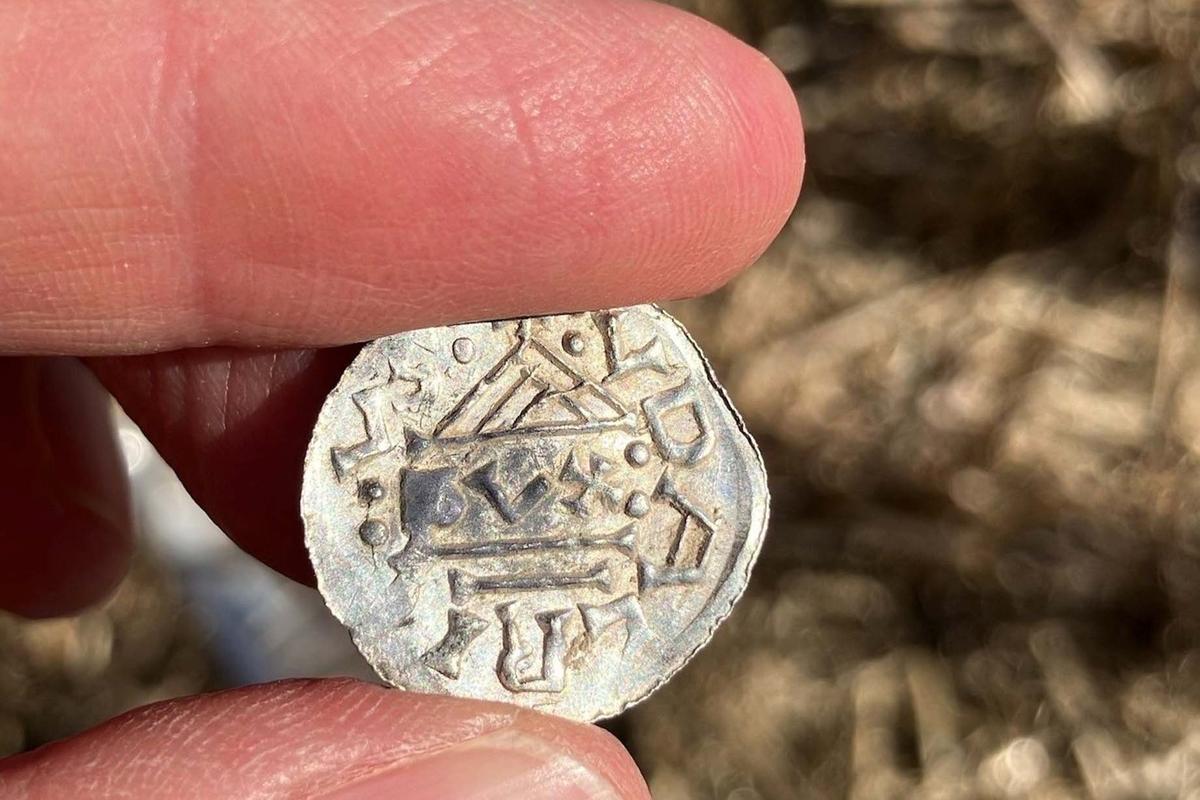

To contextualize the find’s significance, historians have to look back nearly a century or more. Large Viking Age silver hoards are exceptionally rare in Norway. The previous benchmark was set 190 years ago by the Årstad Hoard in Egersund—uncovered between 1836 and 1843—which yielded 1,849 pieces.
Decades later, the 1950 discovery of the 964-coin Dronningens gate Hoard in a Trondheim post office car park served as a stark lesson in site security. Left unguarded overnight by mid-century construction crews, the Trondheim find was pillaged by local passersby who pocketed loose silver out of the open trenches, forcing authorities to later issue a public amnesty program. Only 69 of the stolen coins were retrieved.
But there is far more to this story of sequestered wealth. While the eventual count is fully expected to surpass 5,000 once laboratory work concludes, the Mørstad marshlands are not done giving up their secrets. This autumn, project manager Kjetil Loftsgarden will lead a targeted, deep-strata subsoil excavation at the original site. Hopes are high that digging beneath the historic plow line will reveal the remains of the coin’s leather container—a final garnish when the permanent the Mørstad Hoard exhibition opens.