Act I: Great Beginnings
Born Elizabeth Marie Tall Chief on Jan. 24, 1925, in Fairfax, Oklahoma, she grew up in a household shaped by discipline and movement. Her father, Alexander Tall Chief, and her mother, Ruth Porter, encouraged both music and dance. As a child, she studied piano alongside ballet, practicing scales and exercises with the same steady repetition that would later define her professional work. In the 1930s, the family moved to Los Angeles, where Maria and her sister Marjorie participated in more advanced piano and ballet training programs.Tallchief’s early development was marked by repetition rather than revelation. She spent long hours in studio work, refining basic positions and combinations under close instruction. Teachers often noted her steadiness in tempo and her ability to stay aligned with accompaniment, even in group classes.
In 1942, she joined the Ballet Russe de Monte Carlo. Touring North America exposed her to a demanding repertoire and a performance schedule that required consistency night after night. She learned to manage energy across long seasons on the road. During this period, she began using the shortened professional name Maria Tallchief for billing and programs.
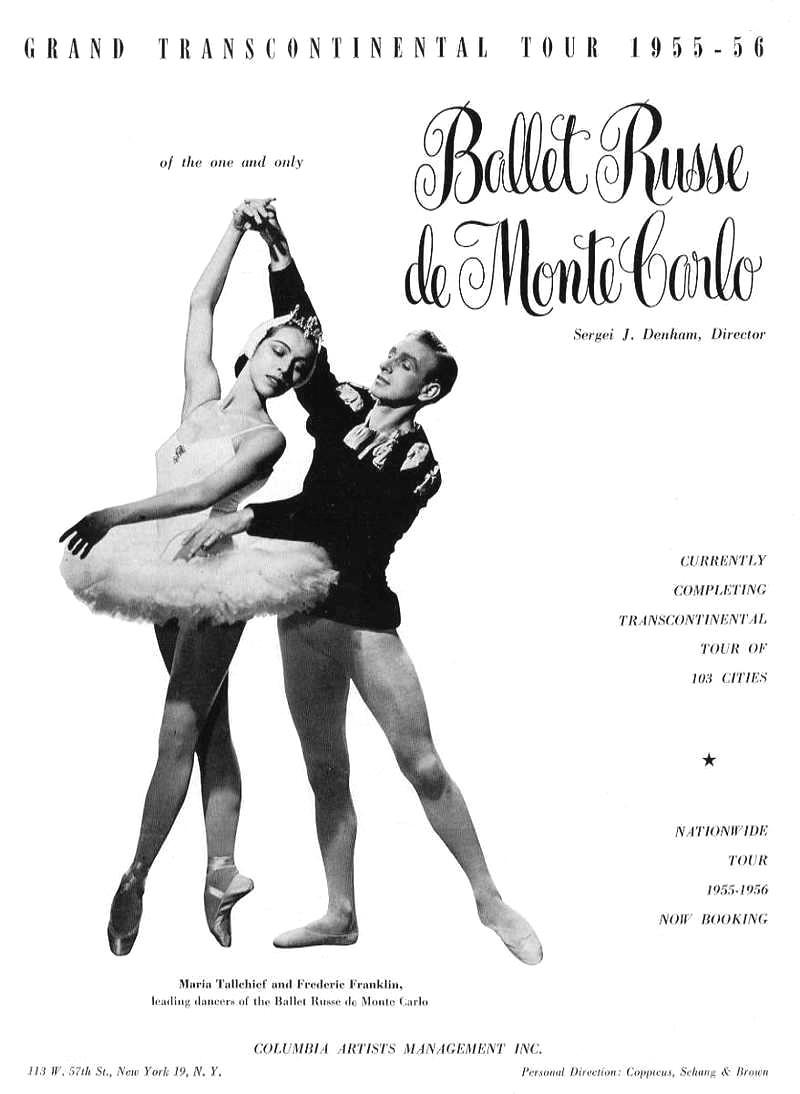
A turning point came when she began working with choreographer George Balanchine in the years immediately following World War II. After leaving the Ballet Russe de Monte Carlo, Tallchief joined Ballet Society, the organization that later evolved into the New York City Ballet.
Act II: The Grand Jeté
A turning point came in 1949 with “Firebird.” The role required sustained control through stylized movement and sudden shifts in rhythm and energy. In rehearsal footage and stage accounts from the period, she is described as moving with a directness that cut cleanly through Balanchine’s angular phrasing, holding balance through rapid changes that unsettled many dancers.The premiere as the title character established her as a leading figure in American ballet. Other notable roles followed, including performances in “Swan Lake,” “The Nutcracker,” “Scotch Symphony,” and “Sylvia: Pas de Deux.” In works such as “Sylvia,” critics and audiences often responded to the combination of athletic power, speed, and technical virtuosity that characterized her dancing.
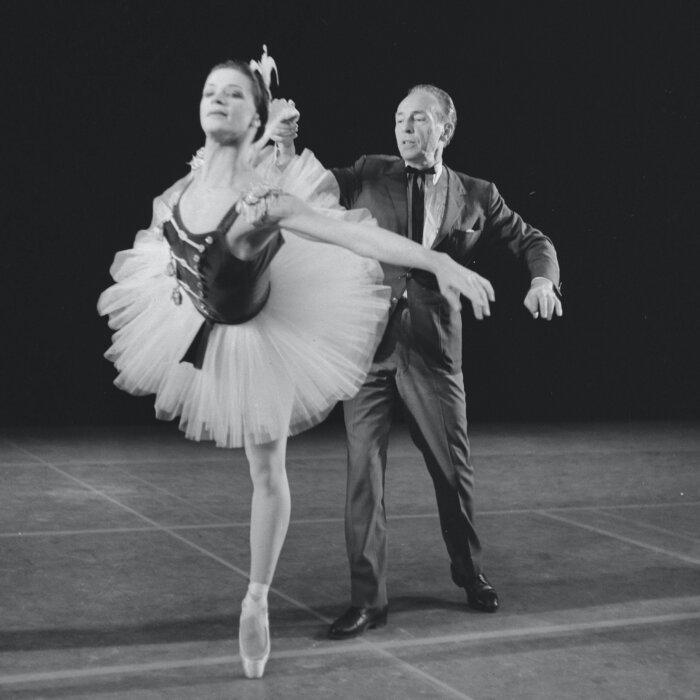
As American ballet companies expanded and stabilized in the mid-20th century, Tallchief became one of the first American-born dancers to remain visible at the highest levels of the profession. Her career unfolded alongside the institutional growth of ballet in New York, where she worked closely within Balanchine’s repertory and company structure.
Coda
After retiring from full-time performance in the 1960s, Tallchief remained active in ballet through teaching and administrative work. In 1981, she and her sister Marjorie helped establish the Chicago City Ballet. She served as artistic director, working directly in rehearsal studios with dancers, correcting placement at the barre, and shaping repertory choices.Tallchief died on April 11, 2013, at the age of 88. In later years, former students and colleagues often recalled the same details: the insistence on musical exactness, the repetition of steps until they matched the score, and the expectation that movement should arrive on the music rather than follow it. These were not abstract principles in her work but daily practice in the studio.
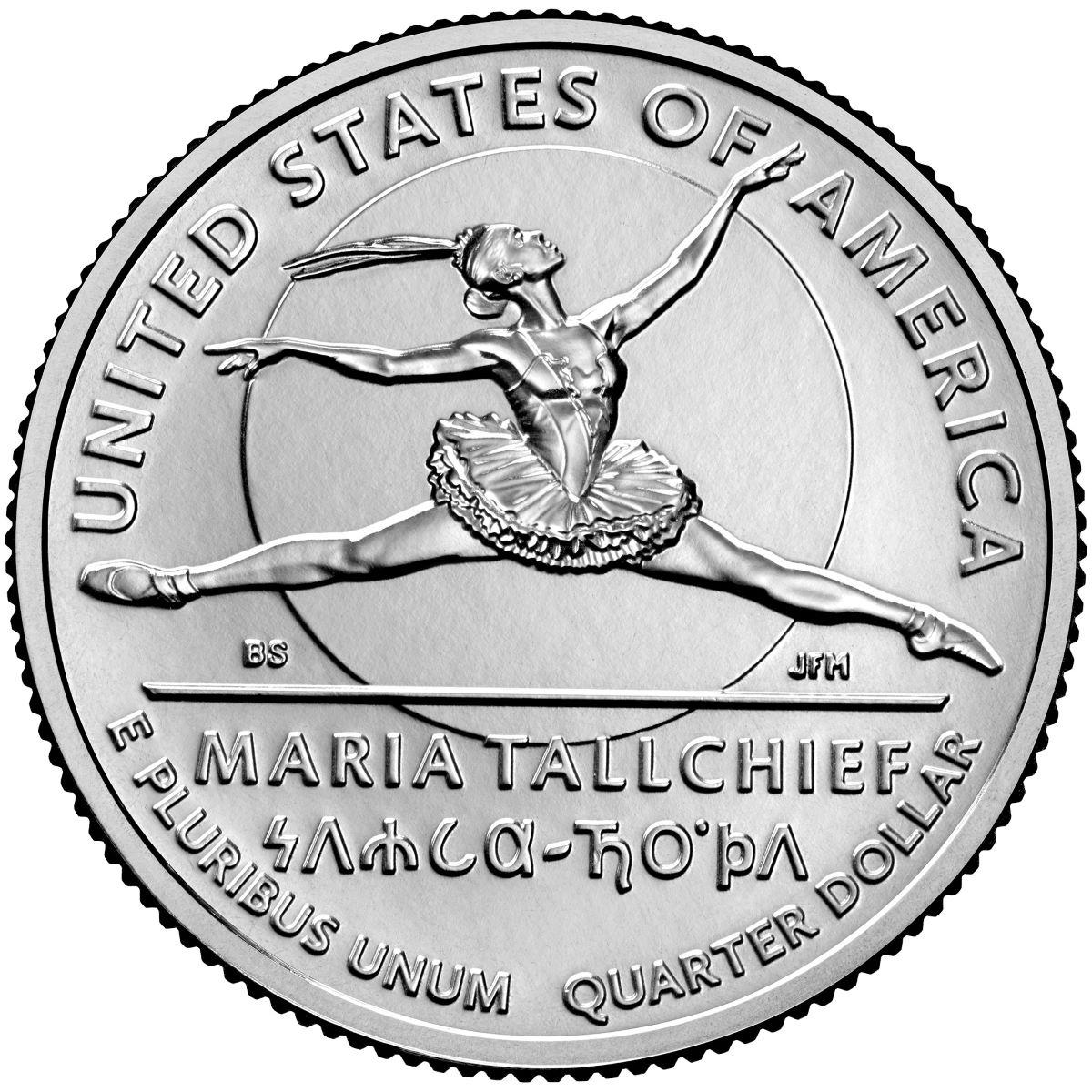
In 2023, a commemorative quarter was issued in her honor as part of the American Women Quarters Program. The reverse shows her in a pose drawn from “Firebird,” arm extended and lifted through the chest, body angled as if caught mid-transition rather than posed. Her Osage name, Wa-Xthe-Thonba, meaning “Two Standards,” is inscribed beneath the design.
The coin now passes through hands in small daily exchanges—change counted out at counters, left on tables, slipped into pockets—carrying the image of a dancer whose work once lived entirely in motion across a stage.