“Mary! Mary! We are elected!”
With that exuberant proclamation, Abraham Lincoln announced to his wife that they would soon be off to the White House. That pronoun was not the royal we, the “majestic plural” used by kings and queens, but a genuine reference to himself and the diminutive dynamo Mary Todd Lincoln (1818–1882).
And who could be more deserving? During the presidential campaign, and long before, Mary had worked to polish up her gangly husband’s dress and manners, including his proclivity for wearing mismatched socks. Much more importantly, she had served as one of Lincoln’s chief advisers. She was knowledgeable in politics and wasn’t shy about sharing her opinions.
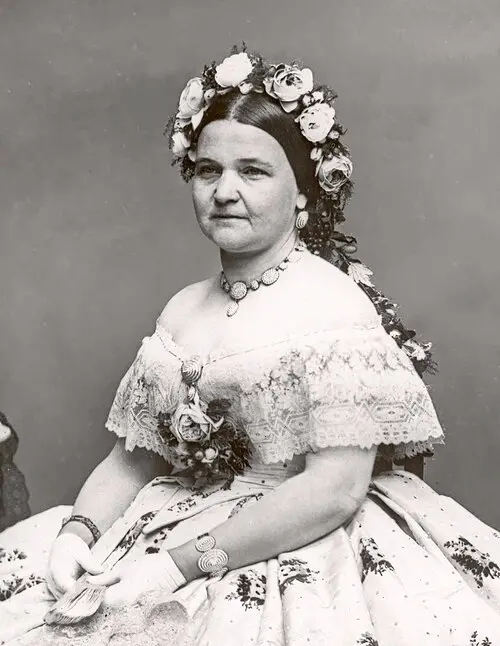
Moreover, she was socially acquainted with many of the Western politicians who supported or opposed Lincoln. Stephen Douglas, for instance, Lincoln’s opponent in the 1858 race for a seat in the Senate, had once courted Mary and likely asked for her hand in marriage, a proposal to which Mary purportedly replied, “I can’t consent to be your wife. I shall be Mrs. President, or I am the victim of false prophets, but it will not be as Mrs. Douglas.”
Adolescence: Abe
A comparison of the early formative years of husband and wife offers a study in contrasts. It is instructive in understanding the Lincolns’ relationship and their approach to other people and events.Both were born in Kentucky, though Lincoln moved in boyhood with his family to Indiana. Largely self-educated, he grew up in poverty and performed manual labor from early boyhood. He was 9 when his beloved mother, Nancy, died. Fortunately for Lincoln, his father married Sarah Bush Johnston, a widow with three children.

Sarah’s kindness, love, and support helped shape the Lincoln who would one day enter the White House. She fed his hunger for education by providing him with books and encouraged him to make the best of himself. Later she said, “His mind and mine, what little I had, seemed to run together, move in the same direction.” Lincoln responded to Sarah’s tender care, calling her “Mother” and telling a relative years later that she “had been his best friend in this world and that no son could love a mother more than he loved her.”
Adolescence: Mary
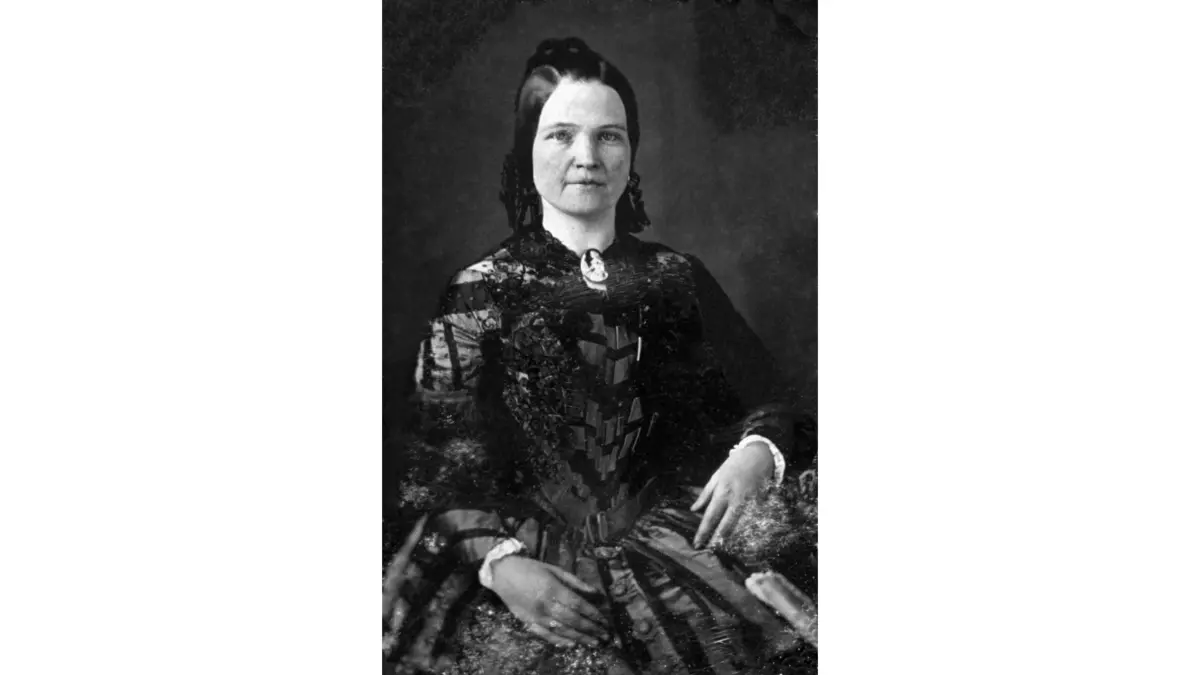
Like Lincoln, 6-year-old Mary Todd lost her mother, Eliza, at an early age. With that exception, however, her adolescence and young adulthood differed entirely from that of her future spouse.Within six months of Eliza’s death, and with six young children in his care, Robert Todd proposed to Betsy Humphreys. After some delays, the couple wedded, and Mary dropped into the orbit of the woman who would change her life for the worse.
In other ways, as well, Mary inhabited a different world than Lincoln. She grew up in Lexington, Kentucky, then dubbed “the Athens of the West.” Robert Todd, who was active in politics and a prosperous merchant, saw to it that his children were as well-educated as money and the town in which they lived could provide.
After learning the basics of reading, writing, math, and more at a local academy, Mary entered Mentelle’s for Young Ladies, a school with rigorous academic standards. Here, Mary became proficient in French, literature, and geography as well as dance and etiquette. Though the school was nearby, and though the Todd family now lived in a 14-room house, she was allowed to become a boarding student, likely seeking escape from her oppressive stepmother. Later, she would look back and consider Mentelle’s her real home during this time.
Finally, Robert Todd opposed slavery and actively discussed and worked with others to find ways to end it, yet he owned several household slaves. As Kimberly Largent writes in her online biography of Mary, “he was a slaveholder in an antislavery family in a slave state.” This circumstance would come back to haunt Mary during her White House years.
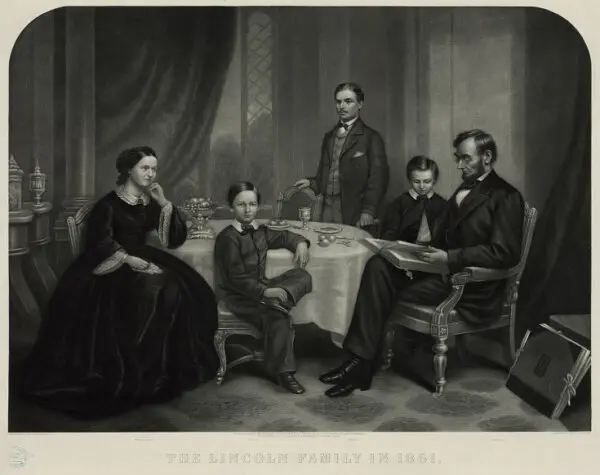
Shrew, Traitor, Saint
Mary entered the White House to some acclaim, with the crowds who met the Lincoln train as it proceeded to the nation’s capital cheering her enthusiastically. Yet that honeymoon with the press and the public was short-lived.During her years at 1600 Pennsylvania Avenue, Mary was pilloried by the press. Given her Kentucky upbringing, the South regarded her as a traitor. Her slave-holding family and two beloved half-brothers who died fighting for the Confederacy made her anathema among many Northern journalists. The money she spent on renovating the White House and on her personal clothing, a lifelong obsession, brought scorn and ridicule. At the same time, her parties and balls struck some people as unseemly in a country engaged in what her own husband at Gettysburg called “a great civil war.”
Among intimates and politicians who worked with Lincoln, Mary also gained a reputation for being sharp-tongued with her husband and an unnecessary distraction from affairs of state. At war’s end, for example, when her carriage arrived late for a review of troops, and after a rough ride, she publicly railed at Lincoln as responsible for this misadventure. Incidents like these were frequent and left witnesses appalled by her behavior. At times, she also meddled in government affairs, further damaging her character.
Consequently, her contemporaries and many historians, even down to our present day ranked her as the worst first lady in our country’s history.
Yet Mary had a side to her that others saw far less frequently. Because she insisted on keeping her good works out of the public eye, few people knew, for instance, that she frequently visited hospital wards, where she visited with wounded soldiers, read to them, and brought them flowers. Twice she remained in the capital when Southern troops threatened it. While she refused to support the vote for women, she favored the founding of a female nursing corps and advocated for the placement of women in government offices. She was also the first presidential hostess to welcome African Americans into the White House.
Sorrows and Madness
On leaving Washington after her husband’s assassination, Mary wrote, “I go hence brokenhearted with every hope in life almost crushed. ... Alas, all is over with me.”She was wrong. Her hopes in life might be mangled, but all was not over for her. Ahead lay years of drama. She remained careless with money and an inveterate shopper of clothes and other personal luxuries, habits that eventually led her only surviving child, Robert, to bring charges of mental incompetence against her and have her confined to an asylum. Friends of Mary had that judgment reversed, and she was freed, but many in the public regarded her as a madwoman on top of all the other calumnies.
Other personal attacks brought their own agonies. In 1866, for example, Lincoln’s Springfield law partner and biographer William Herndon informed the public that Lincoln had truly loved Ann Rutledge, who died at 22 of typhoid fever, and that his marriage to Mary was “a domestic hell. ... For the last 23 years of his life, Mr. Lincoln had no joy.” Mary bore this defamation in silence, though others, including Robert, came to her defense, with some declaring Herndon deranged by his alcoholism.
Some Points to Consider
In Harper Lee’s “To Kill a Mockingbird,” Atticus Finch says to his daughter Scout, “You never really understand a person until you consider things from his point of view … until you climb into his skin and walk around in it.”Before we condemn Mary Todd Lincoln, we might try climbing into her skin for a bit.
Here was a woman whose stepmother made her childhood a misery, which likely affected her behavior for the rest of her life.
Here was a woman who bore four sons. Edward “Eddie” died of tuberculosis in 1850, just before his fourth birthday. Their third son, Willie, passed from typhoid fever at age 11 in 1862, devastating both the first lady and the president. In 1871, their youngest son, 18-year-old Tad, who was Mary’s mainstay after her husband’s assassination, died of respiratory disease.
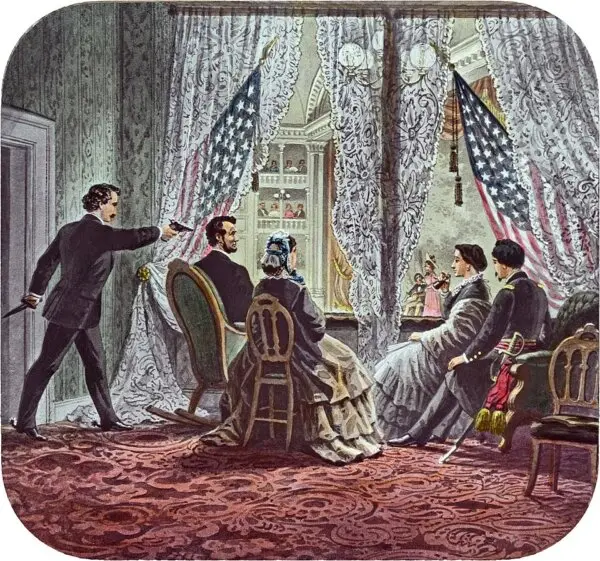
Here was a woman who, on Good Friday, April 14, 1865, was holding her husband’s hand at Ford’s Theater when John Wilkes Booth put a bullet into his head, splattering her cloak with bits of blood and brains.
Here was a woman who, in her later years, was essentially at war with her oldest son, Robert, over money, quarrels which were often of her own making, and which led to her stint in the asylum.
Does Mary Todd Lincoln deserve her reputation as the worst of our first ladies? Perhaps. But given the ordeals she endured, the wise and the kind will leaven that judgment with a touch of mercy.