Silk catches the afternoon sun. Polished walnut reflects a quiet glow. Fresh flowers soften an elegant drawing room while a poised sitter meets the artist’s eye without hesitation. John Singer Sargent transformed such ordinary moments into paintings of astonishing vitality.
Unconventional Artist
John Singer Sargent was born on Jan. 12, 1856, in Florence, Italy, to American parents, Dr. Fitzwilliam Sargent and Mary Newbold Singer Sargent. Although an American citizen by birth, he spent little of his youth in the United States.Following the death of their firstborn child, his parents embraced a life of nearly constant travel, believing that museums, architecture, literature, languages, and music would offer their son an education richer than any conventional classroom. The arrangement proved remarkably successful.
As a boy, Sargent filled sketchbooks with mountain vistas, village streets, harbors, churches, and fellow travelers encountered across Europe. His uncommon talent emerged early, and, in 1874, he entered the Paris atelier of the distinguished portrait painter Carolus-Duran while also studying at the Ecole des Beaux-Arts. There, he mastered the disciplined traditions of European painting while developing the fluid, confident brushwork that became his unmistakable signature.
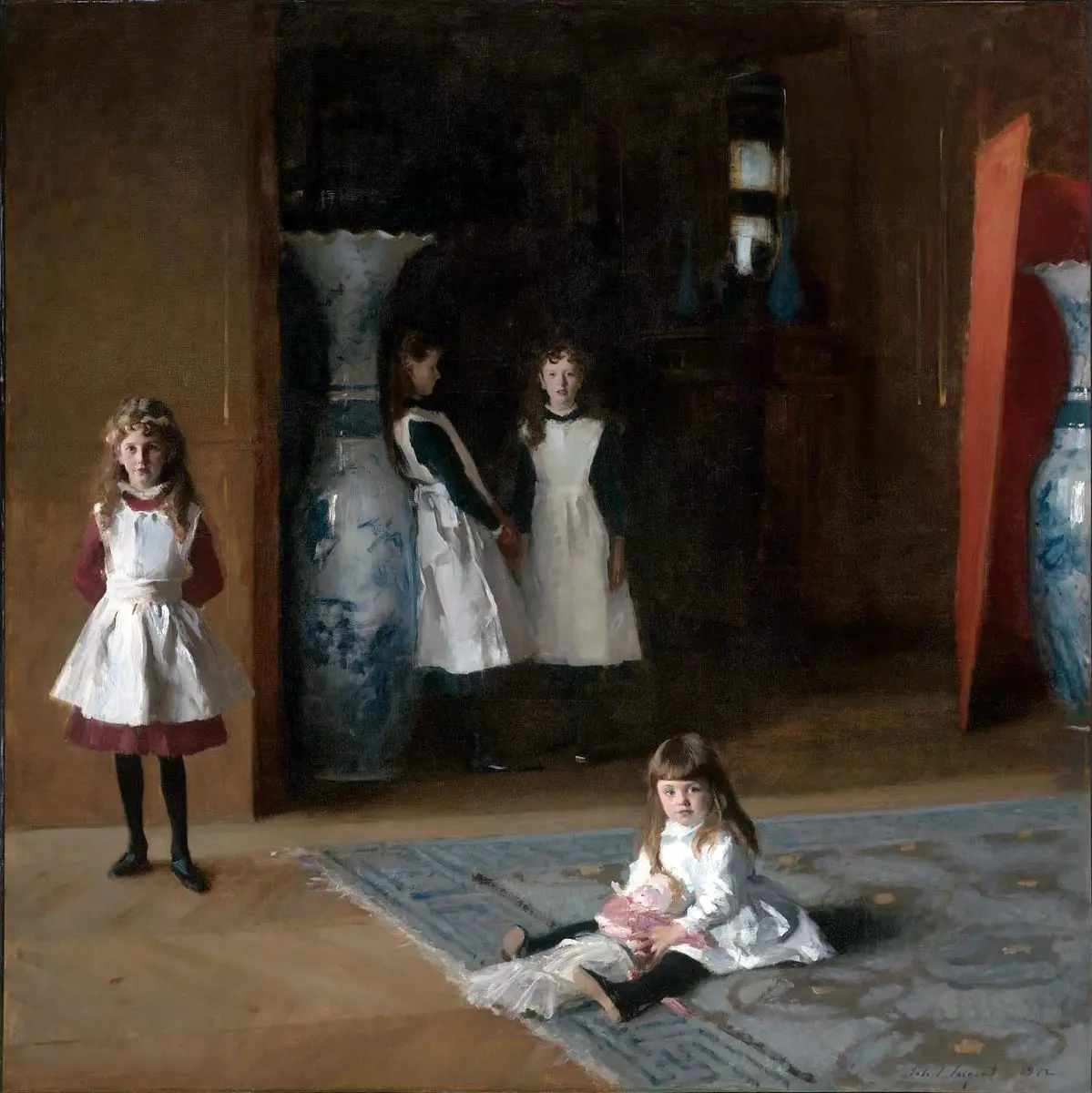
Recognition came quickly. In 1877, Sargent exhibited at the prestigious Paris Salon, where critics praised his technical brilliance and artistic maturity. His reputation continued to grow with works such as “The Daughters of Edward Darley Boit” (1882), an unconventional portrait of four young sisters whose spacious composition and subtle psychological depth remain among the most compelling achievements in American art.
His greatest controversy arrived two years later with “Portrait of Madame X.” The painting depicted Virginie Amélie Avegno Gautreau, a Paris socialite, standing against a subdued background in a striking black gown. Its debut at the Paris Salon of 1884 provoked sharp criticism for its provocativeness. The controversy damaged his standing in Paris and contributed to his decision to establish himself in London in 1886.

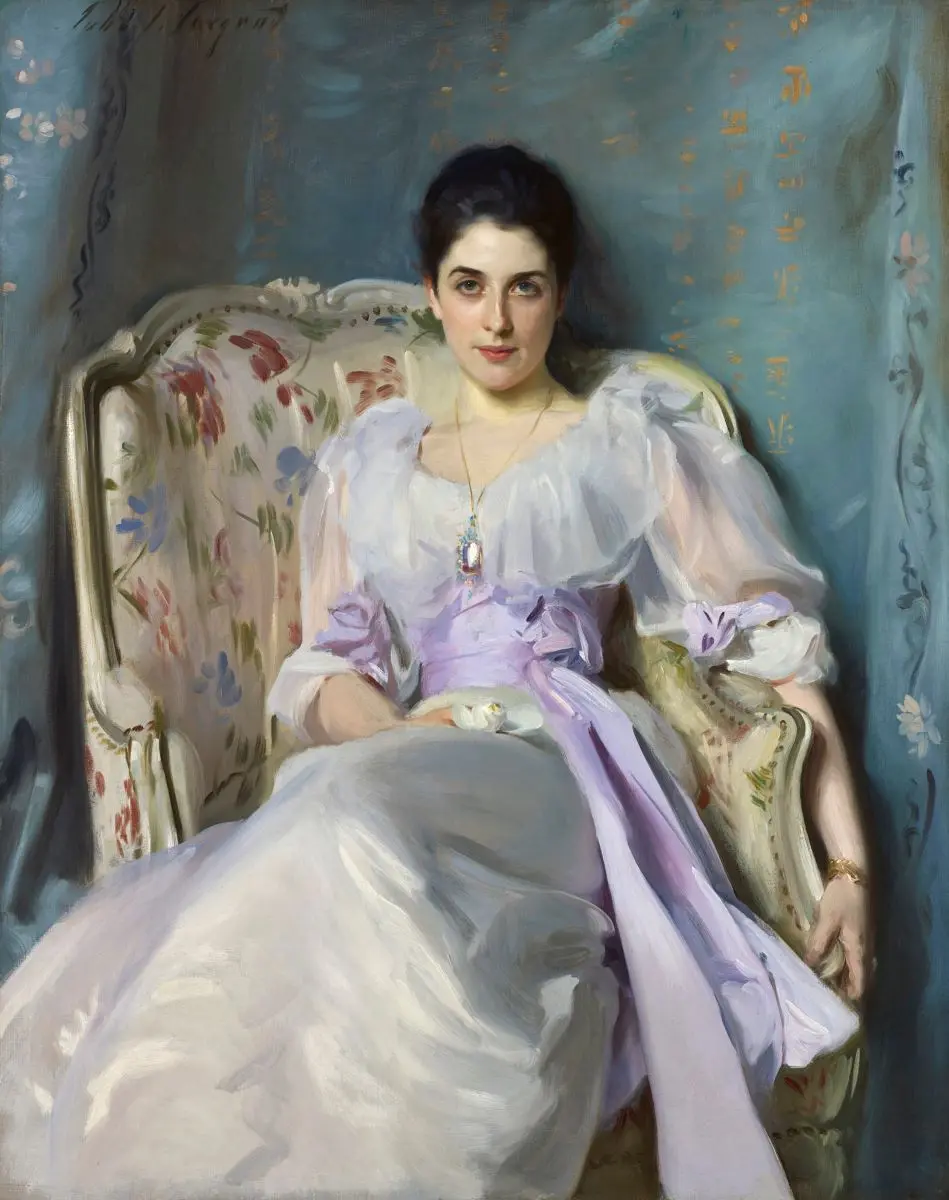
Britain proved fertile ground for his career. Industrialists, statesmen, military officers, authors, musicians, and members of the aristocracy all sought appointments in his studio. Yet Sargent’s portraits rarely feel ceremonial. Satin seems to rustle, velvet absorbs the light, polished silver catches a faint reflection, and flesh appears warm beneath the paint. His subjects breathe rather than merely pose.
Among his finest achievements is “Lady Agnew of Lochnaw” (1892), whose relaxed posture and direct expression quietly redefined expectations of formal portraiture.
Switching Subjects
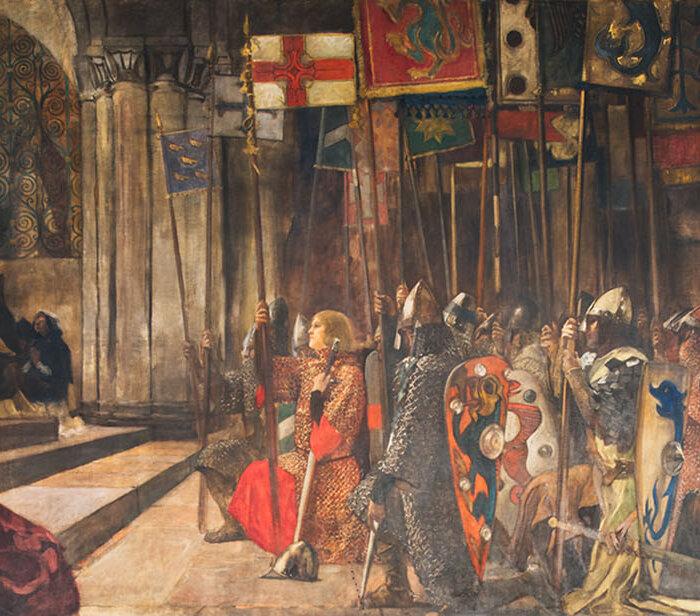
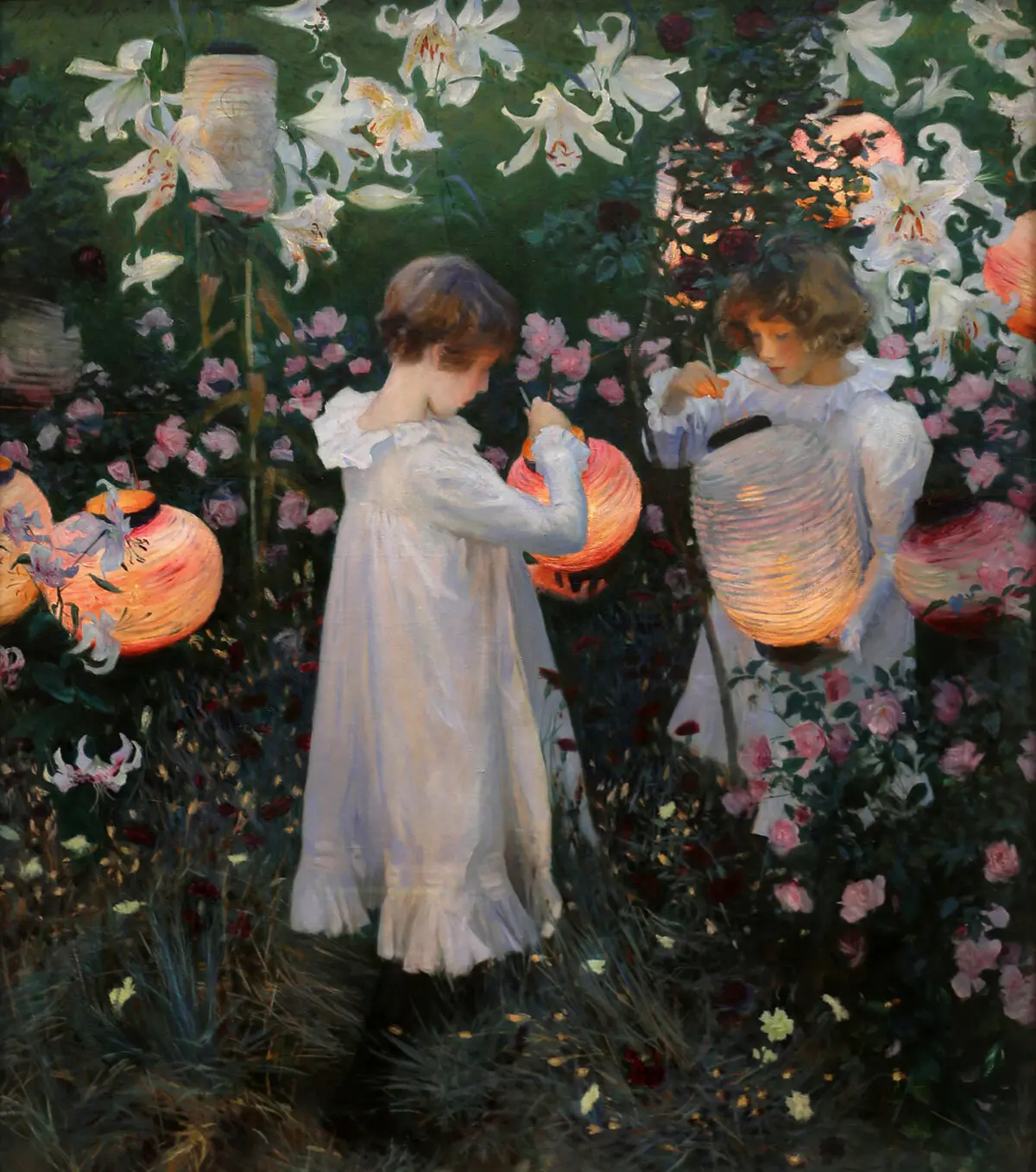
Although portrait commissions brought wealth and international acclaim, Sargent gradually devoted more attention to landscapes, murals, and watercolor painting. He traveled extensively through Venice, the Alps, Spain, the Middle East, and the Mediterranean, producing luminous watercolors filled with sparkling reflections, weathered stone, rushing streams, and brilliant sunlight. Their spontaneity revealed a freer side of Sargent’s artistry.He also accepted ambitious mural commissions, most notably for the Boston Public Library between 1890 and 1919. There, he completed an expansive decorative cycle exploring the history of religion through monumental allegorical paintings. Additional murals for the Museum of Fine Arts, Boston, demonstrated the breadth of his artistic range beyond portraiture.
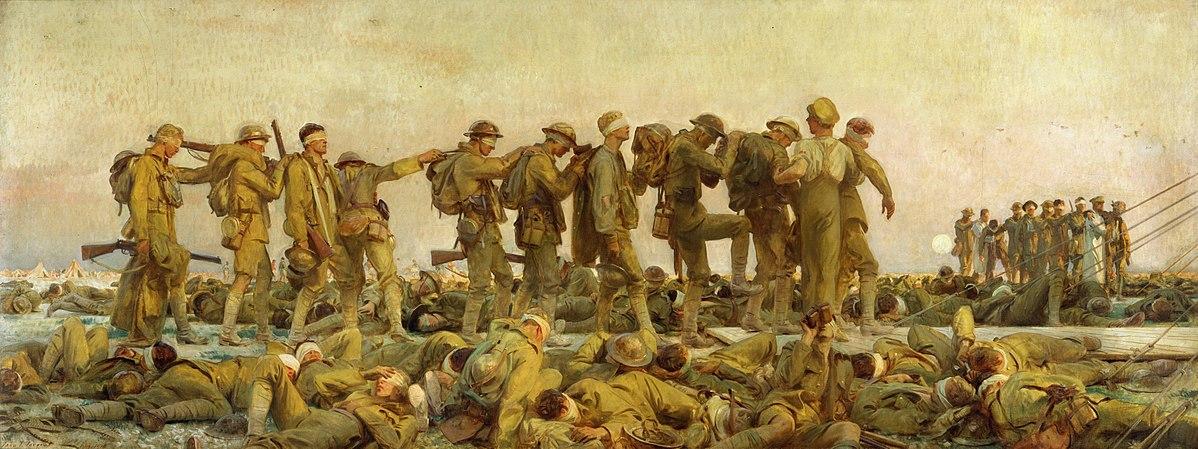
World War I introduced a sobering chapter to his career. In 1918, commissioned by the British government, Sargent visited the Western Front to document the conflict. The resulting masterpiece, “Gassed,” depicts a line of soldiers temporarily blinded by mustard gas being guided from the battlefield. The work abandons society’s elegant drawing rooms for the grim realities of modern warfare, honoring endurance while acknowledging the terrible human cost of war.
Sargent died in London on April 15, 1925. He left behind nearly 900 oil paintings, more than 2,000 watercolors, and a vast number sketches and drawings. Today his work hangs in many of the world’s foremost museums, including the Metropolitan Museum of Art in New York; the Museum of Fine Arts, Boston; the National Gallery of Art in Washington; and Tate Britain in London.
Though best known for portraying society’s elite, Sargent’s artistic range extended far beyond fashionable portraiture. Whether depicting children, celebrated public figures, quiet landscapes, or soldiers emerging from the smoke of war, he approached every subject with the same disciplined eye and astonishing technical command. More than a century after his death, his paintings remain vivid records of an age that prized confidence, beauty, and accomplishment. Few American artists have preserved that world with greater brilliance.