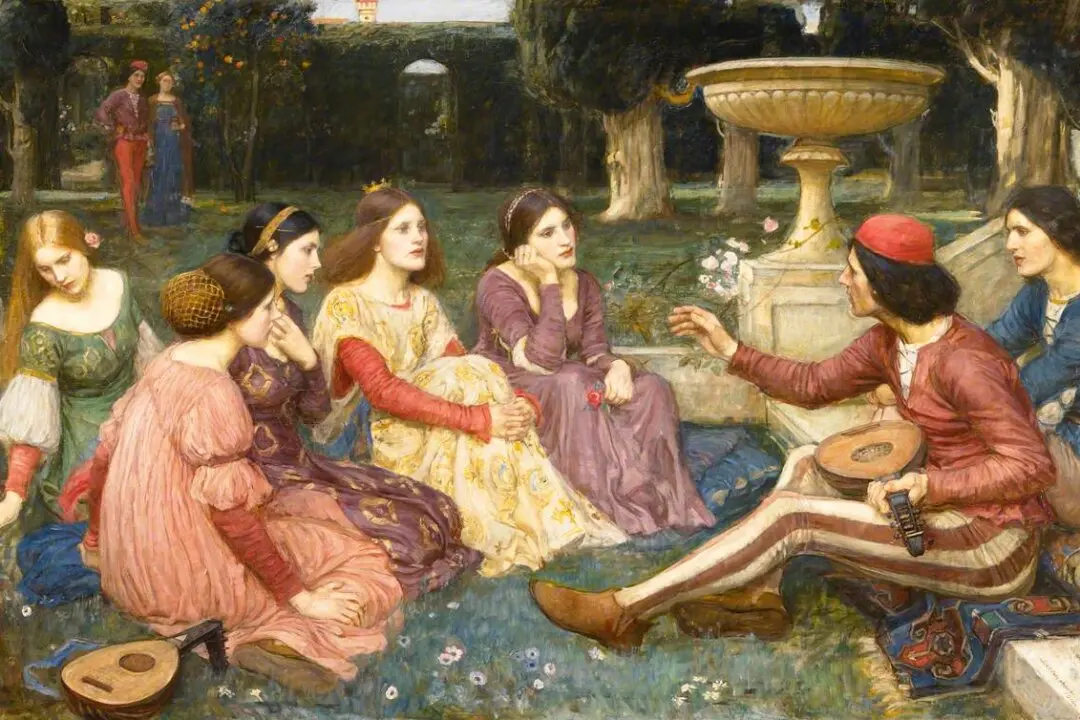
Stroll through the older neighborhoods of these United States, and you will see the ornate and towering structures of Victorian houses, complete with turrets, gables, and steeply sloping roofs. These old houses, emblems of faded glory, line the streets with a quiet, forgotten dignity. To passersby with the ears to hear, the old mansions murmur of a different way of life. Conspicuous on most of them is a central architectural feature: the front porch.
In the time when these venerable old houses were built, America was a nation of front porches—which is a statement more significant than it at first appears. A nation of front porches is a nation knit together by a highly localized social structure, bulwarked by neighborliness and sustained by the bonds of small-scale community.
The Porch’s Purpose
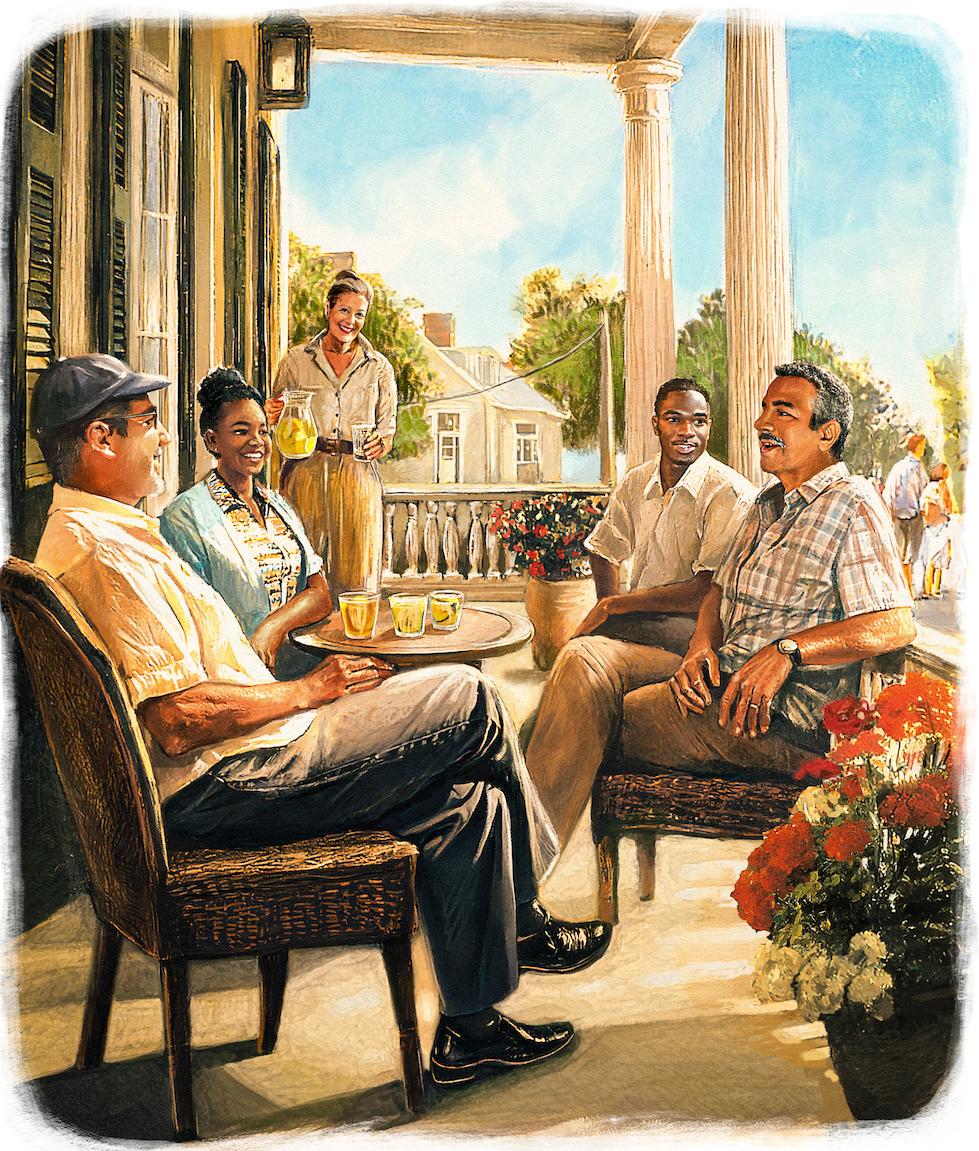
The social climate of the porch was defined by rootedness in place and familiarity with the people of that place—as opposed to contemporary mobility and the anonymity of the modern town or city.
What’s Been Lost
Yet rapid social and technological change in the 20th and 21st centuries slowly erased the front porch from most American dwellings, although of course we still see it in some places. As porches increasingly vanished from the front of the house, they were replaced by patios in the back—a space that does not enable interaction with the world outside the home in the same way. Thomas observed, “Twentieth-century man has achieved the sense of privacy in his patio, but in doing so he has lost part of his public nature which is essential to strong attachments and a deep sense of belonging or feelings of community.”

That sense of belonging became increasingly meaningless, Thomas argued, as more people moved into sleeper communities outside cities, since these communities by definition “lacked established social structures and the ingredients of community building prevalent in the older towns and villages.”
The increasingly nomadic lifestyle of American families, chasing career opportunities in various cities around the country, also decreased the relevance of porches. “In communities with a high rate of mobility, one did not often want to know his neighbor,” Thomas wrote. “The constant turn-over of neighbors worked against the long-term relationships which are essential to a sense of belonging.”
The new housing developments were marked by a distinctly different atmosphere than the old ones: They weren’t towns, strictly speaking, because most of the economic, cultural, and recreational activities happened elsewhere—generally in the city. They were marked by greater uniformity of design among the houses and a greater desire for anonymity among the people. They were also the product of the new world of the automobile, which made a daily commute to a distant place of work, school, or entertainment feasible, but also stretched out the geographic scale of daily life.
A new type of society had emerged: one characterized by a wider extent and a faster pace that would push leisurely evenings on the porch chatting with neighbors more and more to the margins of life.
Is It Too Late for Porches?
All this leads us to ask: Was the decline of porches and porch culture a good thing? As the drift of what I’ve written so far indicates, I tend to think not.Porches have a venerable history of offering us pleasant outdoor spaces that bring us into closer contact with nature and also our local community. The fact that many families in the past sat outside in the evening with children playing in the yard instead of dazedly eyeballing screens suggests that past generations had a deeper sense of active, communal recreation activities, as opposed to the passive, technology-based activities we incline toward today. These passive forms of entertainment can benumb our minds and bodies and deaden the life of local culture.
While the structure of our towns and cities today may not lend itself well to the time-honored occupation of “porching,” it’s certainly not impossible to reintroduce this tradition. In fact, some parts of the country never really lost it, in spite of the swiftly shifting face of modern life. The city of Indianapolis, for example, is well-known for its porch-sitting custom, especially in the lead-up to the Indianapolis 500.
With many online resources, including a calendar of events, websites such as this are using one of the technologies that damaged front porch culture to help rebuild it.
Build a Better Tomorrow
Places like Indianapolis or Seaside teach us that a front porch culture doesn’t have to be a relic of the past, as incongruous as hoop skirts or carriages. Maybe modern neighborhoods aren’t built with porching in mind, but they’re rarely incompatible with it. Even a lack of a porch doesn’t have to pose an insurmountable barrier: An open garage and a couple of folding chairs will do.This might seem like a small, almost meaningless gesture. But I hope I’ve been able to demonstrate how something as simple as sitting outside in the evenings can reshape and renew a neighborhood. Neighborhoods can feel like neighborhoods again. And the state of our neighborhoods, ultimately, comes to bear on the state of our nation.
I spoke of the “social fabric” above. A fabric is nothing more than thousands of individual threads woven together into something much bigger. And so it’s true that the thread of our individual activities, though small in themselves, become powerful when taken in the aggregate, woven into the activities of a community and, ultimately, the activities of a nation. Our porches have more power than we think.