




Composed of 64 poems written from a child’s point of view, Robert Louis Stevenson’s “A Child’s Garden of Verses” is considered one of the most influential works of 19th-century children’s literature. Since its first publication without illustrations in 1885, it has remained continuously in print, with hundreds of different editions produced globally, distinguished primarily by their illustrators. Among these, the Jessie Willcox Smith (1863–1935) edition stands out as one of the most collectible. Her oeuvre belongs to America’s Golden Age of Illustration, when new color printing techniques allowed illustrated books to become aesthetic treasures in their own right.
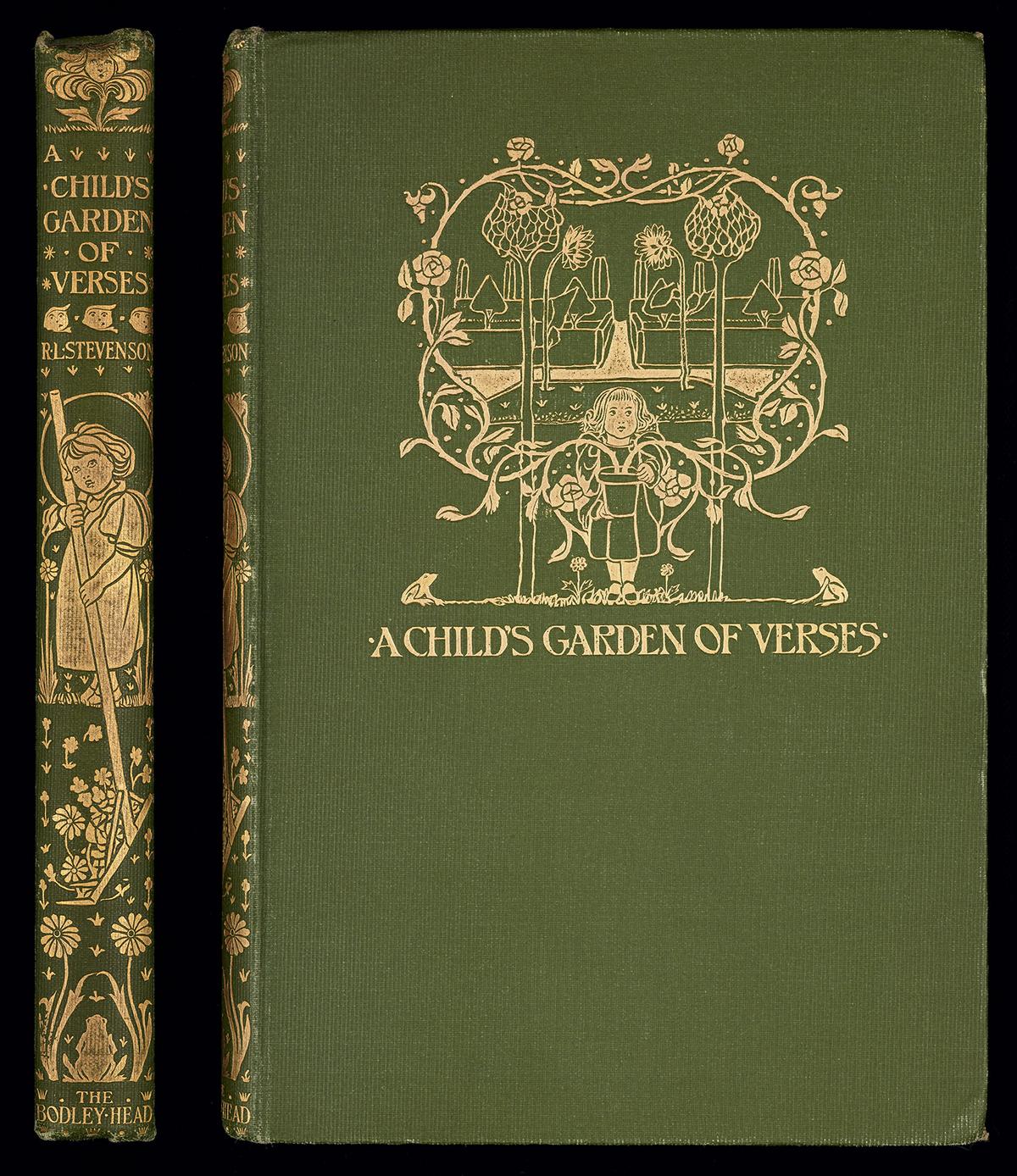
Two Lives Behind One Book
Born in Scotland, Stevenson (1850–1894), suffered from chronic respiratory illness for most of his life. As a child confined to bed, he was read to by his nurse, Alison Cunningham. Soon he started inventing stories of his own, dictating them to his mother and nurse before he could even write. By his mid-30s he was frequently bedridden, yet it was during these years of poor health that he wrote the bulk of his most popular work. “Treasure Island,“ “Kidnapped,” “Underwoods,” “Strange Case of Dr Jekyll and Mr Hyde,” and “A Child’s Garden of Verses” all came from this period. “Fittingly, the poem ”The Land of Counterpane” recalls his own sickbed days. He dedicated the book to Cunningham, the nurse who had once read to him.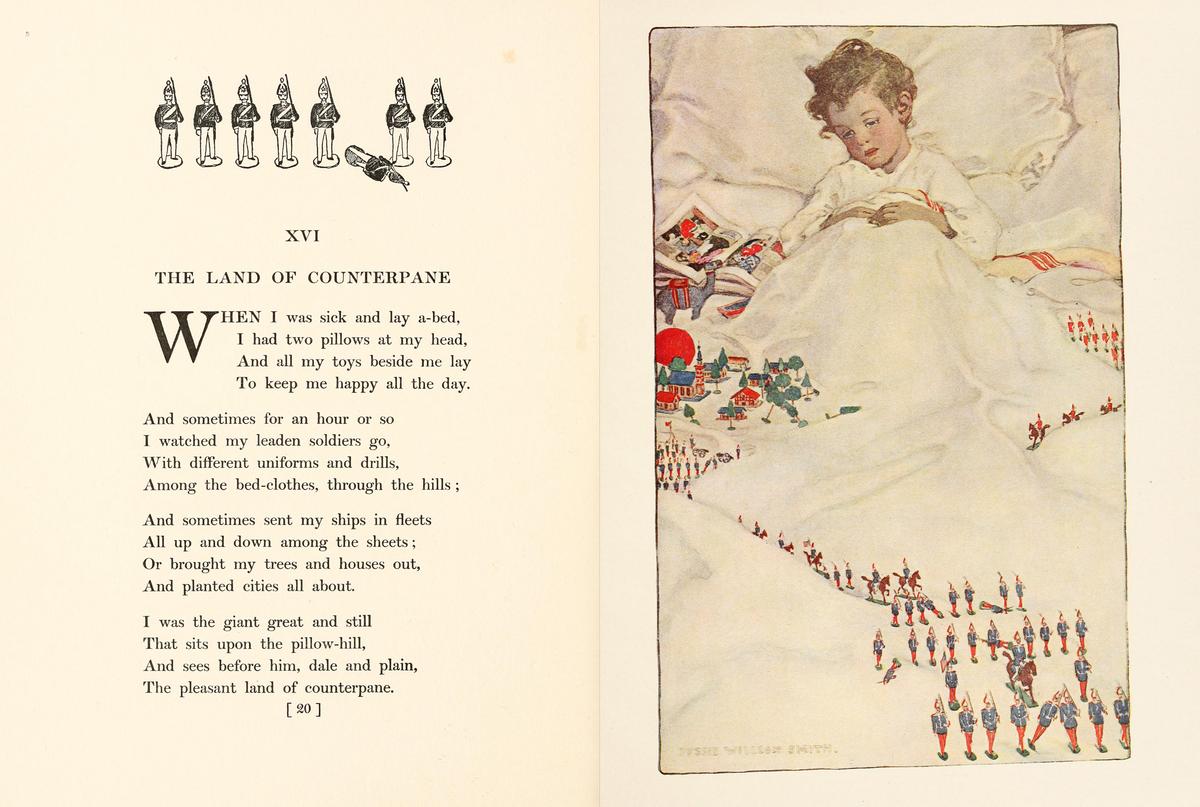
Born in 1863, Smith was a Philadelphia illustrator known for her paintings of children and family life. She trained at the Philadelphia School of Design for Women and the Pennsylvania Academy of Fine Arts, studying under Thomas Eakins. Over her career she illustrated more than 60 books, including titles by Louisa May Alcott and Henry Wadsworth Longfellow. Her images of childhood and motherhood, often idealized, made her one of the era’s most sought-after illustrators. The Stevenson collection remains among her best-known works.
The Artistry of Observation
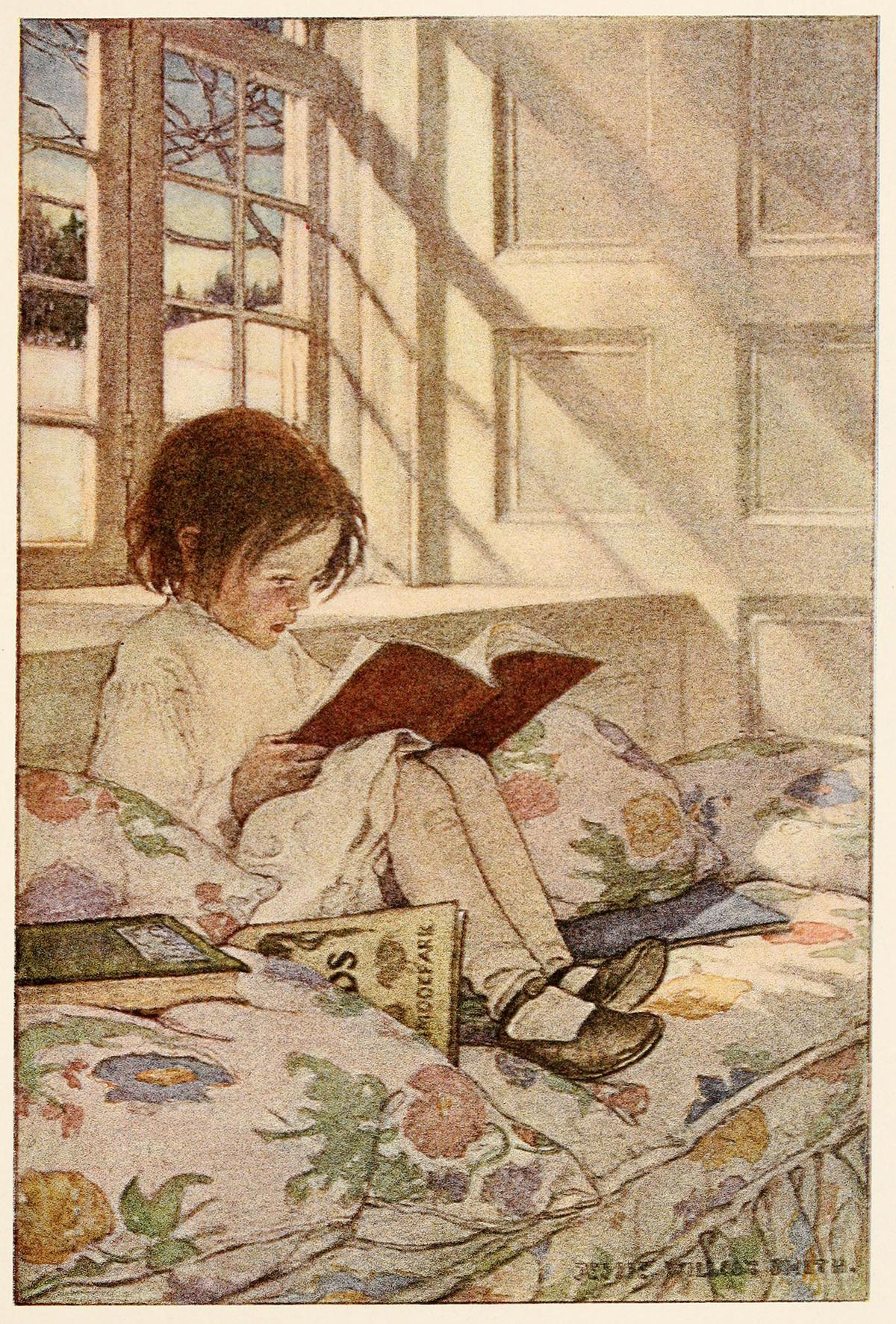
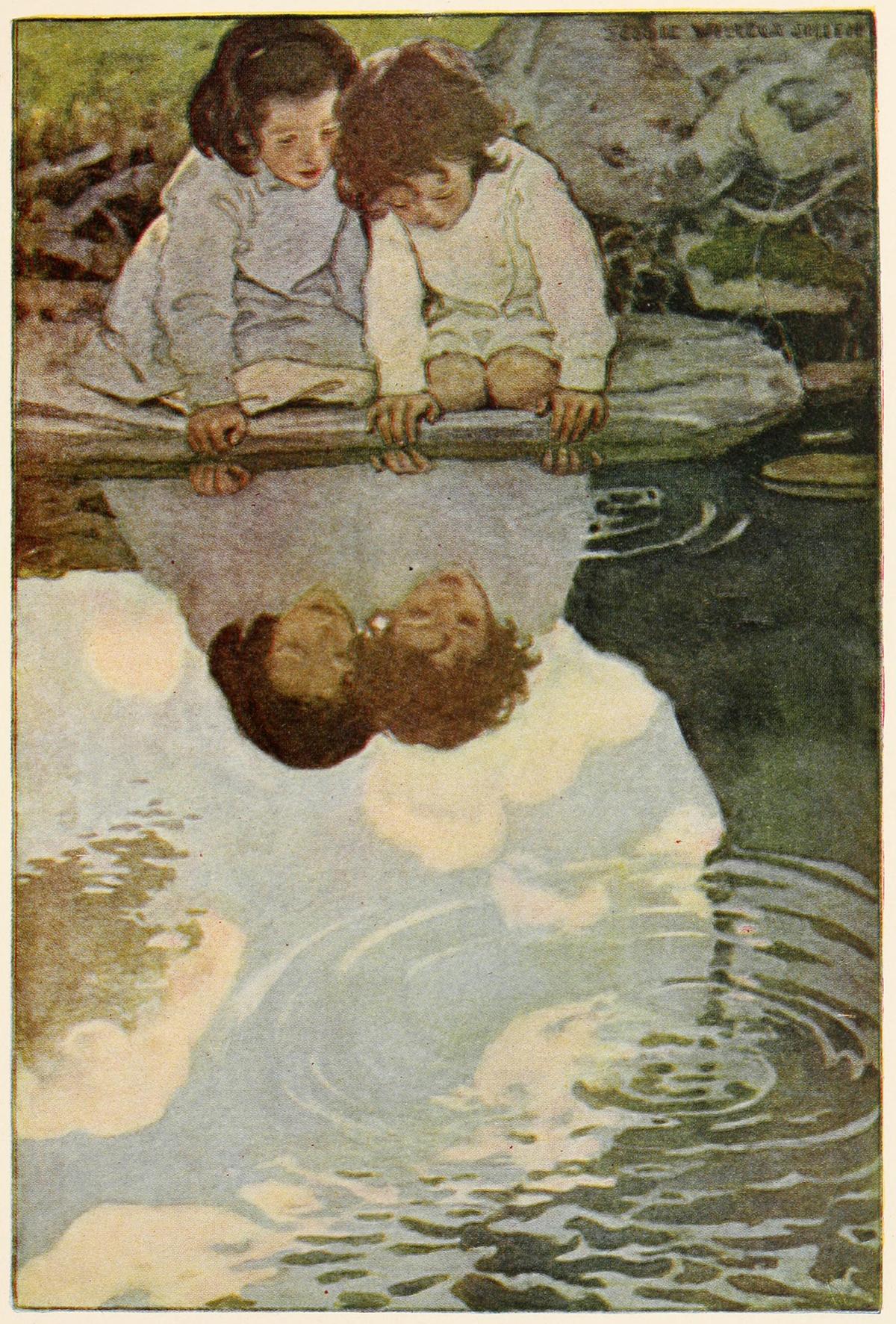
Much like the children depicted in the book, Smith based her illustrations on close observation of clothing, furniture, and rooms. She worked directly from life, inviting friends to bring their children over to play so she could watch and sketch them. Her rendering of period dress, such as the high collar and puffed sleeves in “Picture-Books in Winter,” is precise and realistic. Her soft color schemes, like the muted greens, blues, and earth tones in “Looking-Glass River,” are consistent enough to hold the book together visually. These effects were possible, in part, by advances in color printing during the early 1900s, which allowed illustrated books to reproduce paintings with a fidelity earlier processes simply couldn’t achieve.
Smith’s body of work fits within Victorian and Edwardian-era illustration, with its sentimental domestic scenes and instinct for narrative. She’s often mentioned alongside contemporaries like Elizabeth Shippen Green, Arthur Rackham, and Beatrix Potter, though her interest stayed with the everyday rather than myth or fairy tale. In the end, the 1905 edition is a genuine posthumous collaboration. Stevenson wrote about memory, imagination, and play; Smith painted the rooms, gardens, and streets where it happened. Together, their words and images preserve a vivid portrait of childhood at the turn of the century.



_A_child%27s_garden_of_verses_(15628995320).jpg)