The California Gold Rush drew fortune-seekers from all over the world. A father and a son from London, both named Andrew Smith, looked to strike it rich and traveled halfway around the world to make their dream come true. Launching from Liverpool on Jan. 28, 1852, they sailed for 15 days to reach New York. They then joined approximately 700 passengers aboard another ship.
By 1853, only one of the Smiths remained in California. The elder Andrew, disappointed at the prospects, returned to England. The 17-year-old Smith, who later adopted the last name of his well-to-do godfather and uncle, Sir Andrew Hallidie, continued his search for gold and over the course of several years moved from mining camp to mining camp with not much luck.
The Mining Engineer
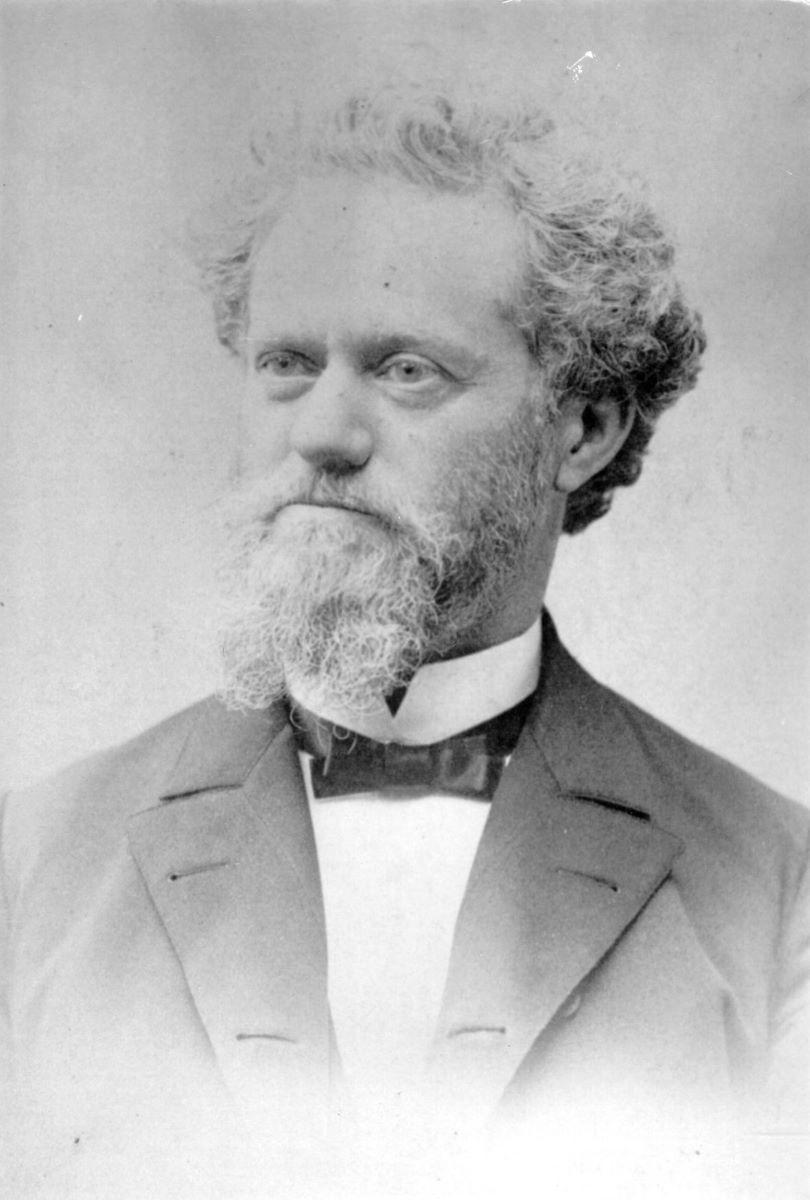
Along with his capacity for survival, Hallidie possessed an immense capacity for engineering. He had grown up in a scientific home, as his father was an inventor, engineer, and the patent-holder for wired rope. With hardly an ounce of gold to his name, his additional skills often helped make ends meet.
Hallidie’s first major engineering project took place in 1855 across the Middle Fork of the American River near Gray Eagle Bar mine. Here, Hallidie engineered a suspension bridge and an aqueduct system with a flume, capable of transporting water.

In 1856, a couple of miles away near American Bar mine, Hallidie first used his adopted skill of using wire rope. He noticed that the mining cars that traversed between the mine and the mill—an elevation of about 1,100 feet—were pulled along by regular rope. The rope would only last a few months before needing to be replaced. Hallidie suggested his wire rope. The owners of the mine accepted his proposition.
Hallidie ordered wire from San Francisco. He intertwined three strands of wire rope, extending approximately 1,200 feet—connected from end-to-end. Instead of about 75 days, the “endless” wire rope lasted two years. It was a breakthrough in mining and transport technology.
Around the time of Hallidie and his father’s arrival in San Francisco, the population had exploded from about 1,000 in 1848—the year the Treaty of Guadalupe Hidalgo was signed—to about 35,000. The population of the Golden City was continuing to expand. By the end of the decade, it was nearing 60,000, and the demand for Hallidie’s skills was growing accordingly.
A year after his American Bar project, Hallidie quit mining and opened his own business, renting a space from Capt. D.C. Mitchell, the captain of the ship that brought Hallidie and his father to San Francisco. Over the ensuing years, Hallidie constructed numerous suspension bridges with the use of his wired rope.
Hills and the Horsecar
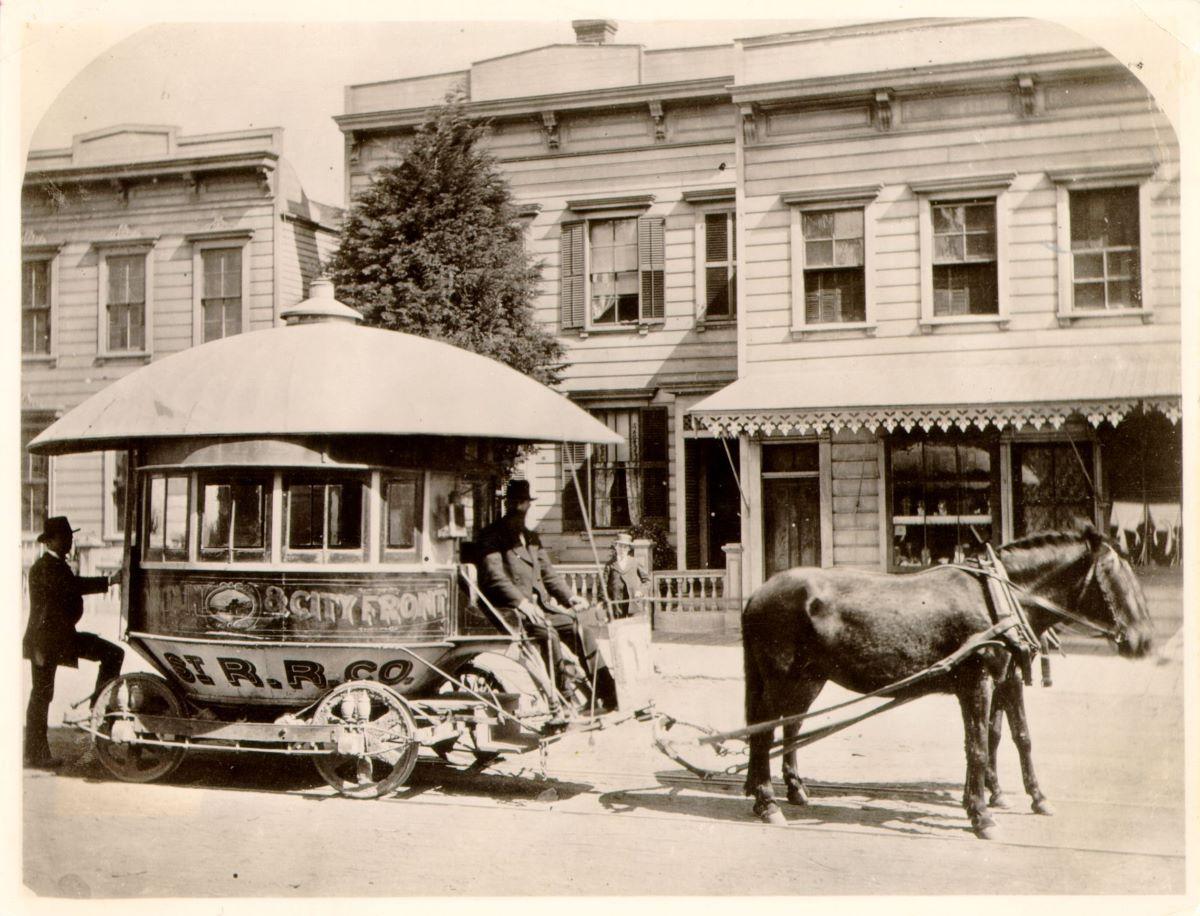
San Francisco is a city of hills. There are arguably more than 50, many with steep grades—as steep as 41 percent. San Francisco, like other large cities across the country, had adopted the horsecar. No other city, however, had so many uphill challenges to face.
Despite the hills, horsecars transporting goods and people became a common sight in the city. The laying of steel rails helped horses pull more weight, but there remained the all-too-common risk of horses losing their balance on an incline and being dragged back down the hill by the weight of the car and its added weight of people or goods. The risk could be deadly if the uncontrolled car crashed.
There are several stories for how Hallidie came up with the idea of constructing a cable car. One story suggests one night he witnessed horses pulling a car slip and slide into a fatal crash. One suggests he was distraught one night as he witnessed horses pulling a car being brutally whipped to keep them moving, an unfortunately common scene.
Another is that San Francisco lawyer Benjamin H. Brooks had formulated a cable car system and was issued a franchise by the city in 1870. Brooks, however, was not able to raise the funds to build the system and thus sold the franchise to Hallidie in 1872.
Getting Started
By this time, Hallidie had become a successful businessman and a respected engineer in the city. In February 1870, Hallidie received a patent for his improvement on the grip pulley, which enabled wire rope to more easily pass through and would allow for gripping and releasing the moving wire. The following year in January, he received a patent which was quite specific to his cable car idea.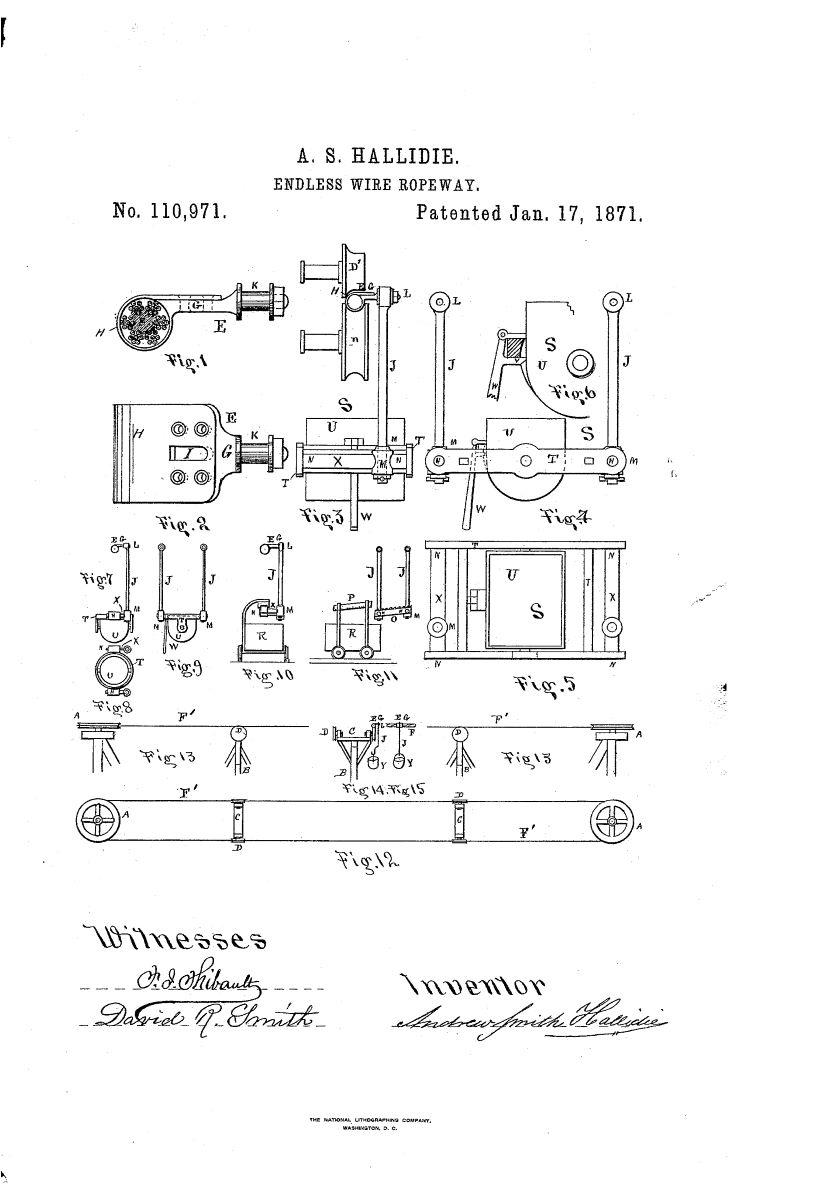
Hallidie had the technology. It now came down to selecting a location, raising the funds and completing construction. The franchise he purchased had come with a deadline. A successful test run of the cable car was required by Aug. 1, 1873.
Building the Cable Car
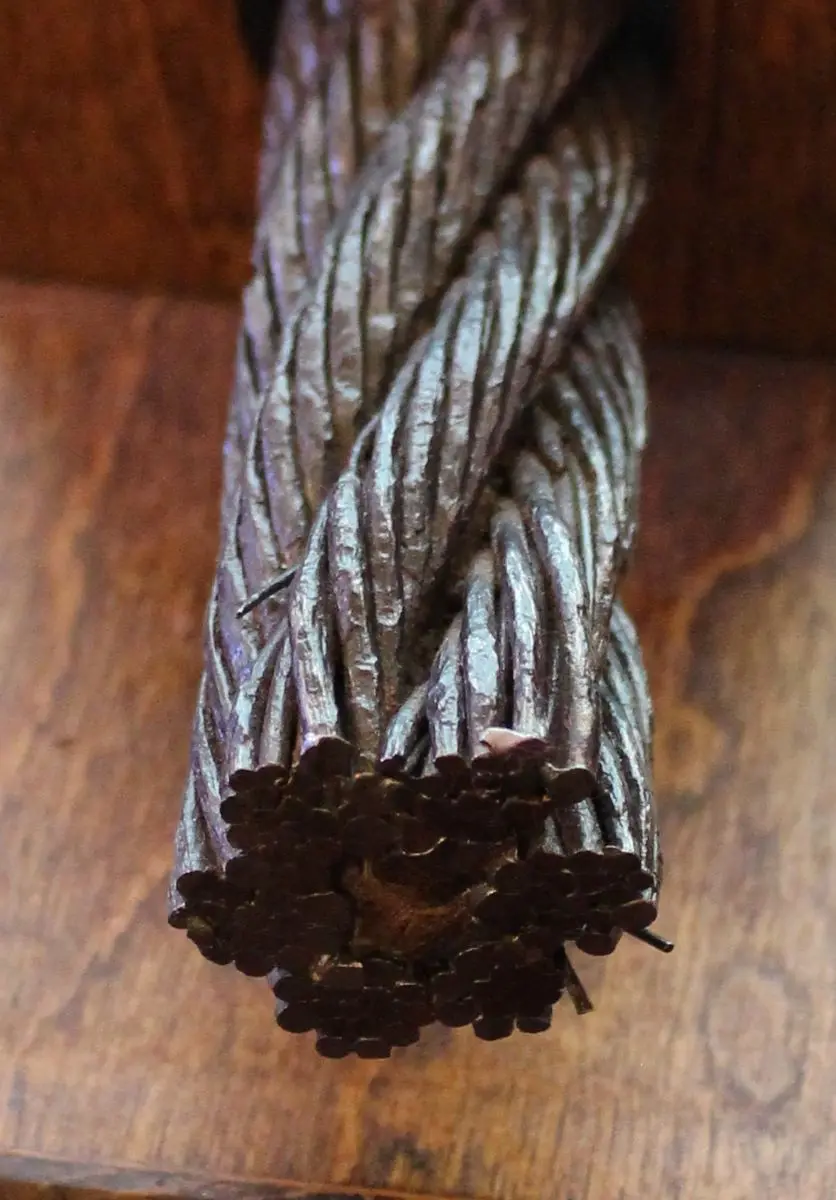
Hallidie hired engineer William E. Eppelsheimer, and together they designed the project. Starting at the intersection of Clay Street and Kearny Street, the cable line was projected to cover 2,800 feet with a steep incline of more than 300 feet over Nob Hill where it would travel about seven blocks west along Clay terminating at Leavenworth Street. Construction of the large project, however, did not begin until the end of May 1873 (some sources suggest the beginning of June). Hallidie would be cutting it very close.Workers laid the track, built the cars, and constructed a large powerhouse 15 feet below the sidewalk at Clay and Leavenworth. The powerhouse consisted of an engine room as well as another room to house cars for repairs. Eight-foot sheaves ran the cable. The 3-inch in circumference, wire rope was passed through a large tube underneath the sidewalk, and the movement of the car was controlled by Hallidie’s gripping device. Outside, the endless wire rope passed through pulleys placed about 40 feet apart. At the end of the line was a large 3,300-pound counterweight, which necessarily maintained the rope’s tension.
A Late Test
Aug. 1 arrived. Construction was completed. But a successful trial run had yet to be conducted. The day passed and the franchise’s deadline was missed. With so much already accomplished, however, no issues were raised with Hallidie by the city.Hallidie decided it was best not to press the issue. It was during this week in history, at 4 a.m. on Aug. 2, 1873, that America’s first cable car was successfully run. The run was no sure thing and even the original gripman, looking down the steep hill, refused to make the first test. Believing in his technology, Hallidie climbed aboard the car and successfully conducted the test himself.
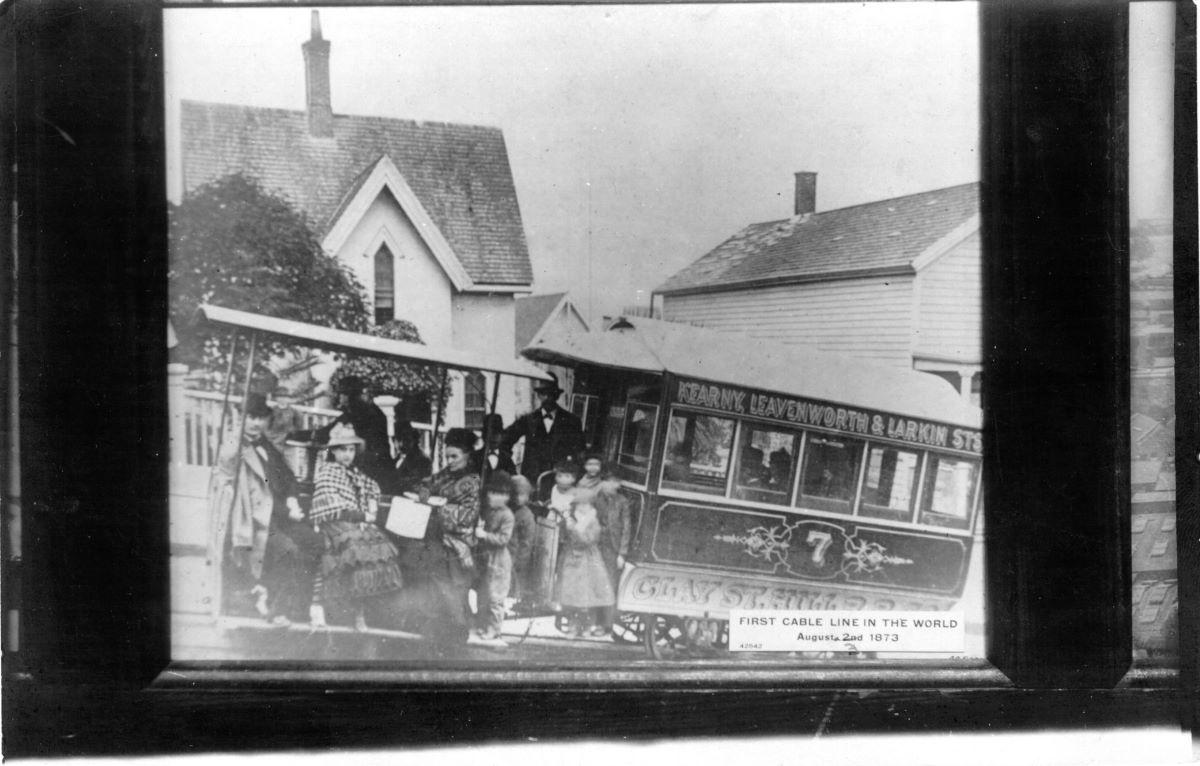
A month later on Sept. 1, the Clay Street Hill Railroad began public service, transforming San Francisco’s and the country’s transportation.
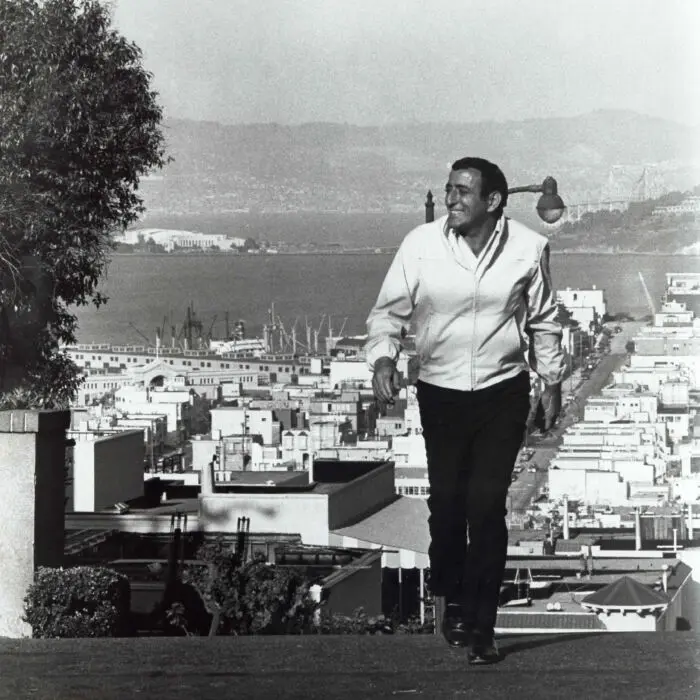
Although buses and various other forms of transport displaced the cable car, San Francisco has maintained theirs, making it an icon of the city. They were even mentioned in the famous 1953 song, “I Left My Heart in San Francisco” (“[W]here little cable cars climb halfway to the stars”), which became Tony Bennett’s signature song.
In 1964, the San Francisco cable cars were designated a National Historic Landmark, and, in 2023, the City of San Francisco celebrated the cable cars’ 150th anniversary.