As computers and algorithms threaten to take over the creation of new art today, it’s more important than ever to remember the highly skilled techniques that were used in the past to create and reproduce art.
Etching is one of those art forms that has been largely forgotten by the general public. Although this fascinating process is still used today, it had its heyday in the years before photocopies became widespread.
The process of etching dates back to the 16th century, but its mid-19th-century resurgence in popularity has been called the etching revival. One lady associated with this revival in the United States was Emily Kelley Moran (1841–1903), a member of a 19-century art family by marriage.
Emily Kelley was born in Dublin, Ireland, on Feb. 21, 1841, although some sources list her birth year as 1850. In 1856, Emily’s mother emigrated to the United States with her and her two sisters when they were children, most likely after their father died. They settled in Philadelphia, where they lived with their uncle, a dry goods merchant.
Becoming an Artist
There’s no doubt that Peter taught his wife artistic techniques. Personal instruction, often from a family member or close friend, was a common form of learning at this point. Peter had learned sketching and painting techniques from his two older brothers, and Emily learned from him.Emily was Peter’s student at the Philadelphia School of Design for Women. Peter started as lecturer in 1866, and they married in 1867. She continued to study there after they married. An 1893 writer referred to the fact that Moran’s wife “was one of his best students.”
Painting and Etching
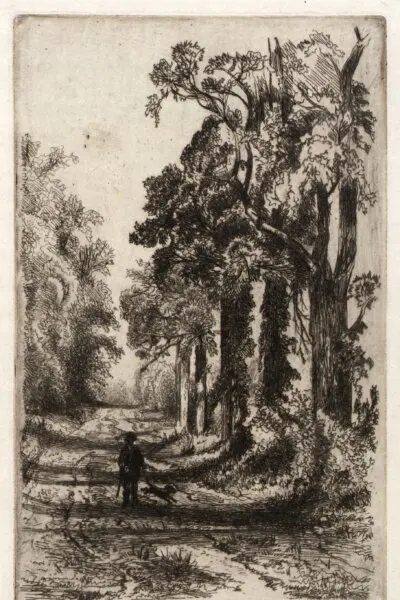
Whether she learned technique through private instruction or at the school, Emily became a very skilled painter and etcher. These were both techniques that her husband mastered and promoted, particularly etching. He’s called the “Father of American Etching.” Dare we suggest that Emily might be the mother?Although not as prolific or acclaimed as her husband, Emily was one of the first female etchers in the United States. Of her work, 19 etchings remain, all of which are landscapes. Many of them depict the beautiful Schuylkill River in Pennsylvania.
Her landscapes are detailed, realistic, and dark in tone. They reflect that she, like her husband, exemplified the American Barbizon School in her work. Inspired by the French Barbizon School, a mid-19th-century art movement that sparked the etching revival in France, this mode promoted clean, simple, and realistic scenes of nature and animals.
Remembering a Female Etcher
During her lifetime, Emily’s etchings were displayed at several exhibitions arranged by German American art curator Sylvester Rosa Koehler, including the Exhibition of American Etchings (1881) and The Work of the Women Etchers of America (1887), as well as the Chicago World’s Columbian Exposition (1893).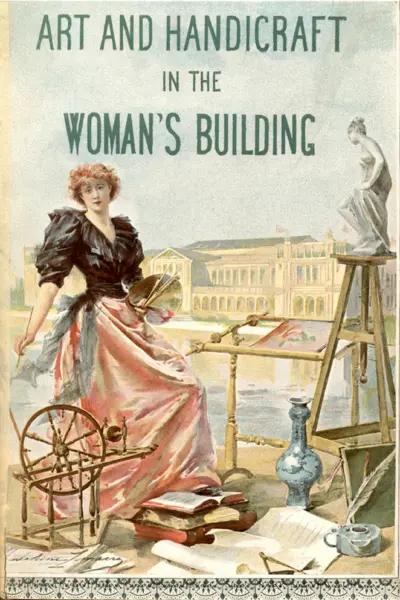
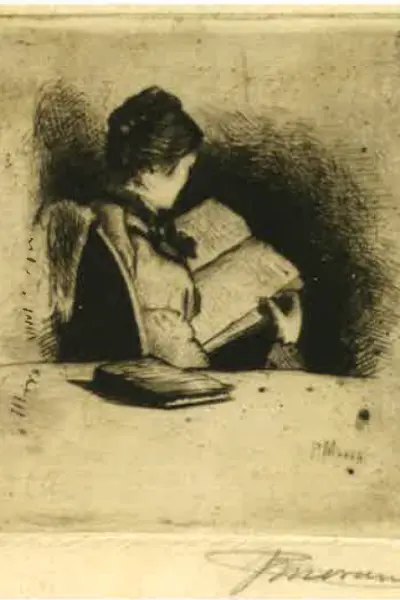
The National Museum of American History has five of her etchings in its collection, although none are currently on display. Emily’s likeness is subtly preserved in an etching her husband produced of her, “Young Lady Reading” (1880), in which you can see the back of her head and side of her face.
Emily’s career as an etcher coincides closely with the American etching revival. Although she’s one of the pioneers of etching in America, especially as a woman, she hasn’t been the subject of many studies or writings.
The most detailed piece about her life and work is a 2012 article by David Wright, “Emily Kelley Moran: Philadelphia’s Ground-Breaking Female Painter-Etcher.” This was published in volume 37, the autumn issue, of the periodical “Imprint,” the American Historical Print Collectors Society journal. It’s not available online, but many research libraries hold copies.