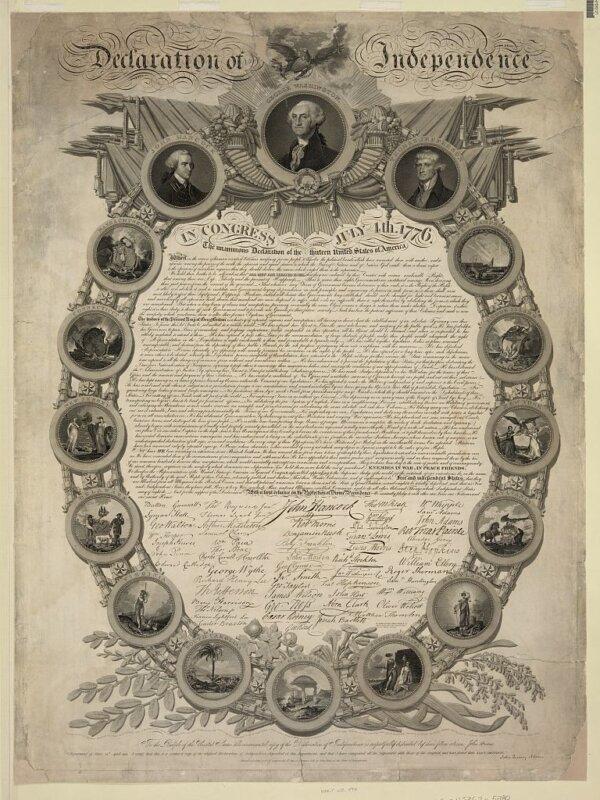
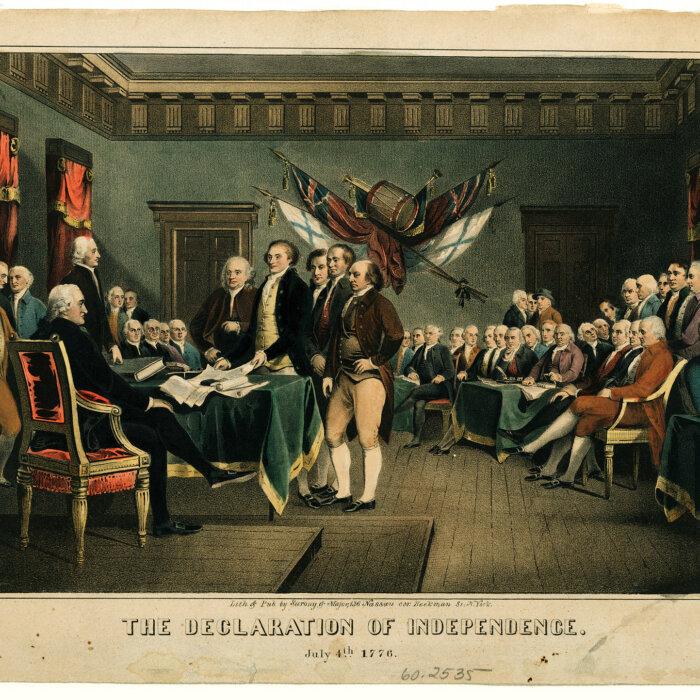
When the Declaration of Independence was signed 250 years ago, it was designed to announce the permanent political break between the 13 British colonies in America and their mother country. But over the decades that followed, something strange happened in how Americans viewed this seminal document.
As the nation grew, the Declaration of Independence was no longer seen as a historic lethal shot directed across the Atlantic. Instead, it was redefined as a foundation of principles that challenged long-held domestic practices and beliefs.
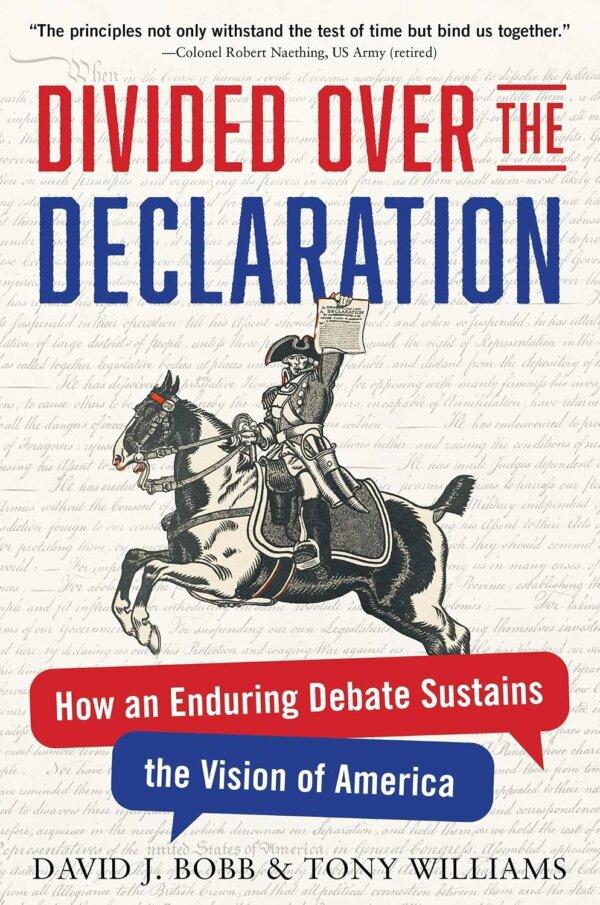
In “Divided Over the Declaration,” David J. Bobb and Tony Williams effectively illustrate how the Thomas Jefferson-penned document came about and inspired waves of political change that were unimaginable in 1776.
Prelude to Independence
The Declaration didn’t come out of thin air, but it was the proverbial last straw held by the Second Continental Congress in its relations with Great Britain. Despite the battles at Lexington and Concord in April 1775, most of Congress weren’t eager to break with the Crown.Congress adopted the Olive Branch Petition on July 5, 1775. This claimed loyalty to Britain with the expressed hope of reconciliation.
However, more than a month after that document was crafted, King George III issued the Proclamation for Suppressing Rebellion and Sedition. It accused the colonists of “traitorously preparing, ordering, and levying war” against Britain. An address by the monarch to Parliament two months later declared the colonists were conspiring to build “an independent Empire.”
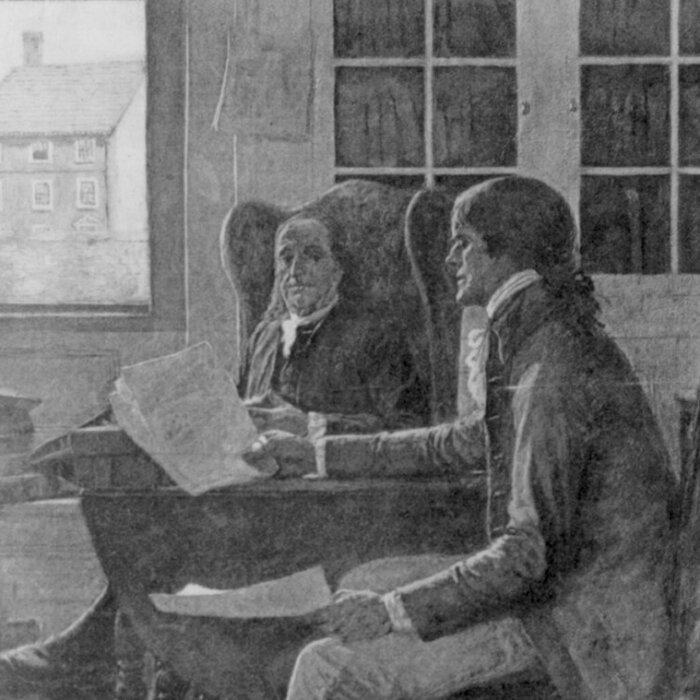
The authors cite the boldly rebellious spirit of Thomas Paine’s pamphlet “Common Sense” for successfully pointing the colonies on a one-way path to independence. Published in January 1776, Paine dared to call the king “a royal brute” and condemned the monarchy as an unnatural form of government.
Equality for Some
The book then explains how 19th-century thought leaders reconsidered the Declaration’s notion of equality as a strategy to address the nation’s boiling sociopolitical problems.The authors recover a long-forgotten early challenge posed by British writer and sociologist Harriet Martineau in her 1837 book “Society in America.” Martineau held up the Declaration’s statement on governments deriving their powers from the consent of those being governed and asked, “How can the political condition of women be reconciled with this?”
The 1848 Seneca Falls Convention was the nation’s first major gathering for women’s rights. The convention adopted a Declaration of Sentiments that updated the 1776 document to address gender equality.
But despite that document’s groundbreaking arguments, the issue of slavery took precedence over women’s rights among the wider society of the pre-Civil War years.
The authors highlight the anti-slavery speeches of Frederick Douglass and Abraham Lincoln in the 1850s that lamented the disconnect between the Declaration’s principles and the continued enslavement of the black population. But the book also shows how pro-slavery advocates cited the Declaration to support their positions.
The most infamous example was the 1857 Dred Scott decision with Chief Justice Roger B. Taney proclaiming that “the enslaved African race were not intended to be included, and formed no part of the people who framed and adopted this declaration.”
That attitude didn’t end with the Civil War. Fast-forward to 1912 and Woodrow Wilson successfully campaigned for president by denigrating the Declaration for being “of no consequence” unless it acted as a vehicle for accomplishing “a program of action” for then-contemporary issues.
As a candidate Wilson would insist that “the question is not whether all men are born free and equal or not.” This should have been a clue that a Wilson administration would roll out racist policies denying black Americans the full rights of citizenship. The book also notes that Wilson opposed giving women the right to vote because it would include of black women.
Elsewhere in the book, the authors connect the Declaration to the Spanish-American War, which transformed the United States into an imperialist power with overseas colonies. Opponents to the American annexation of the Spanish territories questioned if the struggles of 1776 degenerated into hypocrisy. After all, the former Spanish colonies were being denied their right to independence.
Bobb and Wilson provide a provocative consideration of where the Declaration fits into the highly imperfect work-in-progress that is American democracy. Perhaps the most cogent quote harvested for this invigorating book comes from the eloquent Texas Congresswoman Barbara Jordan on the Sisyphean struggle to live out the Declaration’s seemingly impossible ideals:
“It does not contribute to the quality of the debate for us to recite the long train of abuses suffered by some of the citizens of this country. Nor is it helpful to highlight the incongruity of the actions and rhetoric of America. Our job is to make the match.”