The Pre-Raphaelites created some of the most romantic, decorative, and symbolic artworks in British art history. Dante Gabriel Rossetti (1828–1882) was one of the movement’s founders. Both a painter and a poet, Rossetti’s art was inspired by literature, with sources including Shakespeare, the Bible, and mythology, as well as medieval, Renaissance, and romantic poetry. Often accompanying his paintings are his own verses or poems by other writers.
Rossetti’s Muses
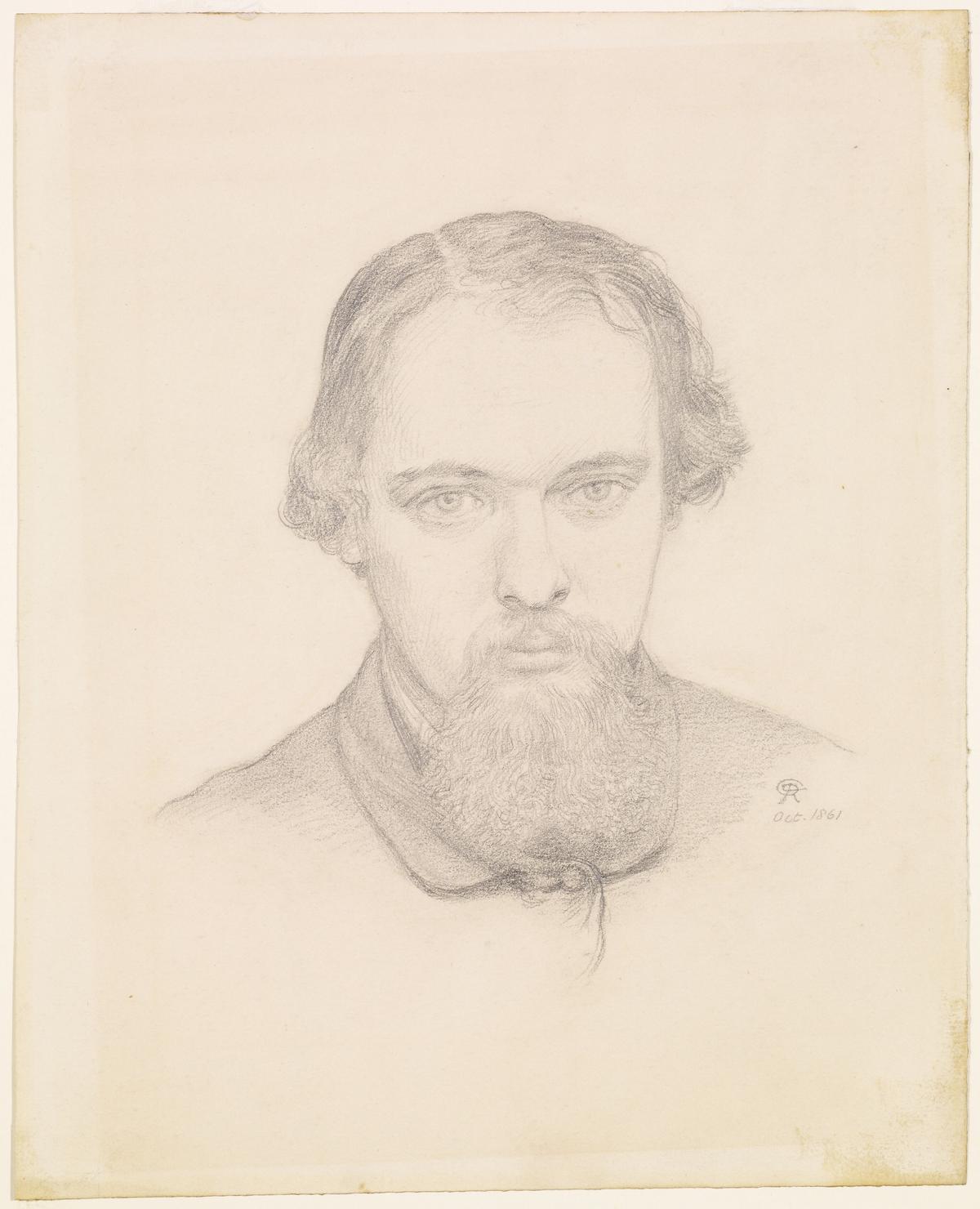
Rossetti was born in London to intellectual parents of Italian origin. Growing up, he was exposed to historic and contemporary literature that influenced his poetic pursuits as well as his visual art. Rossetti displayed artistic talent in his youth and studied at the Royal Academy Schools, but he chafed at academic conventions, which he found stifled his creativity. In 1848, along with friends William Holman Hunt and John Everett Millais, he formed the Pre-Raphaelite Brotherhood. They were fueled by their admiration of Early Renaissance painting, with its rich details, complex symbolism, and emotion.
In the 1860s, Rossetti’s art became lusher. These decorative pictures feature idealized female figures and elaborate iconography. Muses of the decade include his wife Elizabeth Siddal, Jane Morris, who was the spouse of William Morris, and Alexa Wilding.
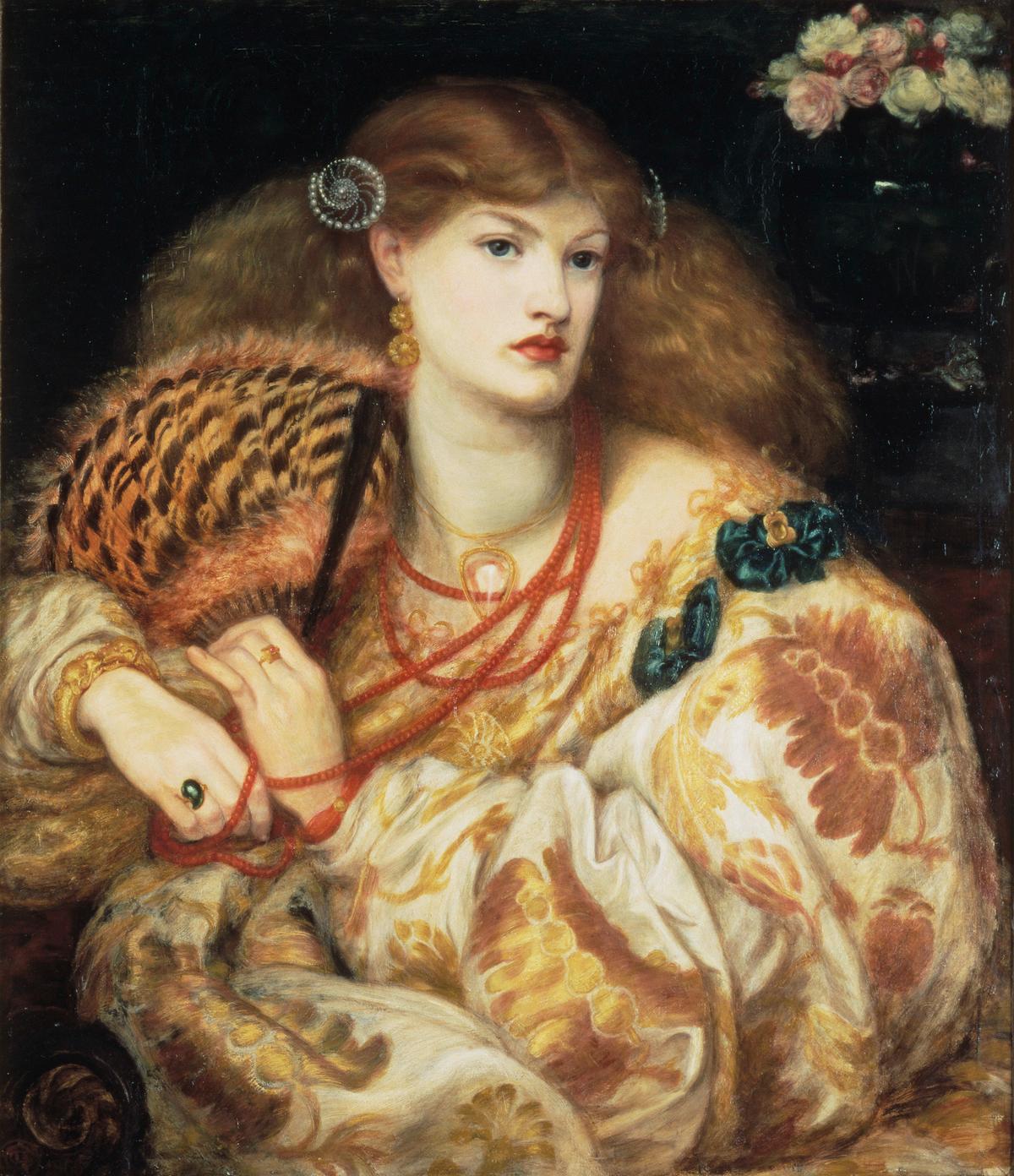
‘To the Well-Loved Knight’
Wilding was also the model for Rossetti’s 1867 oil on panel “The Loving Cup,” part of the collection of the National Museum of Western Art, Tokyo. Rossetti shows a beautiful woman in three-quarters length. Striking reds dominate the composition, from the woman’s auburn hair to her red dress and coral beaded necklace. The warm tone is accompanied by whites and silvers: the blouse with frilly cuffs, the seed-pearls at her wrist and around her neck, the jeweled hair ornament, and the background’s linen cloth with a Veneto-Byzantine lacework pattern that covers a piece of furniture.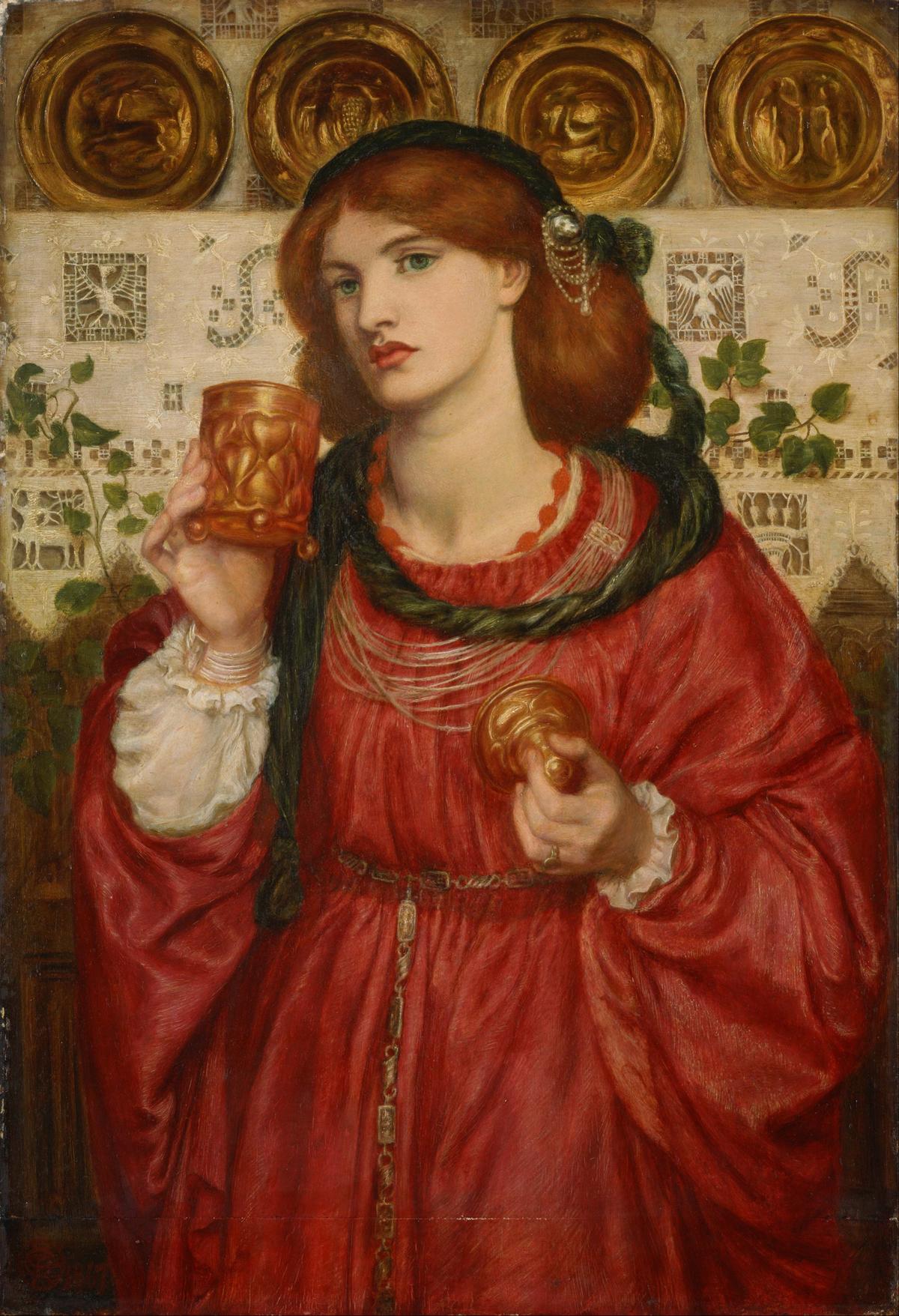
In the painting, a woman raises a golden vessel with heart-shaped designs. It is known as a loving cup, from which lovers would both drink. With a dream-like expression, the figure stares into a space behind the viewer’s left shoulder, seemingly offering a toast to her beloved. The cup’s material is echoed by the chain around her waist and the four bronze or brass plates on a ledge in the background’s uppermost register.

Two plates are decorated with animals while the second and fourth depict biblical scenes: Hosea and Joshua returning from the promised land with a bunch of grapes (Numbers 13:17-29) and Adam and Eve eating the forbidden fruit. The ivy, with heart-shaped leaves, symbolizes fidelity and eternity. Its green color is reiterated by the textile wound around the woman’s upper body and over her head, completing the painting’s harmonious tones.
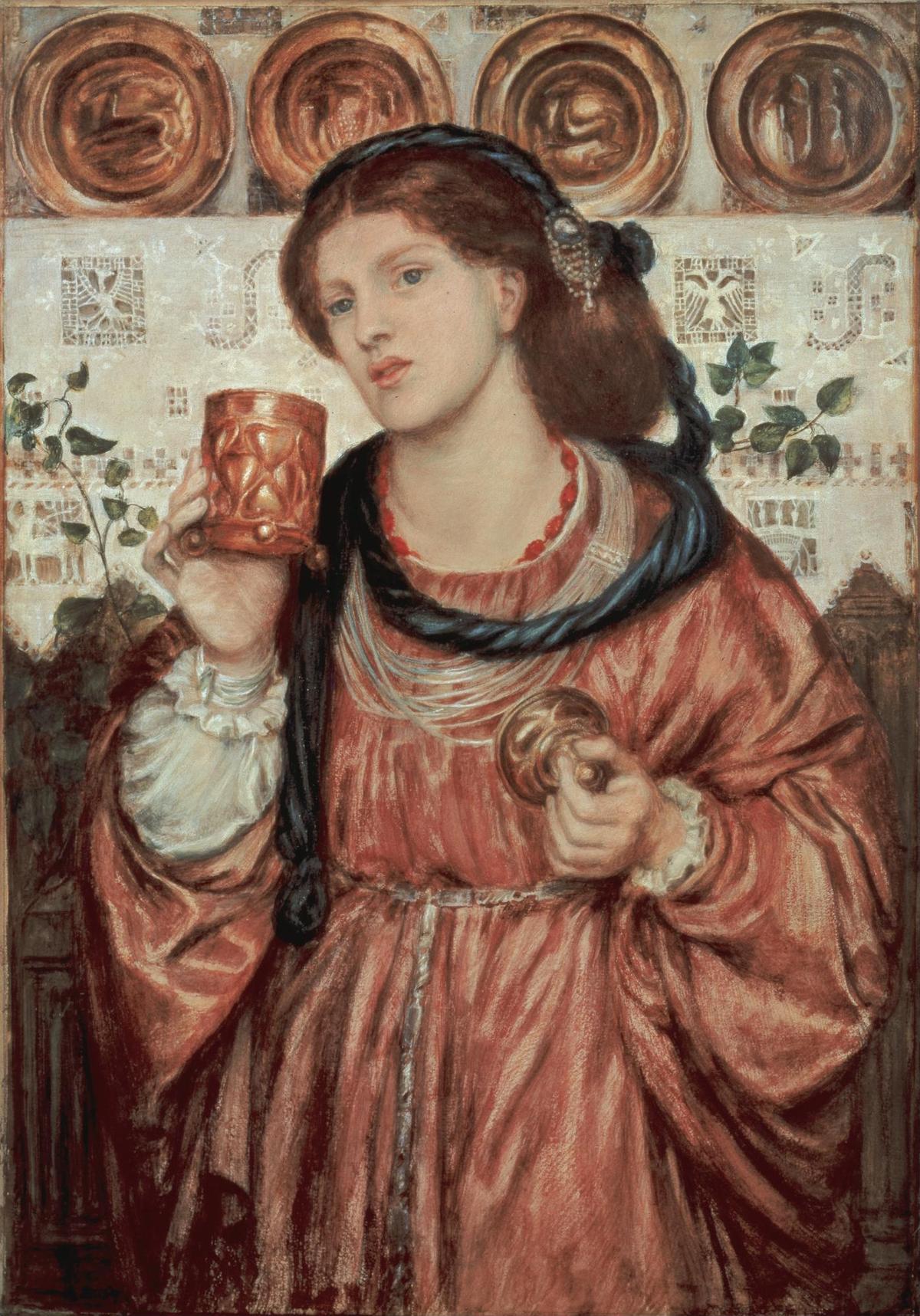
“The Loving Cup” is a beautiful painting from Rossetti’s maturity. It harkens back to medieval art while remaining decidedly of the Victorian era. The painting’s flattened perspective and richly decorative use of color, pattern, and texture, coupled with its theme of love, exemplifies the best of Pre-Raphaelite art.