Crafts That Make America: A Year-Long, Nationwide Celebration

Craft in America’s ‘Handwork: Celebrating American Craft 2026’ showcases craftsmanship across the nation for its 250th anniversary.
Crafts That Make America: A Year-Long, Nationwide Celebration
Hot Glass Team member Tom Ryder pours molten glass into a mold during a live glassmaking demonstration. Courtesy Corning Museum of Glass, Corning, N.Y.
|Updated:
0:00

In honor of the country’s 250th anniversary, Craft in America’s “Handwork: Celebrating American Craft 2026” highlights the rich tapestry of crafts practiced by Americans for Americans across the nation.

With some 300 participating organizations, Americans can easily access events and exhibitions in every state and Puerto Rico. Together, these events showcase 250 years of American heritage crafts, including the people and organizations safeguarding these traditions today.

The varied events celebrate craftsmanship and the different cultures across the nation, from the fledgling republic through to today.

For more than 80 years, the nonprofit American Craft Council has supported nationwide crafts centered around hand work. (Max Franz/Courtesy of the American Craft Council, Minneapolis.)
For more than 80 years, the nonprofit American Craft Council has supported nationwide crafts centered around hand work. Max Franz/Courtesy of the American Craft Council, Minneapolis.

A Selection of Visitor Experiences

At the nation’s oldest continuously operated museum, the Peabody Essex Museum, in Salem, Massachusetts, visitors can take the “Handwork: Celebrating American Craft 2026” audio tour, exploring 500 years in 30 objects. The exhibits include a rare 1679 oak-and-maple valuables cabinet.
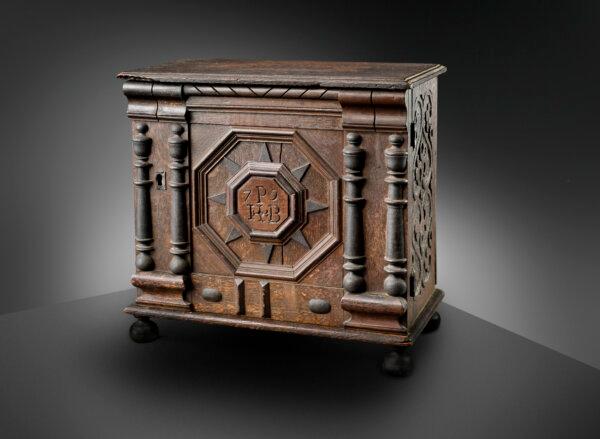
Valuables cabinet, 1679, by James Symonds. Owned by Joseph and Bathsheba Pope. Oak, maple, iron, and paint. Museum purchase, made possible by anonymous donors, 2000, Peabody Essex Museum, Salem, Mass. (Dennis Helmar/Courtesy of Peabody Essex Museum, Salem, Mass.)
Valuables cabinet, 1679, by James Symonds. Owned by Joseph and Bathsheba Pope. Oak, maple, iron, and paint. Museum purchase, made possible by anonymous donors, 2000, Peabody Essex Museum, Salem, Mass. Dennis Helmar/Courtesy of Peabody Essex Museum, Salem, Mass.

At the Vesterheim, Norwegian-American Museum, in Decorah, Iowa, visitors can enjoy 33,000 museum exhibits, learn crafts at its Folk Art School, and also tour 12 historic buildings in its heritage park. The buildings show how Norwegians lived in Norway in the 1800s and after immigrating to America.
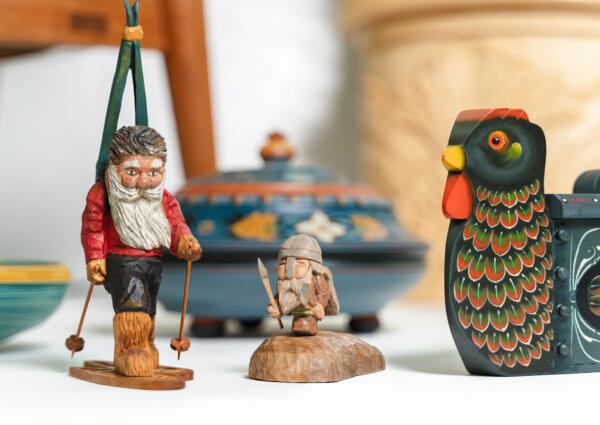
(Left) “Mountain Man” by Greg Akre; “Gunnar” by Alfred Lompe; and “Chicken Tine” by Jerry Johnson. Vesterheim Norwegian-American Museum and Folk Art School, in Decorah, Iowa. (Courtesy of the Vesterheim Norwegian-American Museum and Folk Art School, in Decorah, Iowa)
(Left) “Mountain Man” by Greg Akre; “Gunnar” by Alfred Lompe; and “Chicken Tine” by Jerry Johnson. Vesterheim Norwegian-American Museum and Folk Art School, in Decorah, Iowa. Courtesy of the Vesterheim Norwegian-American Museum and Folk Art School, in Decorah, Iowa

At the non-profit Corning Museum of Glass, in Corning, New York, visitors can see live, often pioneering, glass-making demonstrations. They can also see the art form through the eyes of students in grades 8 to 12, who curated the “Junior Curator Exhibition.”
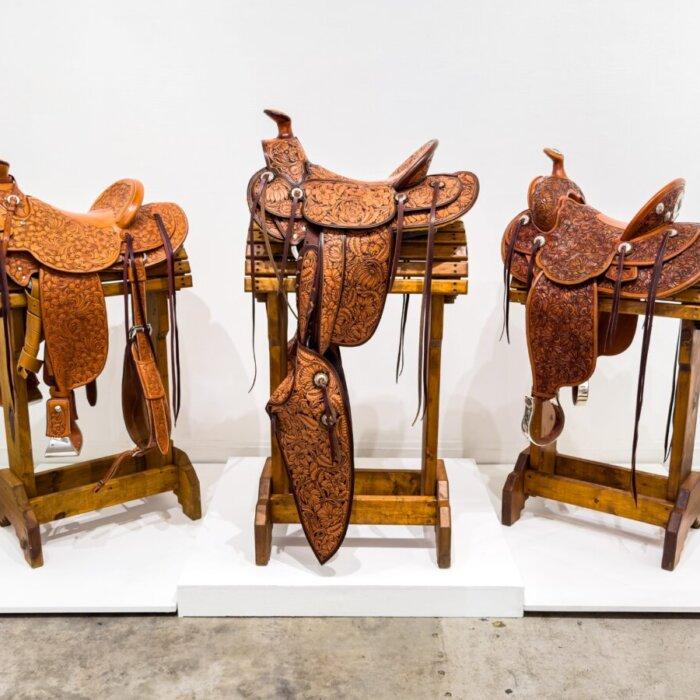
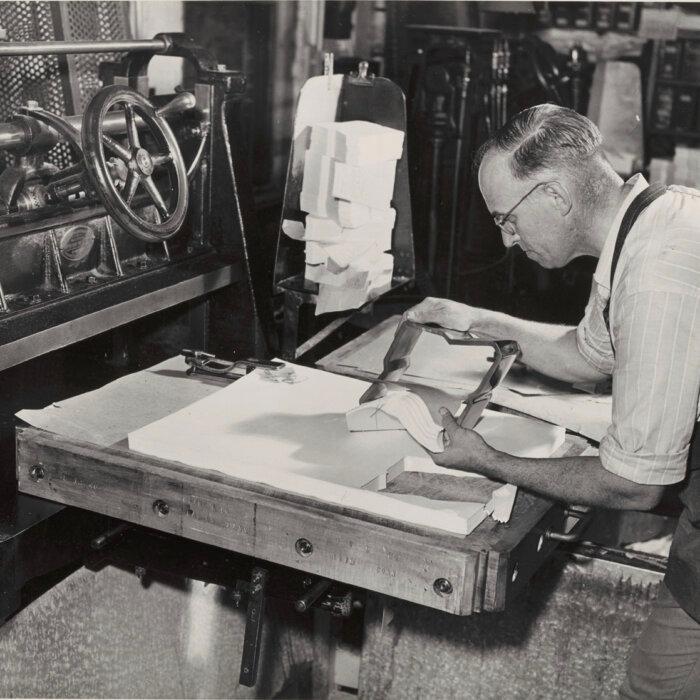
The Maryhill Museum of Art, in Goldendale, Washington, celebrates its centennial this year. Museum visitors can marvel at its rich indigenous holdings, such as a collection of early 20th-century baskets, by Elizabeth Conrad Hickox (Wiyot/Karuk), crafted from native hazel, conifer roots, five-fingered fern, and porcupine quills dyed with wolf lichen.
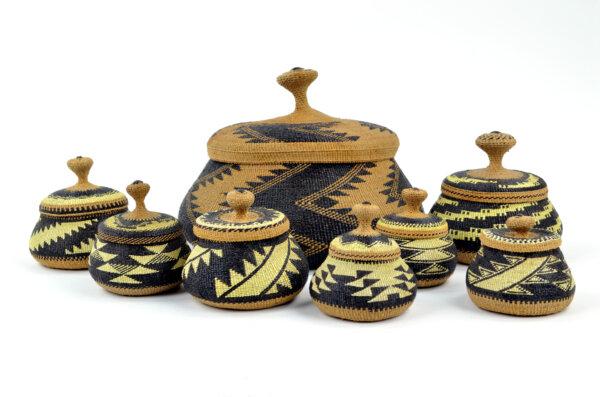
Lidded Baskets, 1920s–1930s, by Elizabeth Conrad Hickox (Wiyot/Karuk). Hazel, conifer roots, five-fingered fern, and porcupine quills dyed with wolf lichen. Largest basket: 5 3/4 inches tall by 7 1/2 inches diameter. Smallest basket: 2 1/4 inches tall by 2 3/4 inches diameter. Gift of the Dress family, Collection of Maryhill Museum of Art, Goldendale, Wash. (Courtesy of Museum of Art, Goldendale, Wash.)
Lidded Baskets, 1920s–1930s, by Elizabeth Conrad Hickox (Wiyot/Karuk). Hazel, conifer roots, five-fingered fern, and porcupine quills dyed with wolf lichen. Largest basket: 5 3/4 inches tall by 7 1/2 inches diameter. Smallest basket: 2 1/4 inches tall by 2 3/4 inches diameter. Gift of the Dress family, Collection of Maryhill Museum of Art, Goldendale, Wash. Courtesy of Museum of Art, Goldendale, Wash.
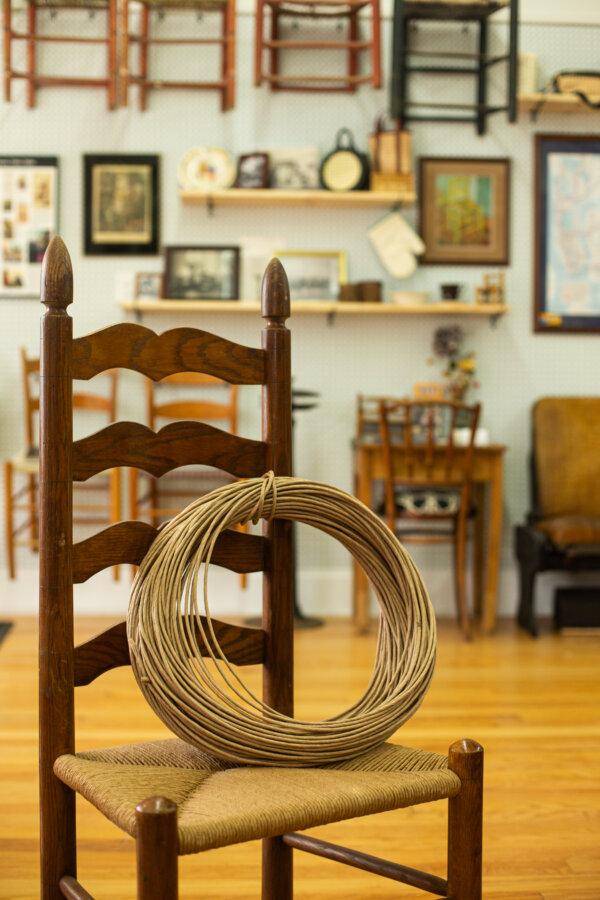
At the Silver River Center for Chair Caning, in Weaverville, North Carolina, visitors can discover “the nation’s only chair caning school and museum.” It was founded by David Klingler and fourth-generation chair weaver Brandy Clements, who both teach, restore, and preserve chair caning for future generations.
Visiting the Silver River Center for Chair Caning, in Asheville, N.C., people can marvel at the different chair caning styles and even learn caning themselves at the only chair caning school and museum in America. (Courtesy Silver River Center for Chair Caning, Asheville, N.C.)
Visiting the Silver River Center for Chair Caning, in Asheville, N.C., people can marvel at the different chair caning styles and even learn caning themselves at the only chair caning school and museum in America. Courtesy Silver River Center for Chair Caning, Asheville, N.C.

Enjoy American Craft at Home

In addition to visitor experiences, Americans can access myriad “Handwork: Celebrating American Craft 2026” content from the comfort of their homes via the website Handwork2026.org. These include films from participating organizations for the “Craft Across America” series.

Lowell Boat House and Museum, in Amesbury, Massachusetts, filmed its week-long class: “Building the Peabod Dory [a small flat-bottomed wooden boat].” The American Swedish Institute in Minneapolis, interviewed Emma Ewadotter about “grannlatsbroderi,” the fine embroidery often seen in Swedish homes and on folk costumes. In New York, fourth-generation family fabric flower-makers M&S Schmalberg filmed a 70-second video of its craft from fabric sheet to flower bloom.

“Handwork: Celebrating American Craft 2026” spans the entire year. It highlights the nation’s rich repository of heritage skills and craftsmanship for future generations to hopefully enjoy for another 250 years.


To find out more about Craft in America’s ‘Handwork: Celebrating American Craft 2026,’ visit Handwork2026.org.
What arts and culture topics would you like us to cover? Please email ideas or feedback to [email protected].
Google LogoMark Us Preferred on Google
Lorraine Ferrier
Lorraine Ferrier
Author
Lorraine Ferrier writes about fine arts and craftsmanship for The Epoch Times. She focuses on artists and artisans, primarily in North America and Europe, who imbue their works with beauty and traditional values. She's especially interested in giving a voice to the rare and lesser-known arts and crafts, in the hope that we can preserve our traditional art heritage. She lives and writes in a London suburb, in England.