By the late 1800s, European painters had fallen in love with a subject earlier generations might have considered too ordinary to bother with: children simply being children.
Historical battles and tragedies from literature hadn’t disappeared from art galleries, but they no longer held exclusive claim on serious attention. Alongside them came something more modest and equally hard to capture well: children playing in courtyards, gathering flowers in fields, building things with their hands. There was no myth to illustrate and no moral to underline, just the texture of an afternoon.
Childhood in a New Light
As industrial cities swelled with workers and factories, many middle-class families had a new opportunities to escape to the countryside during the warmer months, even if only for a few weeks. That seasonal rhythm—city in winter, fields and shorelines in summer—gave painters a fresh supply of scenes to draw from.At the same time, educators and theorists started to see childhood less as a waiting room for adulthood and more as a distinct stage of life shaped by surroundings, play, and direct experience. From this view, a child wandering through a field wasn’t wasting time. They were learning about the world in ways a schoolroom’s textbook couldn’t teach.
Summer as Play
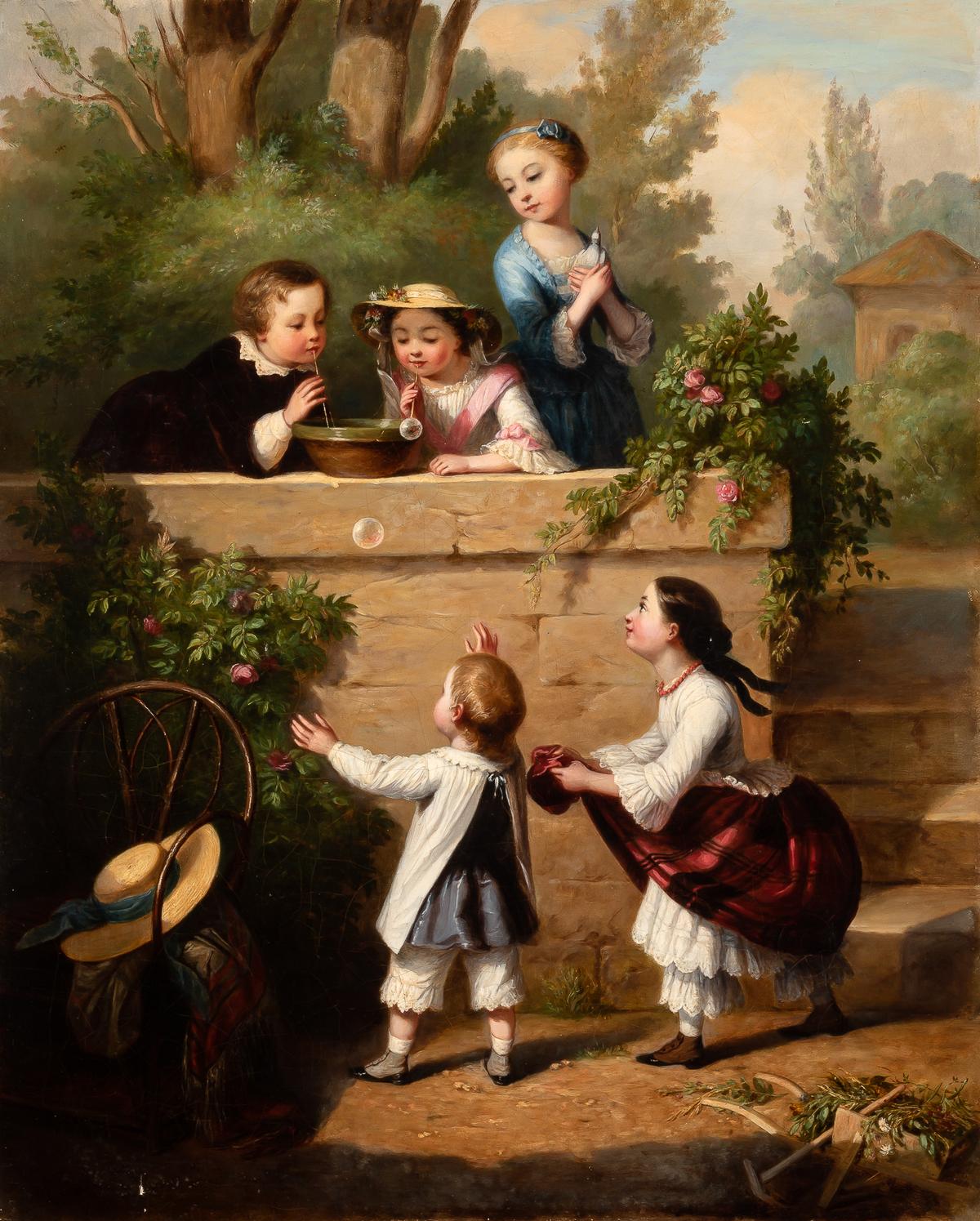
Play, in these paintings, tends to be improvised and built out of whatever happens to be on hand, such as soap and water, flowers from a nearby field, or scraps of wood. Clara Nargeot’s “Children Blowing Bubbles” captures this kind of moment. Nargeot worked within the French domestic genre tradition, a style built on careful observation of everyday moments.
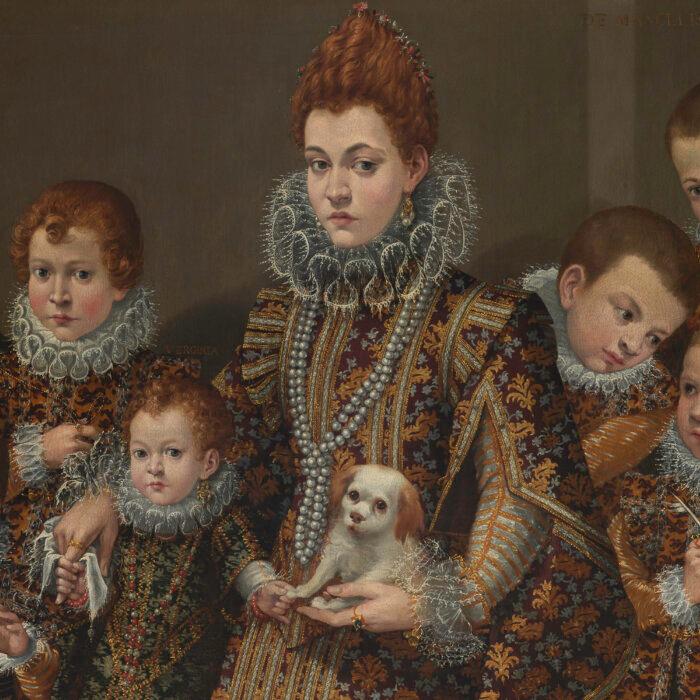
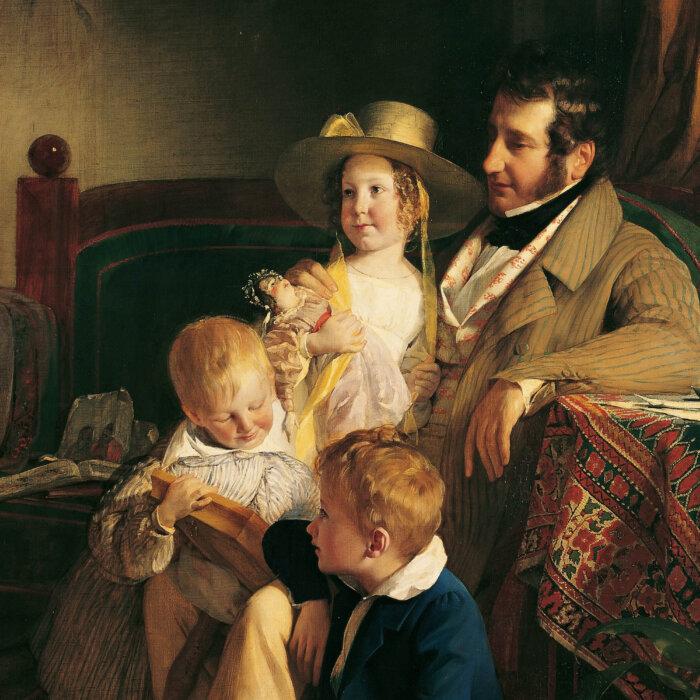
Since the 17th century, bubble-blowing carried a symbolic weight in European Vanitas paintings. Bubbles were used to reference how fleeting life is, present one moment and dissolved the next. However, Nargeot largely sets that tradition aside. Her children aren’t symbols of mortality; they’re just thoroughly absorbed in what they’re doing, caught up in the simple physics of a soap film catching light. The painting allows the viewer to notice their concentration, not decode a hidden meaning behind it.
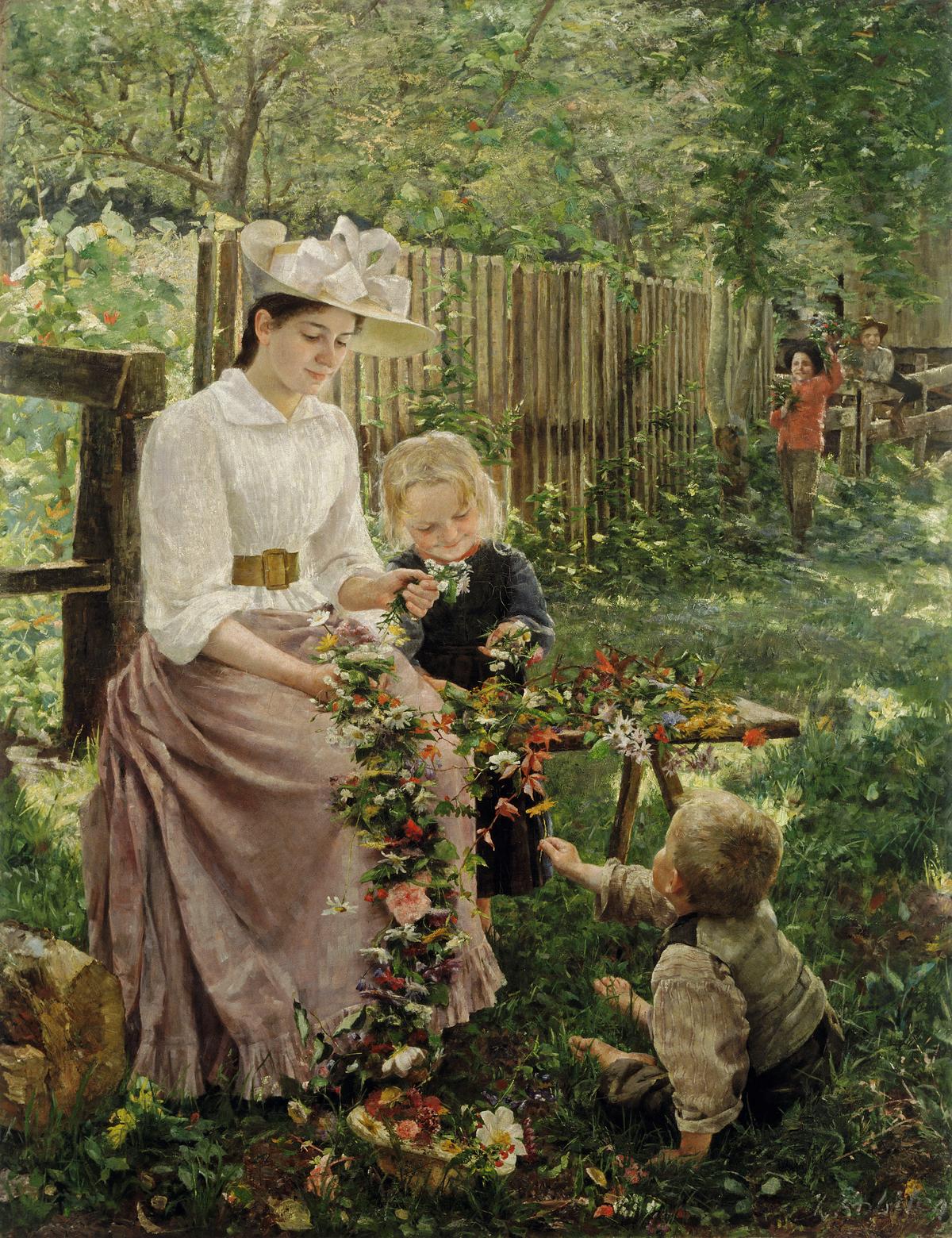
Ivana Kobilca’s painting “Summer” widens the lens considerably. Here, children gather flowers and help braid them into wreaths, while others clamber in from beyond a fence line in the background, as if the painting were catching them mid-arrival. Rather than building the composition around one central event, the way an academic painter might stage a pivotal moment, Kobilca scatters the activity across small clusters of figures, which mirrors how children behave in groups.
Discovery and Creation
Not every painting of childhood is built on motion. Some artists slow things down almost to a standstill, asking the viewer to do less looking around and more looking closely. James Clarke Hook’s “Young Dreams” shows children near the sea, turned inward, lost in thought rather than gazing out at the water.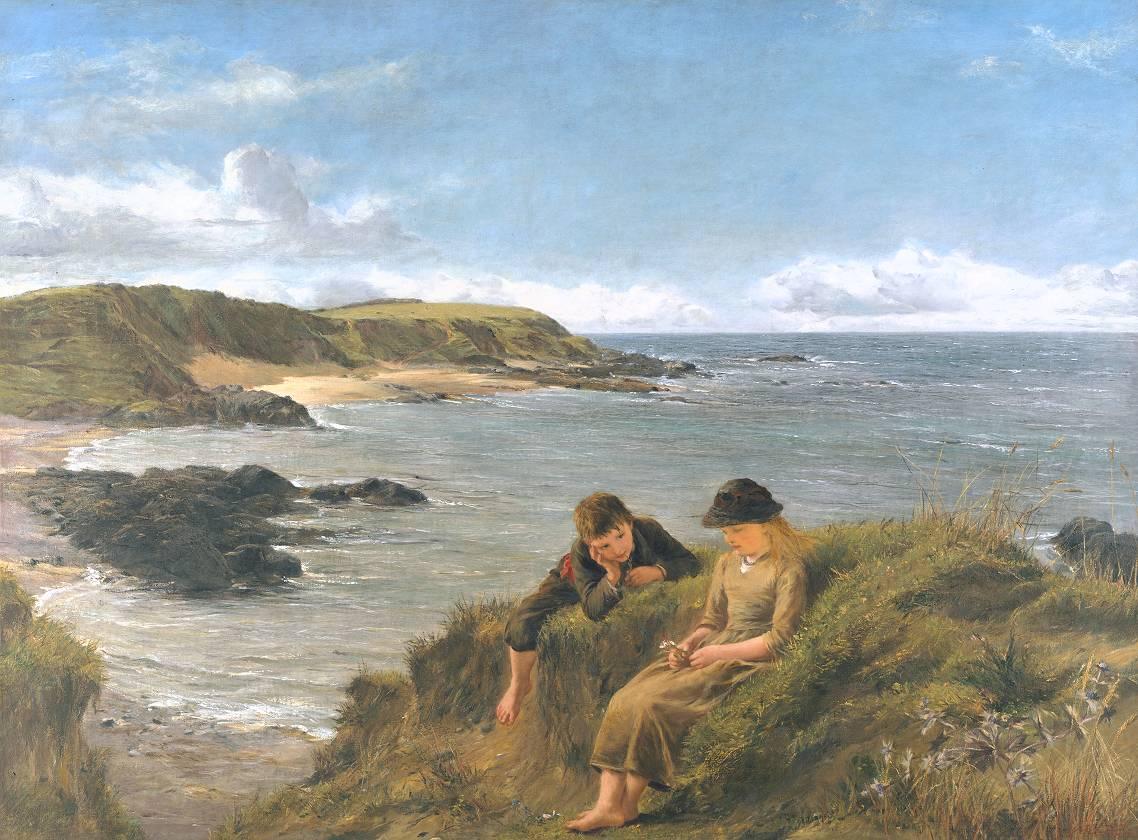
Hook had built his earlier career on historical subjects, the sort of grand narrative scenes popular in the 19th century. He eventually drifted toward coastal and rural scenes, and that shift brought a new patience to his work. “Young Dreams” doesn’t tell a story so much as hold a single moment of repose. It’s a painting about the particular quality of attention children bring to idle moments, the kind of daydreaming that adults tend to forget how to do.
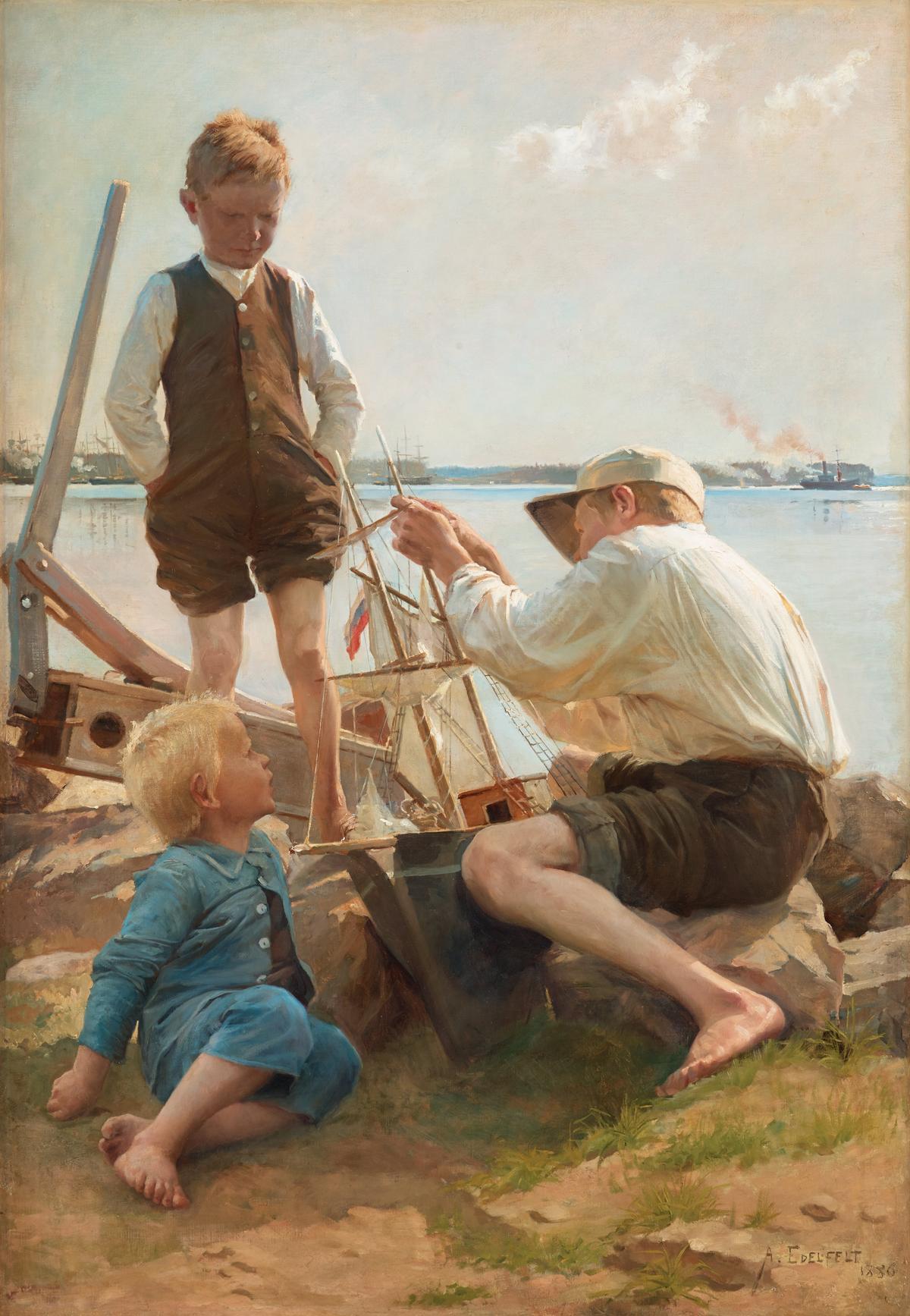
Other artists found a similar summertime magic in the process of discovery and making. Albert Edelfelt spent much of his career painting the rhythms of local community life, and that interest shows in his 1886 painting “Shipbuilders.” The canvas depicts two young boys learning how to build a model boat, in a setting that feels genuinely collaborative rather than staged for the painter’s benefit. Edelfelt treats this kind of hands-on effort as simply part of how summer gets spent, woven into the same fabric as swimming or wandering a field.
The Language of Summer
These paintings aren’t built around one tidy symbol of summer. What ties them together instead is a set of recurring conditions: long days, outdoor gathering, and a slower, more attentive pace of looking, both from the children in the scenes and from the painters observing them. Nature here isn’t simply scenery for childhood to unfold against; it’s an active part of the picture. Courtyards, fields, shorelines, and gardens each shape the activity that happens within them, the way a fence line invites arrival or a shoreline invites stillness. Seen as a group, these paintings capture what tends to happen when children are asked for nothing more than to be outside and absorbed in their own worlds.That pace of attention is part of why these paintings still hold up for modern viewers. It isn’t always nostalgia for a simpler era. Most people can point to a handful of simple memories from the unstructured time spent outside during childhood summers. These paintings are built around exactly that category of memory, the kind that doesn’t survive as a story but does survive as a feeling.
What these works preserve is unscheduled time itself, a thing increasingly rare and worth holding onto, especially since children’s time is more often scheduled and supervised than it was in these scenes.