Jane Campion’s critically-acclaimed 2009 biopic of Romantic poet John Keats, “Bright Star,” captures the tragic figure of the young poet Keats through the story of his turbulent romance with Frances Brawne.
Keats met Fanny Brawne in the autumn of 1818 when her family visited the family he was staying with. Their encounters lead to a deepening romance. During this time, Keats cared for his sick brother, Tom, who died of tuberculosis not long after Keats met Brawne. Eventually, Brawne and her family moved into one half of the estate, and Keats and Brawne were able to see each other every day. After the passing of his brother, Keats’s attention turned fully to two objects: his poetry and his growing love for Brawne.
A Film That Captures History and Poetry
The film closely follows actual historical events. While locked in the crucible of love and grief, during these final troubled years, Keats (Ben Winthraw) produced most of his greatest poems; they came forth from him in clear, lovely forms, as though purified of all imperfections by the furnace of Keats’s inner struggles.Although his poems of this time are profoundly melancholic, some might say “morose,” they possess a certain resignation and peace, a kind of calm that defies their origin in so much emotional turmoil.

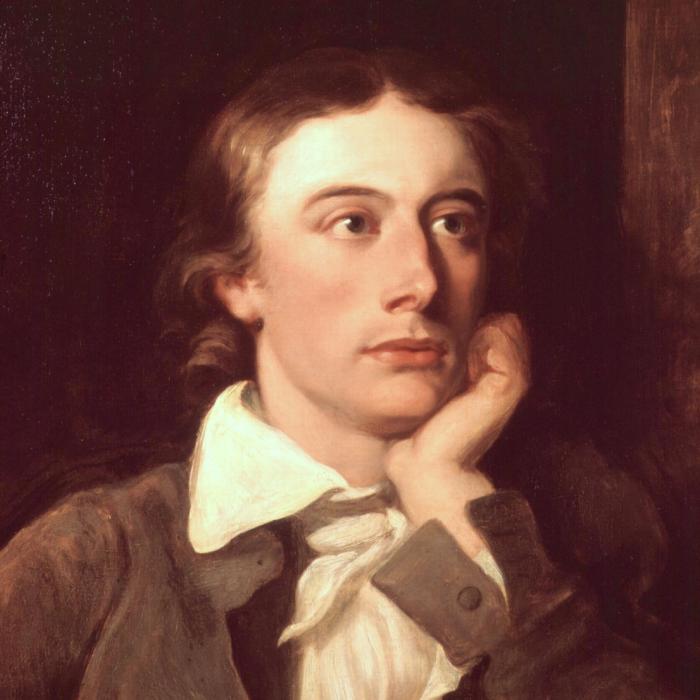
“In the spring of 1819 a nightingale had built her nest near my house. Keats felt a tranquil and continual joy in her song; and one morning he took his chair from breakfast-table to the grass-plot under a plum-tree, where he sat for two or three hours. When he came into the house, I perceived he had some scraps of paper in his hand, and these he was quietly thrusting behind the books. On inquiry, I found those scraps, four or five in number, contained his poetic feeling on the song of our nightingale.”
In Campion’s depiction, we see Keats sitting peacefully under the tree, and we hear verses of the poem through voiceover.
The Characterizations
Cornish plays the teenage Brawne, a lively young woman with a love for fashion and frivolity that slowly deepens into a more mature appreciation for art and ideas as the film progresses. Brawne is strong-willed, independent-minded, and passionate. Her attachment to Keats comes swiftly and completely, and Cornish’s portrayal is completely convincing.Her most impressive moments on screen occur near the film’s end, during and after she learns of Keats’s death, where intense emotions play over her face and voice in a powerful display.
Ben Winthraw, who plays John Keats, inhabits the role with grace and ease. He’s thoughtful, pensive, but also warmhearted. Above all, he comes across on screen with a certain vulnerability, while still maintaining an inner strength. This vulnerability characterizes the real Keats well, a man who was haunted by death and tragedy all his life, which itself ended early and tragically.
His tender heart was to be easily wounded by all that it had to endure; yet from that wounded heart flowed poetic works of extraordinary beauty. The film captures this, too. It includes scenes of Keats composing as well as snatches from at least three different poems.
The film is itself a beautiful piece of art. The camera lingers on rich imagery of everyday beauty. The sparse soundtrack creates evocative atmospheres. The camera has the poet’s eye, noticing small details and their mystery, observing the beauty of children playing, bees floating above a sea of flowers, fabric billowing in the wind.
Appropriately for a movie about a poet, the film proceeds slowly, reflectively. It’s a loving homage to a great poet.