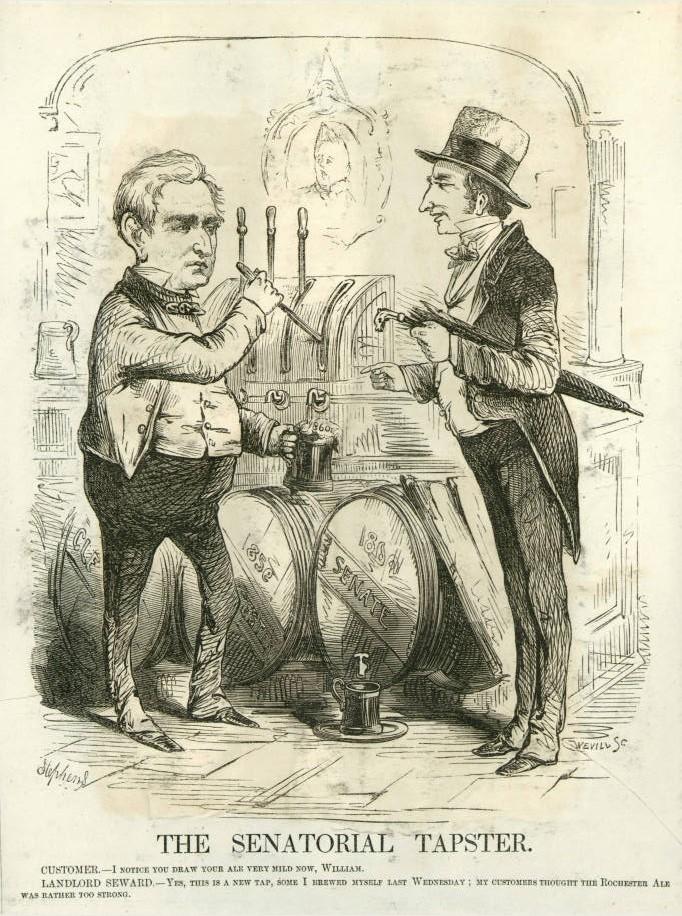
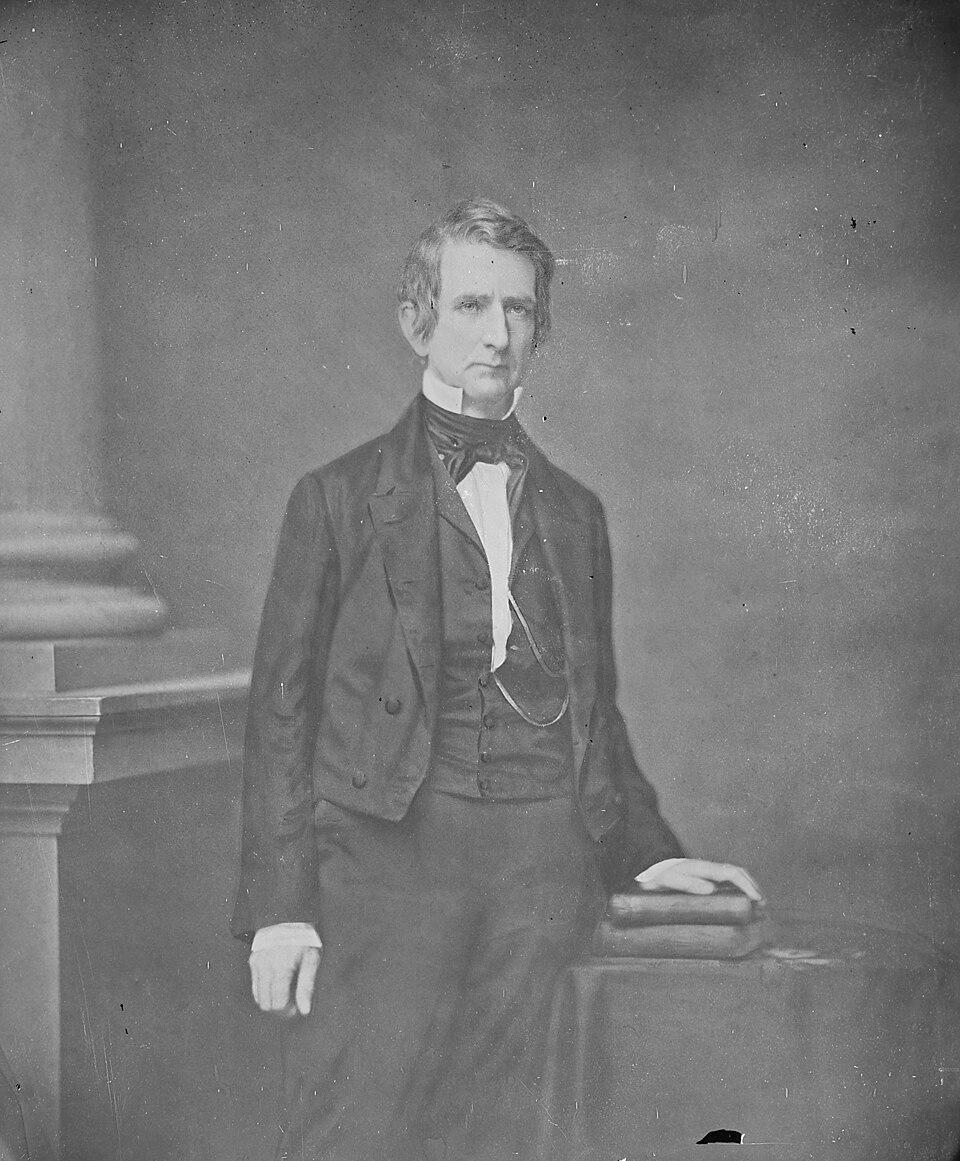
The results of the 1860 Republican Convention in Chicago were certainly a shock. The smart money would have been on William Henry Seward, the senator from New York and not on Abraham Lincoln, the loser of the 1858 Illinois Senate race. But after just three ballots, Lincoln had overtaken Seward to become the Republican Party’s choice.
“The fact of the Convention was the defeat of Seward rather than the nomination of Lincoln,” wrote Murat Halstead, a Cincinnati newspaper reporter.
The Long and Short of It
Stewart’s title, “William Henry Seward’s Quest to Save the Nation During the Secession Winter,” is hardly succinct, but it is on the nose. The long title, however, is not an indication of the book’s length. Indeed, it is more of a long essay in book form. Stewart, or at least the editors at Twelve Tables Press, dispensed with conventional formatting in the book, as each chapter concludes with bibliographic notes.The appreciably exhaustive notes tell as much of the story as Stewart’s narrative. They serve a dual purpose: providing the bibliographic information while also including the author’s personal reading recommendations on particular Civil War-era subjects. Additionally, his notes help bolster his argument. Without them, the work would be rather short on detail.
Stewart’s stated objective is to “attempt to provide a complete explication of Seward’s plan and his prodigious efforts to save the Union during the Secession Winter of November 1860 through April 1861.” According to the author, “Seward’s ‘plan’ did help to keep the Upper South states in the Union during the months before the president-elect became president. And had his counsel been followed after March 4, perhaps the course of American history would have played out very differently.”
The Political Animal
The author leads with Seward’s political prowess and influence, and how both seemed to make him a shoe-in for the Republican nomination. The loss at the Chicago Convention, as presented by the author, shows a man who is somewhat dismayed by the result, rather disappointed, yet willing to accept his political fate, which included his selection as Lincoln’s secretary of state. Lincoln, a relative outsider, was certainly informed enough to know that his administration needed Seward.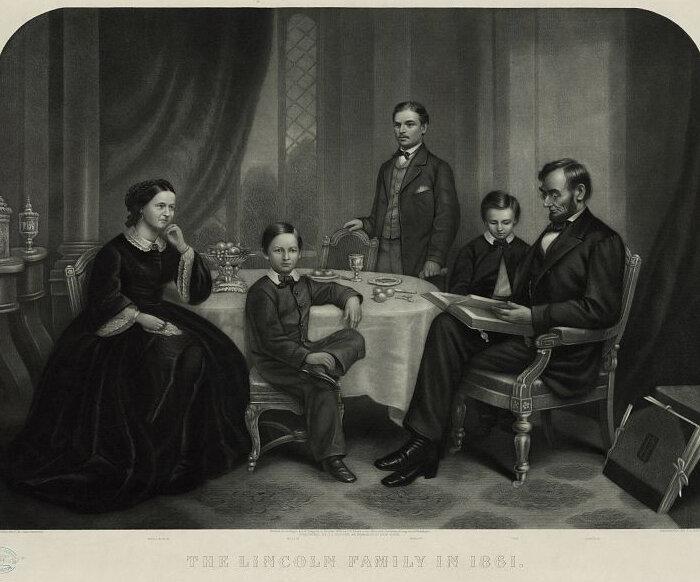

For Seward and Lincoln alike, the overarching objective was to keep the Union together, or at least as much of it together as they could. The 1860 election witnessed South Carolina’s secession from the Union before the year was over, followed by six additional states by Feb. 1, more than a month before Lincoln was inaugurated.
Stewart presents Seward as a political animal with a network of back channels to communicate with members of fellow and opposing political parties. He was a tireless statesman whose efforts, at least in the immediate term, were not in vain.
Undoing Seward
Seward had stumped for Lincoln before the election, which helped Lincoln win, and he transitioned into stumping for the incoming administration as an effort to calm nerves and build political bridges with those important Upper South states, and possibly, hopefully, even the seceded states. Stewart notes that Seward recommended Lincoln come early to Washington, to gauge the political situation, but Lincoln demurred and then decided to conduct a political tour of the Northern states and give speeches. The tour, according to Stewart, “in many ways, was a debacle.”Lincoln’s speeches, recorded and spread throughout by the press, undermined some of Seward’s more politically palatable speeches. It appeared that Lincoln was more hard line on the slavery and secession questions, and perhaps more hard line than he actually was. Nonetheless, there were traces that the beginning of the end had indeed begun.
Stewart presents an interesting angle on the Lincoln-Seward relationship and the trust that would ultimately define it. Lincoln had given Seward, as well as several others, a draft of his inaugural speech. Seward, believing it too hard line and would possibly result in the secession of more states, made 50 recommendations in six pages of notes. As Stewart demonstrates, Lincoln followed a number of those suggestions, specifically for the speech’s conclusion.
Interesting and Digestible
According to the author, “Seward’s Southern Strategy,” despite the outbreak of civil war, did not completely fail, but rather “indisputably bought the new administration time to get into place and start to wield the levers of power.” As much as Lincoln and Seward would later be known for their agreement on many things, the resupply of Fort Sumter was not one of them. One will never know what would have happened if Lincoln had abided by Seward’s advice. As Stewart notes, “That is the stuff of counterfactual history.”What is interesting to know, and in relatively short form, is what Seward did during those nearly six months before the Fort Sumter incident. Stewart has written an easily digestible and rather informative book that not only provides interesting, though brief, insight into the efforts of Seward and Lincoln, as well as how some others viewed the two men, but also gives the reader many suggestions for further reading on one of the most important moments in American history.