The letter was to president-elect Thomas Jefferson. Littlepage had written to him from Altona (now a borough of Hamburg, Germany). He had chosen Altona because it appeared, at least until he returned to America, as the safest place for him to reside. He had dodged several attempts on his life, had narrowly foiled a blackmail campaign, and was now imploring Jefferson to insert an advertisement in the Richmond Gazette. He wrote, “You [Jefferson] know me to be alive in the town of Altona in Holstein, and only waiting the approach of Spring to return to my native Country.”
An Interesting Start
Lewis Littlepage (1762–1802) was born to James and Elizabeth Littlepage in Hanover County, Virginia. The Littlepages were a respected, though greatly indebted Virginia family. Upon the death of James, which happened about two months before Lewis’s 4th birthday, the Littlepage plantation estate, known as South Wales, was auctioned, and included 50 cows, 13 steers, 85 horses, hogs, sheep, 800 acres in Louisa County, 3,000 acres in Orange County, and the 4,000-acre plantation itself. Eight years later in 1774, Elizabeth married Lewis Holladay, who was 18 years her junior. Within the year, 12-year-old Littlepage moved to live with his uncle and aunt.He was then sent to live with Rev. Hall, of Trinity Parish, for his education. Littlepage proved a fast-learning and gifted student, while at the same time a boy who didn’t suffer stringent authority. He soon ran away from Hall’s overbearing tutoring. Littlepage’s guardians decided to send him to the College of William and Mary in the spring of 1778.
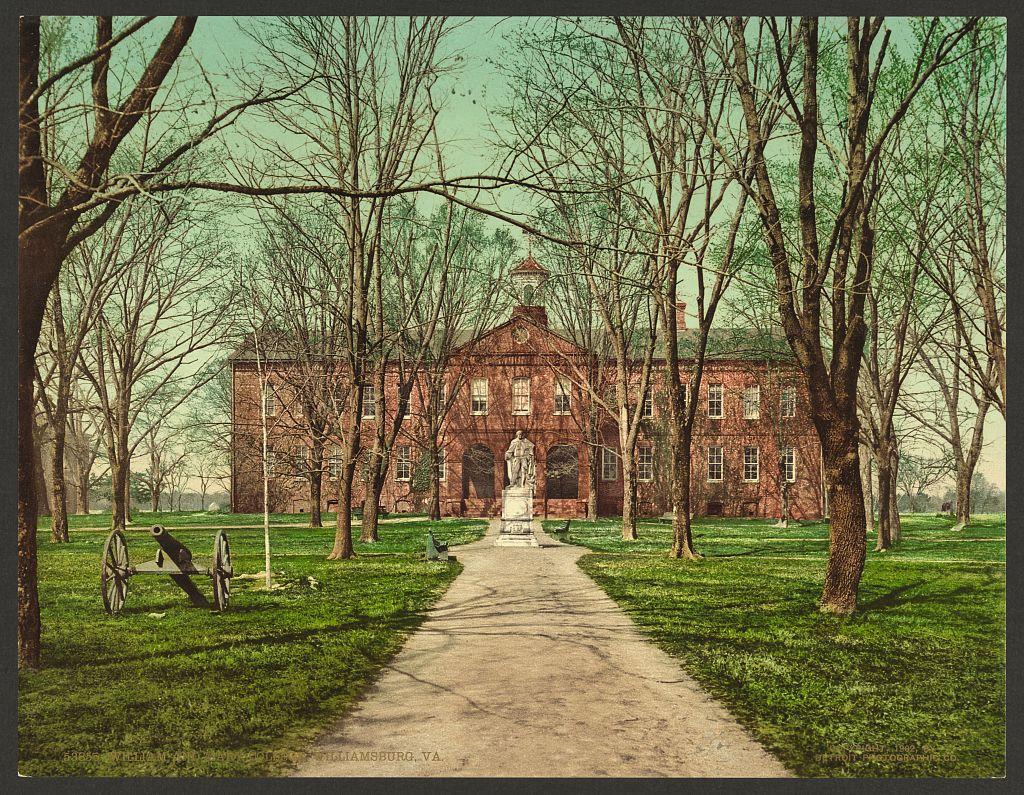
By the time Littlepage arrived at the college, the Revolutionary War had been ongoing for three years. The war had primarily been fought in the north, but a year after arriving at the school, Littlepage, as a militia volunteer, would witness the war firsthand. In May 1779, the British raided along the Chesapeake Bay, burning military stores. The attack brought Littlepage close to danger. So close that he was captured by the British, but shortly released.
Arriving in Europe
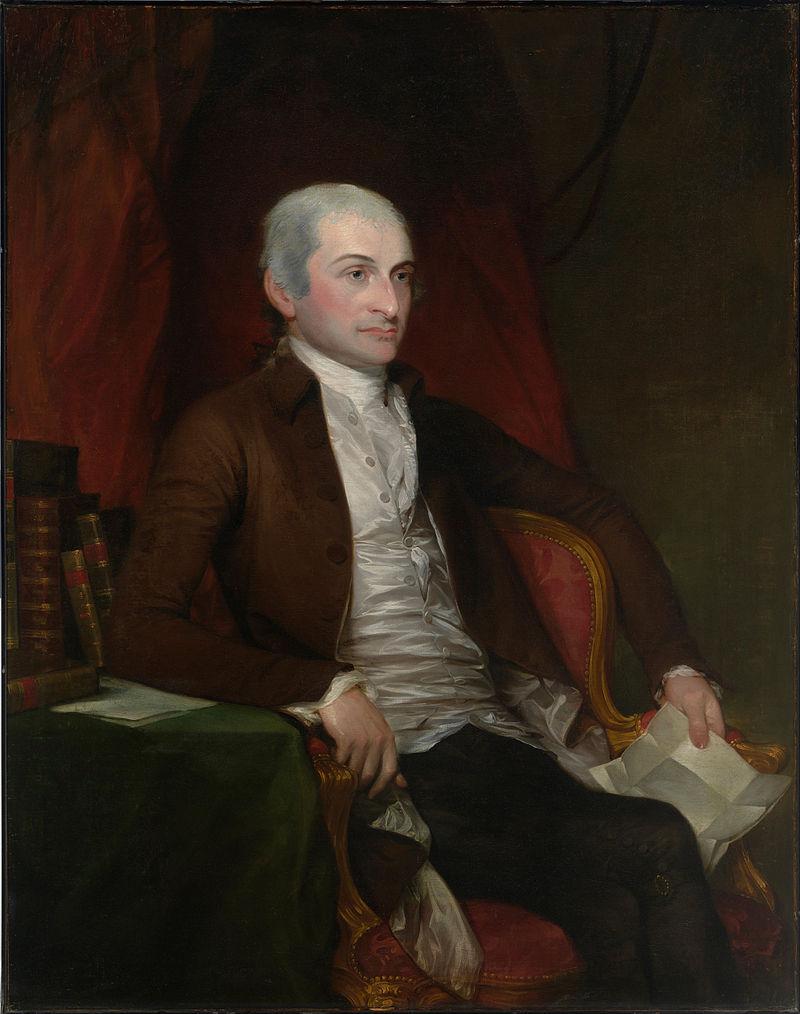
A friend, Thomas Adams, recommended him to John Jay, who had recently been appointed as minister plenipotentiary to Spain. Jay accepted the recommendation, informing Littlepage that he could join him in Madrid where his room and board would be provided, if he could reach Europe on his own dime. Benjamin Lewis, Littlepage’s uncle and guardian, agreed to send him.
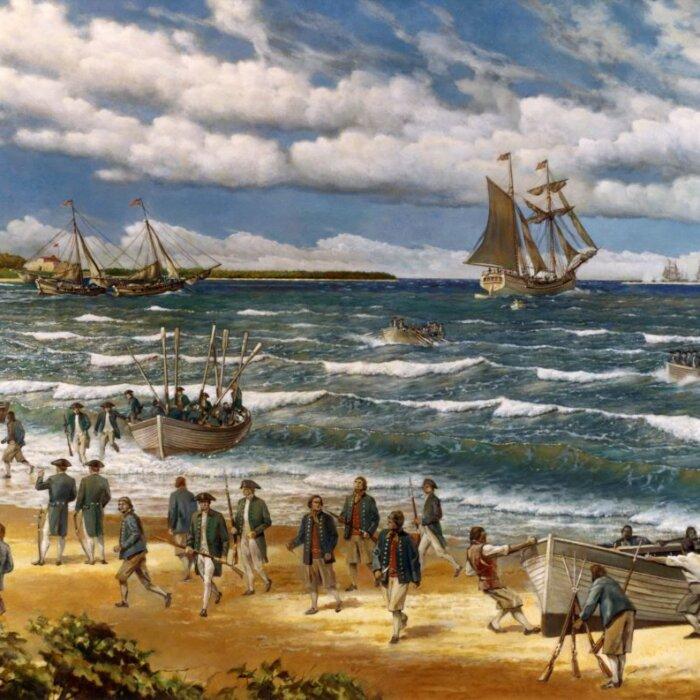
Littlepage boarded a ship to Spain in 1780. Blown off course, he arrived in Nantes, France, rather than Madrid. The teenager coordinated travel plans to reach Spain, while also struggling to fend off his bout with malaria. During this time, he taught himself French and learned the country’s history.
By October 1780, the short, slender, handsome and charming Littlepage arrived in Madrid.
Conflicting Careers
Littlepage’s relationship with Jay, however, proved publicly combative. They had differing views on why Littlepage was in Madrid. Jay had anticipated Littlepage pursuing a career in civil service, but Littlepage could not resist the lure of military action. When he requested permission to join the Franco-Spanish military expedition against British-held Menorca (a small island off the east coast of Spain), Jay was furious and understandably confused by the request. He nonetheless acquiesced, providing for him financially (Jay kept tabs on the debt to be recouped from Littlepage’s uncle).Littlepage had petitioned to be an aide-de-camp to French commander, Louis des Balbes de Berton, Duke de Crillon, who would lead the expedition’s ground forces. On June 19, 1781, he was granted permission by Spanish monarch, King Charles III. About two months later, the expedition, comprised of 58 ships of the line and 75 transport ships carrying approximately 8,000 soldiers, arrived along the shores of Mahón (today’s Mao), the capital of Menorca. An additional 6,000 troops arrived in the following weeks. The Franco-Spanish force bombarded the British citadel of Fort San Felipe. By February 1782, the British were forced to surrender.
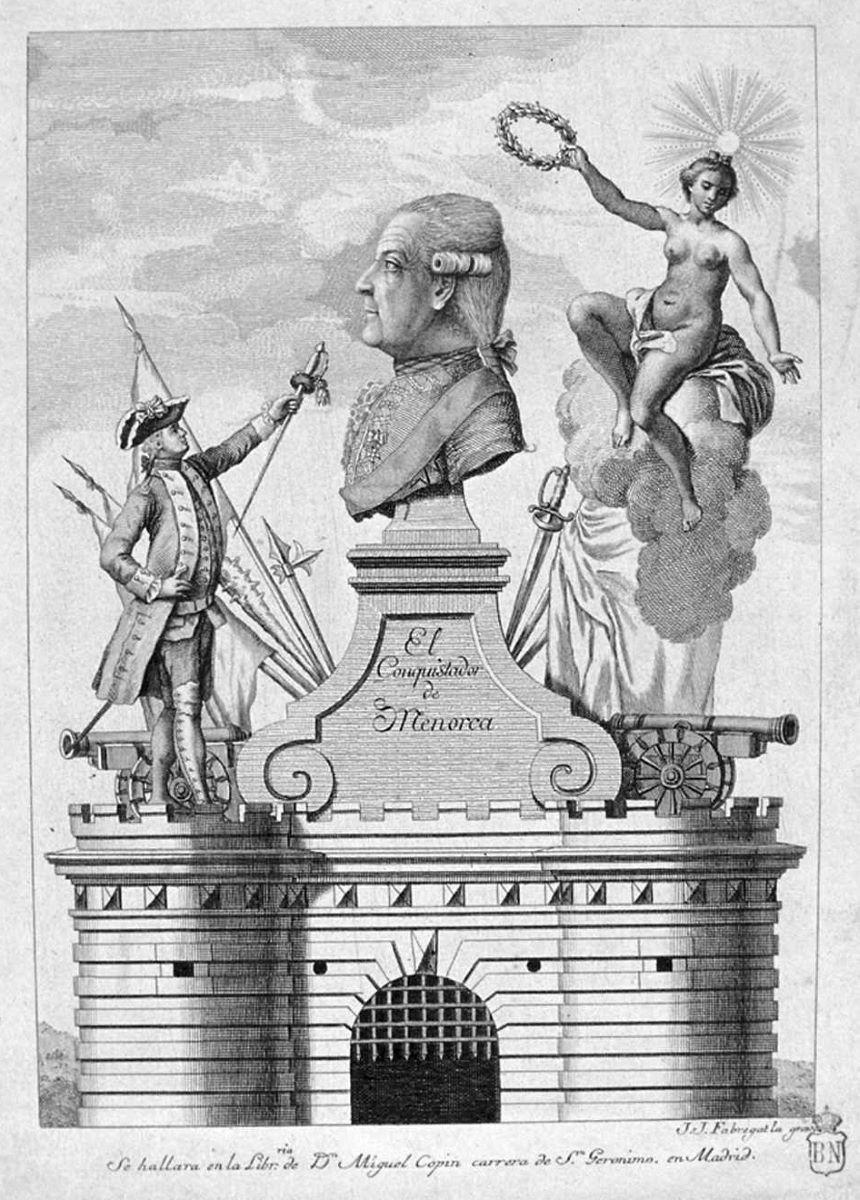
Word had spread that with the fall of Menorca, the focus would turn to the long-under-siege Gibraltar. The French and Spanish had begun their combined siege in 1779 with little success, as the British Navy was able to break the naval blockade several times and resupply the garrison. In March 1782, Littlepage wrote to Jay, “I must own my military Quixotism is not yet abated, and I could wish to assist at the Gibraltar business.”
‘Gallant Conduct’
Littlepage once again petitioned Duke de Crillon, and in June 1782, he found himself at the French commander’s side. With far more soldiers compared to the Menorca raid (nearly 35,000) now available, perhaps now the siege of Gibraltar would succeed. It would prove an emphatic failure.In early October, a massive storm devastated the Franco-Spanish naval blockade, which was followed by the arrival of a British fleet under the command of Adm. Richard Howe, who was able to resupply the British again, before fleeing. Littlepage, who was aboard the 70-gun San Rafael, witnessed the chase of the British. The British fleet escaped, the siege of Gibraltar had failed, and Littlepage returned to Crillon at Cádiz.
His actions during the Menorca and Gibraltar campaigns, however, had gained him recognition among the Spanish, French, and his fellow Americans. “I cannot conclude,” wrote William Carmichael, who had taken Jay’s position in Spain, to then-secretary of foreign affairs, Robert Livingston, “without mentioning that a Mr. Littlepage, from Virginia, has acquired reputation by his gallant conduct in the expedition against Mahon, where he served as Aid-de-camp [sic] to the Duc de Crillon, and since at Gibraltar, where he acted in the same capacity.”
Poland’s Man
Fighting for the King
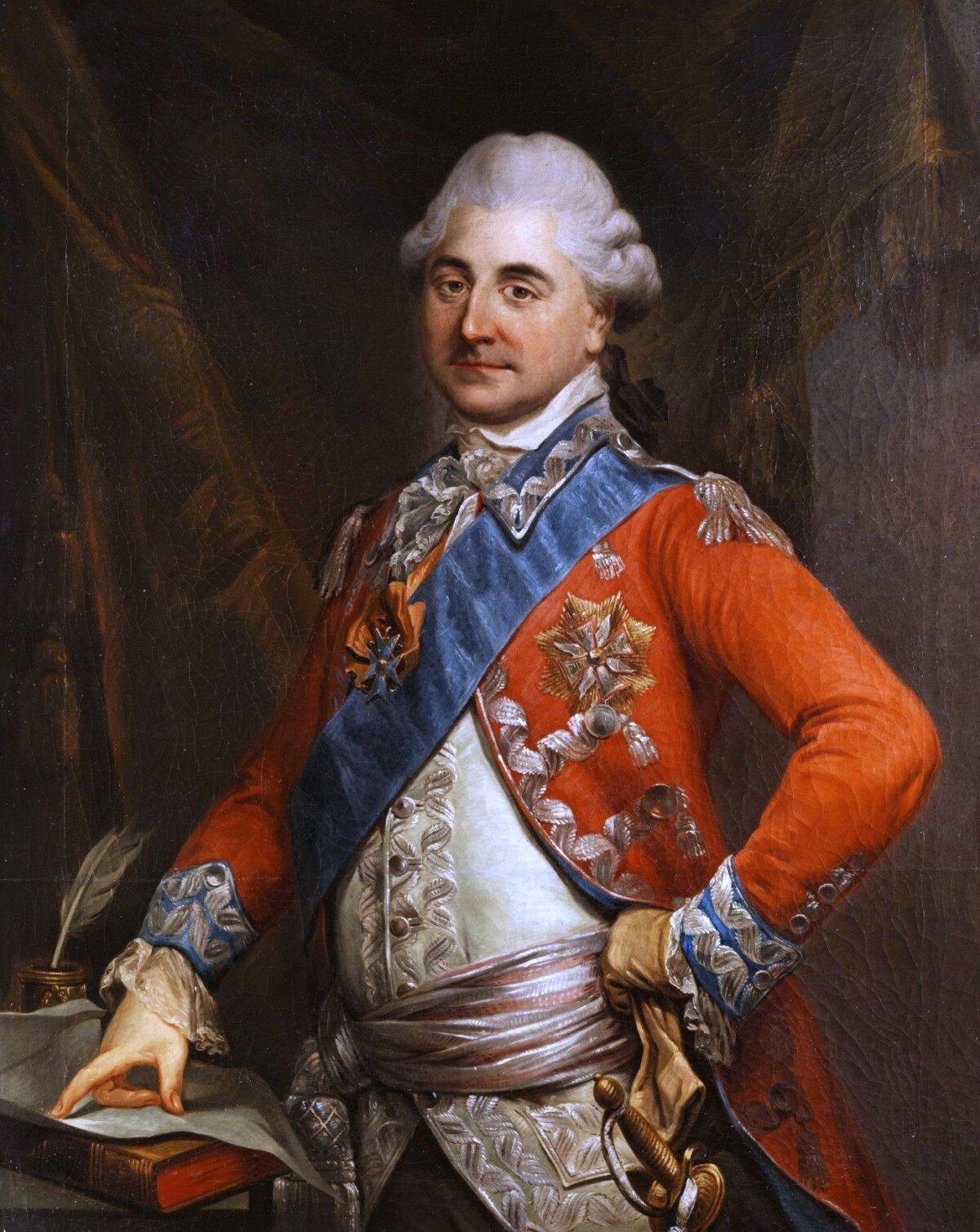
Littlepage, who had fought with the well-established empires of France and Spain against Britain for a surging republic, now found himself fighting on behalf of a crumbling kingdom. In 1791, he was made knight in the Order of Saint Stanislaus (the patron saint of Poland).Stanislaw sent Littlepage to England, France, and Spain hoping he could utilize his connections to bolster the Polish kingdom against the encroaching powers of Austro-Hungary and the Russians. Littlepage’s efforts proved futile, but this did not change the young American’s loyalty to the Polish monarch, and during a brief nationalistic surge in May of 1792, he fought alongside the Polish.
The Russians, however, arrived in overwhelming force. Stanislaw, fearing another Polish partition (the first had taken place in 1772, initiating the split between Poland and Lithuania), signed an armistice with Russia. Recalling Littlepage’s loyalty and bravery, Stanislaw wrote a letter of recommendation to President Washington.
Fighting again erupted in Poland in 1793 as Russia and Prussia looked to continue the partition of Poland and Lithuania. The fighting was bloody and brutal, but Littlepage remained with Stanislaw.
A Briefly Enjoyed Fortune
The third and final partition of Poland took place in 1795, and, by that time, both the nationalist Poles and the Russians were suspicious of Littlepage’s efforts, due to his relations with Stanislaw, viewed by those Poles as a Russian puppet, and, conversely, due to the fact that he had fought against the Russians. Considering the position he found himself in, Littlepage pondered, “In short, I had gone so far in the Revolution that I should have gone much farther.”Littlepage’s political and financial position appeared shaky at best. Despite the Russians promising to pay off Stanislaw’s debts to him, he hardly believed it. His doubt was misplaced. King Paul I, Catherine the Great’s son, paid “the sum assigned me by the King of Poland, as a reward for my long and dangerous services.”
Littlepage, long-owed, finally secured what resulted in a fortune. Through battles, illnesses, long journeys throughout Europe, and coming under suspicion by powerful and dangerous people, it was understandable that people in Virginia believed him dead. His letter to Jefferson proved all the more necessary.
Littlepage, however, made it home to Virginia in October 1801. His ill health, despite not yet being 40, led to his death on July 19, 1802. The bulk of his fortune went to his younger half-brother Waller Holladay.