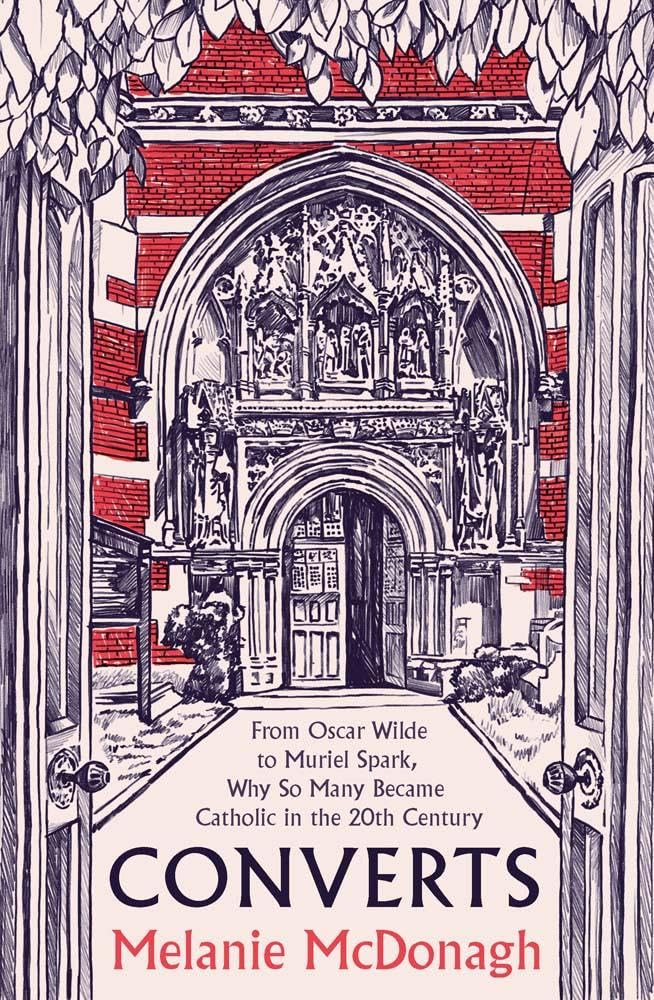
“Much of my moral obliquity is due to the fact that my father would not allow me to become a Catholic. The artistic side of the church, and the fragrance of its teaching would have curbed my degeneracies. I intend to be received into it before long.” This was the sentiment of the famous early 19th-century Irish poet and author, Oscar Wilde, when discussing his moral shortcomings, of which there were many, with his friend, John Clifford Millage.
Answering the Questions
As McDonagh indicates, during the late 19th and early 20th centuries, this period confronted the West (Britain, specifically in this book) with a plethora of metaphysical and existential questions. As new theories about life and the soul were presented, such as Marxism and Darwinism, there was subsequently an increase in agnosticism and materialism. Those referenced in this book, answered those questions accordingly, at least initially. That was until the emptiness of those answers became evident. Some artists, like Sir Arthur Conan Doyle, however, ventured into spiritualism, but for the subjects discussed by McDonagh, that path was without substance.A Concrete Path
As one maneuvers through the chapters, which typically focuses on a specific artist, the reader is situated with people who suffer (as one suffers from sins, and not a disease) from sexual proclivities, like homosexuality, adultery, and rampant fornication. One gets a sense that the major cities in England, Ireland, and Scotland were hotbeds (for lack of a better term) of sexual improprieties and perversions. Perhaps that was the issue in its simplest forms. Or perhaps these were the expected results from the upheaval traditional religion experienced during this period.Mortality and Conversion
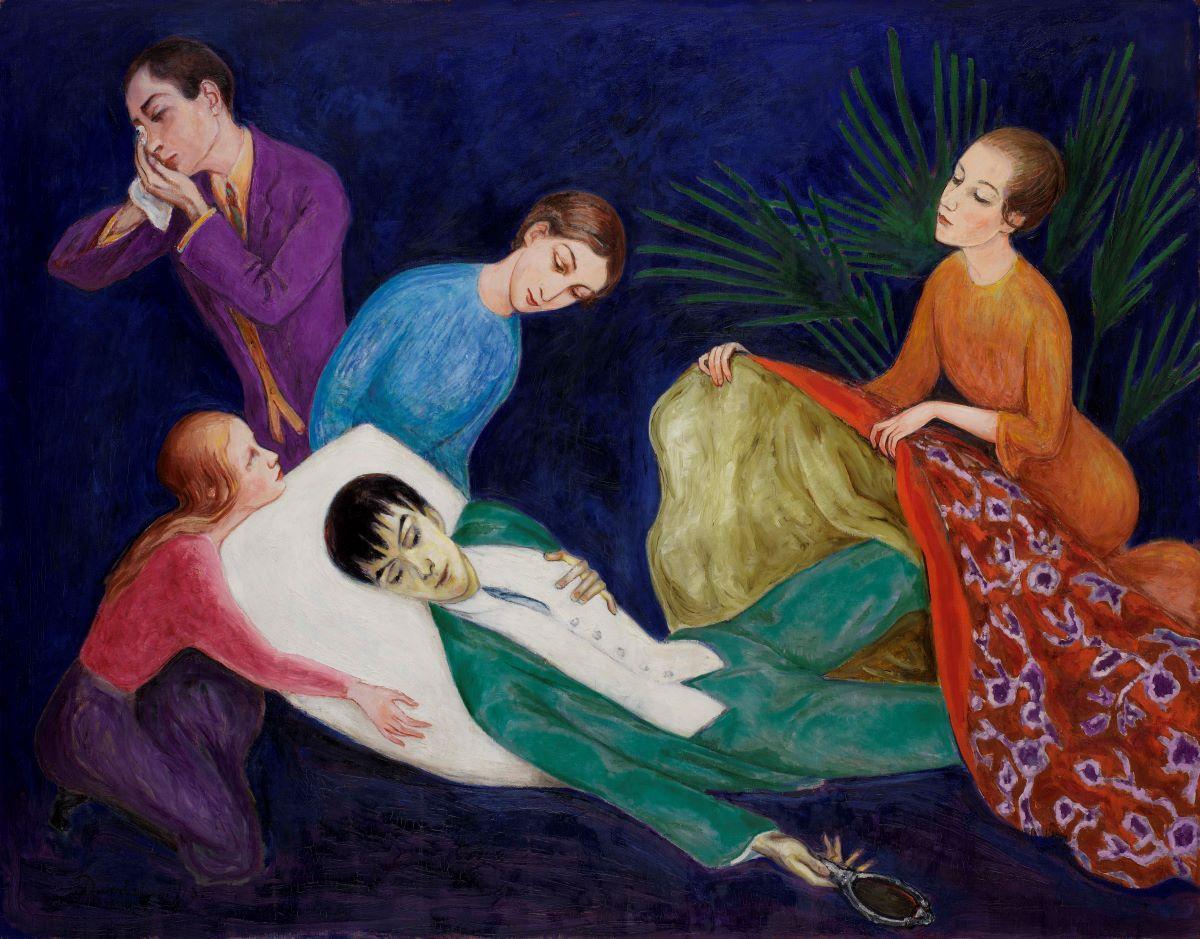
This period discussed by McDonagh reached its climax in World War I. Conversions, as the author documents, reached their climax as well. This, of course, is to be expected. When death is a near certainty, people tend to think of the immediate and what must certainly come immediately after. Often in “Converts” the subjects presented are contemplating their own mortality, either because death is impending, or they have come to realize that existence means more than the here and now, and extends far beyond.
Seeking Redemption
Readers of this review may find deathbed conversions unacceptable, if not, at least, controversial. Although McDonagh does not try to make an argument for or against (though she does reference people who took conflicting views), she does give a quote that could put such a perspective to rest. “I feel now ... like someone who has been standing waiting on the doorstep of a house upon a cold day, and who cannot make up his mind to knock for a long while. At last the door is thrown open and all the warmth of kind hospitality makes glad the frozen traveller.”
That quote is from Beardsley, the talented late 19th-century illustrator whose talents were short-lived due to his death at 25. It speaks to a spiritual need that could not be filled by success or excess. It speaks of and to a world of sinners, as indicated in the book, who knew they were morally wrong and understood that what modernity offered was a far cry from redemption. And that, specifically, is the ideal behind “Converts.” The subjects in this book are, at best, morally suspect and, at worst, morally corrupt, but they chose, eventually, not to pretend to be morally dubious. Such perspective guided them to Catholicism.
Additionally, McDonagh discusses the reasons a number of British Anglicans converted to Catholicism, like Hugh Benson, who was the son of Edward W. Benson, the archbishop of Canterbury. Perhaps (and this is simply the skeptic in me talking) this was self-serving for the Catholic author, McDonagh. The argument for the transition from one denomination to the other was, according to the author, Anglicanism’s religious inconsistencies.
According to McDonagh, Benson personified this belief, stating:
‘Converts, Not Saints’
“Converts” is about transforming the ugly into the beautiful, and, therefore, one must read of the ugly in order to reach the other side. It should be noted for anyone planning to read this book that it is about converts, not saints.For Catholics (and perhaps some non-Catholic Christians), one will find the stories encouraging. McDonagh does, however, end the book on a rather somber note. Her perspective that the Second Vatican Council of 1962 dismantled many traditional Catholic practices has long disrupted the religion. She is also concerned about the lack of annual conversions since. But these are concerns worth having, and considering America’s (and Britain’s) steady religious decline, it is a book worth reading.