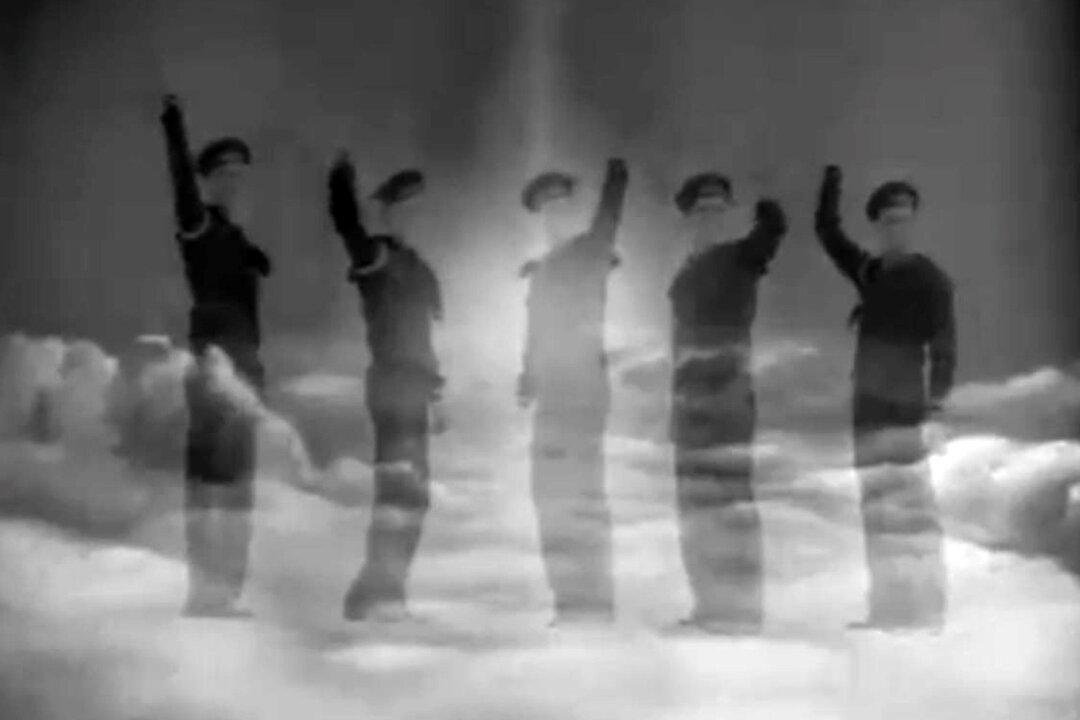
‘Battle of the Coral Sea:’ Built for Speed, Not Accuracy

Despite its title, the actual battle is an afterthought in this World War II Pacific Theater flick.
‘Battle of the Coral Sea:’ Built for Speed, Not Accuracy
Lt. Cmdr. Jeff Conway (Cliff Robertson) becomes a prisoner of war, in “Battle of the Coral Sea.” Morningside Productions
|Updated:
0:00

NR | 1h 26m | Drama, Romance, War | 1959

“Battle of the Coral Sea” (1959) holds a promise of torpedoes, sonar pings, and sweaty men looking through periscopes—a good ol' World War II submarine thriller. Perhaps, the film was riding the coattails of the far superior “Run Silent, Run Deep” (1958).

Not long after the first depth charge or two, however, the movie takes a sharp turn starboard. The action sails directly into POW camp territory, dragging a melodramatic romance subplot along for the ride like a soggy duffel bag.

Directed by Paul Wendkos, the film is a black-and-white production that somehow convinced both the U.S. Navy and the Japanese Imperial Navy to lend a hand as technical advisers. The Department of Defense even gave it a nod, possibly out of curiosity about how little naval combat you could include in a film titled “Battle of the Coral Sea.”
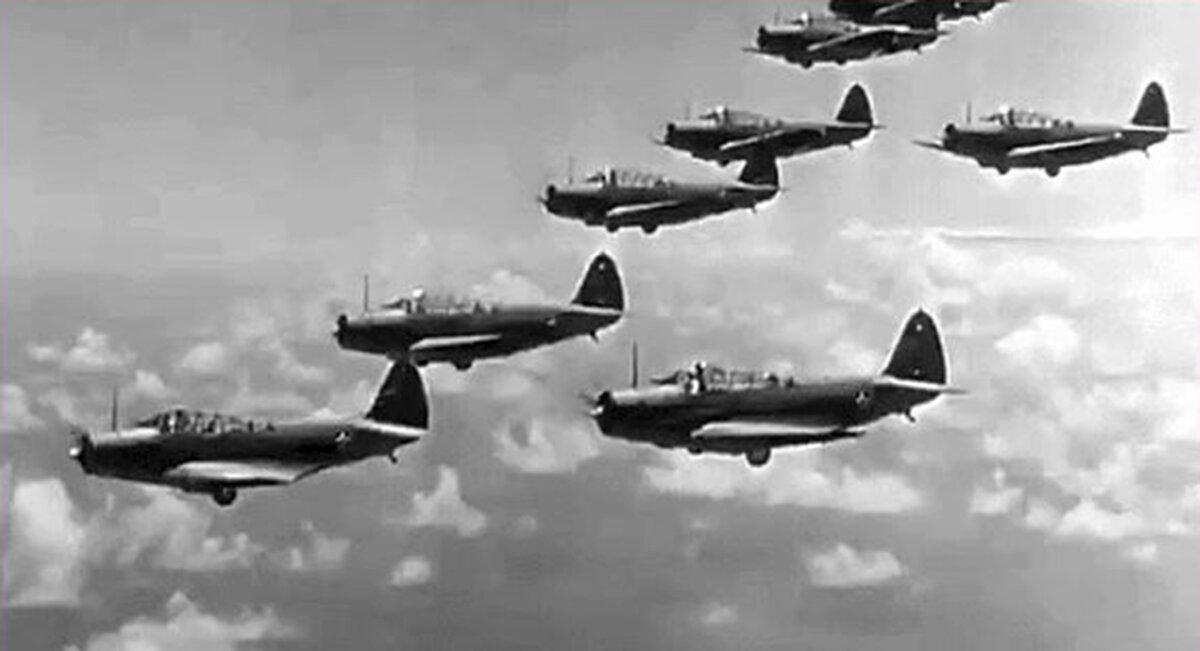
A still from the stock footage used in “Battle of the Coral Sea.” (Morningside Productions)
A still from the stock footage used in “Battle of the Coral Sea.” Morningside Productions
Despite the action-packed title, the actual battle is shoehorned awkwardly into the film’s final act. The “naval spectacle” relies on well-worn stock footage and models. It’s as if the filmmakers realized they’d forgotten the title and frantically rummaged through the archives to slap something on at the end. So, yes, it’s more like a lower-budgeted version of “Stalag 17” (1953) than anything else, with the few war scenes feeling more like a footnote than a title.

Deadly Depths

May 1942. Just days after the fall of Corregidor, Lt. Cmdr. Jeff Conway (Cliff Robertson) and the crew of the USS Dragonfish are dispatched on a covert reconnaissance mission deep into enemy waters. Armed with a cutting-edge periscope camera, their task is to photograph the Japanese fleet amassing near New Guinea. They’re after critical intel that could determine the fate of Japan’s supposed next target—Australia.
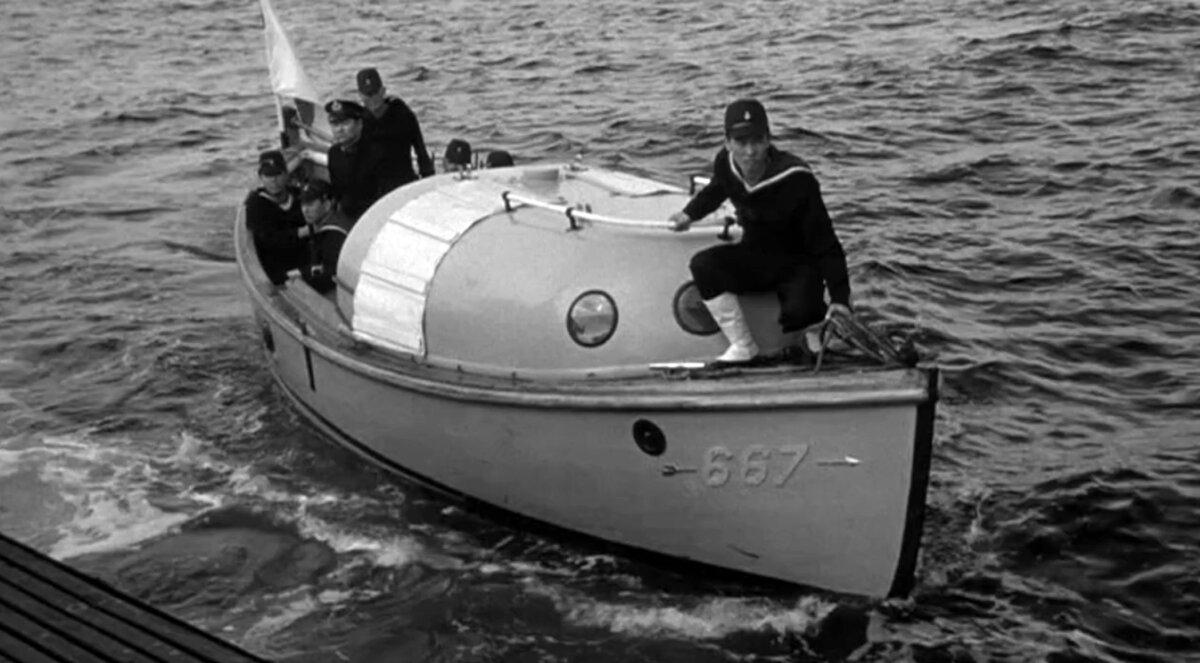
Action ensues, in “Battle of the Coral Sea.” (Morningside Productions)
Action ensues, in “Battle of the Coral Sea.” Morningside Productions

Navigating both minefields and aerial attacks, the Dragonfish captures photos of its target, but a brutal ambush forces the crew to scuttle the sub and surrender. Instead of death or exile, Conway and his officers, which include Lt. Len Ross (Gene Blakely), torpedoman Bates (Gordon Jones), and yeoman Halliday (L.Q. Jones), are taken to a fortified island prison camp. There, they fall under the command of Cmdr. Mori (Teru Shimada), a refined but manipulative Japanese officer who aims to uncover their mission.
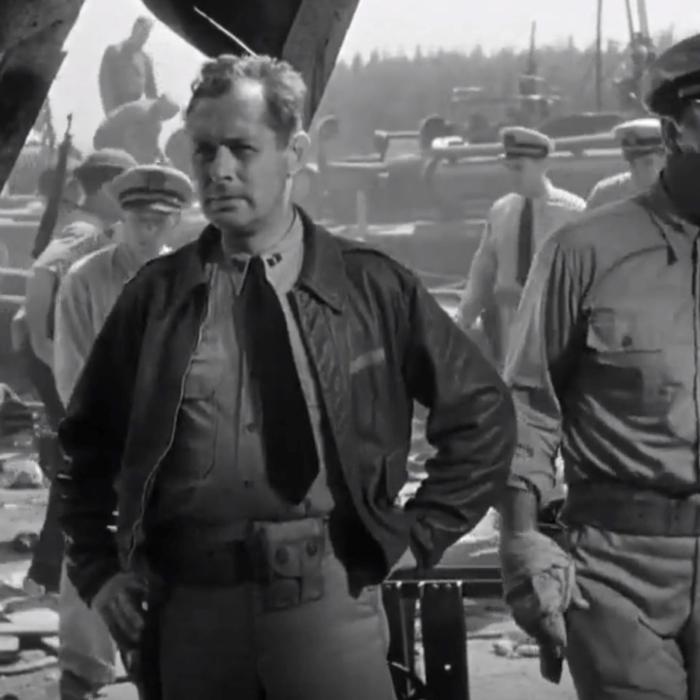
The men also meet Peg Whitcomb (Patricia Cutts), a sharp-tongued British nurse, and Karen Phillips (Gia Scala), a cryptic interpreter with shifting agendas. As the prisoners piece together a risky escape plan, it becomes clear that getting out isn’t just about freedom. It’s about delivering critical intel before the Japanese assault on Australia. With time slipping away and paranoia thick in the tropical air, the crew must improvise and deceive their way past the guards in a last-ditch effort beneath the blazing Pacific sun.

Less War Epic, More Saturday Matinee
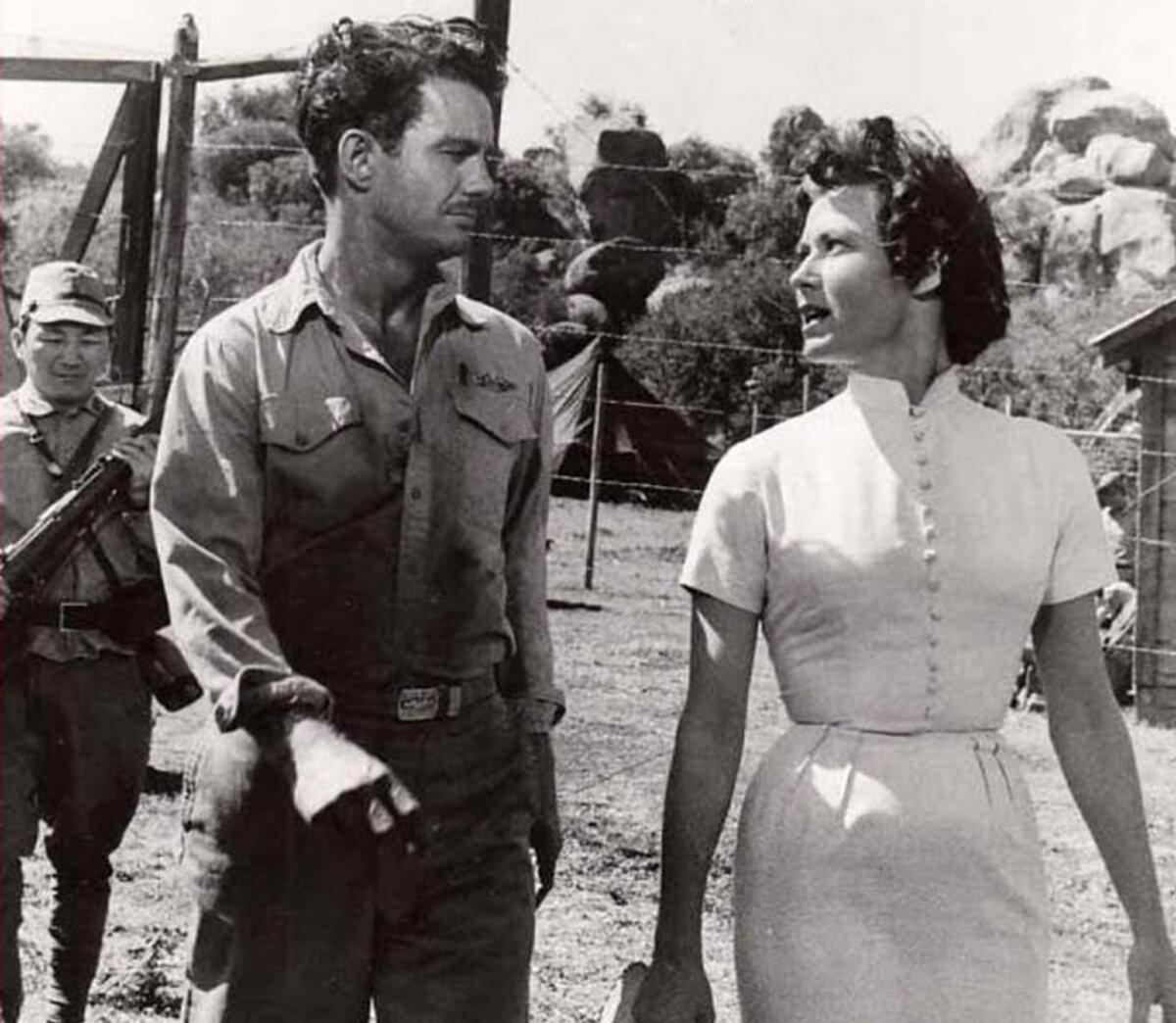
Lt. Cmdr. Jeff Conway (Cliff Robertson) talks and walks with Karen Phillips (Gia Scala), in “Battle of the Coral Sea.” (Morningside Productions)
Lt. Cmdr. Jeff Conway (Cliff Robertson) talks and walks with Karen Phillips (Gia Scala), in “Battle of the Coral Sea.” Morningside Productions
While “Battle of the Coral Sea” seems to aim for the gravitas of “Bridge on the River Kwai” (1957), it never rises above the level of a pulp war yarn with delusions of seriousness. The standoff between Cliff Robertson’s stoic Conway and Teru Shimada’s soft-spoken Mori lacks the dramatic tension it reaches for. There’s more cold conversation than ideological clash. Shimada’s performance, in particular, is too reserved to register as a true threat, and the script favors generic confrontations over deep character study.

The film has a peppy pace. It jumps from underwater cat-and-mouse to prison camp escape plans, without pausing, and keeps things moving along. Bow-and-arrow jailbreaks, torpedo-launched photographs, and scuba-equipped Japanese divers in 1942—none of it passes the logic test, but all of it keeps up a buoyant energy level.

That’s what keeps “Coral Sea” from sinking. Its pacing is brisk, its tone unapologetically earnest, and its action frequent enough to distract from the implausibility. There’s a kind of sturdy charm in its no-frills storytelling; logic gets left ashore, and the film mainly sticks to melodrama. While the dialogue never crackles, it’s functional and focused.

There’s even a curious charm in its contradictions—like the quasi-benevolent enemy officer or the jarring combination of model work and war footage at the climax. It may not hold water as history, but as a fast-moving slice of mid-century, matinee moviemaking, it gets the job done with more confidence than coherence.

“Battle of the Coral Sea” is available on Amazon Prime Video, Apple TV, and YouTube.
‘Battle of the Coral Sea’ Director: Paul Wendkos Starring: Cliff Robertson, Gia Scala, Teru Shimada Running time: 1 hour, 26 minutes Release Date: November 1959 Rated: 3 stars out of 5
What arts and culture topics would you like us to cover? Please email ideas or feedback to [email protected]
Google LogoMark Us Preferred on Google
Ian Kane
Ian Kane
Author
Ian Kane is a U.S. Army veteran, filmmaker, and author. He is dedicated to the development and production of innovative, thought-provoking, character-driven films and books of the highest quality.