NR | 1h 54m | Drama, History, War | 1943
Before the Vietnam War pushed dense jungle combat into the cinematic mainstream, only a small number of Hollywood films dared to explore warfare in the tangled, humid chaos of tropical battlefields. Much of classic war cinema focused on the European front during World War II, with the Korean War often overlooked, and the Pacific Theater only sporadically depicted. The simply titled “Bataan” stands out as a bold exception.
Set deep in the unforgiving jungle of the Bataan Peninsula during the early months of 1942, the film captures the brutal onset of the Japanese invasion. With their positions collapsing under the relentless force of the Japanese advance, Allied forces, American and Filipino, are ordered into retreat. Amid this chaos, a key strategic objective emerges: hold the bridge, then destroy it to delay the enemy’s momentum.
A ragtag squad of just 13 soldiers from fragmented units is thrown together with one clear, grim directive: blow up the bridge once all friendlies are across. Then, when the Japanese rebuild it, blow it up again. And again. And again.
An Endless Mission
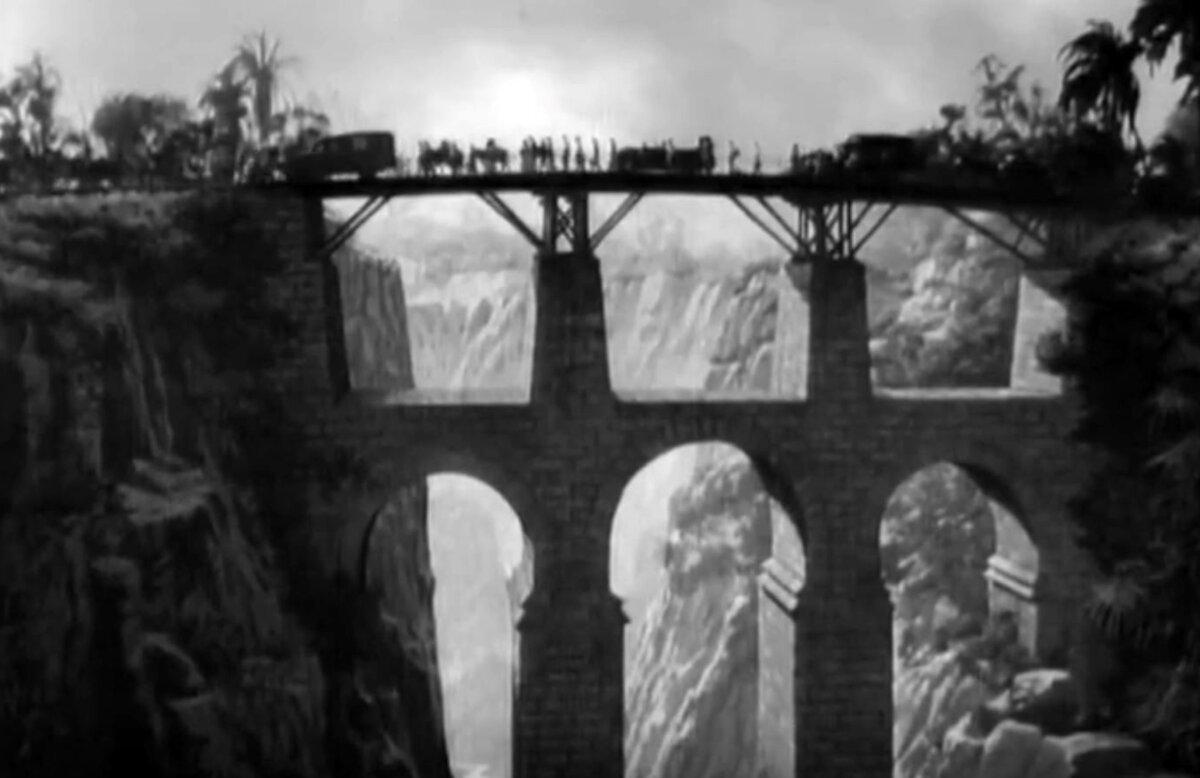
As the “fighting retreat” intensifies, lines of weary soldiers and Filipino civilians funnel toward the crossing. Among the soldiers are Sgt. Bill Dane (Robert Taylor) and Lt. Steve Bentley (George Murphy). They quickly find themselves tasked with forming the skeleton crew meant to stall the oncoming force. Bentley, impressed with Dane’s combat experience in Burma, brings him into the fold. He introduces Dane to the rest of the squad under the command of Capt. Henry Lassiter (Lee Bowman). Together, they form a last line of resistance against the encroaching enemy.
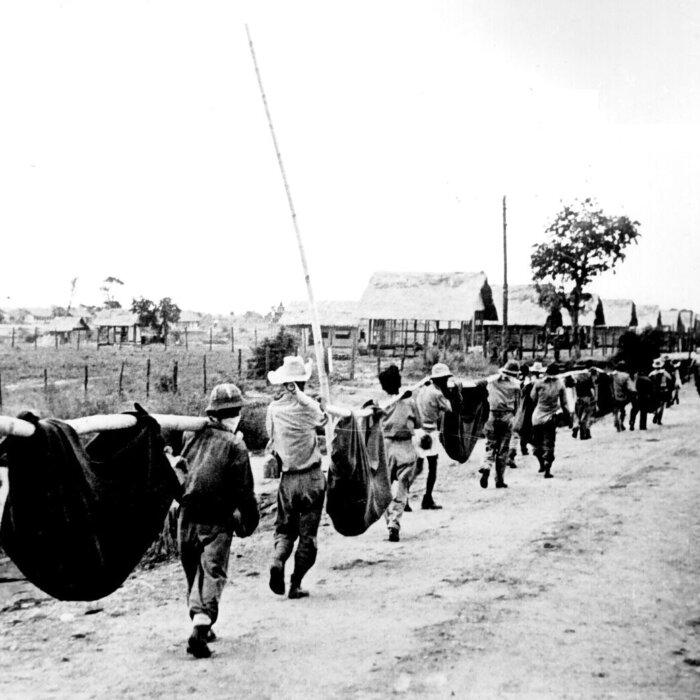

After successfully blasting the bridge, the men dig in and prepare for what they know will be a prolonged, deadly campaign of attrition. Their brief moment of triumph is shattered when a hidden Japanese sniper claims Capt. Lassiter with a single shot to the head. It’s the first of many personal losses and a grim forecast of what’s to come.
With their leader buried, the men begin to reveal their personalities under pressure. Among them is Leonard Purckett (Robert Walker), a young and inexperienced sailor whose ship was sunk, forcing him ashore into a war he never trained for.
Ahead of Its Time
The brilliance of “Bataan” lies in its simplicity. There’s no grand battle strategy, no stirring score to assure the audience that this is all building toward triumph. The film is stripped-down and intimate, focusing on the slow, grinding erosion of morale and manpower as the days pass. Characters perish mid-scene, often with little warning. Supplies dwindle. Fear sets in. And all the while, the jungle closes in—dense, humid, and full of eyes.“Bataan” also breaks surprising ground for a film of its era. The unit is strikingly diverse, especially by 1940s standards: White, black, Latino, and Filipino soldiers all fighting side by side. These aren’t token roles, either. They each get their moment, their voice, and their sacrifice.
Even the character archetypes—the cynic, the rookie, the funny guy—are played with more honesty than expected. Nolan’s Cpl. Todd, in particular, stands out as the embodiment of simmering disillusionment, constantly testing the moral and tactical decisions of his superior.
The film is astonishingly forward-thinking in its portrayal of war as something less than noble. It’s muddy, chaotic, and ultimately indifferent to individual valor. It anticipates the tone of later, more brutal war films decades ahead of its time, without relying on graphic violence to make its point.
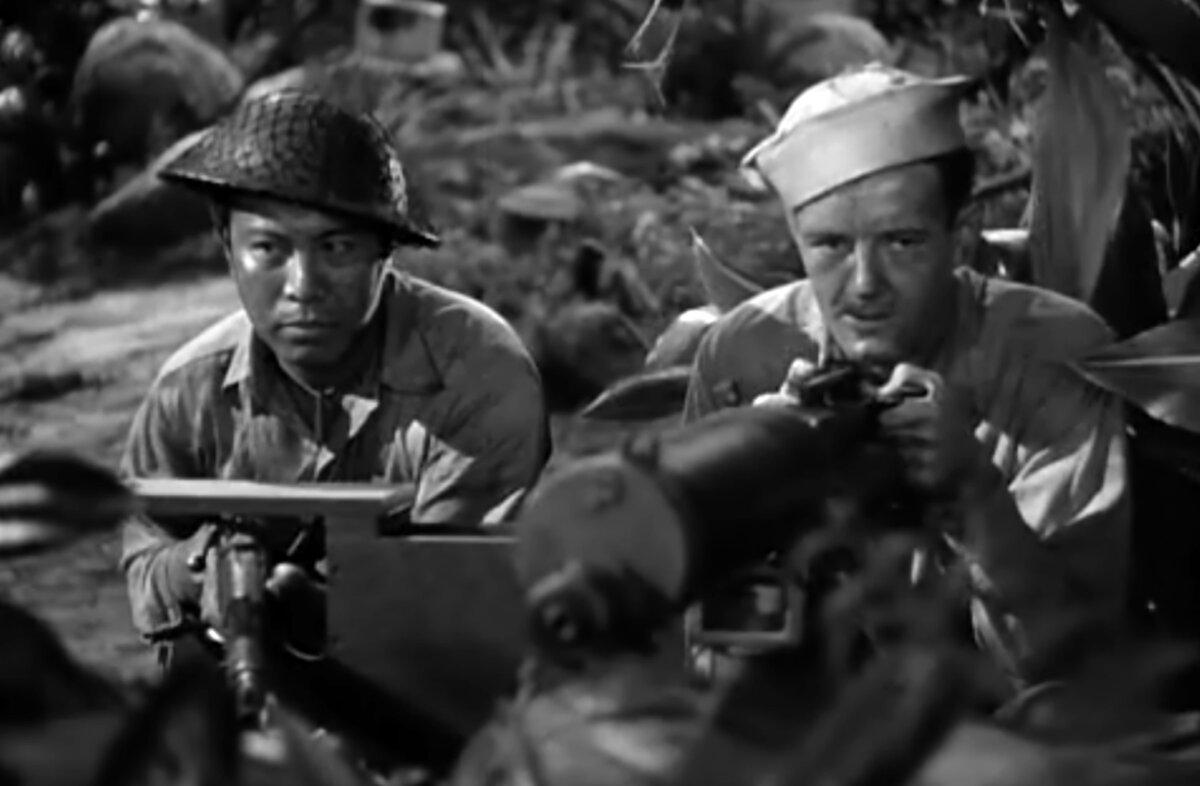
There’s a singular brutality to how the men are picked off one by one not in melodramatic slow motion, but with a suddenness that mirrors how death actually arrives in combat. There is no heroic fanfare, just a stifled cry, a single shot, and then silence.
The film gives no false hope that help is coming or that any of this effort will be remembered with medals and speeches. The enemy is largely unseen. They feel the enemy’s presence surrounding them all the time, a lurking threat that only enhances the film’s thick atmosphere of suspense and hopeless resolve.
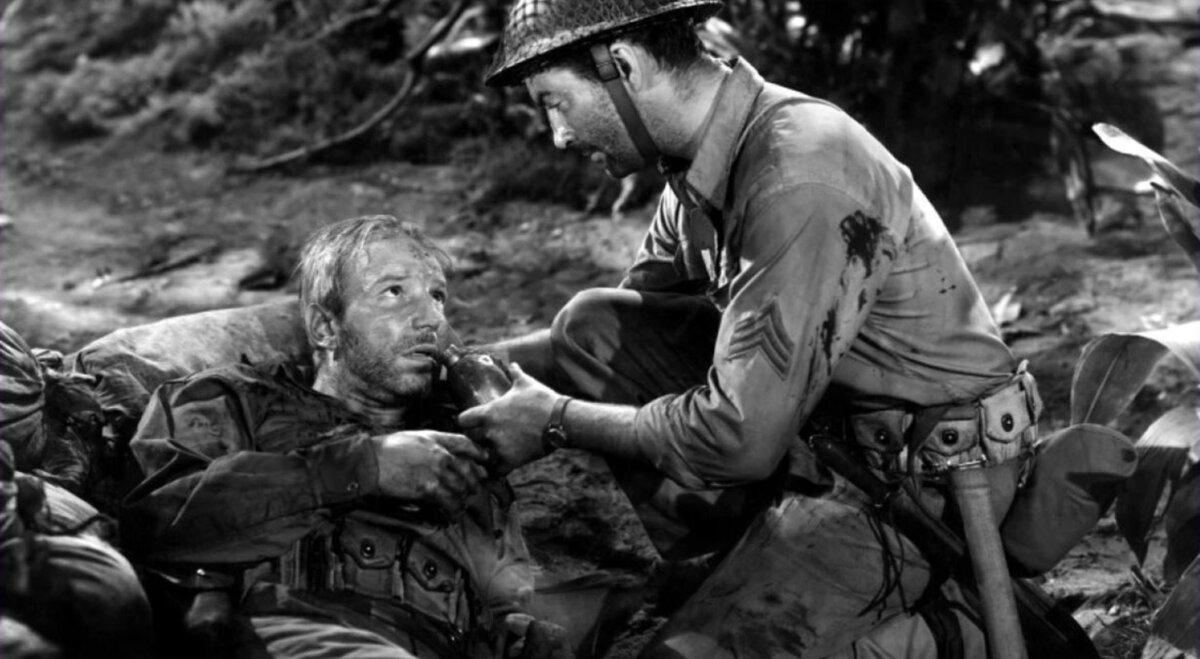
The filmmakers also deserve serious recognition for what they pulled off visually. The jungle outpost, built entirely on soundstages, feels oppressive, alive, and utterly convincing. You can practically feel the moisture in the air and the weight of the vines on the soldiers’ shoulders. It’s a master class in production design on a modest budget. Fog, lighting, and claustrophobic staging is used to draw the viewer into the psychological toll of the setting.
The choice to obscure the Japanese for much of the runtime reinforces the paranoia. These men aren’t fighting soldiers so much as they are grappling with inevitability itself. The environment becomes an extension of that dread: tangled, encroaching, and impossible to escape.
Watching “Bataan” today is like opening a time capsule sealed in sweat, blood, and honest intent. It may not have the raw spectacle or explosive budget of modern war epics, but what it does have is far more enduring: grit, gravitas, and an unflinching sense of setting.
“Bataan” doesn’t glorify sacrifice; it documents it. It doesn’t trumpet victory; it honors the ones who never came home. This film stands among the earliest and most sobering portrayals of what it really means to fight when there’s no winning. It’s a film not watched for thrills. It’s watched to remember.