Autumn in New York brings opportunities to see foliage throughout the city’s parks and tree-lined streets. However, two New York City museums, one in Manhattan and the other in Brooklyn, allow viewers to enjoy autumn foliage year round in the form of magnificent American-made stained glass windows by Tiffany Studios.
‘Autumn Landscape’
Louis Comfort Tiffany (1848–1933) was a Renaissance man in the decorative arts. He worked in ceramics, enamels, glass, jewelry, metalwork, and mosaics, in addition to being a painter and interior designer. He is best known today for his leaded-glass artworks, lamps, and windows.
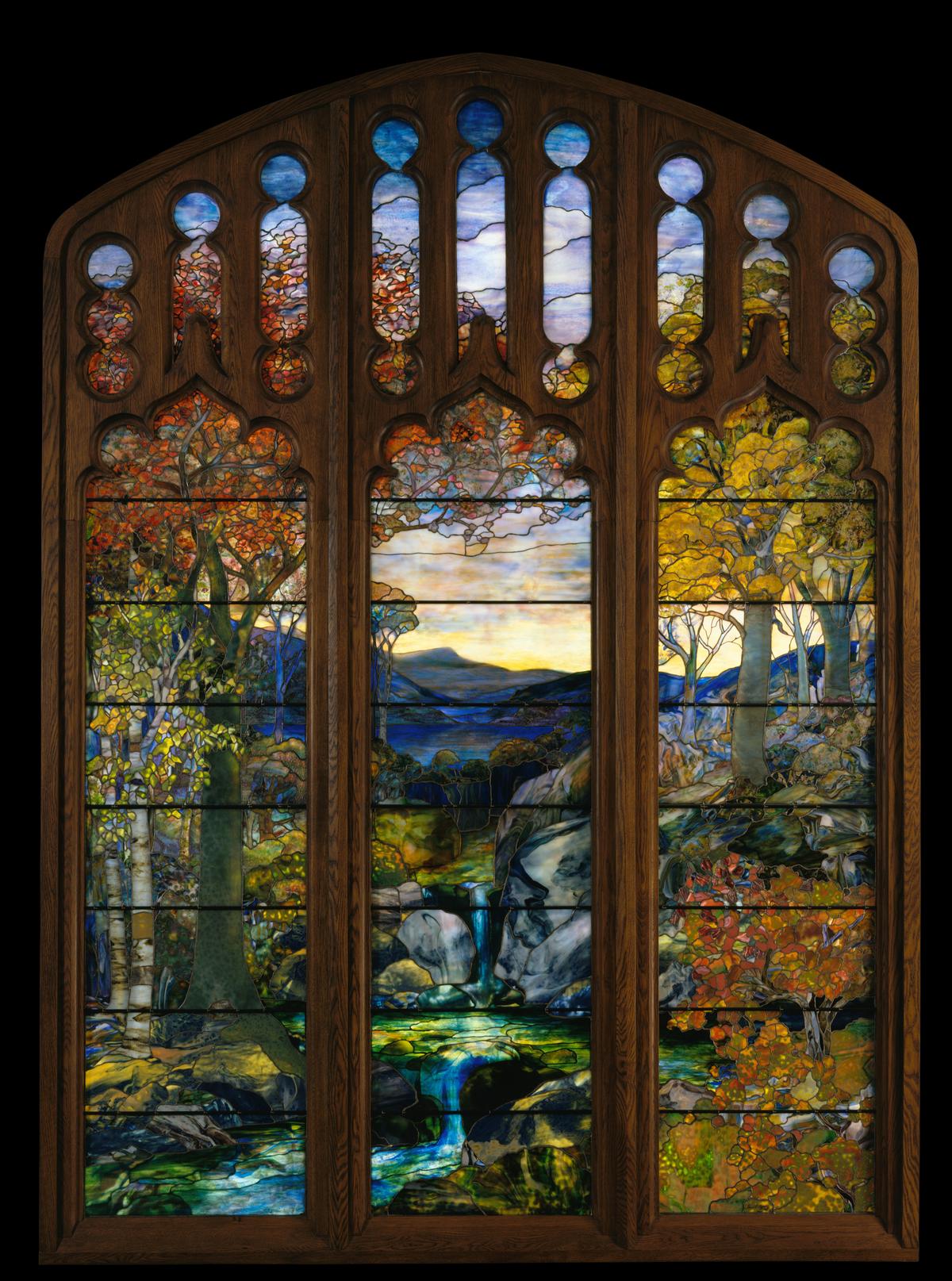
One of his masterpieces is the 1923–1924 “Autumn Landscape” at the Metropolitan Museum of Art. It dates to later in Tiffany’s career. The window was commissioned by the real estate executive Loren D. Towle for the neo-Gothic mansion he was building for himself outside of Boston. The architectural style of the house influenced the wooden frame of the window, which has a Gothic tracery design. It was destined for Towle’s stair landing. Alas, Towle died in debt before the home was completed. Presumably, his heirs were unable to pay his bills, including the one from Tiffany Studios. To preserve the window, Tiffany convinced a close friend, president and founder of The Met’s American Wing, to donate it to the museum in 1925.
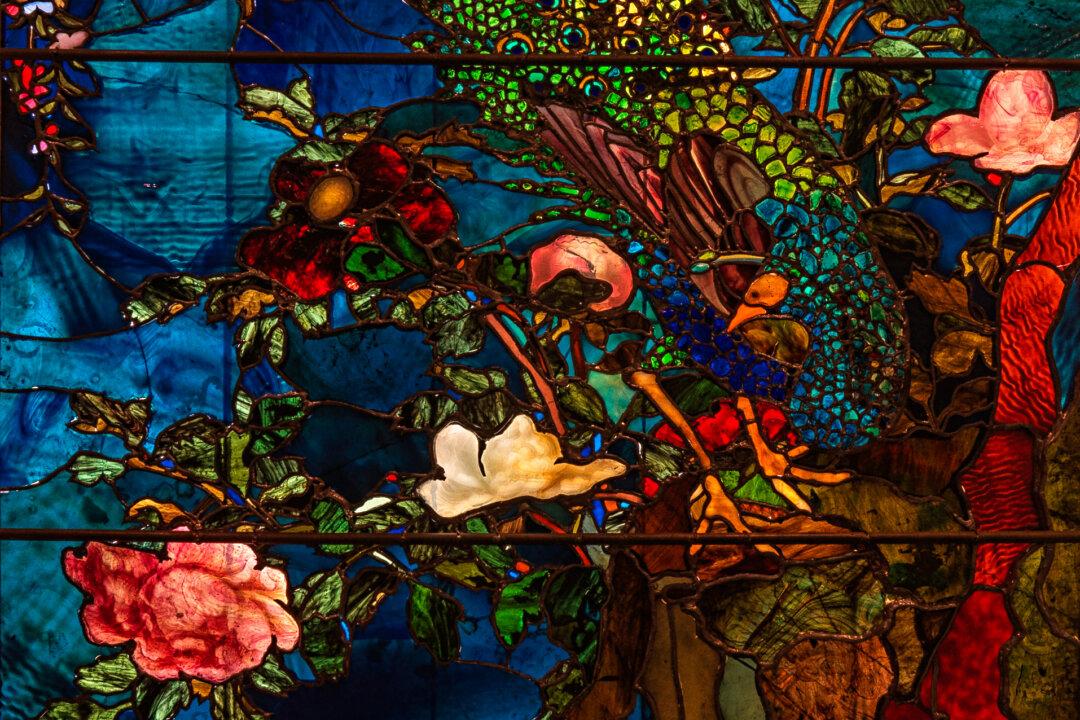
The naturalistic “Autumn Landscape” is an 11-foot-tall window composed of over 1,000 pieces of glass. It shows an idyllic vista in late afternoon sun, resplendent with fall foliage of reds, oranges, and yellows. The view is framed by tall trees, including birches, on either side of the window. A glorious sky glows with red, gold, and lavender. The center panel features a cascading stream full of movement. Astonishingly, all of these effects are conveyed solely through glass and not paint.
Since the Middle Ages, stained glass had consisted of flat white and colored glass with painted details. Tiffany and his artisans changed things: They invented new techniques that blended colors and textures to make opalescent glass. Tiffany called the hand-made, unique glass created in his Queens factory Favrile. The Met explains:
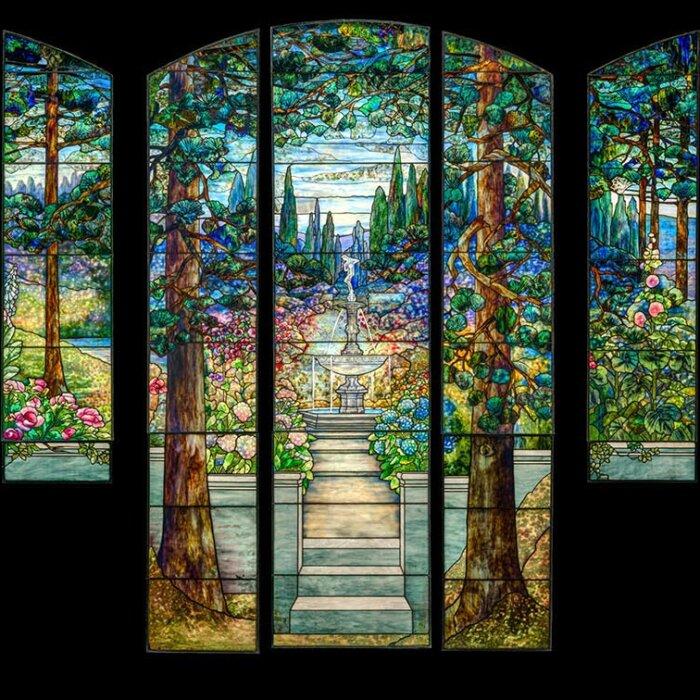
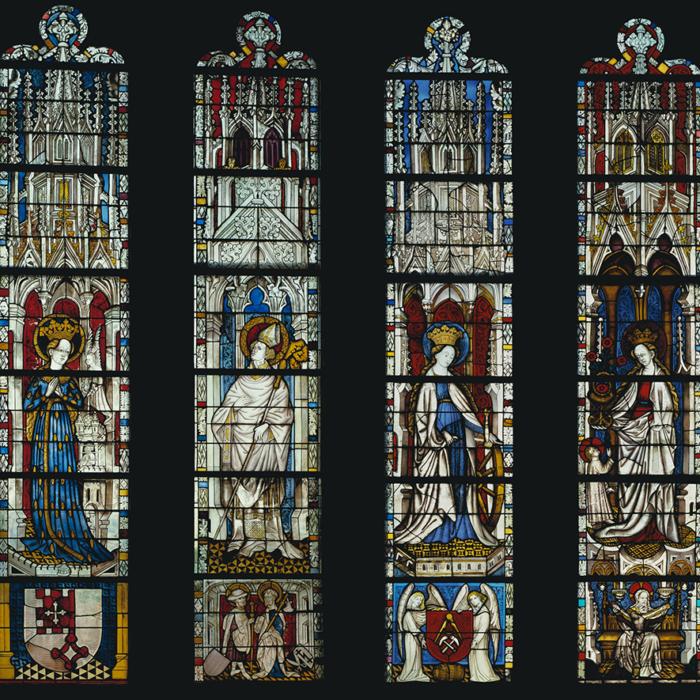
“The variegated surface was made by wrinkling glass in its molten state. Different color effects were achieved by embedding tiny, confetti-like flakes of glass in the surface. Plating—the superimposition of several layers of glass on the back of the window—added depth.”
Tiffany’s Premiere Artist
Although Tiffany oversaw all aspects of his production, this window was likely designed by one of his premiere artists, Agnes Northrop (1857–1953). Scholarship is ongoing to further understand the career of this important woman artist, a rarity in the period. Northrop was gifted in her ability to compose landscapes with intricate flora. The Met owns a preparatory watercolor drawing for the window, attributed to Northrop, that gives insight into her design process.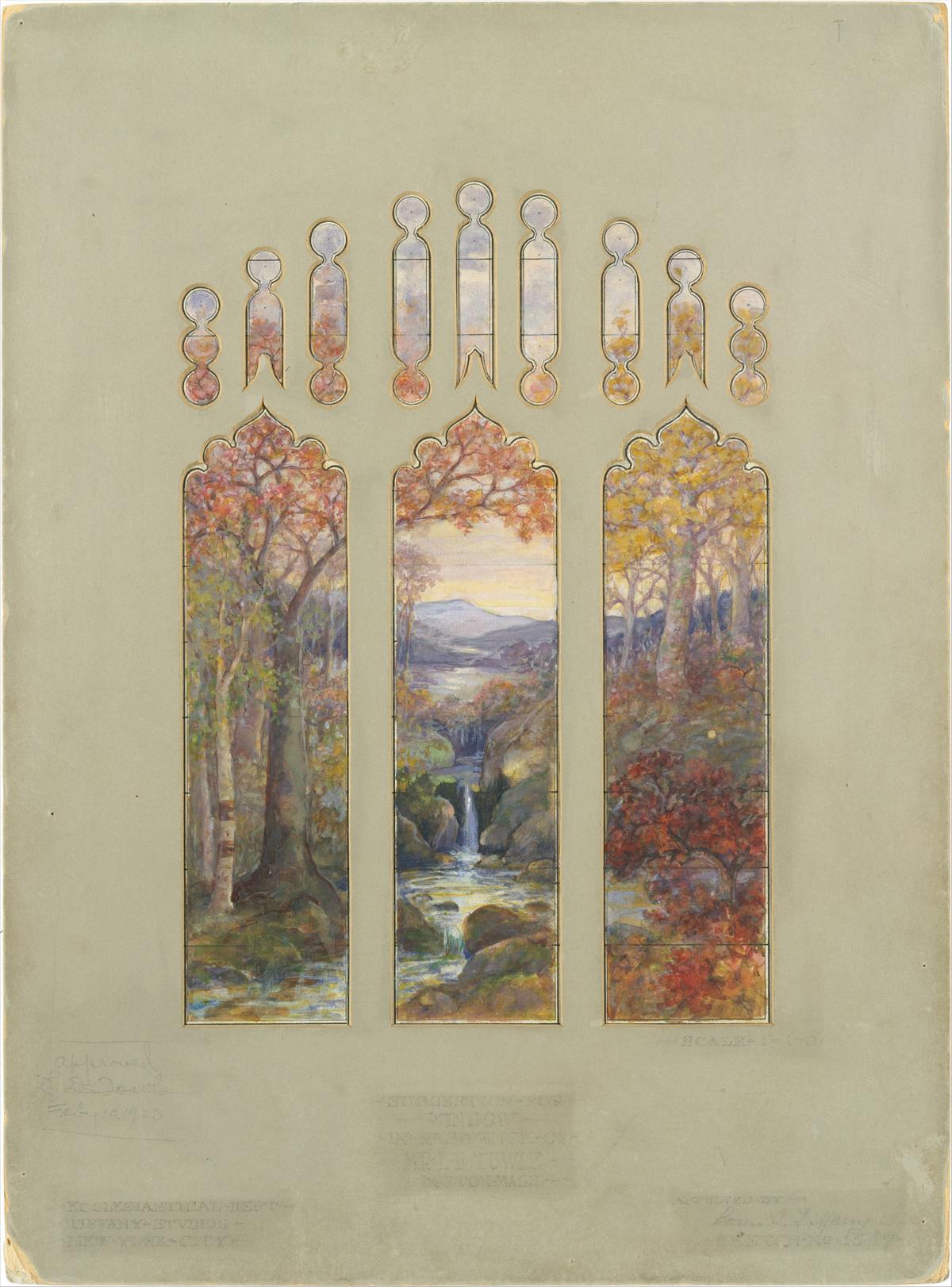
While “Autumn Landscape” was made for a residential dwelling, Tiffany windows with similar subject matter were created for churches and mausoleums. Northrop designed artworks for these settings as well. Ecclesiastical examples attributed to her, now at the Brooklyn Museum, are “Sunset in Autumn Woods” and its companion piece “Dawn in the Woods in Springtime.” They were made in 1905 for the Universalist Church of Our Father, Brooklyn. The two windows were later purchased by another church. After loaning the windows to the Brooklyn Museum in 1999, All Souls Bethlehem Church gifted them to the institution in 2014.
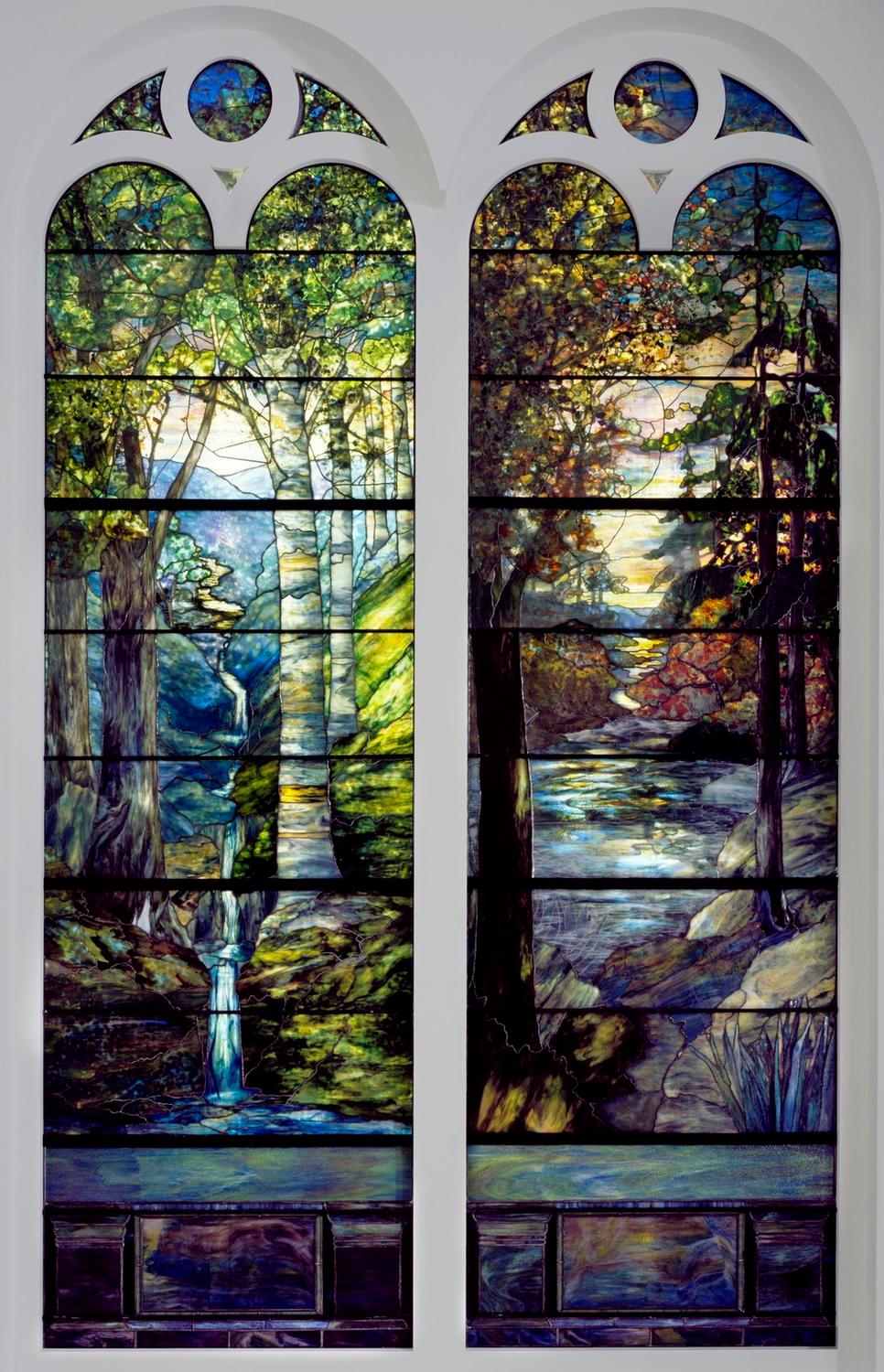
Made of iridescent glass, the windows radiate brilliant color and are full of symbolism. The window at left shows a springtime woodland setting at dawn. The right one depicts an autumn scene at dusk. By placing these different seasons and times of day side by side, the museum writes that “they also constitute an allegory of life and the passage of time.”
All three windows feature a central stream stretching seemingly infinitely into the far-off landscape. This “river of life” theme imbues the artworks with a deep spirituality. Met curator Alice Cooney Frelinghuysen explains that nature’s majesty in Tiffany windows “reflects Emersonian transcendentalism, the belief in a higher reality that can be intuited.” One can feel this when in a beautiful landscape or while looking at a sublime artwork.