Graduation parties. Weddings. Block parties. Festivals. Family reunions.
Summer entails a busier social calendar than most other seasons. With all that comes more intense pressure on introverts and those with social anxiety. An event that an extrovert considers a fantastic party makes the introvert’s hors d'oeuvres churn in her stomach as she nervously scans the crowd for just one familiar face.
“Big crowds are usually loud, which is not my vibe,” Lori Downs, an author, engineer, and self-described “introvert with a touch of anxiety,” told The Epoch Times. “I also worry that I'll call attention to myself if I end up standing around alone, not interacting with anyone. I feel this way even if I’ve come with someone or know others there.”
Introverts struggle at parties for many reasons, including overwhelming stimuli, a bombardment of simultaneous conversations, and the pressure to make small talk. Introverts also feel uncomfortable knowing that many pairs of eyes are (potentially) on them, even though they dislike “performing” in the way that extroverts do. They find it tiring and draining to keep a smile on their face, repeatedly reintroduce themselves, worry about how they look or if they said the wrong thing, and dwell on small talk subjects they don’t find particularly compelling.

However, this party anxiety can be reduced by entering the social environment with a plan that breaks the situation into achievable social goals, prepares questions and responses in advance, and maintains realistic, non-intimidating expectations.
Arrive Early and Set Micro-Goals
Many experts advise breaking down an intimidating social interaction into smaller, more manageable pieces. Psychologist and clinical director Rod Mitchell told The Epoch Times that he suggests introverts arrive at a party within the first 20 to 30 minutes, while groups of two or three are still forming. It’s less intimidating to enter a conversation with just a few others compared to a large circle of people. This is one way to “break it down.” Another way suggested by Mitchell is for introverts to assign themselves small tasks, such as refilling a water glass, so that they have a ready-made opening line and a way to avoid standing around awkwardly.

Once again, segmenting the process into smaller chunks and establishing intermediate goals eases the process. Moody recommends setting a minimum amount of time you’ll stay at the party, such as one hour. Of course, if you’re having fun, the hour can be extended. But giving yourself permission to leave after an hour takes the pressure off.

A little forethought makes all this easier as well—planning ahead for conversation and even the room’s physical layout can relieve the tension.
Parties—whether summer grill-outs or New Year’s Eve dances—generally fit the same basic spatial layout. Vanessa Van Edwards, who created a science-backed system for developing people skills, has identified three zones at these types of events: The Start Zone, the Social Zone, and the Side Zone. The Start Zone is the area by the entrance where people tend to be most nervous as they orient themselves to the situation. The Social Zone is near the food and drink, and it’s where people tend to feel more comfortable. The Side Zone includes any areas where guests become sidelined and fail to meet new people.
Van Edwards recommends finding a place at the end of the food line or by the bar, the area others will trickle into after they’ve picked up a martini or a piece of bruschetta. Partygoers are more likely to be relaxed and ready for a conversation once they have a drink in hand. By contrast, introverts should avoid staying right by the food all night or hanging out by the bathroom, both classic Side Zones. Another Side Zone trap to avoid—perhaps the sneakiest one of all—is talking only to people you already know.

Script Your Conversation Starters
Preparing a few conversation starters and follow-up questions can relieve the awkwardness of groping for an appropriate introduction and bridging the gap to a more substantive conversation.A lot of introverts dislike small talk because they seek deeper connections and find it exhausting to constantly skim the surface of topics. While the introvert would rather find a quiet corner and a single conversational partner with whom they can dive into questions of values, philosophy, or deep personal history, many parties instead tend to generate larger conversational groups but smaller topics.
Moreover, there are ways to move beyond small talk and into more engaging realms of conversation. For instance, “If you want to get past small talk and into the deeper topics, I recommend asking the person you’re speaking with a slightly bigger question,” Mitchell said. “Then answer that same question yourself. ‘What’s been taking up most of your headspace lately?’ is a good one to try. A slightly deeper question like that invites a real reply.”
Challenge Your Social Paranoia
Sometimes, what introverts need most to calm their nerves is a reality check. Because they tend to be introspective, introverts expend energy worrying about what others might think of them and whether or not they’re making a good impression. The truth, according to Dr. Saranga, is that the introvert is probably thinking about himself more than anyone else is. “One of the biggest concerns that introverts have at parties or with large groups of people is that they think everyone is judging their every move and every word they say. Remind yourself that’s simply not true,” he said.Furthermore, Dr. Saranga prompts introverts not to expect themselves to possess perfect social poise. “Be realistic with yourself. So what if you stumble over your words? So what if someone doesn’t care for you? Let go of the pressure and realize that it’s OK to not always be perfect and you don’t always have to impress everyone you meet.”
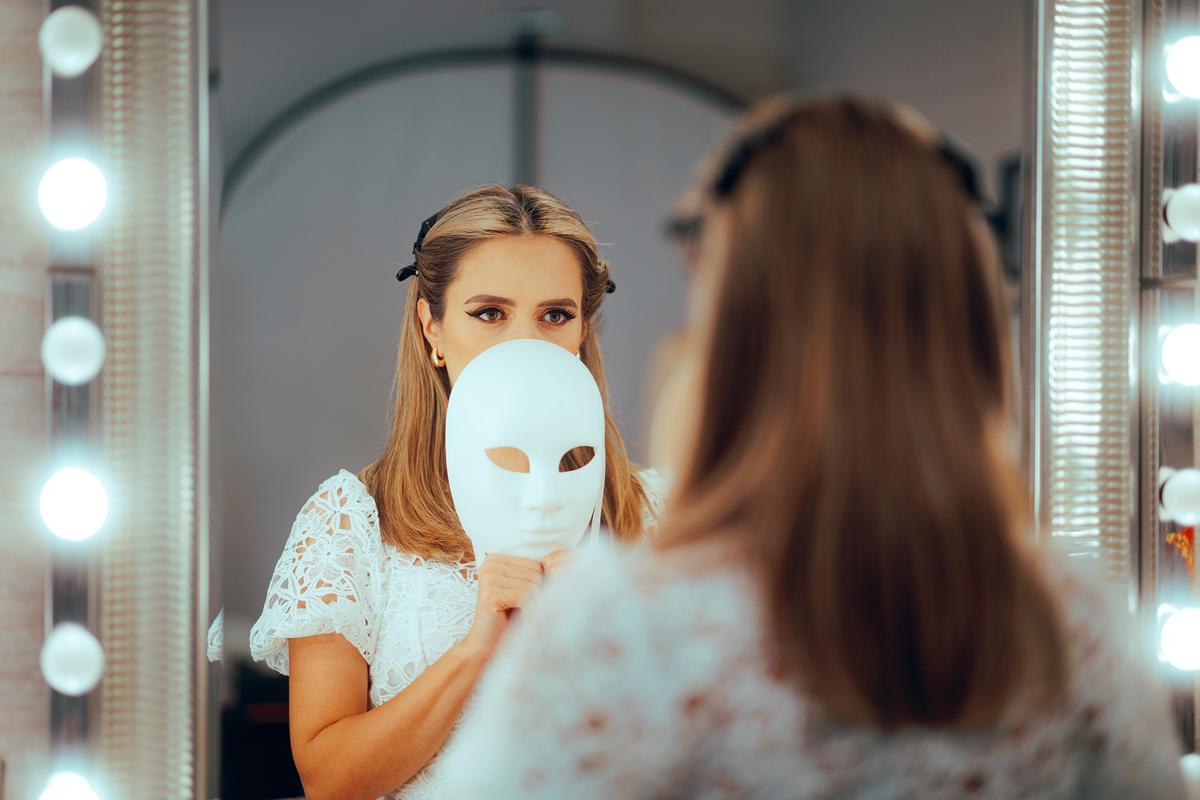
Accepting social imperfection can actually play to the introvert’s advantage, a sort of social judo move: The introvert can let social missteps remind him to be himself, which is ultimately the smoothest path to social confidence and connection. It’s not about ignoring social cues, abandoning manners, or indulging uncouth habits, of course. Rather, it’s about authenticity. In Dr. Saranga’s words, “Real relationships come from being who you are.”
Lean Into Your Natural Strengths
Part of this pressure to “perform,” which can be so hard for introverts, stems from cultural shifts in recent centuries that prize outgoing sociability over quiet reflection. Extroversion is more socially expected today. And that can make introverts anxious.Achieving that kind of vulnerability requires a certain degree of self-acceptance, which requires a certain degree of self-understanding. Both introverts and extroverts can benefit from a better understanding of these two personality archetypes in social situations.
Carl Jung introduced the terms “introvert” and “extrovert” in 1921. He observed that introverts are attracted to an interior world of thought, reflection, and emotion, while extroverts crave external stimulation. Today, this is often described in terms of how one “recharges.” Introverts “recharge their batteries” through solitude, while extroverts get energy from being with people and groups. Extroversion has received more praise in recent decades—after all, extroverts attract more attention almost by definition—though there’s been some recent pushback against this emphasis on extroversion.
The societal admiration for extroversion may be tied to a cultural change that occurred at the turn of the twentieth century. Cultural historian Warren Susman argued that a shift from a “Culture of Character” to a “Culture of Personality” occurred at the beginning of the 20th century in tandem with a transformation from an agricultural to an industrial and urban nation. A century ago, as people moved from quiet farms into crowded cities, the qualities society valued shifted. Instead of praising people for being quiet, serious, and hard-working (character), the culture started rewarding those who were loud, charming, and great at self-marketing (personality). That’s why modern society often feels custom-built for extroverts.
Of course, both temperamental archetypes have their value and importance—as well as their faults and flaws. Introverts can build greater self-confidence by understanding what makes them tick and accepting it, while also working to overcome their weaknesses, such as excessive shyness.
The rewards are well worth the effort. As Dr. Saranga put it, “When introverts make a real effort to overcome natural shyness, there’s often so many wonderful things waiting on the other side, such as friendships, romance, professional opportunities, and perhaps most important, increased self-confidence.”
Introversion doesn’t have to mean unsociability or shyness. Overcoming anxiety and establishing a genuine human connection—something introverts usually prize highly—lies within reach. Breaking the process into manageable bites, making a few simple plans ahead of time, and establishing realistic expectations will be keys to unlocking the joy of this summer’s parties and gatherings.