R | 1h 47m | Neo-Western, Crime-Thriller, Comedy | 2025
“Americana” also has a MacGuffin; a priceless Lakota ghost shirt, which is sought after throughout by a large cast of desperadoes, both criminal and not. The Lakota ghost shirts were spiritually imbued garments from the Ghost Dance religion of the late 19th century. Painted with sacred nature symbols like stars, moons, and birds, they were believed to provide spiritual protection (particularly from bullets) and offered hope for a renewed world.
The Various Claims on the Ghost Shirt
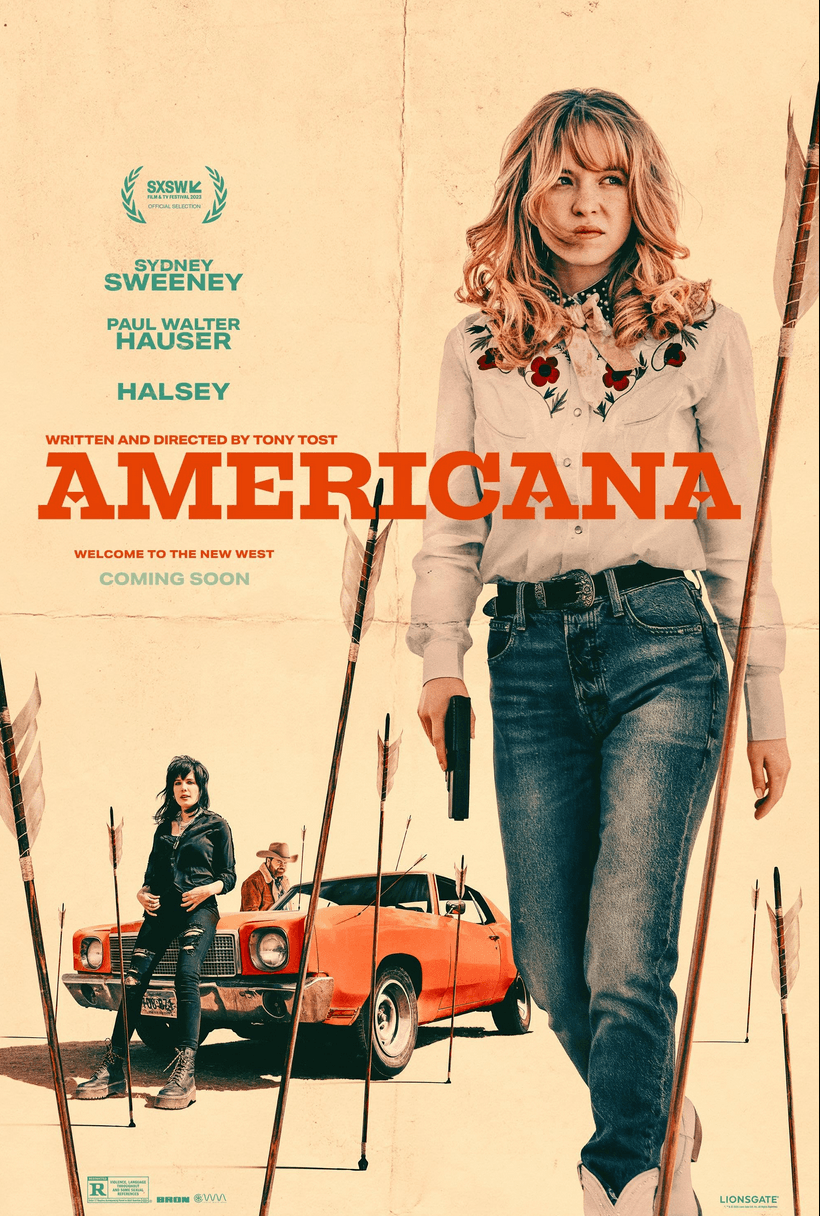
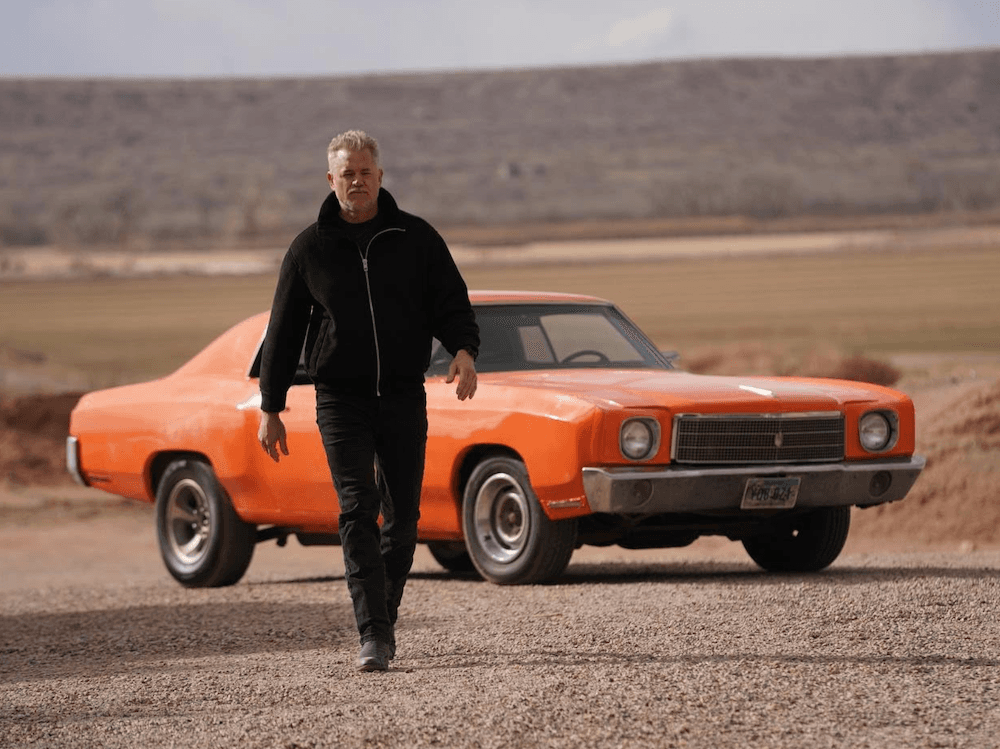
First, single mom Mandy Starr (pop singer Halsey) steals the shirt after her abusive boyfriend Dillon (Eric Dane) ripped it off a wealthy artifact collector. Selling the shirt will allow Mandy to escape Dillon.However, Mandy’s young Caucasian son Cal (Gavin Maddox Bergman), who fervently believes himself to be the reincarnation of Sitting Bull, feels that he must, forthwith, return said ghost shirt to his tribe. He’s not sure where his tribe lives, but he’s gonna find out.


At the same time, a pretty red-headed waitress with a world-class stammer, Penny Jo Poplin (Sweeney), and one of her regular customers at the local diner, Lefty (Paul Walter Hauser) happen to overhear plans to steal the shirt.
Penny Jo is as sweet as she can be, reminiscent of Sissy Spacek in “Carrie,” with the same virulent lack of self-esteem and overbearing, shaming Mom. Penny feels the filching and fencing of the artifact will finance the blowing of the proverbial small-town-life popsicle-stand—for Nashville. Penny can’t talk too well, but the girl sure can sing.
Meanwhile, members of a local Lakota Sioux militant group wish to reclaim the ghost shirt, naturally, for its cultural and spiritual importance.
Overall
“Americana” has a great setup, but the story features too many of today’s favorite stereotypes—single moms, reservation-raised Native-Americans who talk like ghetto-raised African-Americans, patriarchal toxic white men, at-risk latchkey kids, religious cultists, and an assortment of desert-dwelling losers—criminal and not.It’s too easy to predict where it’s all headed, who survives, and who gets skewered by arrows. All of the above would be fine if there was even a modicum of character development, but no distinct personalities propel the story; they’re all flat stereotypes that fail to rejuvenate the genre conventions. I suppose all of that does, ironically, add up to a particular kind of Americana.
The only modest exceptions are Sweeney and Hauser. Sydney Sweeney is very compelling as Penny Jo, but the script basically gives her only a stammer to work with. Paul Walter Hauser’s Lefty has an obsessive habit of proposing to every woman he spends more than 10 minutes with, which is supposed to be funny, but which is more, you know, just sad.
Ultimately, young Cal’s broken-record Sitting Bull schtick highlights the principal weakness of “Americana,” which is its insistence on presenting characters a tad too colorful to be fully believable. “Americana” would like to showcase forgotten everyday people who possess endearingly unusual traits, but the writing isn’t sharp enough to provide believable character arcs that evolve beyond mildly cartoonish idiosyncrasies.
By the end, “Americana” is more interested in preaching than telling a story. A modern-day chase for a sacred artifact could have been a lot of fun, and with this cast, the film should have knocked it out of the reservation. Instead, it feels bogged down, heavy, and far too concerned with making statements instead of just being entertaining.