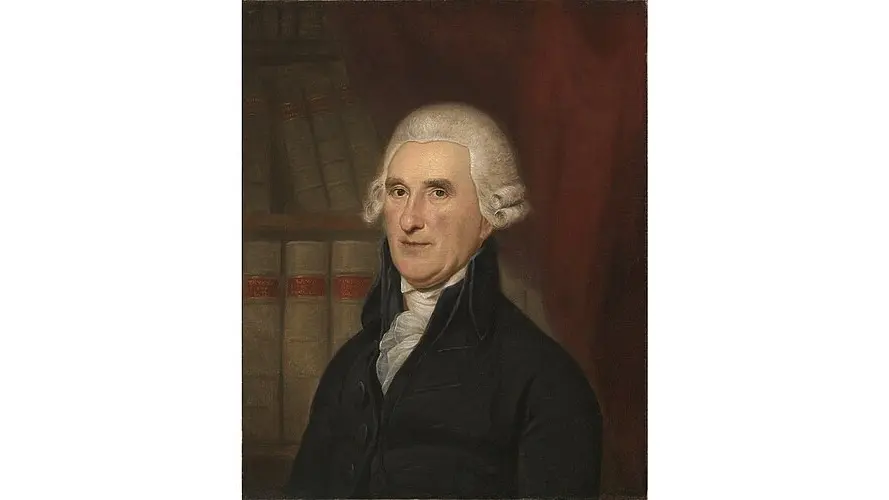
Celebrating the momentous significance of the Declaration of Independence, the Constitution, and the Bill of Rights on America’s 250th birthday inspired millions.
As important as the cherished beliefs in “all men are created equal” and “we hold these truths to be self-evident” remain today, the Founding Fathers also provided a priceless gift to future generations: the seeds of American exceptionalism.
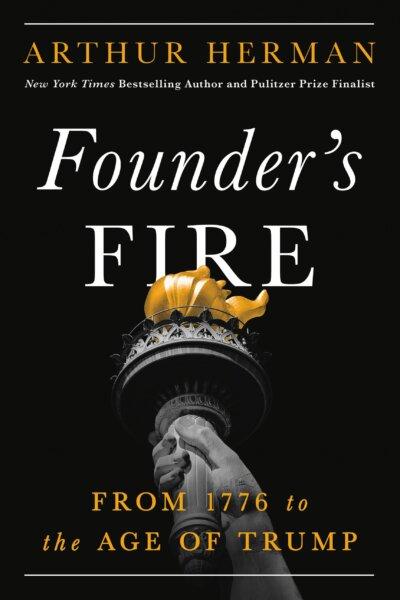
That is the optimistic premise of Arthur Herman’s captivating book, “Founder’s Fire: From 1776 to the Age of Trump.” Herman is a New York Times bestselling and Pulitzer Prize Finalist author of 10 books. In his latest book, he makes a substantial case for why America’s DNA is imbued with success.
“When all is said and done, our original founders created a system that has an extraordinary capacity for self-renewal,” Herman wrote.
He asserts that it is thanks to the brilliance and foresight of our political founders, that they created an economic framework that rewards invention and creativity. Over the centuries, that system has not only made America successful, but it has also transformed human history.
The Founders’ Gift
The term “founder” often conjures up thoughts of the Founding Fathers of our country, but as Herman states, founders aren’t limited to political leaders. He asserts business leaders, inventors, industry titans, social reformers, and technologists have also been founders who have contributed to America’s renewal since its beginning.

Herman identifies six characteristics founders possess regardless of occupation: mission and vision driven with an uncompromising ferocity; obsessively hands-on and detail-oriented; action-oriented with no fear of disrupting the status quo; risk tolerant; a dislike of delegating and a preference for working directly with others who share their vision; a view of the future with unlimited potential.
Many of the signers of the Declaration of Independence shared those traits. The Founding Fathers’ genius foresight, however, laid the groundwork for citizen founders to flourish by creating a new source of wealth creation.
Herman points out that, prior to Adam Smith’s classic book on economics, “The Wealth of Nations,” the primary source of wealth had always been land ownership. However, the Scottish Enlightenment introduced the concept of wealth creation through trade and commerce.
The Founding Fathers built on that foundation. They adopted the idea of a free economy where creative ideas and inventions would be rewarded with monetary success.
Growing Pains
The first four chapters provide an excellent historical overview on the early days of the Republic, up through the country’s 50th birthday in 1826. Abraham Lincoln then kept the founders’ movement going by ending slavery and shepherding the country through the pain of the Civil War.Herman details the country’s growing pains after John Adams and Thomas Jefferson. Both died on July 4, 1826, exactly 50 years after their signing of the Declaration of Independence.
He also describes how a restless Young America movement sparked the need for modern infrastructure improvements like canals and railroads, the desire to expand the nation’s western boundaries, and the goal of ending slavery.
The chapter on Lincoln is noteworthy in that Herman shows how influential the Founding Fathers were on Lincoln’s thinking and how he drew inspiration from them during his efforts to bind together a nation torn apart by the Civil War.
Economics and Politics
The final six chapters describe the emergence of 19th-century business. Founders, inventors, and industrialists contributed their talents in both world wars.The tug-of-war between founders and managers in American corporations produced the Rust Belt. Business produced the meteoric rise of Silicon Valley and digital start-ups like Google, Facebook, and Twitter.
The author pulls no punches. He provides examples in which government meddling in areas such as production and corporate expansion had detrimental consequences. One was Woodrow Wilson, establishing direct government control over American industry during World War I. The net result: the U.S. Shipping Board spent half a billion dollars without producing a single ship, and the U.S. Aircraft Board spent even more without building a single plane.
Herman said 18th-century railroad magnate James J. Hill best summed up the problem with politicians interfering in successful business ventures: “It really seems hard, when we look at what we have done … that we should be compelled to fight political adventurers who have never done anything but pose and draw a salary.”
That is not to say that the government hasn’t successfully aided in vital science and technology breakthroughs. Herman cites the Manhattan Project as the most amazing example of winning cooperation between government and industry.
Today’s Founders
Some readers may disagree with Herman labeling Donald Trump, Charlie Kirk, and Elon Musk as contemporary founders, but he believes all three meet the necessary criteria with their clear vision, ferocious drive, and demonstrable willingness to disrupt the status quo.Trump is working to restore America’s manufacturing base with tariffs and usher in an American Golden Age; Kirk’s Turning Point USA seeks to lead young Americans to embrace the nation’s key founding principles such as free speech and limited government.
For his part, Musk bought Twitter to restore some semblance of free speech after proven government meddling, plus his reusable SpaceX Dragon spacecraft rescued three astronauts stranded aboard the International Space Station.
“Founder’s Fire” is an optimistic retelling of American history, a logical treatise. It explains American exceptionalism and why our country has a lion’s share of the world’s supply of creativity, innovation, and unlimited potential.