In October 1918, Alfred Carlton Gilbert (1884–1961) stood before the Council of National Defense (CDN). On April 6, 1917, America entered World War I, and the country’s manufacturers began building products primarily for the war effort. The Council soon set its sights on toy manufacturers, suggesting that building and selling toys took away from the effort. Gilbert, who was chairman of the Toy Association’s War Service Committee, strongly disagreed. He brought in numerous toys to prove his argument.
Among the toys Gilbert brought was a steam engine, which led Secretary of Commerce William Redfield to observe, “I learned the rudiments of engineering on an engine like this.”
The Magical Medical Student
This epochal moment in Gilbert’s life was one of many. Born in Salem, Oregon, Gilbert grew up a stellar athlete in wrestling and track and field, as well as a brilliant academic student. His passion, however, was magic tricks. He had become so good that when a magician came into town one year, Gilbert matched each trick the magician did. “You will be a great success,” the magician predicted to Gilbert.Becoming an Olympic Champion
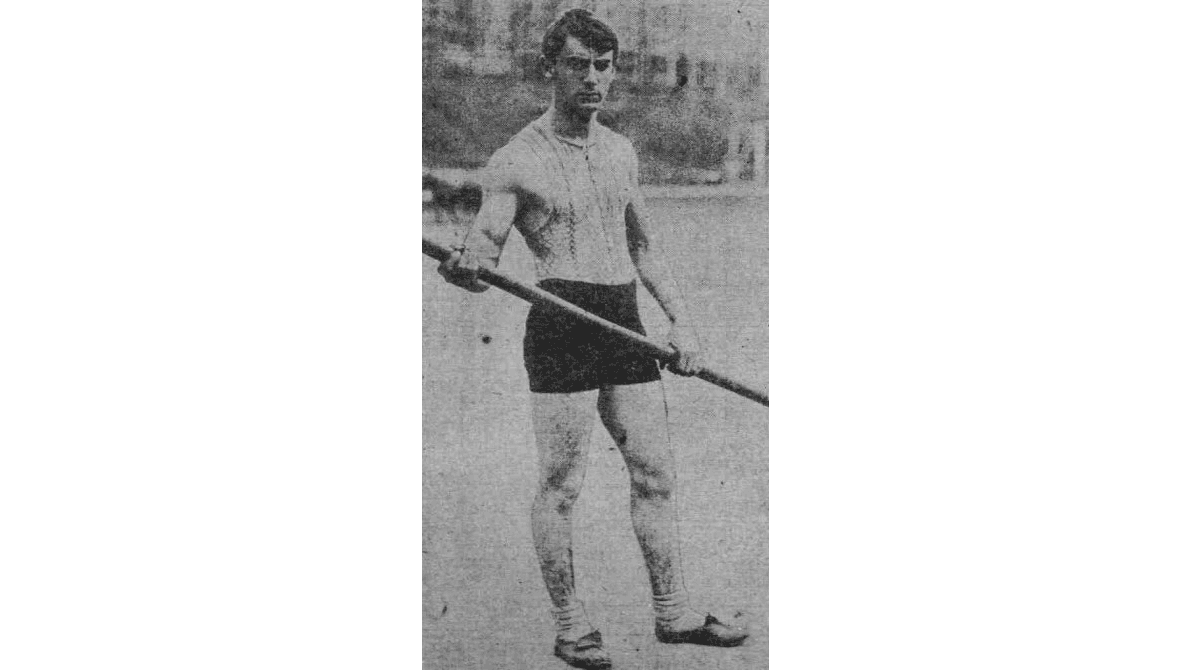
As a student at Yale, Gilbert earned his money and paid for his tuition as a professional magician. While studying and working, Gilbert continued his athletic pursuits in wrestling and the pole vault. In 1908, he set pole vaulting world records in preparation for the Olympic Games at 12 feet 6 inches and then 12 feet 7.5 inches When he arrived in London, he was the favorite to win the Olympic Gold. There would be, however, some controversy during the event.
Gilbert had vaulted 12 feet 2 inches in the final, which was higher than the other competitors. Oddly, the English officials decided to call it a tie between him and fellow American, Edwin Tiffin Cooke Jr., who had reached the same height but during one of the qualifying rounds. It was the only tie in Olympic pole vault history.
Construction on a Kid Scale
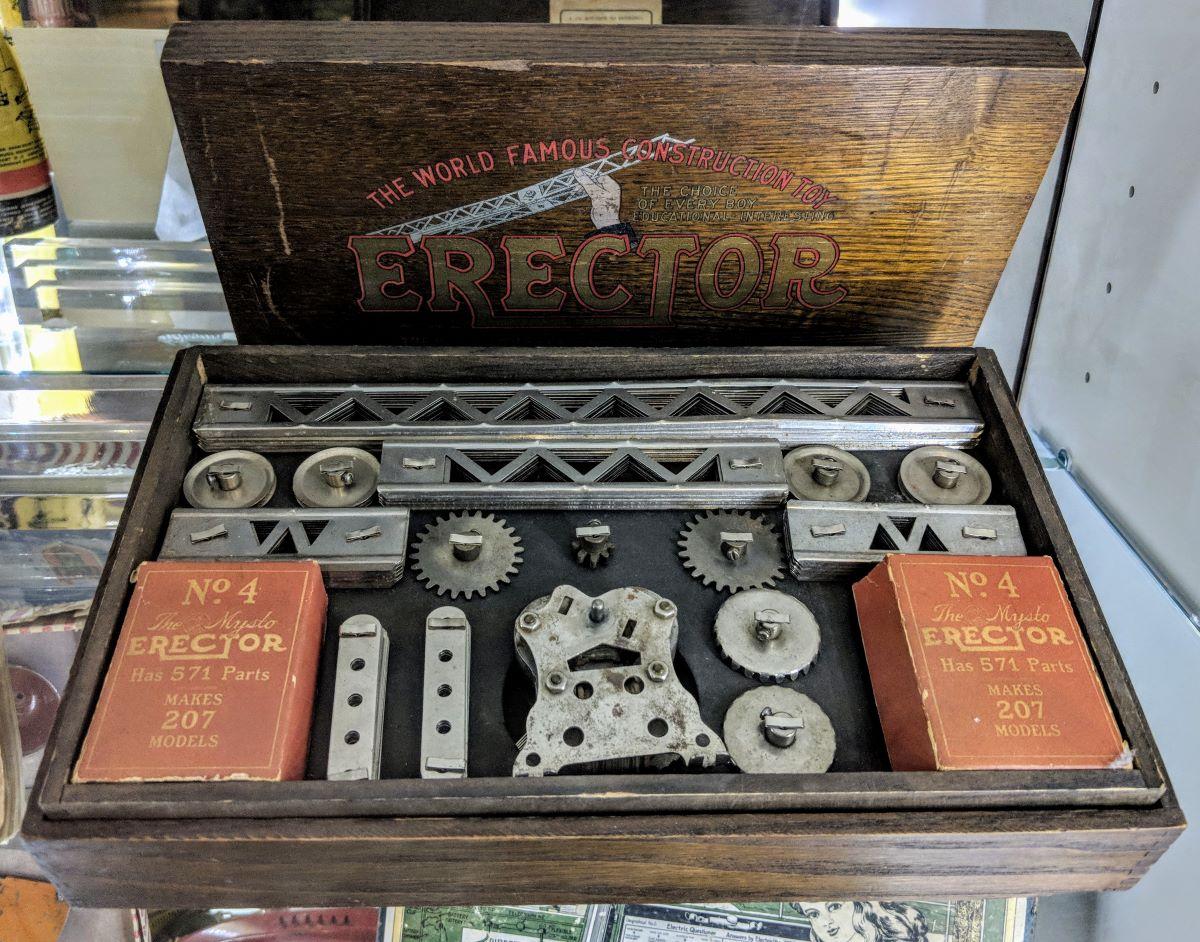
The year after the Olympics, he and friend, John Petrie, founded Mysto Manufacturing Company in New Haven, Connecticut, which produced magic trick sets. The business was so successful that Gilbert abandoned his medical career in favor of his magic business. He began touring places like Boston and New York City to perform, and, in 1910, he opened a store in The Big Apple. While aboard a train during one of his commutes from New Haven and New York City, Gilbert watched as laborers worked with steel girders. It gave him a great idea.First using cardboard, Gilbert constructed girders. Then he moved to metal. He believed he had stumbled upon a toy that would leave young boys fascinated. In 1913, with his toy creation perfected, he presented his Erector Structural Steel & Electro-Mechanical builder set at the New York Toy Fair. His Mysto Erector Structural Steel Builder quickly became a best seller. Gilbert then bought out his partner. In 1915, he presented his Erector Set at the Panama Pacific Exposition in San Francisco where he was awarded a Gold Medal. Gilbert’s Erector Set, with its small metal beams and assemblage of bolts, gears, pulleys, and screws, allowed children to build their own tiny construction sites. The Erector Set later offered small engines.
A Magical Legacy
During this time, while he was getting his toy erector set building business off the ground, WWI began. America remained neutral until April 1917 when the U.S. Congress declared war on Germany. Gilbert’s meteoric rise as a toymaker made him a household name.In 1916, he co-founded and became president of the Toy Manufacturers of America (TMA). It was his company’s success and his leadership of the TMA that positioned him to stand before the Council on National Defense and make his convincing argument about the necessity of toymaking.
Gilbert indeed saved Christmas in 1918, but he also made Christmas for millions of boys and girls over the years with his Erector Sets, as well as his company’s tool kits for children, and sets for chemistry, metal casting, and engineering. Additionally, he bought the rights to the American Flyer model trains in 1938. He moved the manufacturing hub from Chicago to New Haven and built and sold the trains for the next two decades.
By the time of Gilbert’s passing, he received more than 150 patents. The medical student and magician who became an Olympic champion is most known, however, for building one of America’s best toys.