




Statues convey the virtues of great people, and in the case of civic statuary, these virtues are on public display for generations of citizens.
In “Classical Architecture and Monuments of Washington, D.C.: A History & Guide,” author Michael Curtis described the difference between sculptures and statues. Sculptures “might contain any idea large, small or insipid of anything or non-thing or nonsense,” he wrote. “Statues are intelligently composed, aesthetically resolved, expertly crafted tributes to civic, military, and humanitarian accomplishments.”
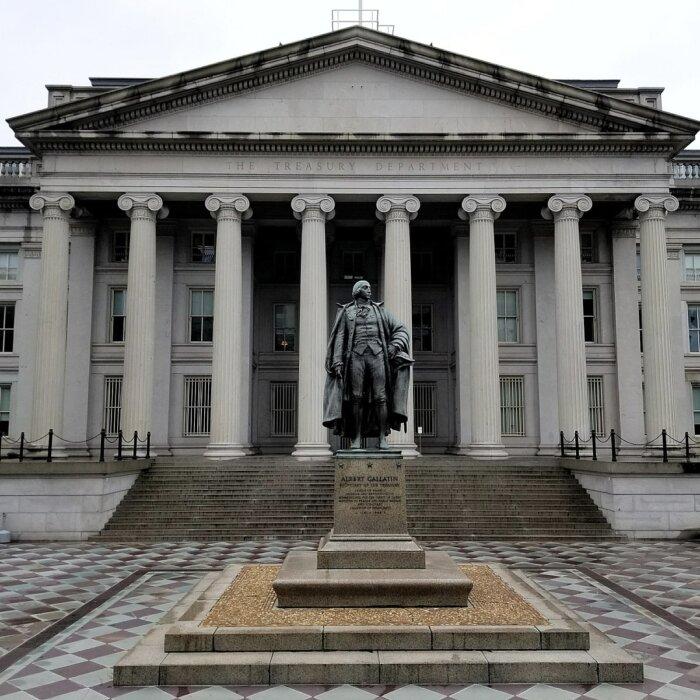
A fine example of such statuary is American sculptor James Earle Fraser’s 10-foot bronze statue of Alexander Hamilton. As the first secretary of the Treasury, Hamilton stands prominently on the south side of the Treasury Building.
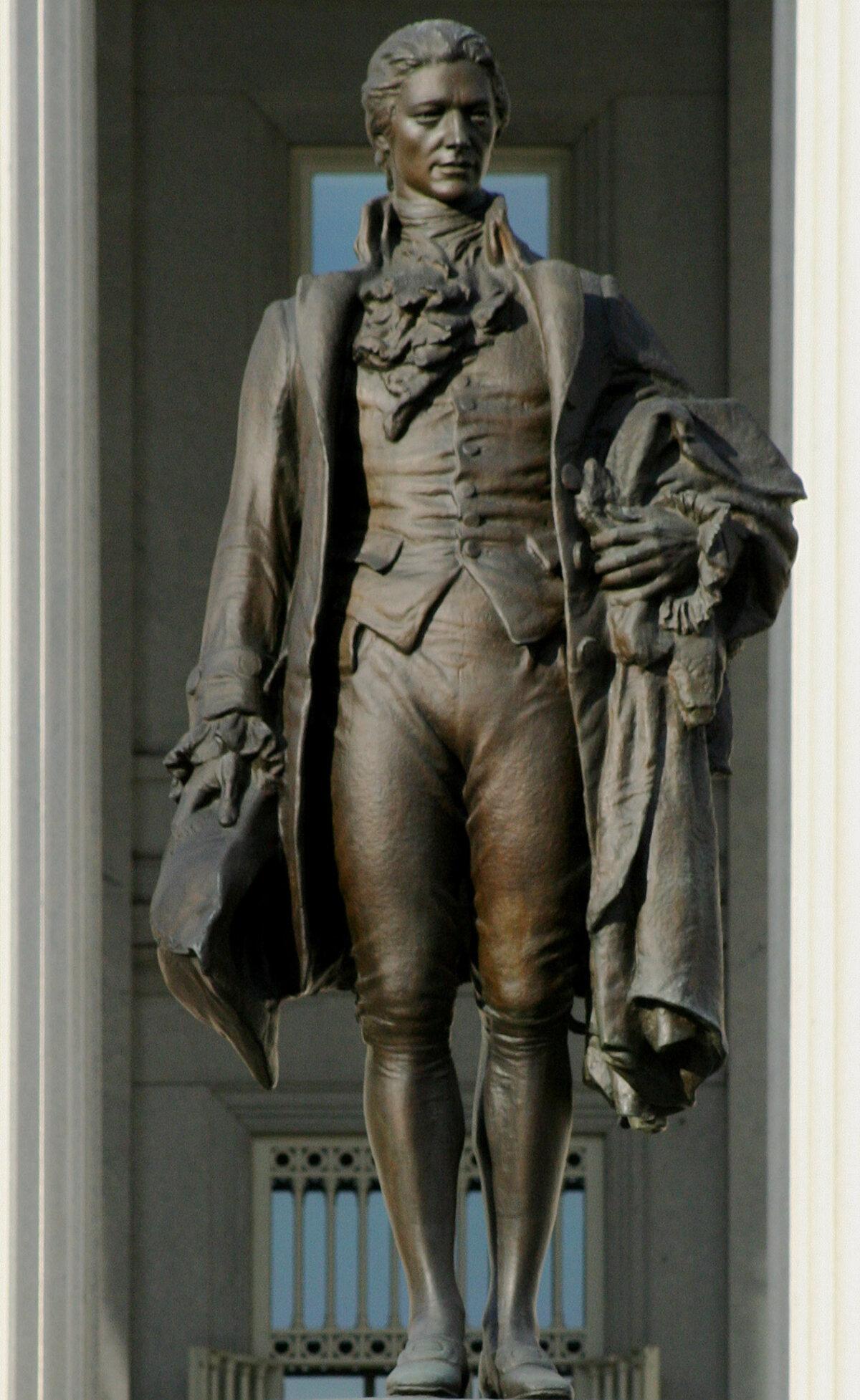
Alexander Hamilton, 1922, by James Earle Fraser. Dedicated May 17, 1923. Bronze and Stony Creek granite; 10 feet tall. (dbking/CC-BY-SA-2.0)
Fraser’s Hamilton cuts a dashing figure, which, although cast in bronze, is alive with feeling. Confident in pose, Hamilton appears as if he is ready to stride off into action, with his left foot ready to propel him forward. His face exudes a certain assuredness along with a faint, charming smile that distinguishes the man from the monument.
On the front of the base, an inscription lists Hamilton’s patriotic roles: “First secretary of the Treasury/ soldier, orator, statesman/ champion of constitutional union/ representative government and/ national integrity.”
On the north side of the base, an honorific inscription of Hamilton’s time as secretary of the Treasury states: “He smote the rock of the national resources and abundant streams of revenue gushed forth. He touched the dead corpse of the public credit and it sprang upon its feet.”
Statues in the Light of Humanity
On Feb. 23, 1775, Hamilton wrote in the pamphlet “The Farmer Refuted”:
“The sacred rights of mankind are not to be rummaged for, among old parchments, or musty records. They are written, as with a sun beam, in the whole volume of human nature, by the hand of divinity itself; and can never be erased or obscured by mortal power.”
Expertly crafted statues, infused with the light of human nature, remind us of those sacred rights. Statues made in that manner and with such noble intentions can forevermore enrich us with beauty, meaning, and purpose.
What arts and culture topics would you like us to cover? Please email ideas or feedback to [email protected].

.jpg)