CHICAGO—It’s not a fast-paced thriller or a cloak-and-dagger mystery. Still, for those seeking an insight into human nature, “Uncle Vanya” can be a profound experience. Written by Russian playwright Anton Chekhov (1860–1904), it opened in 1899 at the Moscow Art Theatre, and is now revived in a superb production at AstonRep at The Edge Off Broadway in Chicago.
Set on a Russian country estate, the story follows a family: Uncle Vanya, a bitter man who has spent years managing the estate to support his late sister’s former husband, a professor. Sonya is Vanya’s hard-working niece who runs the farm. Their dull routine is upended when the arrogant, retired professor and his dazzling young wife arrive.
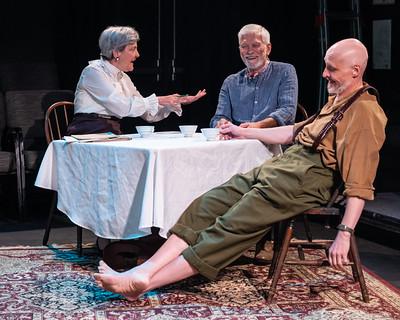
As the play progresses, we witness the characters’ wasted potential and regrets as they begin to question whether they squandered their youth and hard work on the wrong things and the wrong people.
Vanya has spent his life idolizing the professor, only to realize that he’s a second-rate academic. Sonya is in love with the local doctor, Astrov. The professor’s wife, Helena, doesn’t love her husband and is attracted to the doctor. The doctor ignores Sonya’s affections and falls under Yelena’s spell, as does Uncle Vanya.
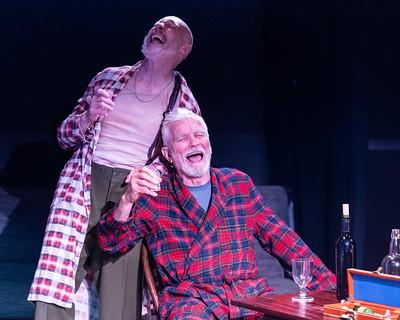
From 1900 Russia to Modern Sitcoms
Before Chekhov, theater was dominated by melodrama, one-sided villains, and clear-cut moral solutions. Chekhov abandoned those traditions in favor of psychological realism. In “Uncle Vanya,” Chekhov recreates the way people actually behave, in which they say one thing but mean another. Indeed, Chekhov is considered a model for some of our modern sitcoms in which a group of contrasting personalities is trapped together. Such is the case with “Cheers,” in which different personalities meet in a bar and clash with each other, although they aren’t trapped.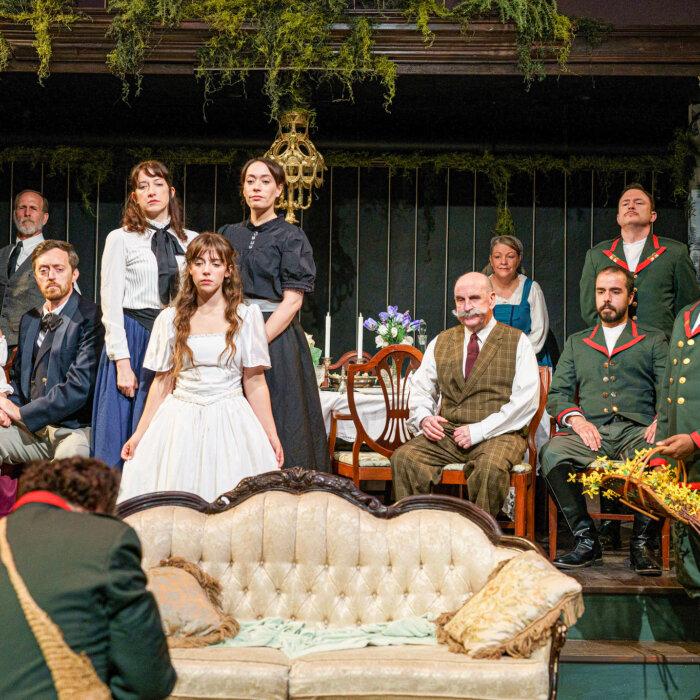

Moreover, Chekhov’s play ends where it begins, with the characters returning to their routines, as in “Seinfeld.” In addition, the humor in self-pity is seen in sitcom comedies in which the main character, such as “Frasier,” is as pretentious as the snobbish professor in “Uncle Vanya.”
This revival, adapted by Liisa Repo-Martell, is faithful to the classic. It keeps the historical 1900 Russian setting intact but differs from the original by using more naturalistic speech patterns and dialogue, making the language easier for theatergoers to appreciate.
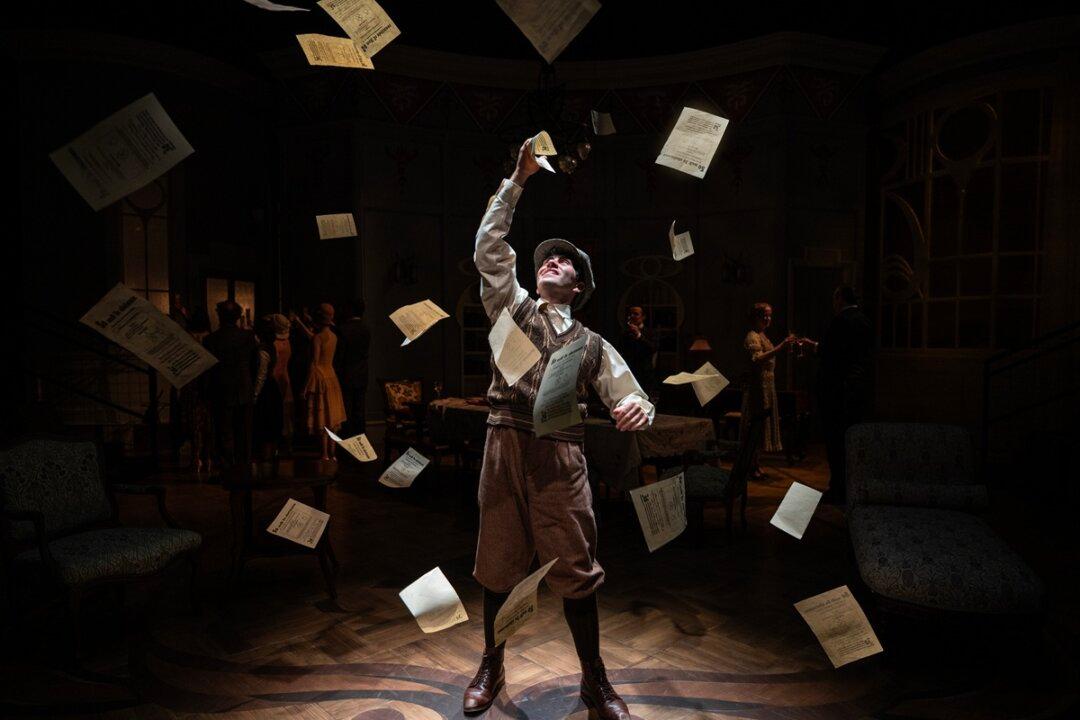
Masterfully directed by Derek Bertelsen, this “Uncle Vanya” also features a fluid physicality in which the characters move around the stage with graceful elegance. The setting and lighting by Jeremiah Barr, and the costuming by Samantha Barr, give the AstonRep stage an old-world atmosphere of Russia at the turn of the 20th century.
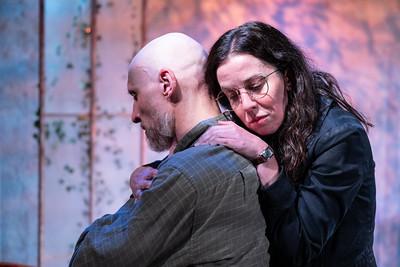
In addition, and most importantly, the performances bring Chekhov’s characters to genuine life. Rian Jairell delivers a complex Vanya as he walks a tightrope between Vanya’s depression and comedic rants, making the character more humorous than sorrowful.
This “Uncle Vanya” offers a more humorous presentation than past productions, highlighting the contradictory nature of the human condition. The best “Uncle Vanya” we’ve seen, it has a lot going for it. Indeed, it might provide many with a new understanding of their fellow man.